Shanghai Institute for Advanced Immunochemical Studies, ShanghaiTech University, Shanghai 201210, China.
School of Life Science and Technology, ShanghaiTech University, Shanghai 201210, China.
Proc Natl Acad Sci U S A. 2022 Apr 19;119(16):e2117142119. doi: 10.1073/pnas.2117142119. Epub 2022 Apr 5.
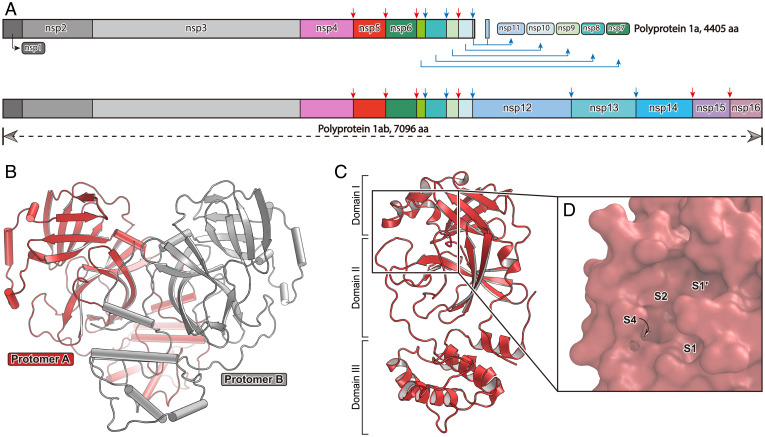
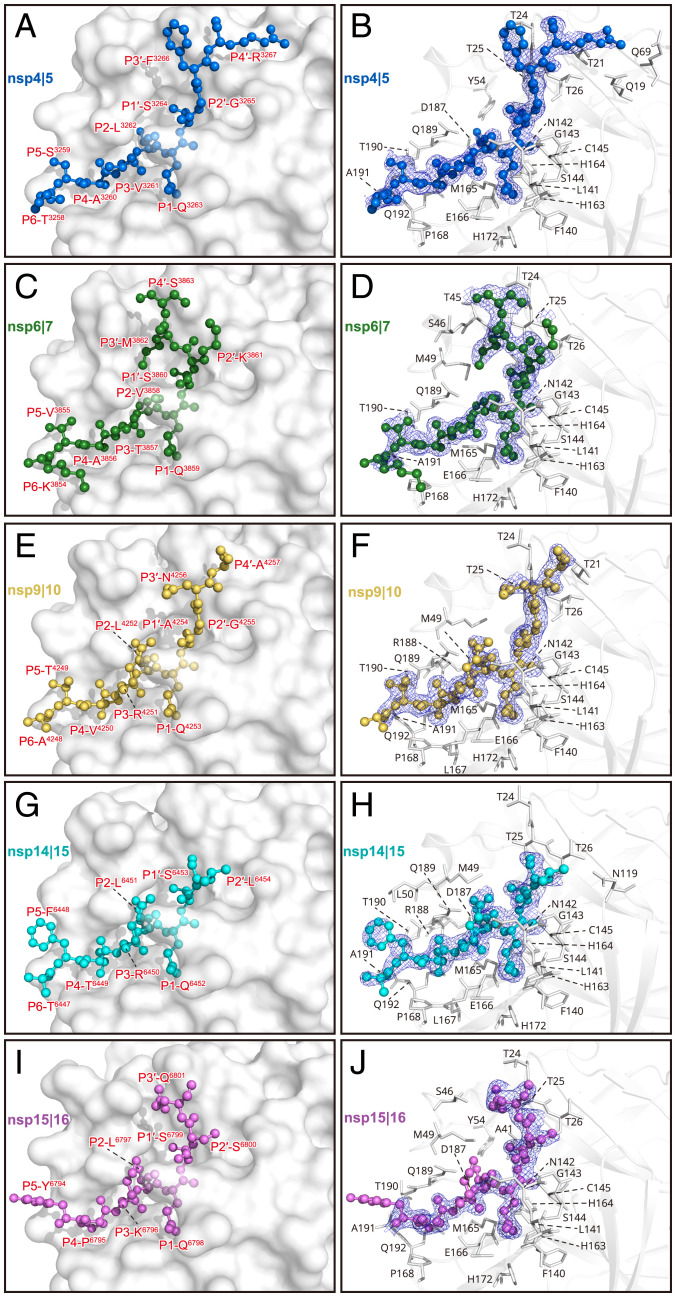
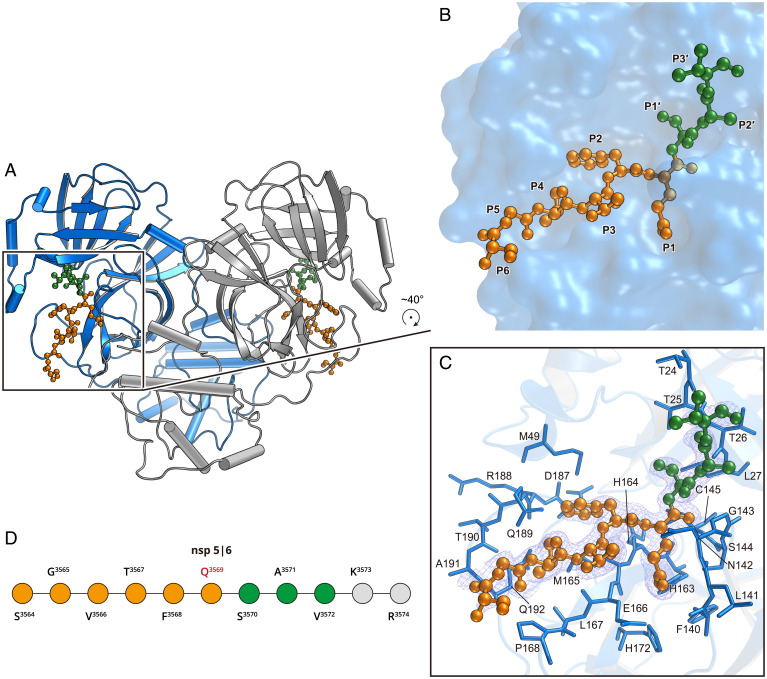
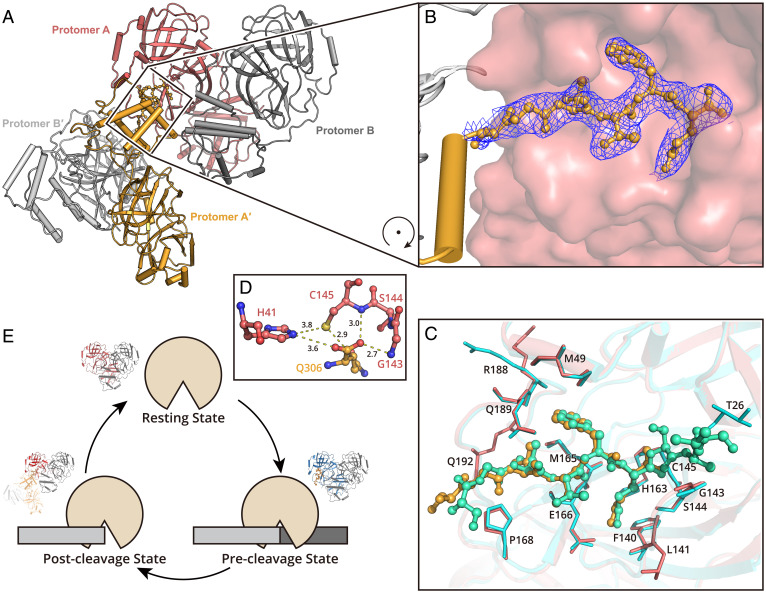
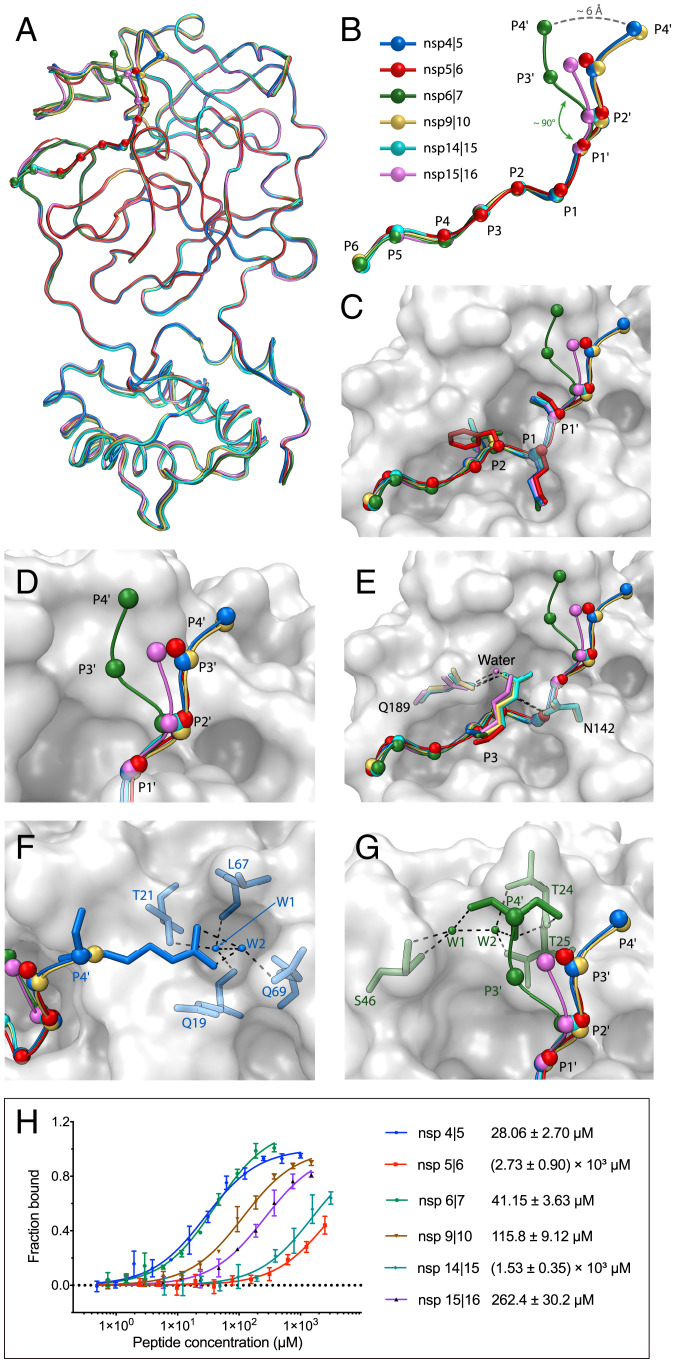
The main protease (Mpro) of severe acute respiratory syndrome coronavirus 2 (SARS-CoV-2) is a key enzyme, which extensively digests CoV replicase polyproteins essential for viral replication and transcription, making it an attractive target for antiviral drug development. However, the molecular mechanism of how Mpro of SARS-CoV-2 digests replicase polyproteins, releasing the nonstructural proteins (nsps), and its substrate specificity remain largely unknown. Here, we determine the high-resolution structures of SARS-CoV-2 Mpro in its resting state, precleavage state, and postcleavage state, constituting a full cycle of substrate cleavage. The structures show the delicate conformational changes that occur during polyprotein processing. Further, we solve the structures of the SARS-CoV-2 Mpro mutant (H41A) in complex with six native cleavage substrates from replicase polyproteins, and demonstrate that SARS-CoV-2 Mpro can recognize sequences as long as 10 residues but only have special selectivity for four subsites. These structural data provide a basis to develop potent new inhibitors against SARS-CoV-2.
严重急性呼吸综合征冠状病毒 2(SARS-CoV-2)的主要蛋白酶(Mpro)是一种关键酶,它广泛消化 CoV 复制酶多蛋白,这些多蛋白对病毒复制和转录至关重要,因此它成为抗病毒药物开发的有吸引力的靶点。然而,SARS-CoV-2 的 Mpro 如何消化复制酶多蛋白并释放非结构蛋白(nsps)的分子机制以及其底物特异性在很大程度上仍不清楚。在这里,我们确定了 SARS-CoV-2 Mpro 在静止状态、预切割状态和切割后状态的高分辨率结构,构成了完整的底物切割循环。这些结构显示了多蛋白加工过程中发生的精细构象变化。此外,我们还解决了 SARS-CoV-2 Mpro 突变体(H41A)与来自复制酶多蛋白的六个天然切割底物复合物的结构,并证明 SARS-CoV-2 Mpro 可以识别长达 10 个残基的序列,但仅对四个亚位点具有特殊选择性。这些结构数据为开发针对 SARS-CoV-2 的有效新型抑制剂提供了基础。