Department of Pediatrics, University Medical Center Groningen, University of Groningen, Groningen, the Netherlands.
Department of Laboratory Medicine, University Medical Center Groningen, University of Groningen, Groningen, the Netherlands.
Hepatology. 2020 Nov;72(5):1638-1653. doi: 10.1002/hep.31198. Epub 2020 Oct 30.
Glycogen storage disease (GSD) type 1a is an inborn error of metabolism caused by defective glucose-6-phosphatase catalytic subunit (G6PC) activity. Patients with GSD 1a exhibit severe hepatomegaly due to glycogen and triglyceride (TG) accumulation in the liver. We have shown that the activity of carbohydrate response element binding protein (ChREBP), a key regulator of glycolysis and de novo lipogenesis, is increased in GSD 1a. In the current study, we assessed the contribution of ChREBP to nonalcoholic fatty liver disease (NAFLD) development in a mouse model for hepatic GSD 1a.
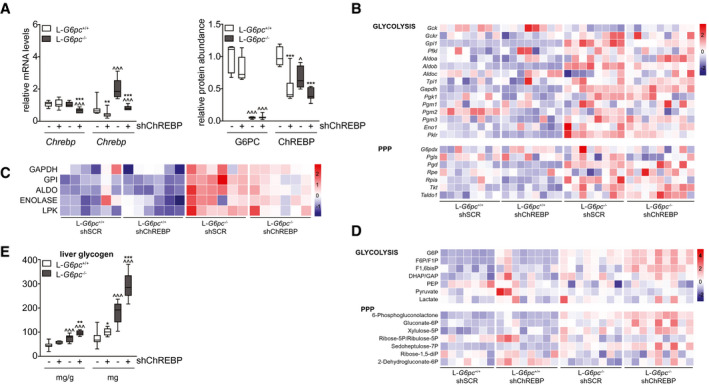
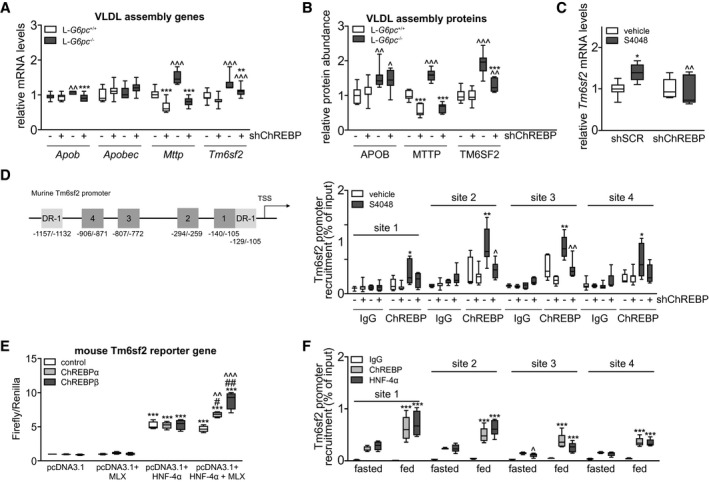
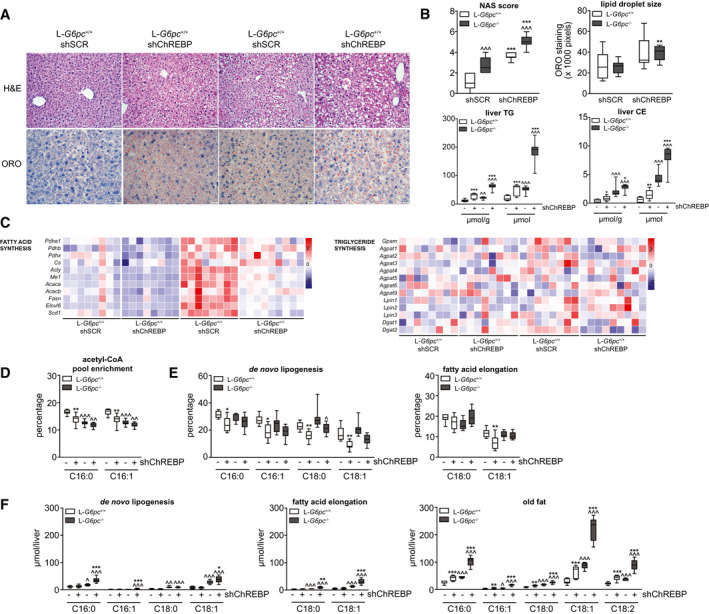
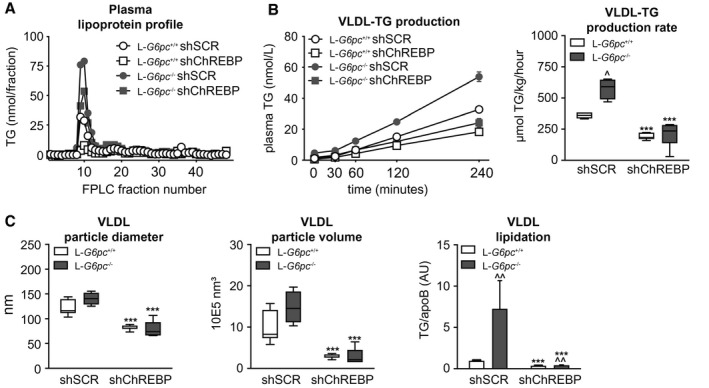
Liver-specific G6pc-knockout (L-G6pc ) mice were treated with adeno-associated viruses (AAVs) 2 or 8 directed against short hairpin ChREBP to normalize hepatic ChREBP activity to levels observed in wild-type mice receiving AAV8-scrambled short hairpin RNA (shSCR). Hepatic ChREBP knockdown markedly increased liver weight and hepatocyte size in L-G6pc mice. This was associated with hepatic accumulation of G6P, glycogen, and lipids, whereas the expression of glycolytic and lipogenic genes was reduced. Enzyme activities, flux measurements, hepatic metabolite analysis and very low density lipoprotein (VLDL)-TG secretion assays revealed that hepatic ChREBP knockdown reduced downstream glycolysis and de novo lipogenesis but also strongly suppressed hepatic VLDL lipidation, hence promoting the storage of "old fat." Interestingly, enhanced VLDL-TG secretion in shSCR-treated L-G6pc mice associated with a ChREBP-dependent induction of the VLDL lipidation proteins microsomal TG transfer protein and transmembrane 6 superfamily member 2 (TM6SF2), the latter being confirmed by ChIP-qPCR.
Attenuation of hepatic ChREBP induction in GSD 1a liver aggravates hepatomegaly because of further accumulation of glycogen and lipids as a result of reduced glycolysis and suppressed VLDL-TG secretion. TM6SF2, critical for VLDL formation, was identified as a ChREBP target in mouse liver. Altogether, our data show that enhanced ChREBP activity limits NAFLD development in GSD 1a by balancing hepatic TG production and secretion.
糖原贮积病(GSD)1a 型是一种由于葡萄糖-6-磷酸酶催化亚基(G6PC)活性缺陷引起的先天性代谢错误。GSD 1a 患者由于肝脏中糖原和甘油三酯(TG)的积累而表现出严重的肝肿大。我们已经表明,碳水化合物反应元件结合蛋白(ChREBP)的活性,即糖酵解和从头脂肪生成的关键调节因子,在 GSD 1a 中增加。在本研究中,我们评估了 ChREBP 在肝脏 GSD 1a 小鼠模型中非酒精性脂肪性肝病(NAFLD)发展中的作用。
肝特异性 G6pc 敲除(L-G6pc)小鼠用腺相关病毒(AAV)2 或 8 处理,针对短发夹 ChREBP,以将肝 ChREBP 活性正常化为接受 AAV8-随机短发夹 RNA(shSCR)的野生型小鼠观察到的水平。肝 ChREBP 敲低显著增加了 L-G6pc 小鼠的肝重和肝细胞大小。这与肝 G6P、糖原和脂质的积累有关,而糖酵解和脂肪生成基因的表达减少。酶活性、通量测量、肝代谢物分析和极低密度脂蛋白(VLDL)-TG 分泌测定表明,肝 ChREBP 敲低降低了下游糖酵解和从头脂肪生成,但也强烈抑制了肝 VLDL 脂质化,从而促进了“旧脂肪”的储存。有趣的是,shSCR 处理的 L-G6pc 小鼠中增强的 VLDL-TG 分泌与 ChREBP 依赖性诱导 VLDL 脂质化蛋白微粒体 TG 转移蛋白和跨膜 6 超家族成员 2(TM6SF2)有关,后者通过 ChIP-qPCR 得到证实。
在 GSD 1a 肝脏中减弱肝 ChREBP 诱导会加重肝肿大,因为糖酵解减少和 VLDL-TG 分泌受到抑制,导致糖原和脂质进一步积累。TM6SF2 是 VLDL 形成的关键,它被确定为小鼠肝脏中 ChREBP 的靶标。总之,我们的数据表明,增强的 ChREBP 活性通过平衡肝 TG 产生和分泌来限制 GSD 1a 中 NAFLD 的发展。