Institute of Biomedical Engineering, National Taiwan University, Taipei 10617, Taiwan.
Division of Urology, Department of Surgery, Taipei Tzu Chi Hospital, The Buddhist Tzu Chi Medical Foundation, New Taipei 23142, Taiwan.
Toxins (Basel). 2020 Feb 18;12(2):128. doi: 10.3390/toxins12020128.
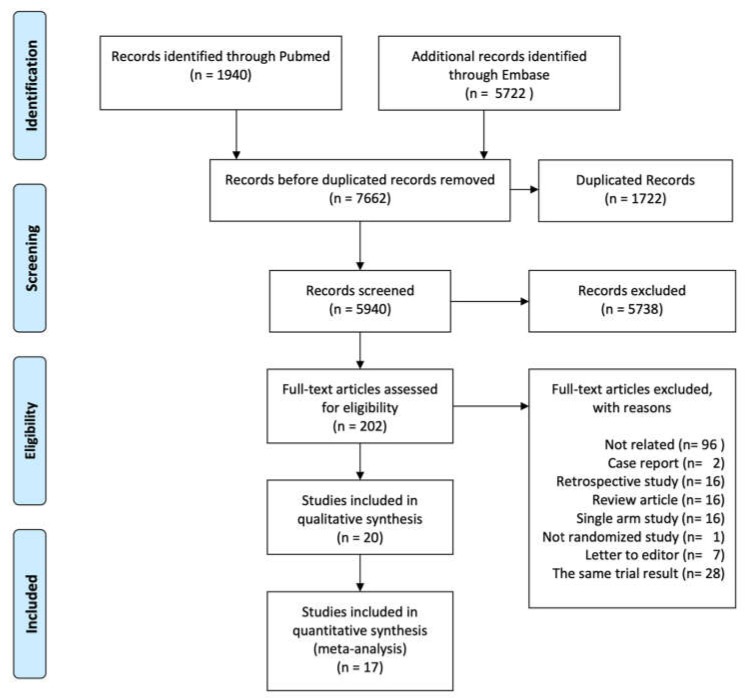
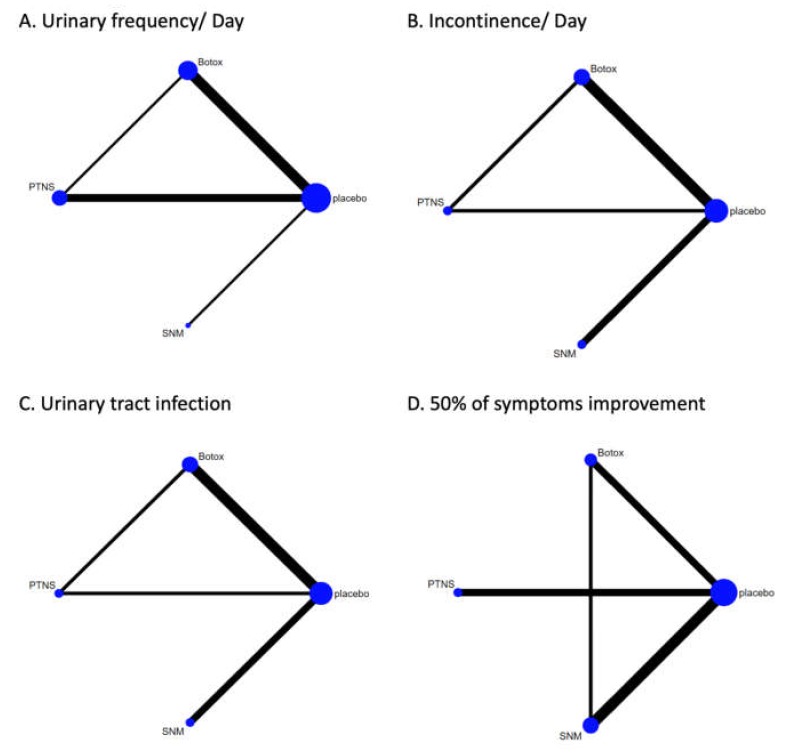
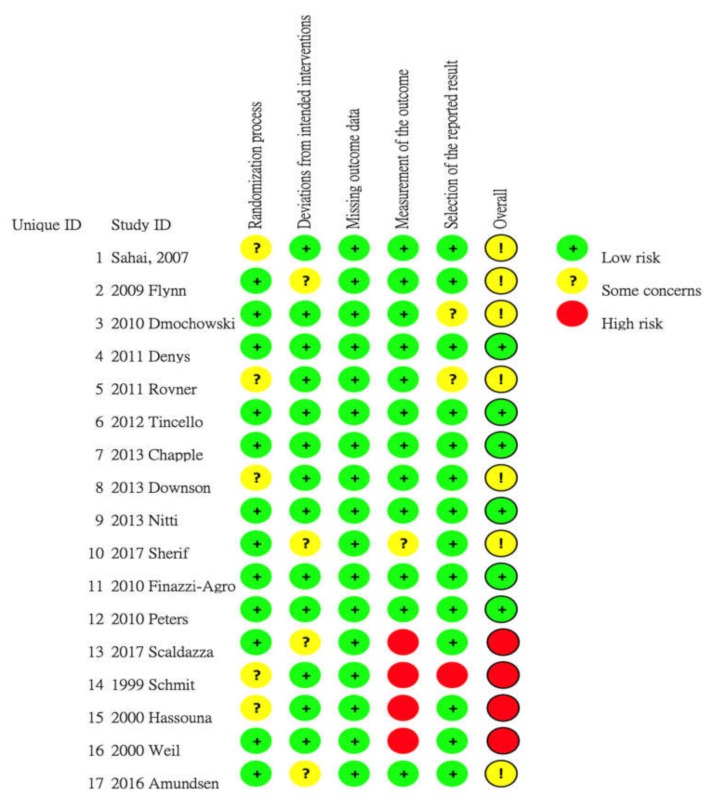
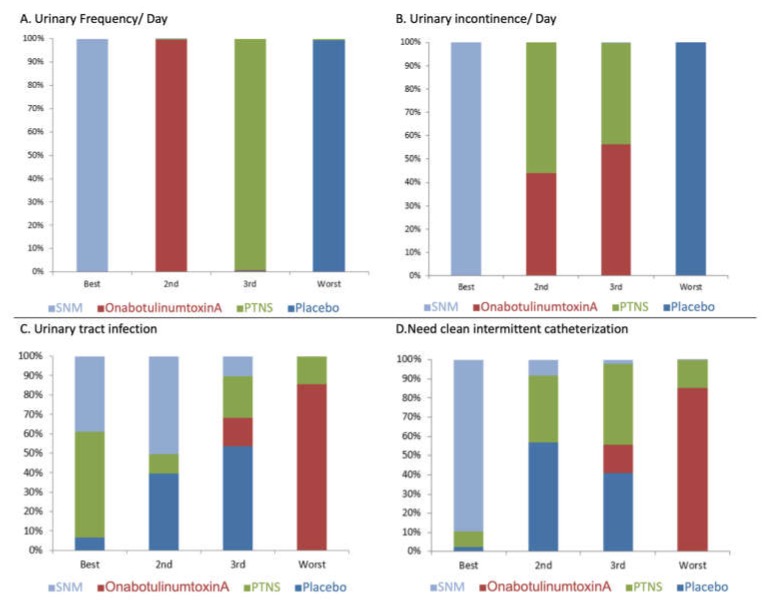
The American Urological Association guidelines for the management of non-neurogenic overactive bladder (OAB) recommend the use of OnabotulinumtoxinA, sacral neuromodulation (SNM), and peripheral tibial nerve stimulation (PTNS) as third line treatment options with no treatment hierarchy. The current study used network meta-analysis to compare the efficacy of these three modalities for managing adult OAB syndrome. We performed systematic literature searches of several databases from January 1995 to September 2019 with language restricted to English. All randomized control trials that compared any dose of OnabotulinumtoxinA, SNM, and PTNS with each other or a placebo for the management of adult OAB were included in the study. Overall, 17 randomized control trials, with a follow up of 3-6 months in the predominance of trials (range 1.5-24 months), were included for analysis. For each trial outcome, the results were reported as an average number of episodes of the outcome at baseline. Compared with the placebo, all three treatments were more efficacious for the selected outcome parameters. OnabotulinumtoxinA resulted in a higher number of complications, including urinary tract infection and urine retention. Compared with OnabotulinumtoxinA and PTNS, SNM resulted in the greatest reduction in urinary incontinence episodes and voiding frequency. However, comparison of their long-term efficacy was lacking. Further studies on the long-term effectiveness of the three treatment options, with standardized questionnaires and parameters are warranted.
美国泌尿协会(AUA)关于非神经源性膀胱过度活动症(OAB)的管理指南建议将肉毒杆菌毒素 A(OnabotulinumtoxinA)、骶神经调节(SNM)和外周胫神经刺激(PTNS)作为三线治疗选择,无治疗优先级。本研究采用网络荟萃分析比较这三种方法治疗成人 OAB 综合征的疗效。我们对从 1995 年 1 月至 2019 年 9 月的多个数据库进行了系统文献检索,语言仅限于英语。所有比较任何剂量的 OnabotulinumtoxinA、SNM 和 PTNS 彼此之间或与安慰剂治疗成人 OAB 的随机对照试验均纳入研究。总体而言,纳入了 17 项随机对照试验,主要试验的随访时间为 3-6 个月(范围为 1.5-24 个月)。对于每个试验结果,结果以基线时结果的平均发作次数报告。与安慰剂相比,所有三种治疗方法对所选结局参数均更有效。OnabotulinumtoxinA 导致更多的并发症,包括尿路感染和尿潴留。与 OnabotulinumtoxinA 和 PTNS 相比,SNM 导致尿失禁发作和排尿频率的最大减少。然而,缺乏对其长期疗效的比较。需要进一步研究三种治疗选择的长期有效性,采用标准化问卷和参数。