The Ritchie Centre, Department of Obstetrics and Gynaecology, School of Clinical Sciences, Monash University, Clayton, Victoria 3168, Australia.
Heart Failure Pharmacology, Baker Heart & Diabetes Institute, Victoria 3004, Australia.
Int J Mol Sci. 2020 Feb 18;21(4):1384. doi: 10.3390/ijms21041384.
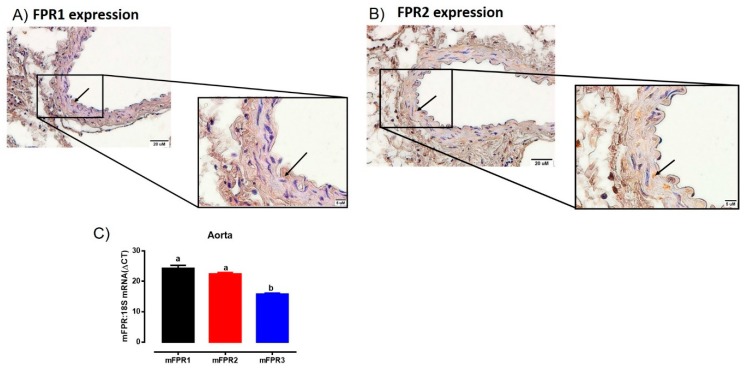
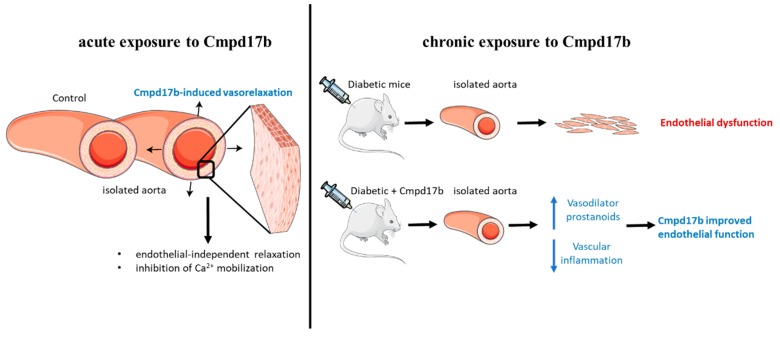
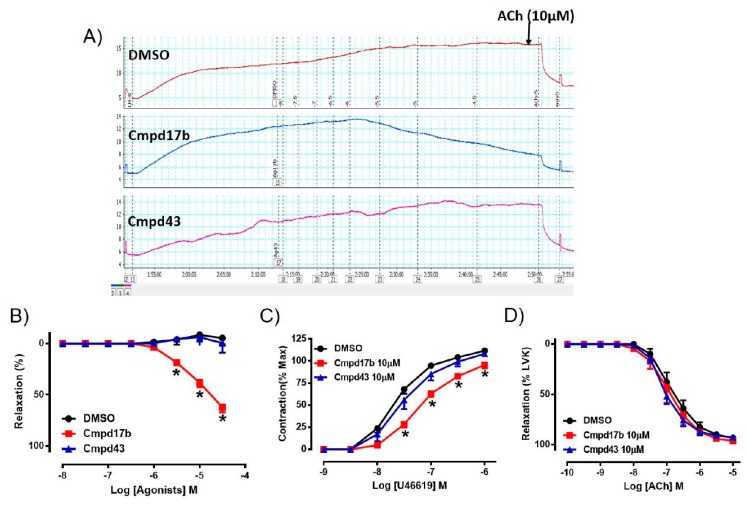
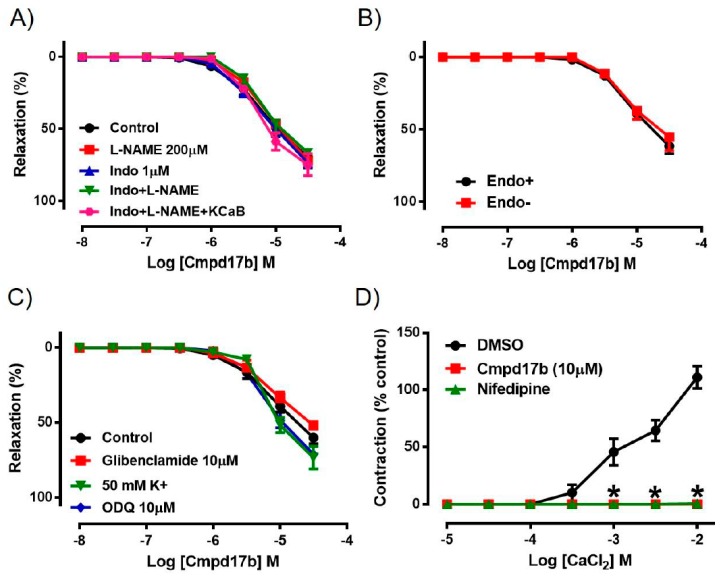
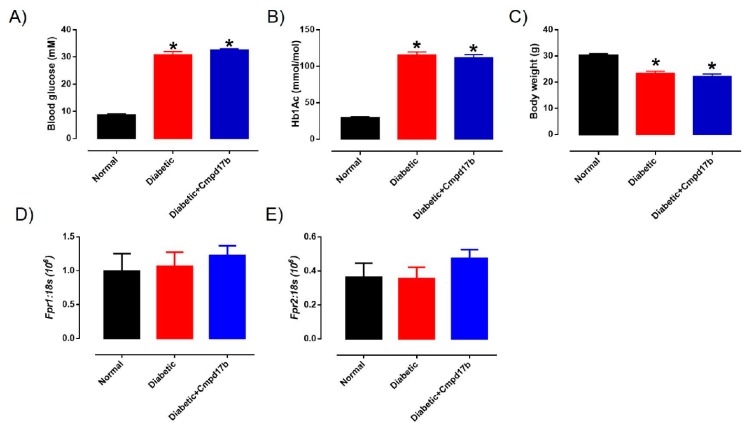
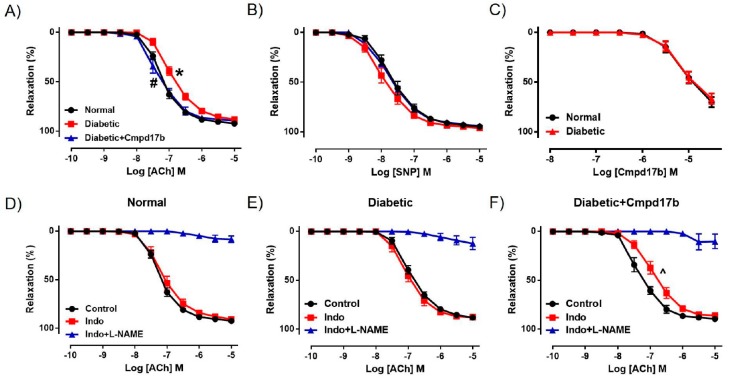
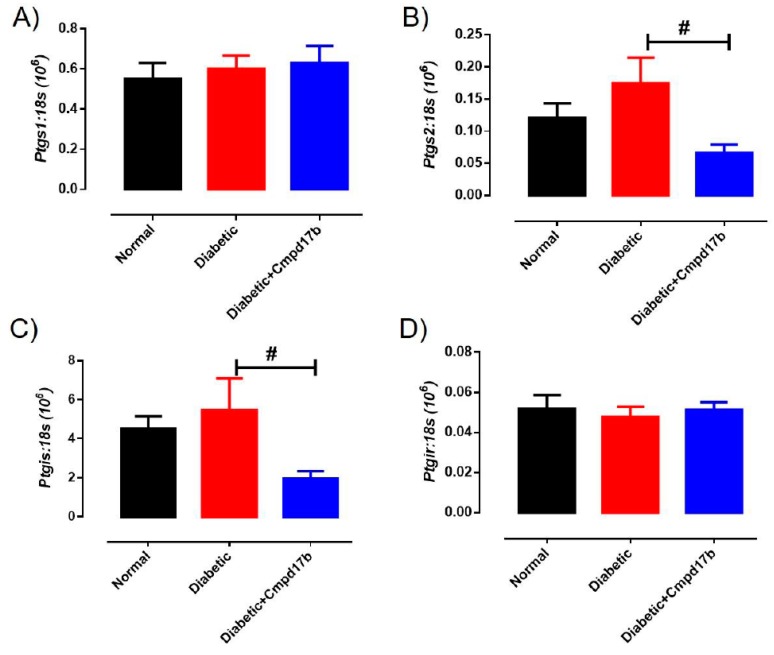
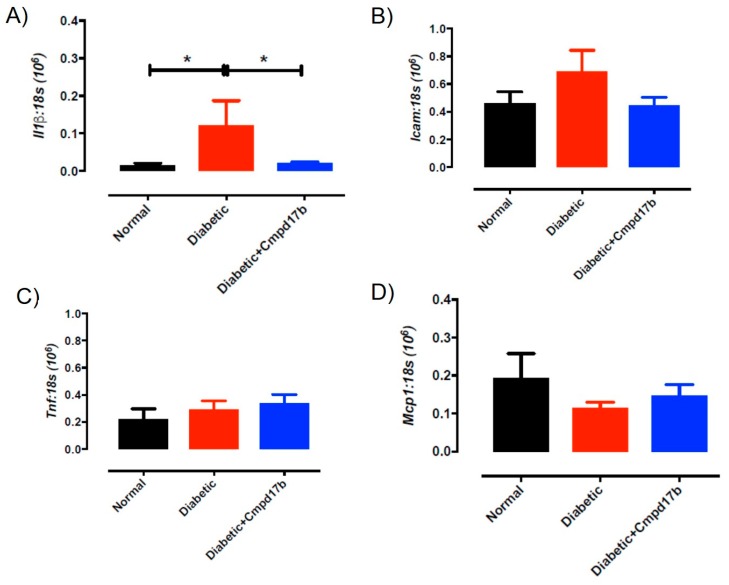
The formyl peptide receptor (FPR) family are a group of G-protein coupled receptors that play an important role in the regulation of inflammatory processes. It is well-established that activation of FPRs can have cardioprotective properties. Recently, more stable small-molecule FPR1/2 agonists have been described, including both Compound 17b (Cmpd17b) and Compound 43 (Cmpd43). Both agonists activate a range of signals downstream of FPR1/2 activation in human-engineered FPR-expressing cells, including ERK1/2 and Akt. Importantly, Cmpd17b (but not Cmpd43) favours bias away from intracellular Ca mobilisation in this context, which has been associated with greater cardioprotection in response to Cmpd17b over Cmpd43. However, it is unknown whether these FPR agonists impact vascular physiology and/or elicit vasoprotective effects in the context of diabetes. First, we localized FPR1 and FPR2 receptors predominantly in vascular smooth muscle cells in the aortae of male C57BL/6 mice. We then analysed the vascular effects of Cmpd17b and Cmpd43 on the aorta using wire-myography. Cmpd17b but not Cmpd43 evoked a concentration-dependent relaxation of the mouse aorta. Removal of the endothelium or blockade of endothelium-derived relaxing factors using pharmacological inhibitors had no effect on Cmpd17b-evoked relaxation, demonstrating that its direct vasodilator actions were endothelium-independent. In aortae primed with elevated K concentration, increasing concentrations of CaCl evoked concentration-dependent contraction that is abolished by Cmpd17b, suggesting the involvement of the inhibition of Ca mobilisation via voltage-gated calcium channels. Treatment with Cmpd17b for eight weeks reversed endothelial dysfunction in STZ-induced diabetic aorta through the upregulation of vasodilator prostanoids. Our data indicate that Cmpd17b is a direct endothelium-independent vasodilator, and a vasoprotective molecule in the context of diabetes.
形式肽受体(FPR)家族是一组 G 蛋白偶联受体,在炎症过程的调节中发挥重要作用。众所周知,FPR 的激活具有心脏保护作用。最近,已经描述了更稳定的小分子 FPR1/2 激动剂,包括 Compound 17b(Cmpd17b)和 Compound 43(Cmpd43)。这两种激动剂都能激活人源 FPR 表达细胞中 FPR1/2 激活下游的一系列信号,包括 ERK1/2 和 Akt。重要的是,Cmpd17b(但不是 Cmpd43)在这种情况下有利于偏离细胞内钙动员,这与 Cmpd17b 比 Cmpd43 更能引起心脏保护反应有关。然而,目前尚不清楚这些 FPR 激动剂是否会影响血管生理学并/或在糖尿病背景下产生血管保护作用。首先,我们在雄性 C57BL/6 小鼠的主动脉中主要定位了 FPR1 和 FPR2 受体。然后,我们使用线描法分析了 Cmpd17b 和 Cmpd43 对主动脉的血管作用。Cmpd17b 而非 Cmpd43 引起了小鼠主动脉的浓度依赖性舒张。用药理学抑制剂去除内皮或阻断内皮衍生的舒张因子对内皮依赖性舒张没有影响,这表明其直接的血管舒张作用与内皮无关。在用升高的 K 浓度预刺激的主动脉中,增加的 CaCl 浓度引发浓度依赖性收缩,而 Cmpd17b 则消除了这种收缩,这表明其涉及通过电压门控钙通道抑制钙动员。用 Cmpd17b 治疗 8 周可通过上调血管舒张性前列腺素逆转 STZ 诱导的糖尿病主动脉的内皮功能障碍。我们的数据表明,Cmpd17b 是一种直接的内皮非依赖性血管舒张剂,也是糖尿病背景下的血管保护分子。