Baker IDI Heart and Diabetes Institute, 75 Commercial Road, Melbourne, Victoria 3004, Australia.
Department of Pharmacology, University of Melbourne, Melbourne, Victoria 3010, Australia.
Nat Commun. 2017 Feb 7;8:14232. doi: 10.1038/ncomms14232.
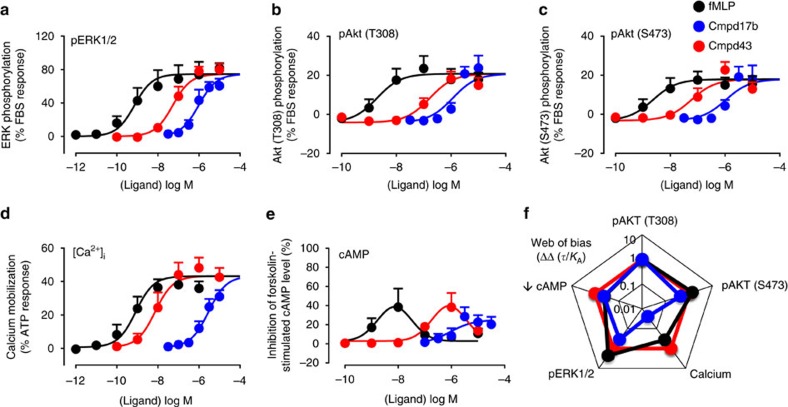
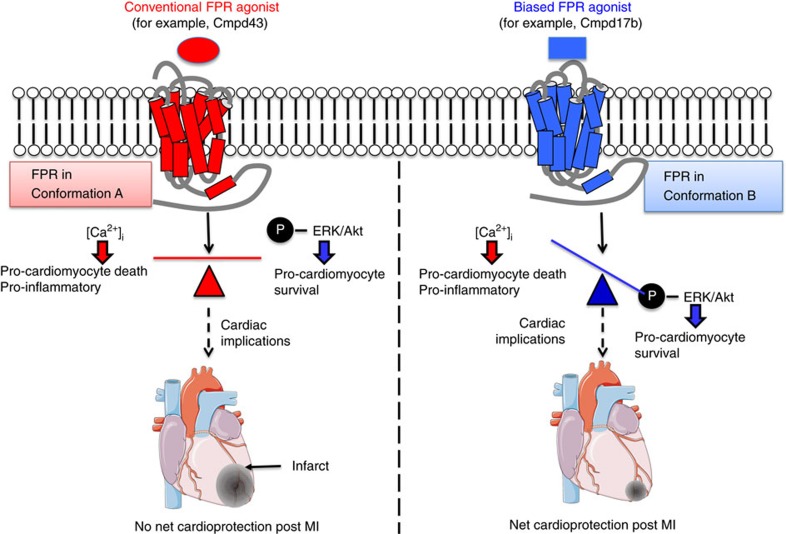
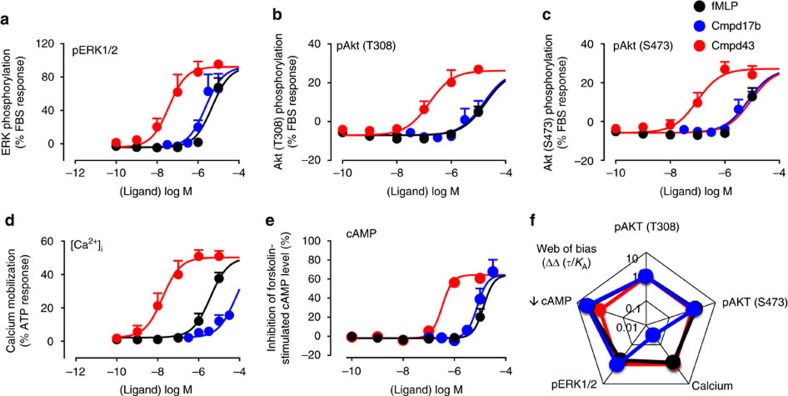
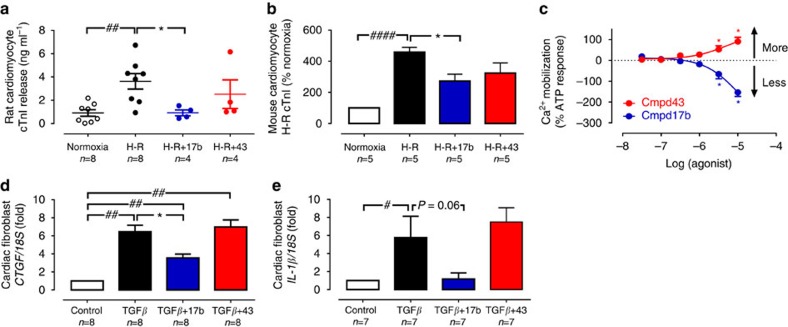
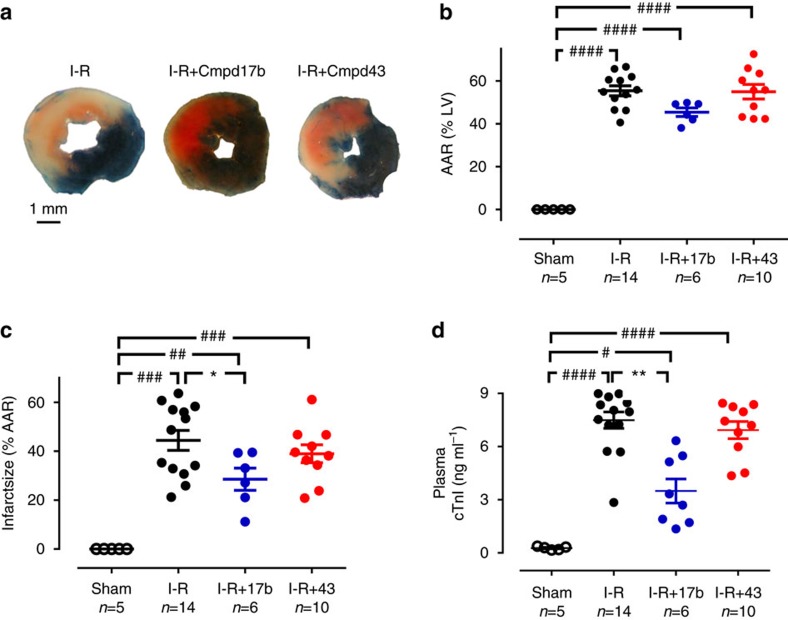
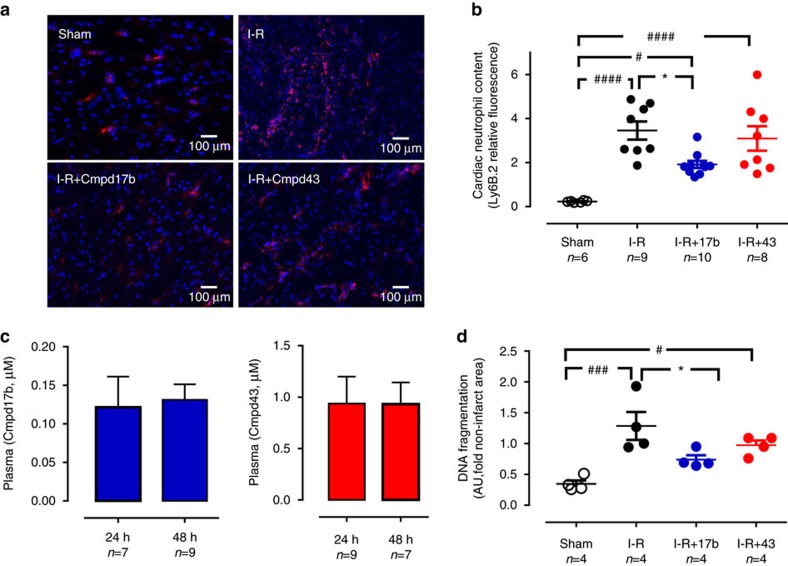
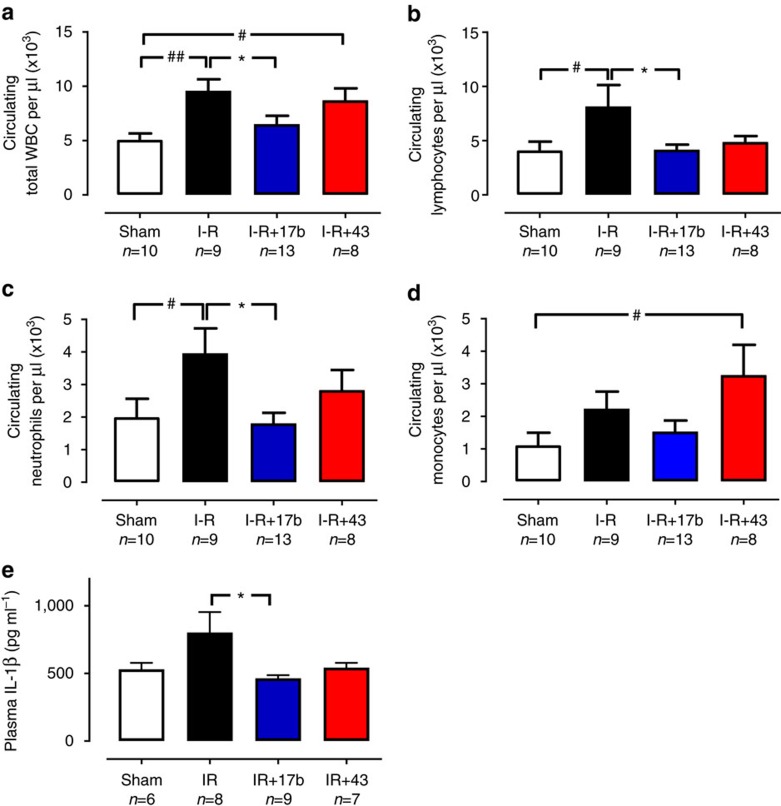
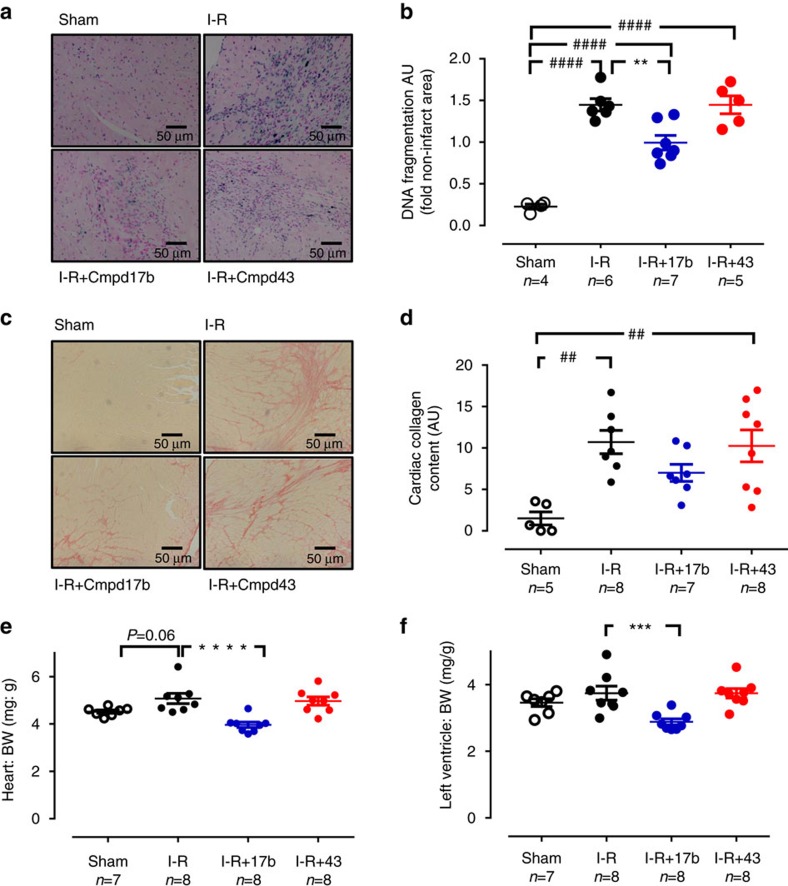
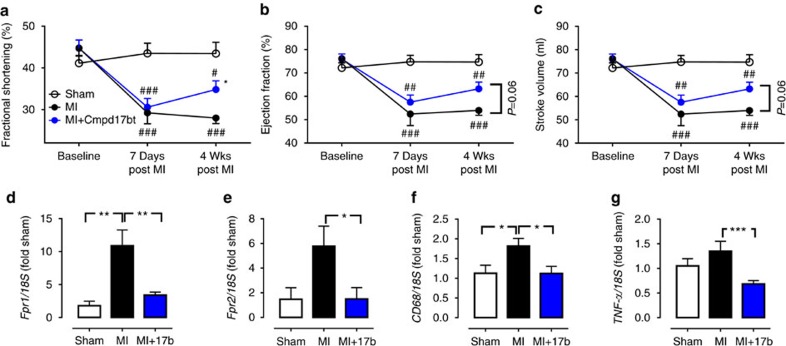
Effective treatment for managing myocardial infarction (MI) remains an urgent, unmet clinical need. Formyl peptide receptors (FPR) regulate inflammation, a major contributing mechanism to cardiac injury following MI. Here we demonstrate that FPR1/FPR2-biased agonism may represent a novel therapeutic strategy for the treatment of MI. The small-molecule FPR1/FPR2 agonist, Compound 17b (Cmpd17b), exhibits a distinct signalling fingerprint to the conventional FPR1/FPR2 agonist, Compound-43 (Cmpd43). In Chinese hamster ovary (CHO) cells stably transfected with human FPR1 or FPR2, Compd17b is biased away from potentially detrimental FPR1/2-mediated calcium mobilization, but retains the pro-survival signalling, ERK1/2 and Akt phosphorylation, relative to Compd43. The pathological importance of the biased agonism of Cmpd17b is demonstrable as superior cardioprotection in both in vitro (cardiomyocytes and cardiofibroblasts) and MI injury in mice in vivo. These findings reveal new insights for development of small molecule FPR agonists with an improved cardioprotective profile for treating MI.
有效治疗管理心肌梗死(MI)仍然是一个紧迫的、未满足的临床需求。甲酰肽受体(FPR)调节炎症,这是 MI 后心脏损伤的主要发病机制。在这里,我们证明 FPR1/FPR2 偏向激动可能代表 MI 治疗的一种新的治疗策略。小分子 FPR1/FPR2 激动剂,化合物 17b(Cmpd17b),表现出与传统 FPR1/FPR2 激动剂化合物 43(Cmpd43)不同的信号特征。在稳定转染人 FPR1 或 FPR2 的中国仓鼠卵巢(CHO)细胞中,Cmpd17b 偏向于避免潜在有害的 FPR1/2 介导的钙动员,但相对于 Cmpd43,保留了促生存信号ERK1/2 和 Akt 磷酸化。Cmpd17b 的偏向激动作用的病理重要性在体外(心肌细胞和心肌成纤维细胞)和体内 MI 损伤的小鼠中均表现出优越的心脏保护作用。这些发现为开发具有改善的心肌梗死治疗作用的心脏保护作用的小分子 FPR 激动剂提供了新的见解。