Department of Rheumatology and Immunology, Ruijin Hospital, Shanghai Jiao Tong University School of Medicine, No. 197 Ruijin Second Road, Huangpu District, Shanghai, 200025, China.
Werfen China, 10 Jiuxianqiao RD., Chaoyang District, Beijing, China.
Arthritis Res Ther. 2020 Feb 21;22(1):33. doi: 10.1186/s13075-020-2131-4.
Despite expansion in the 2006 Sydney antiphospholipid syndrome (APS) classification criteria to include IgG/IgM anti-β2-glycoprotein (aβ2GPI) antibodies in addition to IgG/IgM anti-cardiolipin antibodies (aCL) and lupus anticoagulant (LAC), some individuals with clinical features of APS remain seronegative (seronegative APS or SNAPS) and are at risk of recurrent thrombosis and pregnancy morbidities. Our aim was to assess the value of "non-criteria" aPL antibodies to detect these SNAPS patients.
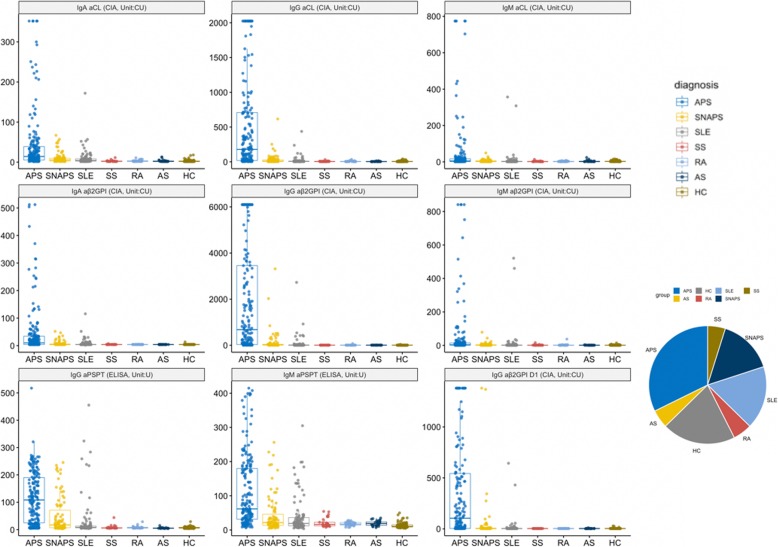
One hundred ninety-two APS patients, 90 SNAPS patients, 193 autoimmune disease controls, and 120 healthy controls were evaluated. Ten antiphospholipid antibodies (aPLs) were tested using commercial kits, including 5 non-criteria aPLs: anti-phosphatidylserine/prothrombin antibodies (aPS/PT) IgG/IgM, aCL IgA, aβ2GPI IgA, and anti-β2GPI Domain 1 (aβ2GPI-D1) IgG.
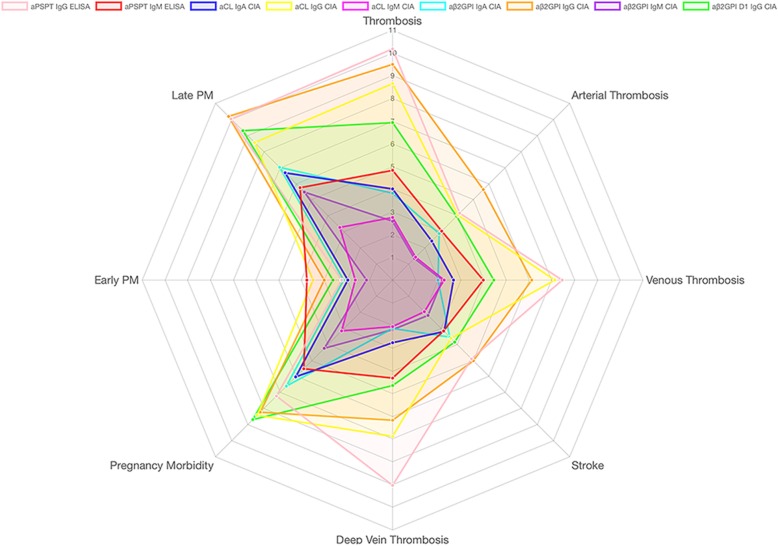
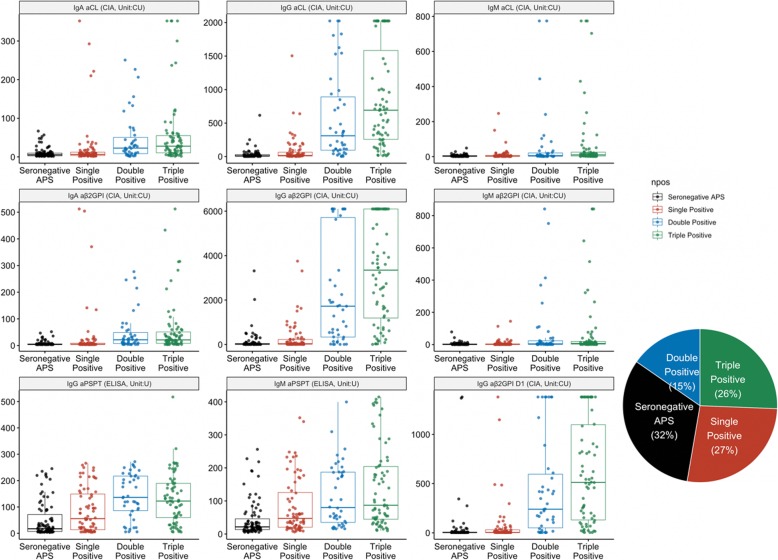
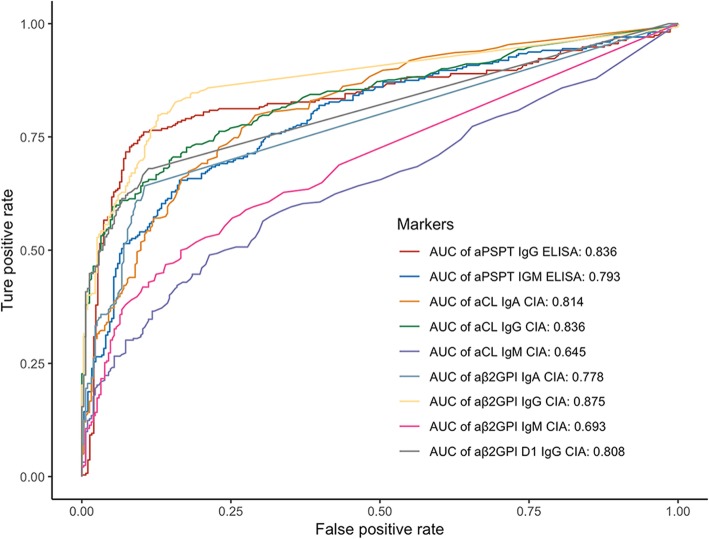
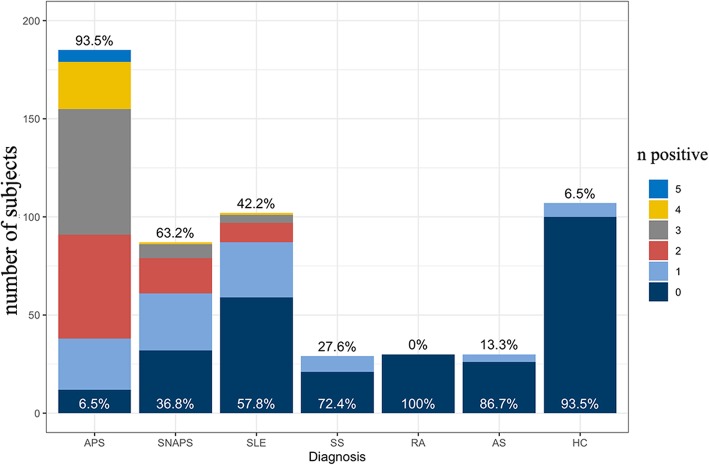
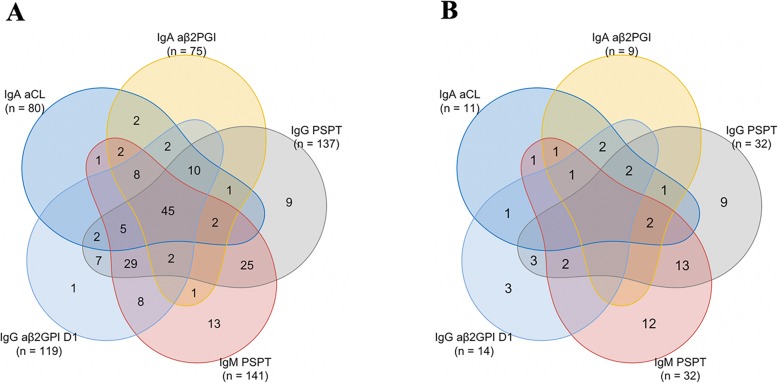
Up to 60.9% of the SNAPS and 93.5% of APS patients were detected by at least one non-criteria aPL. aPS/PT IgG had the highest Youden index in classifying APS and SNAPS from controls. aPS/PT IgG and aβ2GPI Domain 1 IgG seem to be the most significant risk factors for thrombotic events and pregnancy morbidity, respectively. aPS/PT IgG/IgM and aβ2GPI-D1 IgG were detected in some SNAPS patients, while IgA isotypes of aCL/aβ2GPI tended to appear together with other biomarkers. The combined analysis showed enhanced diagnostic performance with the inclusion of non-criteria aPLs.
Recognition of SNAPS patients is critical for clinical management and prevention of potential thrombotic and obstetric adverse events. The non-criteria antiphospholipid antibodies help to identify a considerable portion (60.9%) of these patients who otherwise may remain untreated and at clinical risk.
尽管 2006 年悉尼抗磷脂综合征(APS)分类标准有所扩大,除 IgG/IgM 抗心磷脂抗体(aCL)和狼疮抗凝物(LAC)外,还包括 IgG/IgM 抗β2-糖蛋白 I(aβ2GPI)抗体,但仍有一些具有 APS 临床特征的个体呈血清阴性(血清阴性 APS 或 SNAPS),存在复发性血栓形成和妊娠并发症的风险。我们的目的是评估“非标准”抗磷脂抗体检测这些 SNAPS 患者的价值。
评估了 192 例 APS 患者、90 例 SNAPS 患者、193 例自身免疫性疾病对照组和 120 例健康对照组。使用商业试剂盒检测了 10 种抗磷脂抗体(aPLs),包括 5 种非标准 aPLs:抗磷脂酰丝氨酸/凝血酶原抗体(aPS/PT)IgG/IgM、aCL IgA、aβ2GPI IgA 和抗β2GPI 结构域 1(aβ2GPI-D1)IgG。
SNAPS 和 APS 患者中分别有 60.9%和 93.5%至少有一种非标准 aPL 检测阳性。aPS/PT IgG 在区分 APS 和 SNAPS 与对照组方面具有最高的 Youden 指数。aPS/PT IgG 和 aβ2GPI-D1 IgG 分别似乎是血栓形成事件和妊娠并发症的最重要危险因素。一些 SNAPS 患者检测到 aPS/PT IgG/IgM 和 aβ2GPI-D1 IgG,而 aCL/aβ2GPI 的 IgA 同种型则倾向于与其他生物标志物一起出现。联合分析显示,纳入非标准 aPL 可提高诊断性能。
识别 SNAPS 患者对于临床管理和预防潜在的血栓形成和产科不良事件至关重要。非标准抗磷脂抗体有助于识别相当一部分(60.9%)否则可能未经治疗且处于临床风险中的患者。