Department of Sports Medicine, Peking University Shenzhen Hospital, #1120 Lianhua Road, Shenzhen, Guangdong Province, China.
National and Local Joint Engineering Research Center of Orthopaedic Biomaterials, Peking University Shenzhen Hospital, #1120 Lianhua Road, Shenzhen, Guangdong Province, China.
J Orthop Surg Res. 2020 Feb 21;15(1):64. doi: 10.1186/s13018-020-01584-y.
This study aims to investigate the malreduction of syndesmosis and its effects on stability.
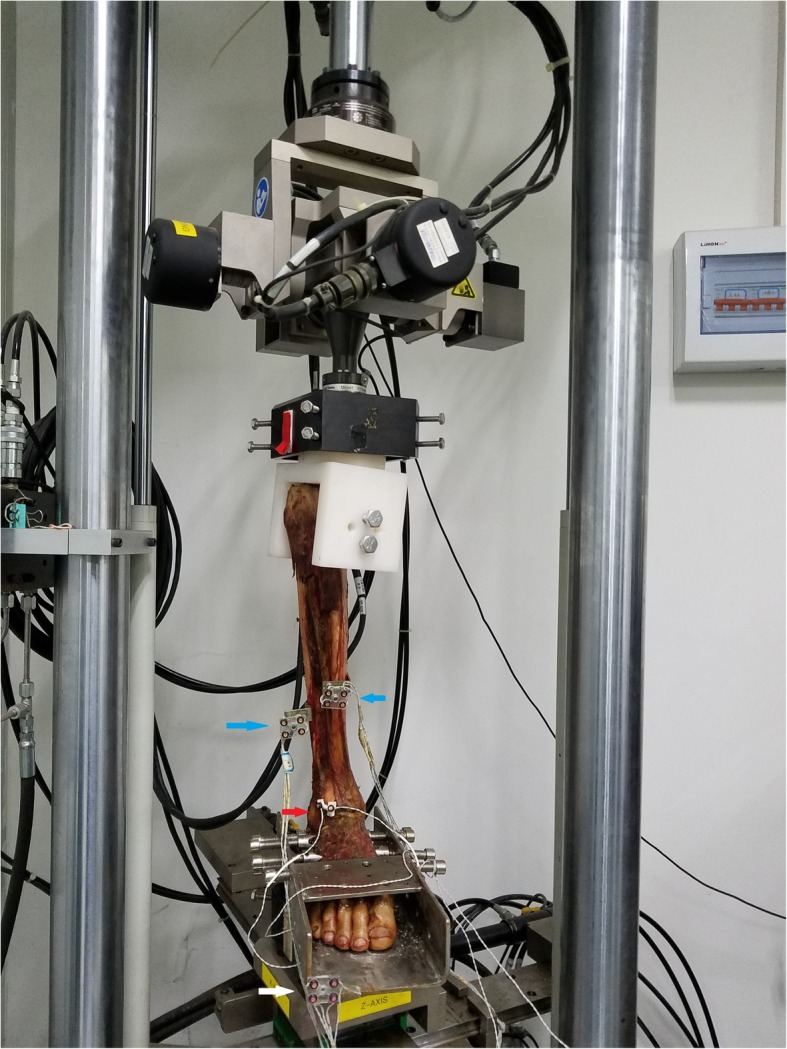
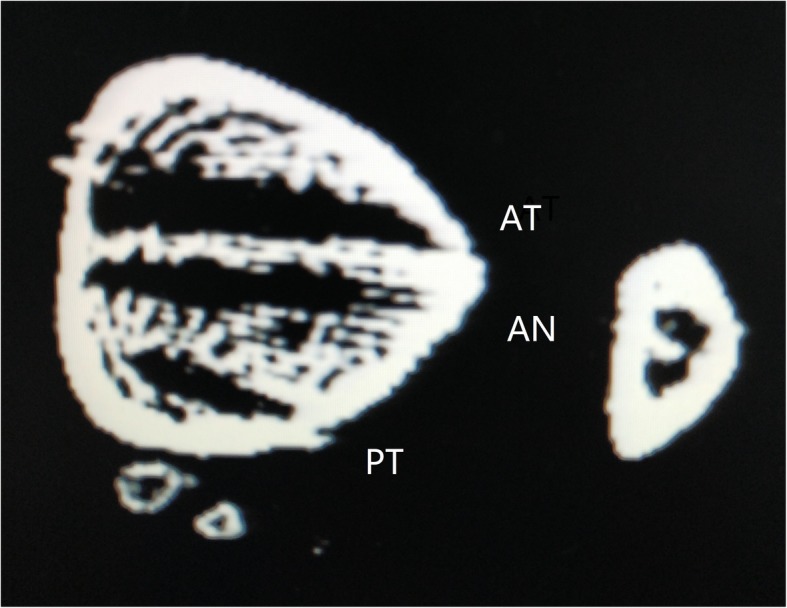
The biomechanical tests, including the three-dimensional (3D) displacement of the syndesmotic incisura, fibular rotation angle, and torque resistance, were performed on six cadaver legs. These specimens were first tested intact (intact group), then cut all the syndesmotic ligaments and fixed in anatomical position (anatomical model group) and test again. After that, syndesmosis was fixed in 1 cm malreduction (anterior and posterior displacement group) to do the same test.
In internal or external load, there were significant differences in torque resistance and fibular rotation angle (internal t = 2.412, P = 0.036; external t = 2.412, P = 0.039) between the intact and post-malreduction groups. In internal rotation load, there were significant differences in sagittal displacement between the intact and post-malreduction groups (P = 0.011), and between the anatomical and post-malreduction groups (P = 0.020). In external rotation load, significant differences existed between the intact and ant-malreduction group (P = 0.034) in sagittal (anterior-posterior) displacement. Significant differences also existed between the intact and post-malreduction groups (P = 0.013), and between the anatomical and post-malreduction groups (P = 0.038) in coronal (medial-lateral) displacement.
Malreduction in different conditions does affect the stability of the syndesmotic fixation. The result of the study may reveal the biomechanical mechanism of poor clinical outcome in syndesmosis malreduction patients and pathological displacement patterns of the ankle under syndesmotic malreduction conditions.
III.
本研究旨在探讨下胫腓联合复位不良及其对稳定性的影响。
对 6 例尸体下肢进行生物力学测试,包括下胫腓联合切迹的三维(3D)位移、腓骨旋转角度和抗扭阻力。这些标本首先进行完整测试(完整组),然后切断所有下胫腓联合韧带并在解剖位置固定(解剖模型组),再进行测试。之后,将下胫腓联合固定在 1cm 复位不良(前后移位组)进行相同的测试。
在内外负荷下,完整组和复位后组之间的抗扭阻力和腓骨旋转角度存在显著差异(内旋 t=2.412,P=0.036;外旋 t=2.412,P=0.039)。在旋转负荷下,完整组和复位后组之间在矢状面位移上存在显著差异(P=0.011),解剖模型组和复位后组之间也存在显著差异(P=0.020)。在外旋负荷下,完整组和前复位组在矢状面(前后)位移上存在显著差异(P=0.034)。完整组和复位后组之间以及解剖模型组和复位后组之间在冠状面(内外)位移上也存在显著差异(P=0.013,P=0.038)。
不同条件下的复位不良确实会影响下胫腓联合固定的稳定性。研究结果可能揭示了下胫腓联合复位不良患者临床结果不佳的生物力学机制以及下胫腓联合复位不良情况下踝关节的病理性移位模式。
III。