Department of Molecular Medicine II, Medical Faculty, Heinrich-Heine-University, Universitätsstraße 1, 40225, Düsseldorf, Germany.
Institute of Immunology, Medical Faculty, University of Duisburg-Essen, Hufelandstrasse 55, 45147, Essen, Germany.
J Exp Clin Cancer Res. 2020 Feb 21;39(1):38. doi: 10.1186/s13046-020-1539-7.
New therapies are urgently needed in melanoma particularly in late-stage patients not responsive to immunotherapies and kinase inhibitors.
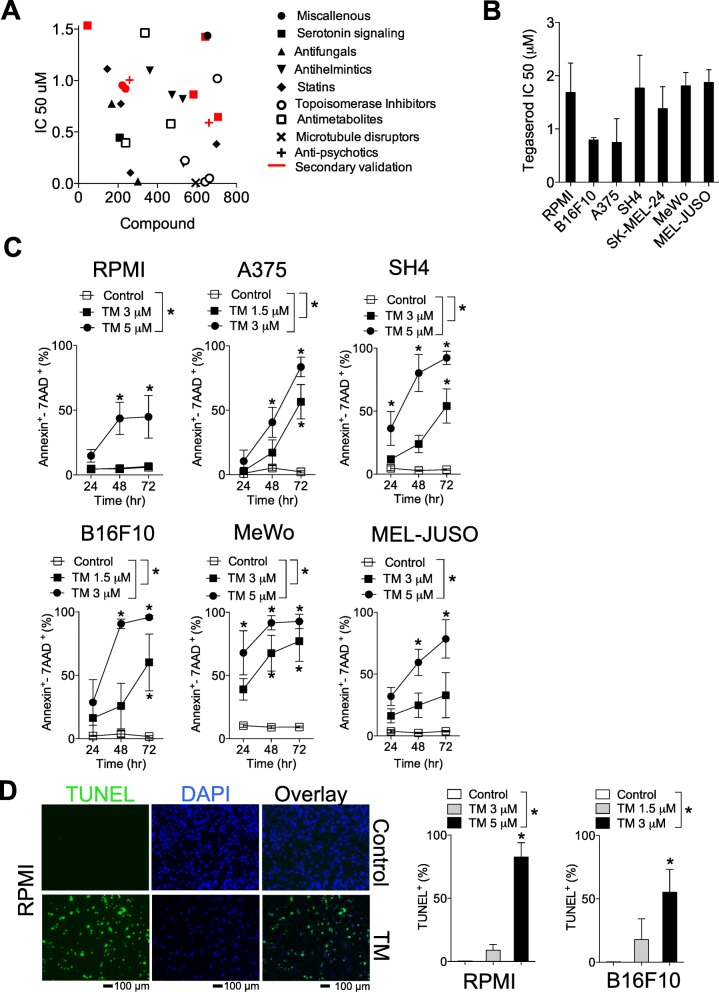
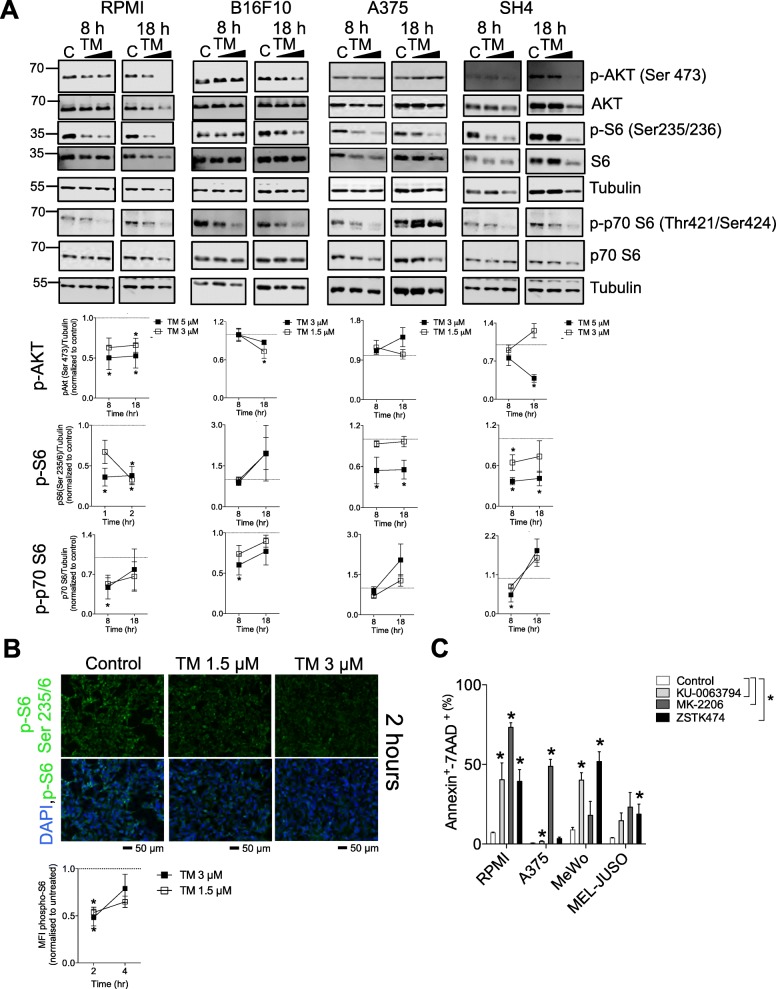
Drug screening, IC50 determinations as well as synergy assays were detected by the MTT assay. Apoptosis using Annexin V and 7AAD staining was assessed using flow cytometry. TUNEL staining was performed using immunocytochemistry. Changes in phosphorylation of key molecules in PI3K/Akt/mTOR and other relevant pathways were detected by western blot as well as immunocytochemistry. To assess in vivo anti-tumor activity of Tegaserod, syngeneic intravenous and subcutaneous melanoma xenografts were used. Immunocytochemical staining was performed to detect expression of active Caspase-3, cleaved Caspase 8 and p-S6 in tumors. Evaluation of immune infiltrates was carried out by flow cytometry.
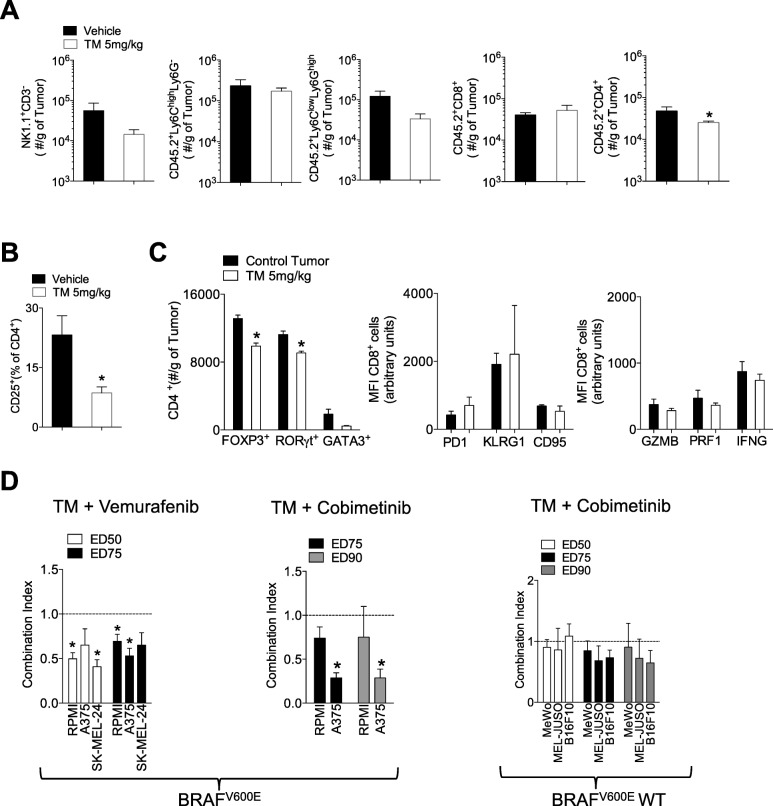
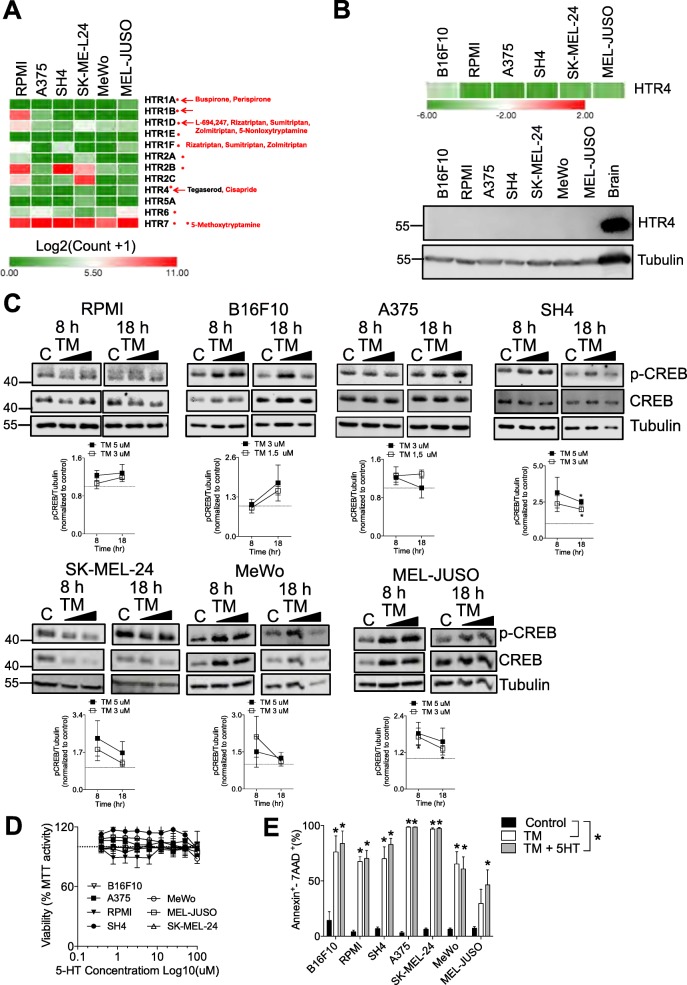
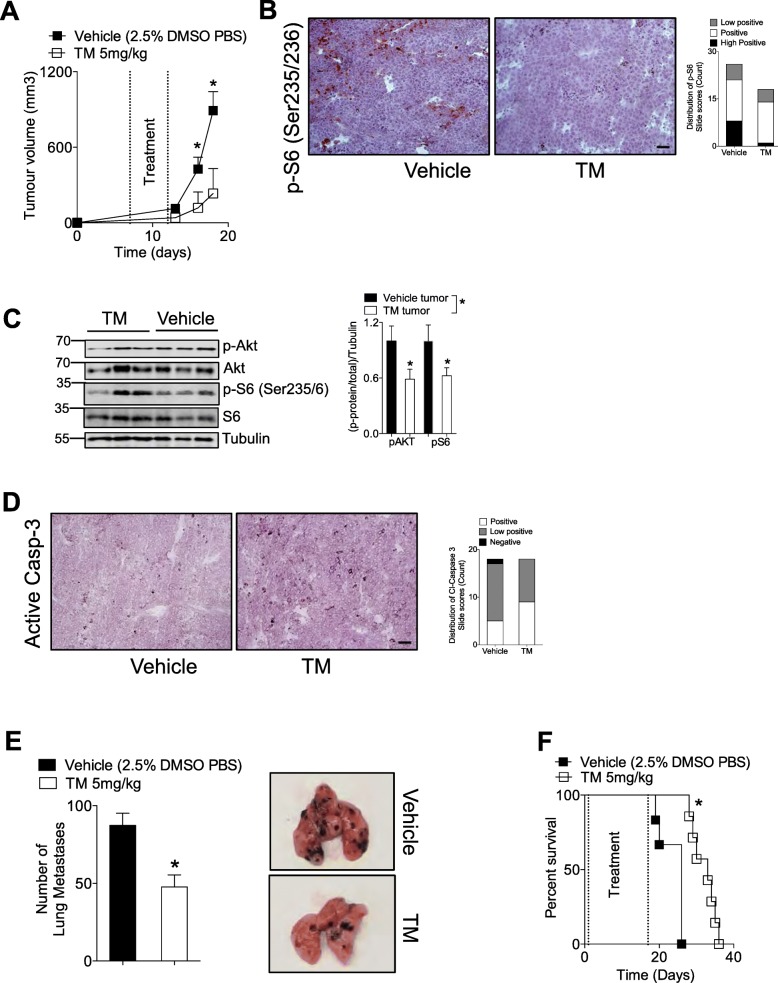
Using a screen of 770 pharmacologically active and/or FDA approved drugs, we identified Tegaserod (Zelnorm, Zelmac) as a compound with novel anti-cancer activity which induced apoptosis in murine and human malignant melanoma cell lines. Tegaserod (TM) is a serotonin receptor 4 agonist (HTR4) used in the treatment of irritable bowel syndrome (IBS). TM's anti-melanoma apoptosis-inducing effects were uncoupled from serotonin signaling and attributed to PI3K/Akt/mTOR signaling inhibition. Specifically, TM blunted S6 phosphorylation in both BRAF and BRAF wildtype (WT) melanoma cell lines. TM decreased tumor growth and metastases as well as increased survival in an in vivo syngeneic immune-competent model. In vivo, TM also caused tumor cell apoptosis, blunted PI3K/Akt/mTOR signaling and decreased S6 phosphorylation. Furthermore TM decreased the infiltration of immune suppressive regulatory CD4CD25 T cells and FOXP3 and ROR-γt positive CD4 T cells. Importantly, TM synergized with Vemurafenib, the standard of care drug used in patients with late stage disease harboring the BRAF mutation and could be additively or synergistically combined with Cobimetinib in both BRAF and BRAF WT melanoma cell lines in inducing anti-cancer effects.
Taken together, we have identified a drug with anti-melanoma activity in vitro and in vivo that has the potential to be combined with the standard of care agent Vemurafenib and Cobimetinib in both BRAF and BRAF WT melanoma.
黑色素瘤尤其需要新的疗法,尤其是对免疫疗法和激酶抑制剂无反应的晚期患者。
通过 MTT 测定法检测药物筛选、IC50 测定和协同作用测定。使用 Annexin V 和 7AAD 染色通过流式细胞术评估细胞凋亡。使用免疫细胞化学检测 TUNEL 染色。通过 Western blot 和免疫细胞化学检测 PI3K/Akt/mTOR 及其他相关通路中关键分子的磷酸化变化。为了评估替加色罗在体内的抗肿瘤活性,使用同源静脉和皮下黑色素瘤异种移植。通过免疫细胞化学染色检测肿瘤中活性 Caspase-3、裂解 Caspase 8 和 p-S6 的表达。通过流式细胞术评估免疫浸润的评估。
使用 770 种具有药理活性和/或美国食品和药物管理局批准的药物进行筛选,我们发现替加色罗(Zelnorm,Zelmac)是一种具有新型抗癌活性的化合物,可诱导鼠和人恶性黑色素瘤细胞系凋亡。替加色罗(TM)是一种用于治疗肠易激综合征(IBS)的 5-羟色胺受体 4 激动剂(HTR4)。TM 的抗黑色素瘤凋亡诱导作用与 5-羟色胺信号无关,归因于 PI3K/Akt/mTOR 信号抑制。具体而言,TM 减弱了 BRAF 和 BRAF 野生型(WT)黑色素瘤细胞系中 S6 的磷酸化。TM 减少了体内同源免疫相容模型中的肿瘤生长和转移,并提高了存活率。在体内,TM 还导致肿瘤细胞凋亡,减弱 PI3K/Akt/mTOR 信号并降低 S6 磷酸化。此外,TM 减少了免疫抑制调节性 CD4CD25 T 细胞和 FOXP3 和 ROR-γt 阳性 CD4 T 细胞的浸润。重要的是,TM 与维莫非尼协同作用,维莫非尼是晚期携带 BRAF 突变患者的标准治疗药物,并且在 BRAF 和 BRAF WT 黑色素瘤细胞系中与 Cobimetinib 联合使用时可协同或协同诱导抗癌作用。
总之,我们已经确定了一种在体外和体内具有抗黑色素瘤活性的药物,它有可能与标准治疗药物维莫非尼和 Cobimetinib 联合用于 BRAF 和 BRAF WT 黑色素瘤。