Department of Radiology, Memorial Sloan Kettering Cancer Center, New York, New York.
Molecular Imaging Program, Center for Cancer Research, NCI, NIH, Bethesda, Maryland.
Cancer Res. 2020 Apr 15;80(8):1681-1692. doi: 10.1158/0008-5472.CAN-19-2991. Epub 2020 Feb 21.
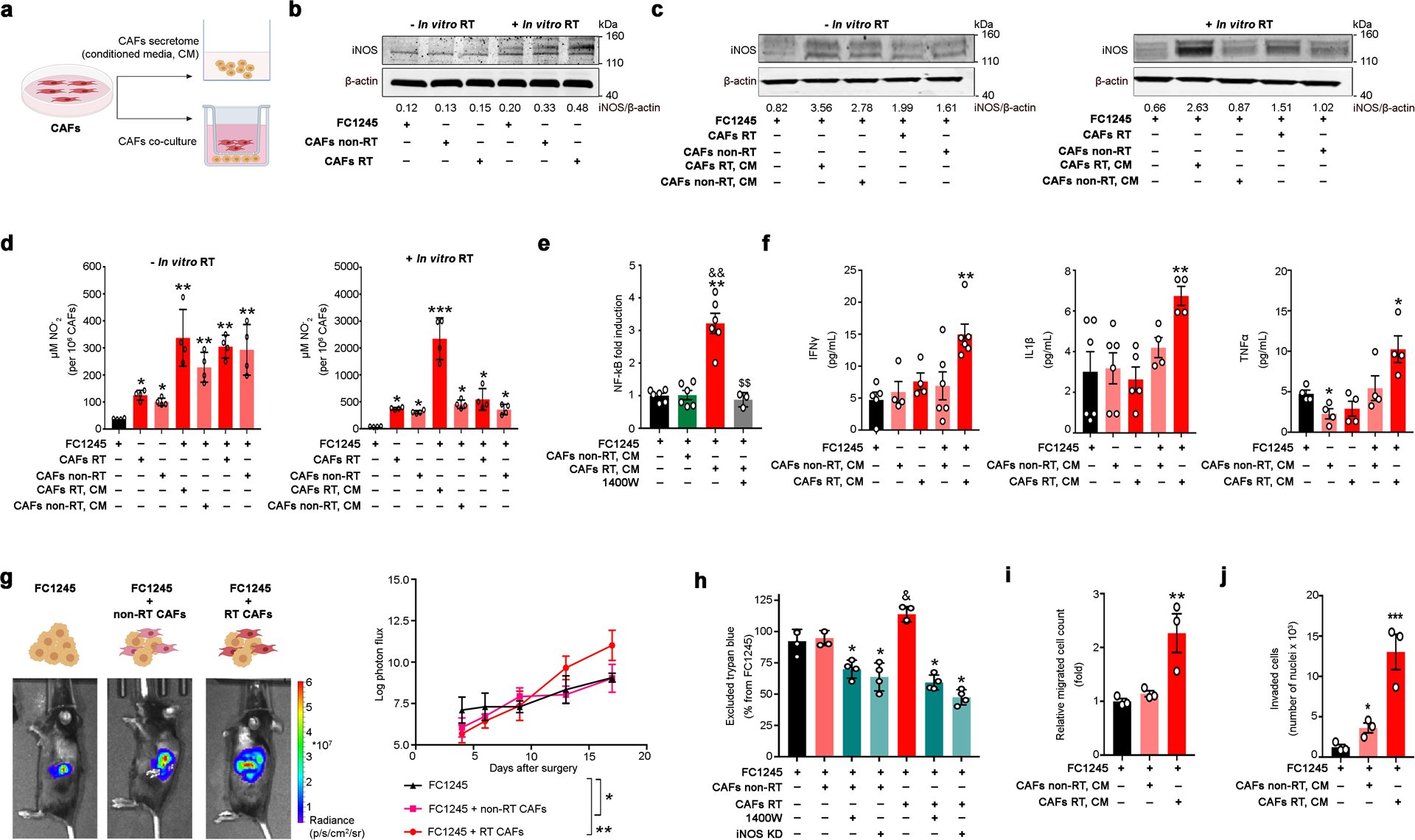
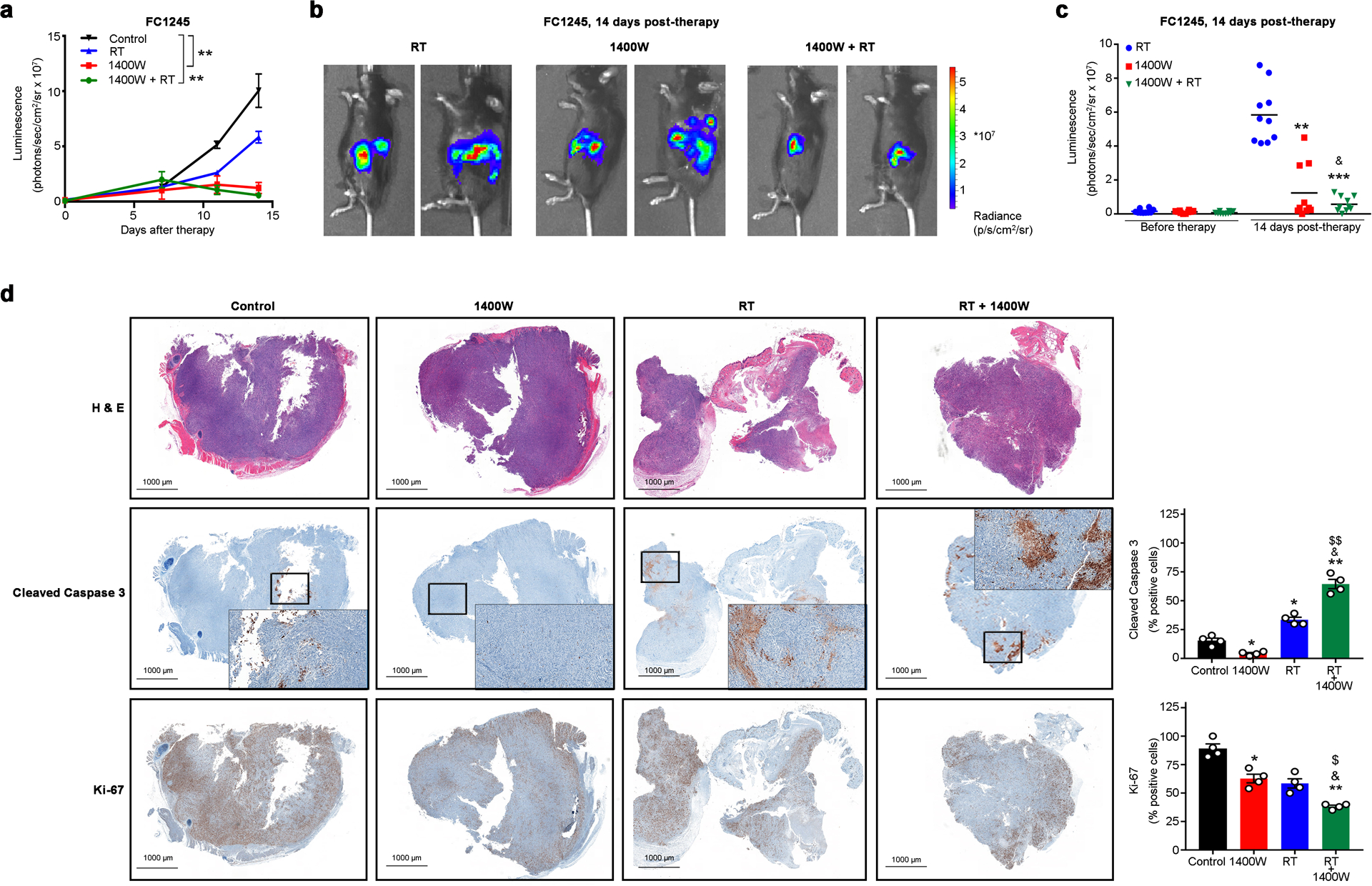
Pancreatic ductal adenocarcinoma (PDAC) is highly resistant to radiotherapy, chemotherapy, or a combination of these modalities, and surgery remains the only curative intervention for localized disease. Although cancer-associated fibroblasts (CAF) are abundant in PDAC tumors, the effects of radiotherapy on CAFs and the response of PDAC cells to radiotherapy are unknown. Using patient samples and orthotopic PDAC biological models, we showed that radiotherapy increased inducible nitric oxide synthase (iNOS) in the tumor tissues. Mechanistic studies showed that, although undetectable in radiotherapy-activated tumor cells, iNOS expression and nitric oxide (NO) secretion were significantly increased in CAFs secretome following radiotherapy. Culture of PDAC cells with conditioned media from radiotherapy-activated CAFs increased iNOS/NO signaling in tumor cells through NF-κB, which, in turn, elevated the release of inflammatory cytokines by the tumor cells. Increased NO after radiotherapy in PDAC contributed to an acidic microenvironment that was detectable using the radiolabeled pH (low) insertion peptide (pHLIP). In murine orthotopic PDAC models, pancreatic tumor growth was delayed when iNOS inhibition was combined with radiotherapy. These data show the important role that iNOS/NO signaling plays in the effectiveness of radiotherapy to treat PDAC tumors. SIGNIFICANCE: A radiolabeled pH-targeted peptide can be used as a PET imaging tool to assess therapy response within PDAC and blocking iNOS/NO signaling may improve radiotherapy outcomes.
胰腺导管腺癌 (PDAC) 对放疗、化疗或两者联合治疗具有高度耐药性,手术仍然是局部疾病的唯一治愈性干预措施。尽管癌症相关成纤维细胞 (CAF) 在 PDAC 肿瘤中大量存在,但放疗对 CAF 的影响以及 PDAC 细胞对放疗的反应尚不清楚。我们使用患者样本和原位 PDAC 生物模型表明,放疗增加了肿瘤组织中的诱导型一氧化氮合酶 (iNOS)。机制研究表明,尽管在放疗激活的肿瘤细胞中无法检测到,但 iNOS 表达和一氧化氮 (NO) 分泌在放疗后 CAF 分泌组中显著增加。用来自放疗激活 CAF 的条件培养基培养 PDAC 细胞,通过 NF-κB 增加肿瘤细胞中的 iNOS/NO 信号,进而增加肿瘤细胞释放炎症细胞因子。PDAC 中放疗后增加的 NO 导致酸性微环境,可使用放射性标记的 pH(低)插入肽 (pHLIP) 检测到。在小鼠原位 PDAC 模型中,当联合使用 iNOS 抑制和放疗时,胰腺肿瘤生长被延迟。这些数据表明,iNOS/NO 信号在放疗治疗 PDAC 肿瘤的有效性中起着重要作用。意义:放射性标记的 pH 靶向肽可用作 PET 成像工具来评估 PDAC 内的治疗反应,并且阻断 iNOS/NO 信号可能会改善放疗结果。