Vassiliadis Dane, Wong Koon Ho, Blinco Jo, Dumsday Geoff, Andrianopoulos Alex, Monahan Brendon
Genetics, Genomics & Systems Biology, School of Biosciences, The University of Melbourne, Parkville, Victoria, Australia
Commonwealth Scientific and Industrial Research Organisation (CSIRO), Parkville, Victoria, Australia.
G3 (Bethesda). 2020 Apr 9;10(4):1375-1391. doi: 10.1534/g3.119.400986.
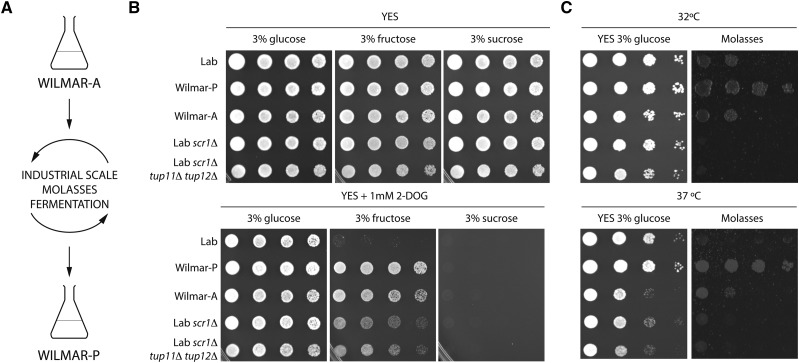
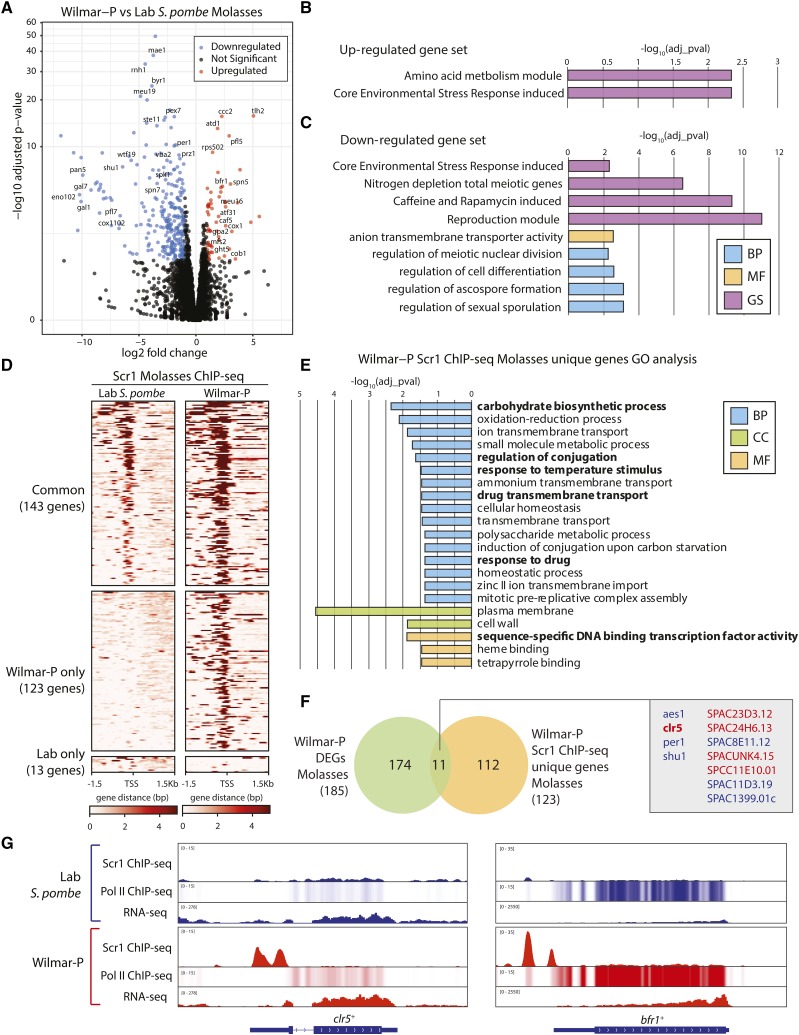
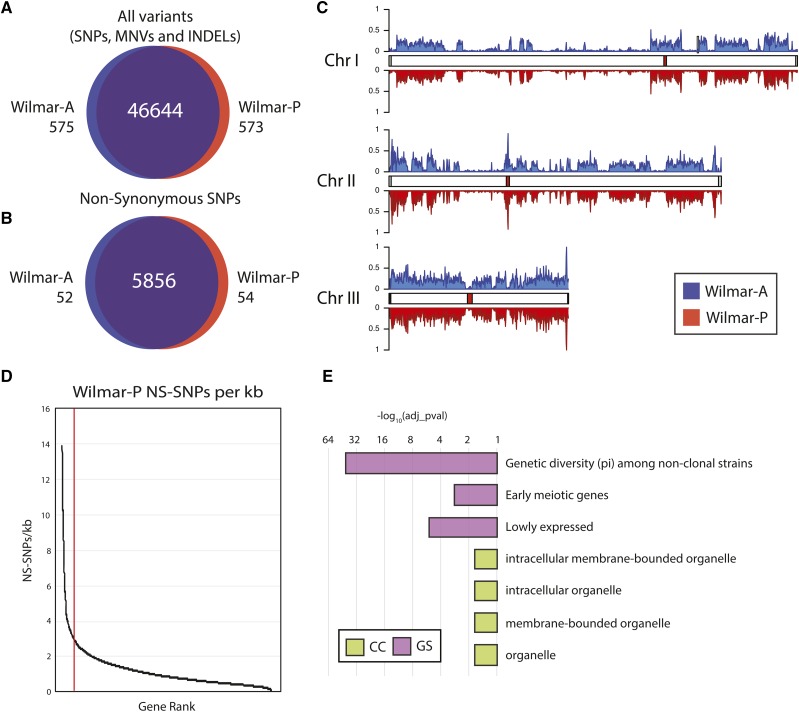
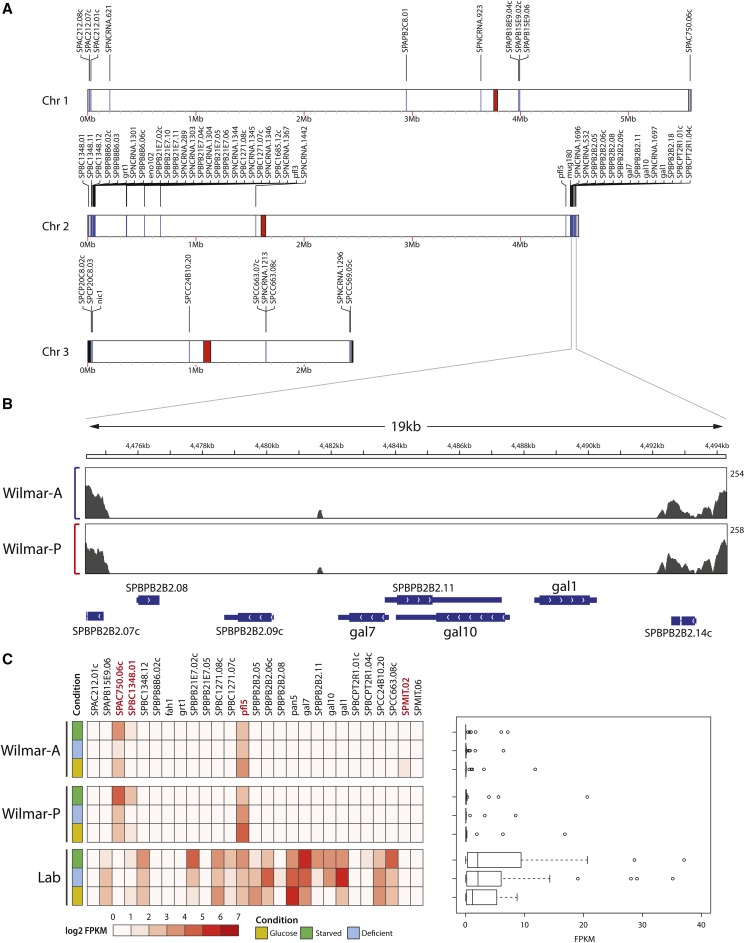
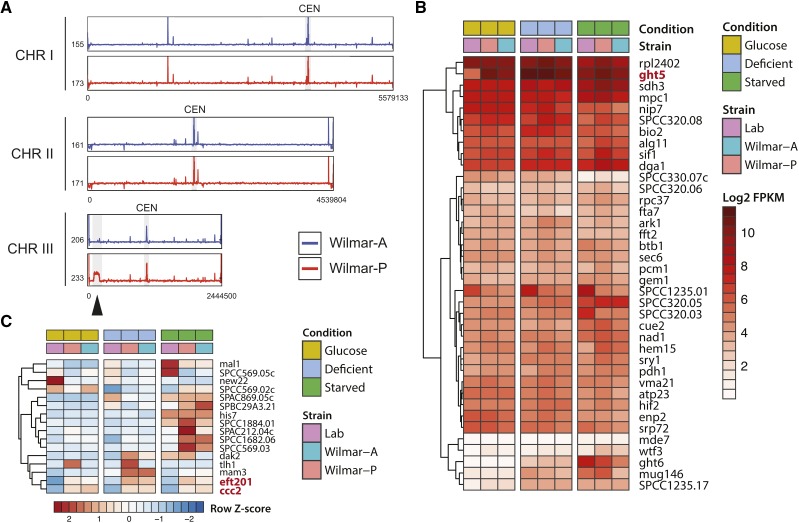
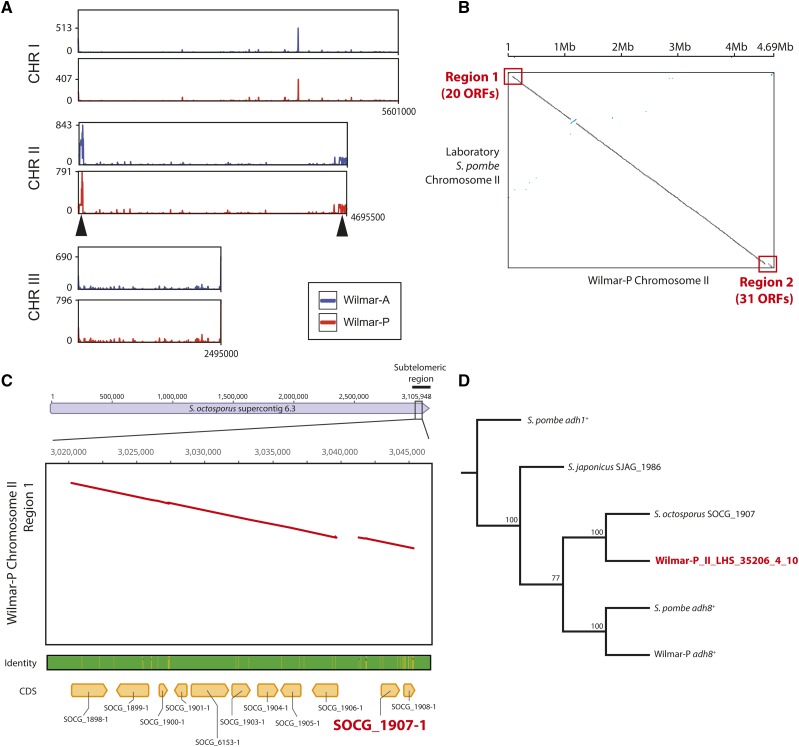
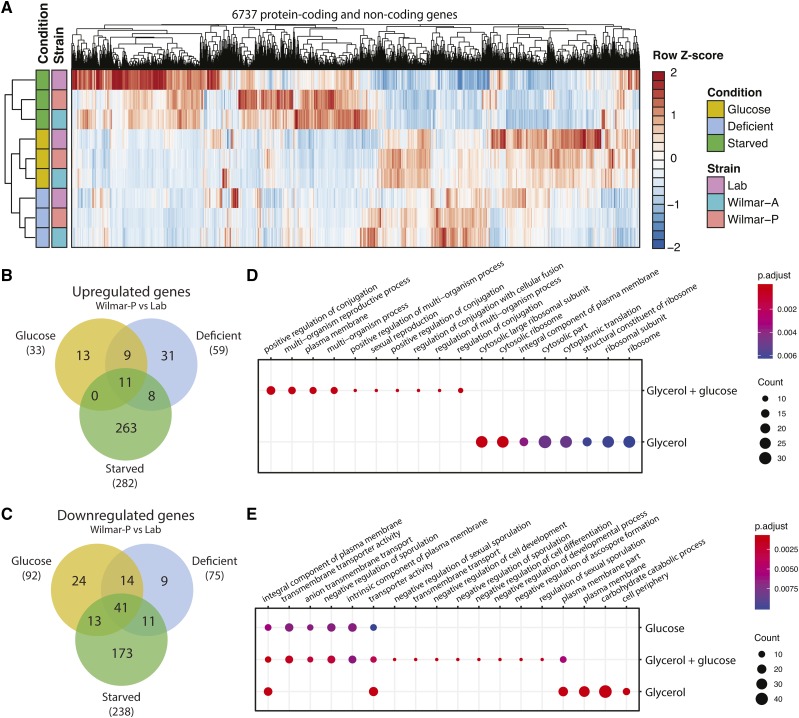
is a model unicellular eukaryote with ties to the basic research, oenology and industrial biotechnology sectors. While most investigations into cell biology utilize Leupold's 972 laboratory strain background, recent studies have described a wealth of genetic and phenotypic diversity within wild populations of including stress resistance phenotypes which may be of interest to industry. Here we describe the genomic and transcriptomic characterization of Wilmar-P, an isolate used for bioethanol production from sugarcane molasses at industrial scale. Novel sequences present in Wilmar-P but not in the laboratory genome included multiple coding sequences with near-perfect nucleotide identity to sequences. Wilmar-P also contained a ∼100kb duplication in the right arm of chromosome III, a region harboring , the predominant hexose transporter encoding gene. Transcriptomic analysis of Wilmar-P grown in molasses revealed strong downregulation of core environmental stress response genes and upregulation of hexose transporters and drug efflux pumps compared to laboratory Finally, examination of the regulatory network of Scr1, which is involved in the regulation of several genes differentially expressed on molasses, revealed expanded binding of this transcription factor in Wilmar-P compared to laboratory in the molasses condition. Together our results point to both genomic plasticity and transcriptomic adaptation as mechanisms driving phenotypic adaptation of Wilmar-P to the molasses environment and therefore adds to our understanding of genetic diversity within industrial fission yeast strains and the capacity of this strain for commercial scale bioethanol production.
是一种与基础研究、酿酒学和工业生物技术领域相关的典型单细胞真核生物。虽然大多数对细胞生物学的研究利用的是Leupold的972实验室菌株背景,但最近的研究描述了野生种群中丰富的遗传和表型多样性,包括工业可能感兴趣的抗逆表型。在这里,我们描述了Wilmar-P的基因组和转录组特征,Wilmar-P是一种用于工业规模从甘蔗 molasses生产生物乙醇的分离株。Wilmar-P中存在但实验室基因组中不存在的新序列包括多个与序列具有近乎完美核苷酸同一性的编码序列。Wilmar-P在第三条染色体右臂上还含有一个约100kb的重复序列,该区域含有主要的己糖转运蛋白编码基因。对在molasses中生长的Wilmar-P进行转录组分析发现,与实验室相比,核心环境应激反应基因强烈下调,己糖转运蛋白和药物外排泵上调。最后,对参与调控在molasses上差异表达的几个基因的Scr1调控网络的研究发现,与实验室在molasses条件下相比,Wilmar-P中该转录因子的结合有所扩展。我们的结果共同表明,基因组可塑性和转录组适应性是驱动Wilmar-P对molasses环境进行表型适应的机制,因此增加了我们对工业裂殖酵母菌株内遗传多样性以及该菌株进行商业规模生物乙醇生产能力的理解。