Quantitative Biomedical Research Center, Department of Population and Data Sciences, University of Texas Southwestern Medical Center, Dallas, TX 75390, USA.
Division of Hematology/Oncology, Department of Pediatrics, University of Texas Southwestern Medical Center, Dallas, TX 75390, USA.
Sci Immunol. 2020 Feb 21;5(44). doi: 10.1126/sciimmunol.aaz3199.
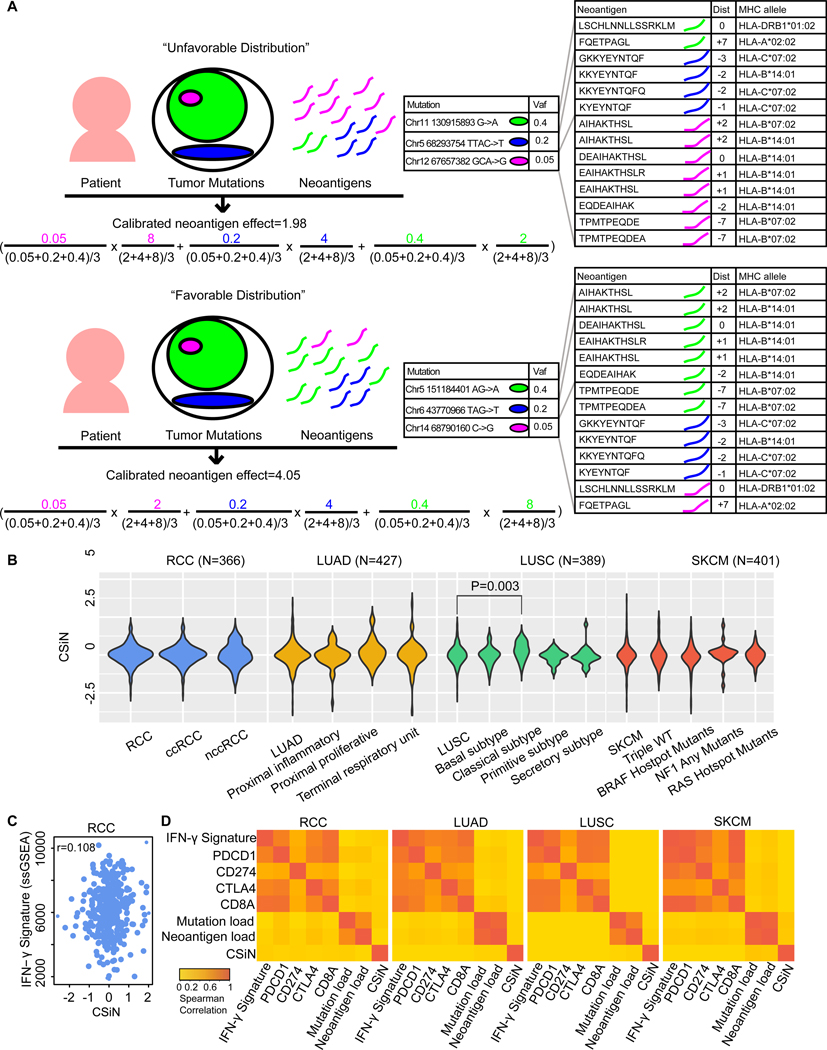
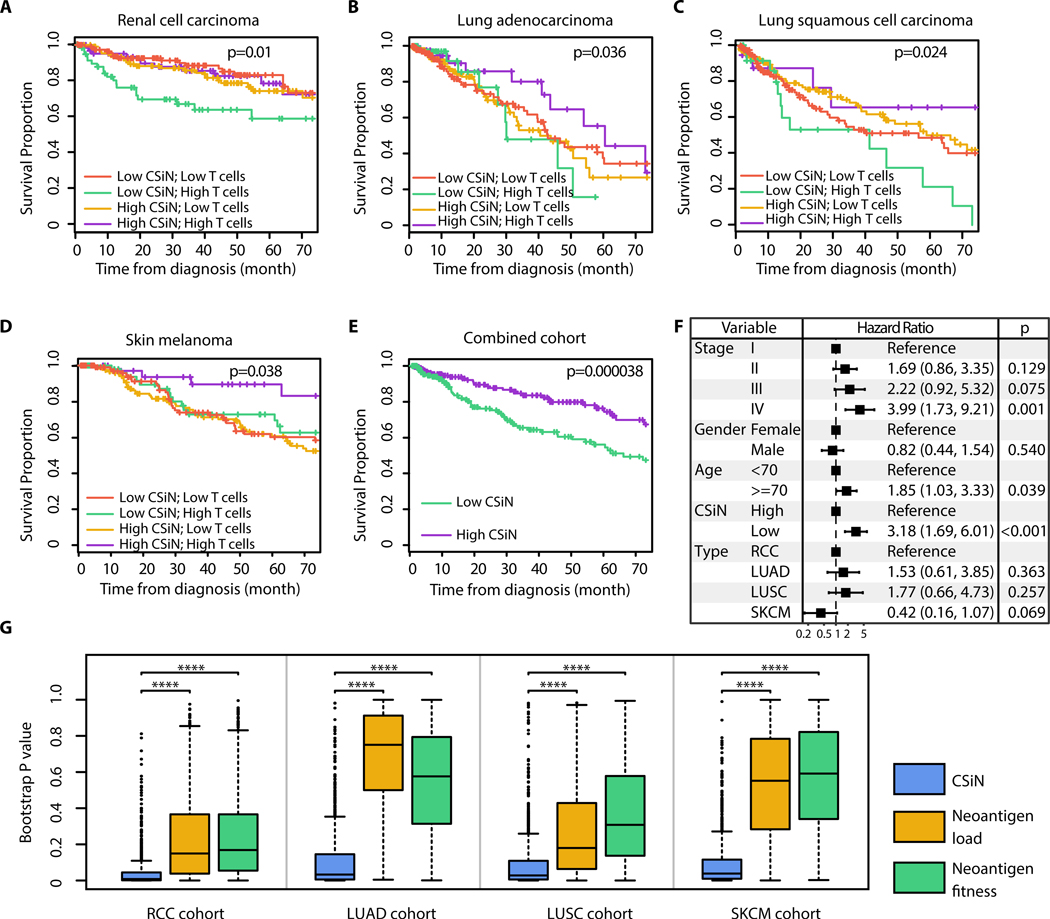
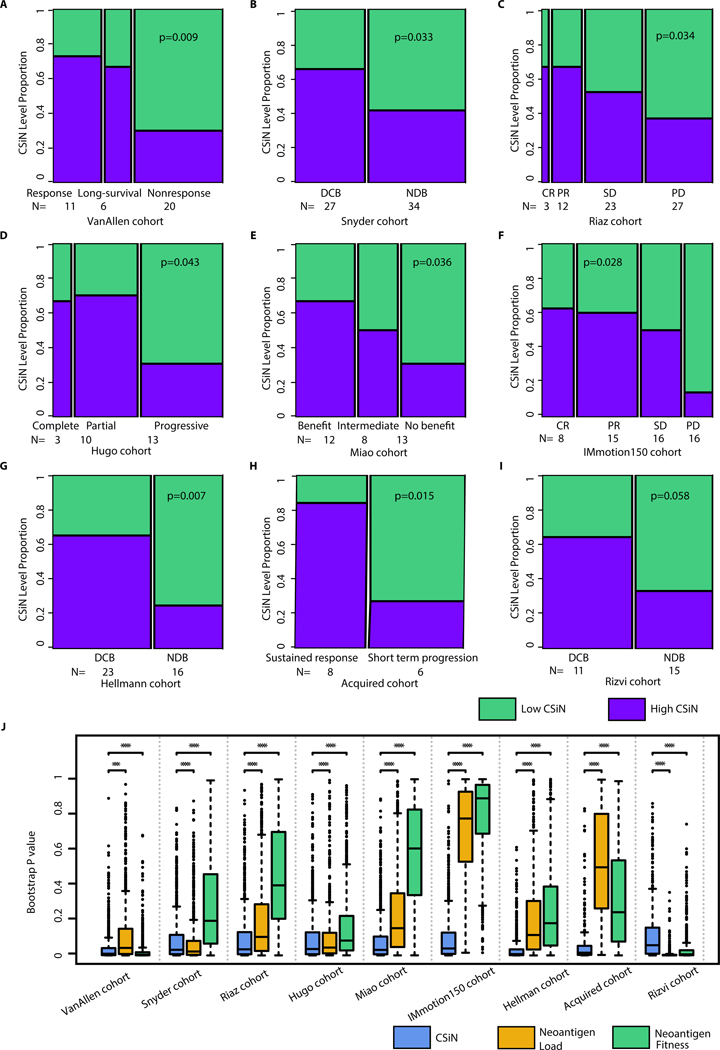
Lack of responsiveness to checkpoint inhibitors is a central problem in the modern era of cancer immunotherapy. Tumor neoantigens are critical targets of the host antitumor immune response, and their presence correlates with the efficacy of immunotherapy treatment. Many studies involving assessment of tumor neoantigens principally focus on total neoantigen load, which simplistically treats all neoantigens equally. Neoantigen load has been linked with treatment response and prognosis in some studies but not others. We developed a Cauchy-Schwarz index of Neoantigens (CSiN) score to better account for the degree of concentration of immunogenic neoantigens in truncal mutations. Unlike total neoantigen load determinations, CSiN incorporates the effect of both clonality and MHC binding affinity of neoantigens when characterizing tumor neoantigen profiles. By analyzing the clinical responses in 501 treated patients with cancer (with most receiving checkpoint inhibitors) and the overall survival of 1978 patients with cancer at baseline, we showed that CSiN scores predict treatment response to checkpoint inhibitors and prognosis in patients with melanoma, lung cancer, and kidney cancer. CSiN score substantially outperformed prior genetics-based prediction methods of responsiveness and fills an important gap in research involving assessment of tumor neoantigen burden.
对检查点抑制剂缺乏反应是癌症免疫治疗现代时代的一个核心问题。肿瘤新生抗原是宿主抗肿瘤免疫反应的关键靶标,其存在与免疫治疗效果相关。许多涉及评估肿瘤新生抗原的研究主要集中在总新生抗原负荷上,这种方法简单地将所有新生抗原同等对待。在一些研究中,新生抗原负荷与治疗反应和预后相关,但在其他研究中则不然。我们开发了一种新生抗原的柯西-施瓦茨指数(CSiN)评分,以更好地反映主干突变中免疫原性新生抗原的集中程度。与总新生抗原负荷测定不同,CSiN 在描述肿瘤新生抗原谱时,同时考虑了新生抗原的克隆性和 MHC 结合亲和力的影响。通过分析 501 名接受癌症治疗(大多数接受检查点抑制剂治疗)患者的临床反应和 1978 名基线癌症患者的总生存率,我们表明 CSiN 评分可预测黑色素瘤、肺癌和肾癌患者对检查点抑制剂的治疗反应和预后。CSiN 评分大大优于先前基于遗传学的反应预测方法,并填补了评估肿瘤新生抗原负担研究中的一个重要空白。