Telethon Institute of Genetics and Medicine, Via Campi Flegrei 34, 80078 Pozzuoli, Naples, Italy.
Telethon Institute of Genetics and Medicine, Via Campi Flegrei 34, 80078 Pozzuoli, Naples, Italy; Institute of Cellular Biology and Biochemistry, CNR, Via Ramarini 33, 00015 Monterotondo Scalo, Rome, Italy.
Mol Ther. 2020 Apr 8;28(4):1167-1176. doi: 10.1016/j.ymthe.2020.02.005. Epub 2020 Feb 12.
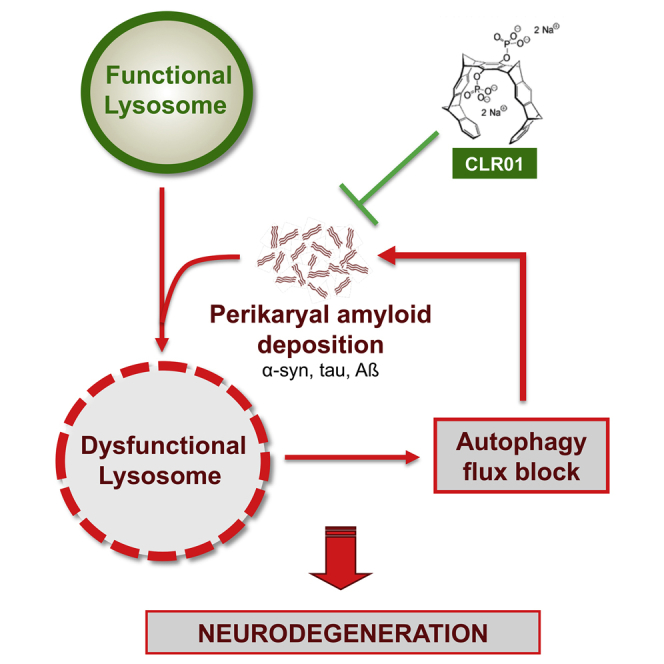
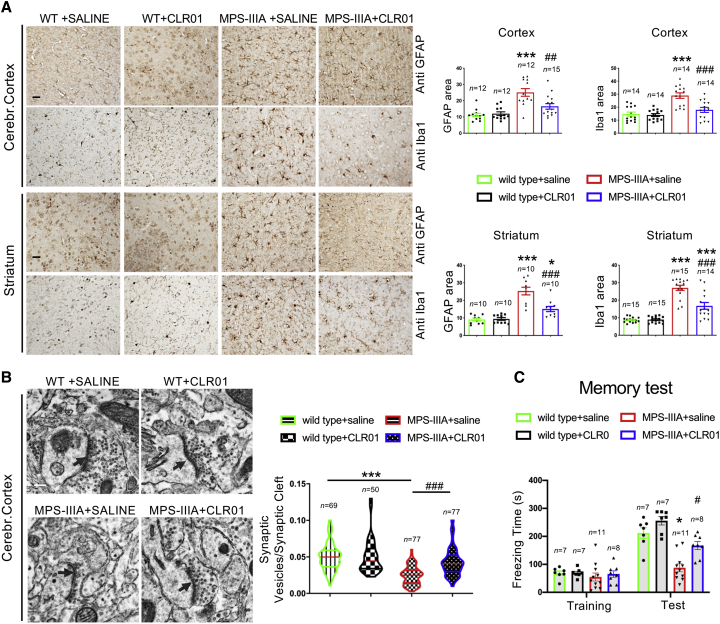
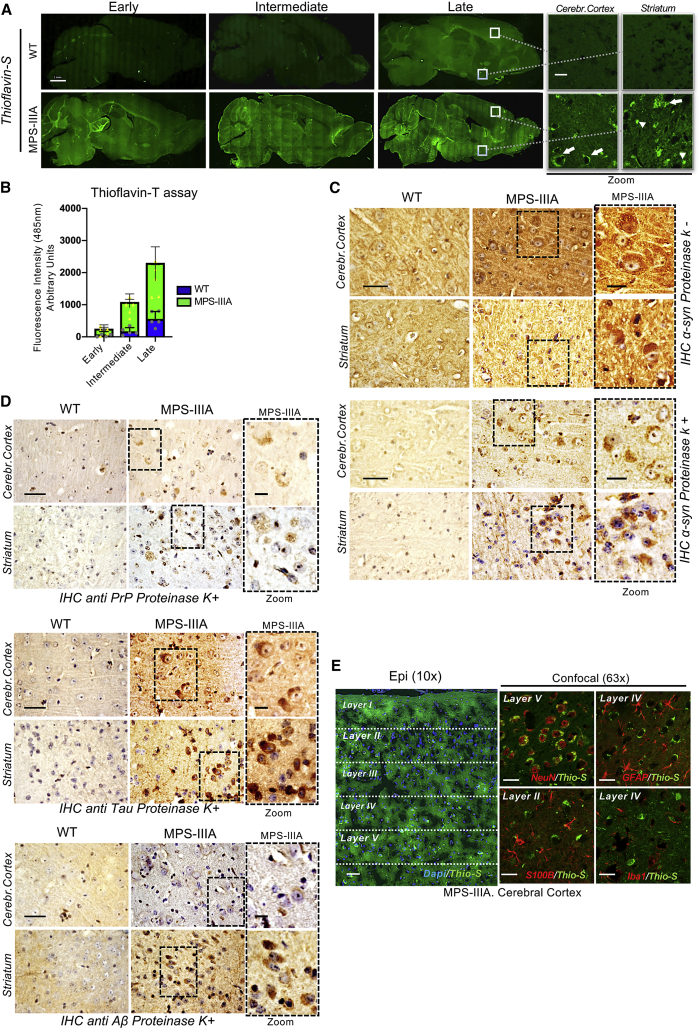
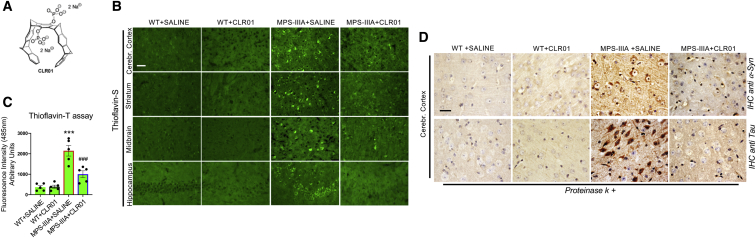
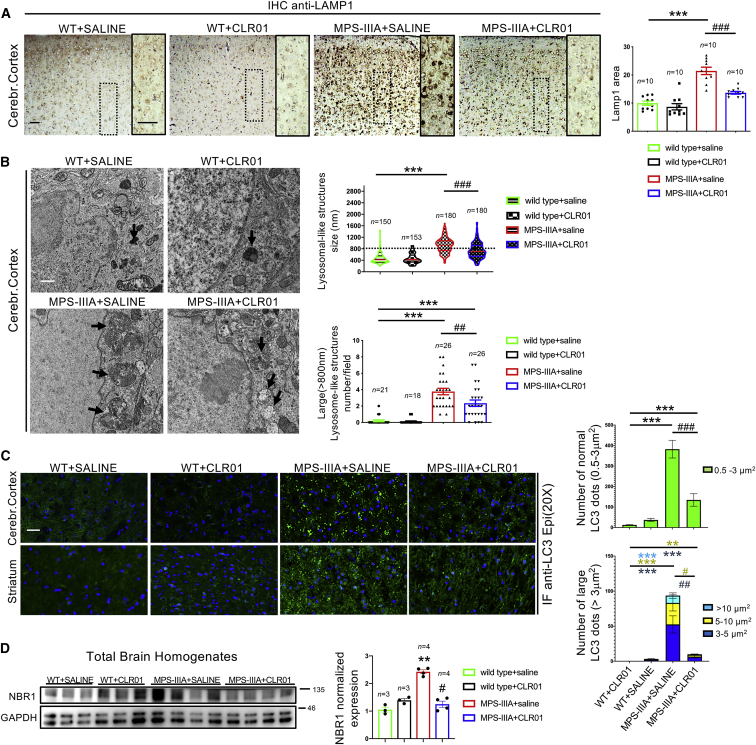
Lysosomal storage diseases (LSDs) are inherited disorders caused by lysosomal deficiencies and characterized by dysfunction of the autophagy-lysosomal pathway (ALP) often associated with neurodegeneration. No cure is currently available to treat neuropathology in LSDs. By studying a mouse model of mucopolysaccharidosis (MPS) type IIIA, one of the most common and severe forms of LSDs, we found that multiple amyloid proteins including α-synuclein, prion protein (PrP), Tau, and amyloid β progressively aggregate in the brain. The amyloid deposits mostly build up in neuronal cell bodies concomitantly with neurodegeneration. Treating MPS-IIIA mice with CLR01, a "molecular tweezer" that acts as a broad-spectrum inhibitor of amyloid protein self-assembly reduced lysosomal enlargement and re-activates autophagy flux. Restoration of the ALP was associated with reduced neuroinflammation and amelioration of memory deficits. Together, these data provide evidence that brain deposition of amyloid proteins plays a gain of neurotoxic function in a severe LSD by affecting the ALP and identify CLR01 as new potent drug candidate for MPS-IIIA and likely for other LSDs.
溶酶体贮积症(LSDs)是由溶酶体缺陷引起的遗传性疾病,其特征是自噬溶酶体途径(ALP)功能障碍,常伴有神经退行性变。目前尚无治疗 LSD 神经病理学的方法。通过研究粘多糖贮积症(MPS)III 型的小鼠模型,我们发现多种淀粉样蛋白,包括α-突触核蛋白、朊病毒蛋白(PrP)、Tau 和淀粉样β,在脑中逐渐聚集。淀粉样沉积物主要在神经元细胞体中积累,同时伴有神经退行性变。用 CLR01 治疗 MPS-III 型小鼠,CLR01 是一种“分子钳子”,作为淀粉样蛋白自组装的广谱抑制剂,可减少溶酶体增大并重新激活自噬流。ALP 的恢复与神经炎症的减少和记忆缺陷的改善有关。总之,这些数据提供了证据,表明脑内淀粉样蛋白的沉积通过影响 ALP 在严重 LSD 中发挥神经毒性作用,并将 CLR01 鉴定为 MPS-III 型和可能的其他 LSD 的新型有效药物候选物。