Oncology R&D, AstraZeneca, Aaron Klug Building, Granta Park, Cambridge, CB21 6GH, UK.
BioPharmaceuticals R&D, Clinical Pharmacology & Safety Sciences, AstraZeneca, South San Francisco, CA, USA.
Cancer Immunol Immunother. 2020 Jun;69(6):1015-1027. doi: 10.1007/s00262-020-02495-x. Epub 2020 Feb 22.
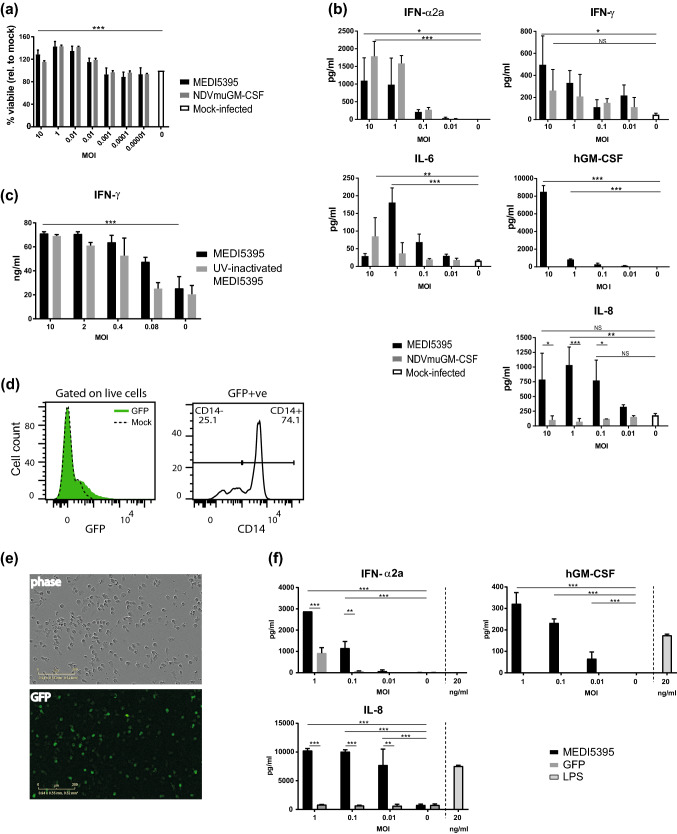
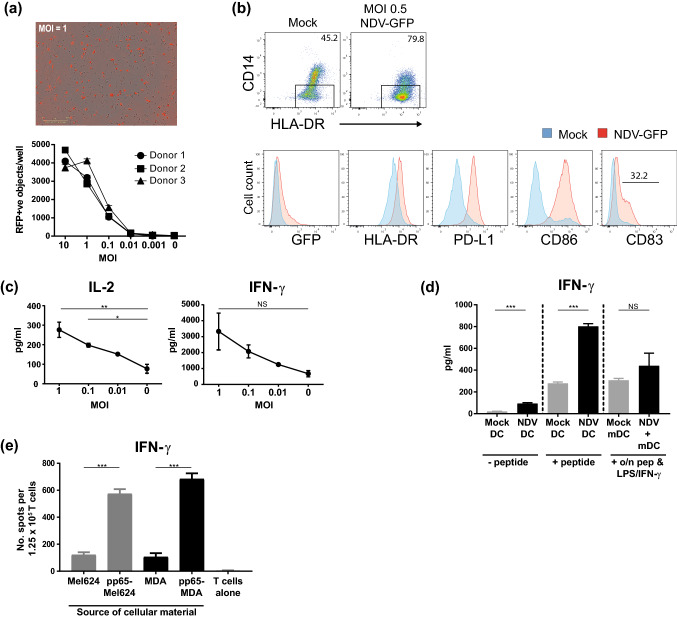
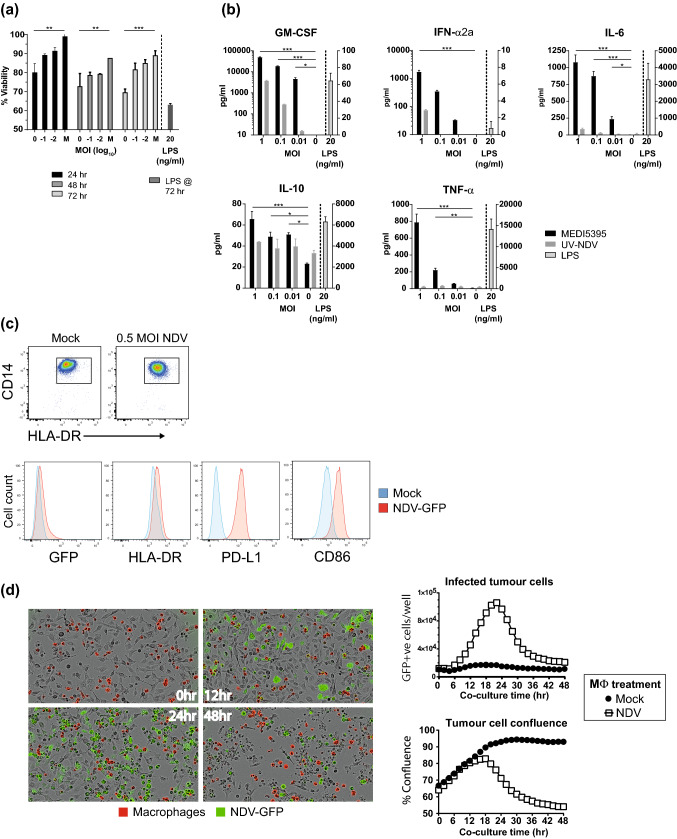
Oncolytic virus (OV) therapy is an emerging approach with the potential to redefine treatment options across a range of cancer indications and in patients who remain resistant to existing standards of care, including immuno-oncology (IO) drugs. MEDI5395, a recombinant Newcastle disease virus (NDV), engineered to express granulocyte-macrophage colony-stimulating factor (GM-CSF), exhibits potent oncolytic activity. It was hypothesized that activation of immune cells by MEDI5395, coupled with its oncolytic activity, would enhance the priming of antitumor immunity. Using MEDI5395 and recombinant NDVs encoding fluorescent reporter genes, we demonstrated preferential virus uptake and non-productive infection in myeloid cells, including monocytes, macrophages, and dendritic cells (DCs). Infection resulted in immune-cell activation, with upregulation of cell surface activation markers (e.g., CD80, PD-L1, HLA-DR) and secretion of proinflammatory cytokines (IFN-α2a, IL-6, IL-8, TNF-α). Interestingly, in vitro M2-polarized macrophages were more permissive to virus infection than were M1-polarized macrophages. In a co-culture system, infected myeloid cells were effective virus vectors and mediated the transfer of infectious NDV particles to tumor cells, resulting in cell death. Furthermore, NDV-infected DCs stimulated greater proliferation of allogeneic T cells than uninfected DCs. Antigens released after NDV-induced tumor cell lysis were cross-presented by DCs and drove activation of tumor antigen-specific autologous T cells. MEDI5395 therefore exhibited potent immunostimulatory activity and an ability to enhance antigen-specific T-cell priming. This, coupled with its tumor-selective oncolytic capacity, underscores the promise of MEDI5395 as a multimodal therapeutic, with potential to both enhance current responding patient populations and elicit de novo responses in resistant patients.
溶瘤病毒 (OV) 治疗是一种新兴的方法,有可能重新定义一系列癌症适应症和对现有治疗标准(包括免疫肿瘤学 [IO] 药物)仍有抵抗力的患者的治疗选择。MEDI5395 是一种表达粒细胞-巨噬细胞集落刺激因子 (GM-CSF) 的重组新城疫病毒 (NDV),具有强大的溶瘤活性。据推测,MEDI5395 激活免疫细胞,再加上其溶瘤活性,将增强抗肿瘤免疫的启动。使用 MEDI5395 和编码荧光报告基因的重组 NDV,我们证明了病毒在髓样细胞(包括单核细胞、巨噬细胞和树突状细胞 [DC])中的优先摄取和非生产性感染。感染导致免疫细胞激活,细胞表面激活标志物(例如 CD80、PD-L1、HLA-DR)上调和促炎细胞因子(IFN-α2a、IL-6、IL-8、TNF-α)的分泌。有趣的是,体外 M2 极化的巨噬细胞比 M1 极化的巨噬细胞更允许病毒感染。在共培养系统中,感染的髓样细胞是有效的病毒载体,并介导感染性 NDV 颗粒向肿瘤细胞的转移,导致细胞死亡。此外,感染 NDV 的 DC 比未感染的 DC 更能刺激同种异体 T 细胞的增殖。NDV 诱导的肿瘤细胞裂解后释放的抗原由 DC 交叉呈递,并驱动肿瘤抗原特异性自体 T 细胞的激活。因此,MEDI5395 表现出强大的免疫刺激活性和增强抗原特异性 T 细胞启动的能力。这一点,加上其肿瘤选择性溶瘤能力,突显了 MEDI5395 作为一种多模式治疗药物的潜力,有可能增强现有反应患者群体的疗效,并在耐药患者中引发新的反应。