Rafiee Poorya, Ebrahimi Sirous, Hosseini Maryam, Tong Yen Wah
Biotechnology Research Centre, Faculty of Chemical Engineering, Sahand University of Technology, Tabriz, Iran.
Department of Biotechnology, Delft University of Technology, Delft, Netherlands.
Biotechnol Rep (Amst). 2020 Feb 10;25:e00433. doi: 10.1016/j.btre.2020.e00433. eCollection 2020 Mar.
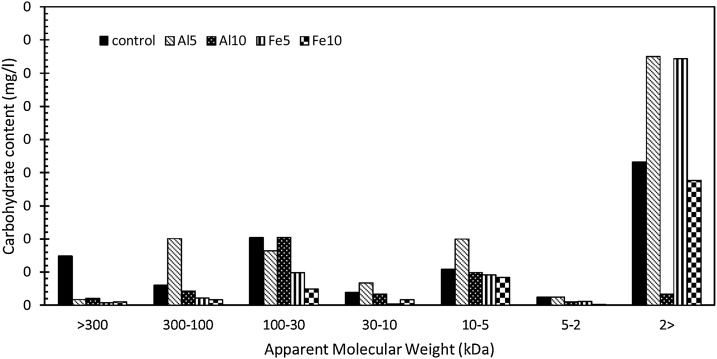
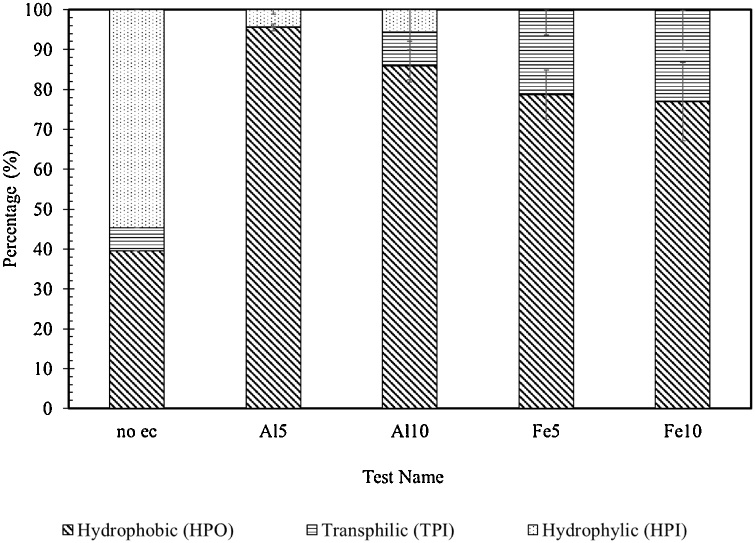
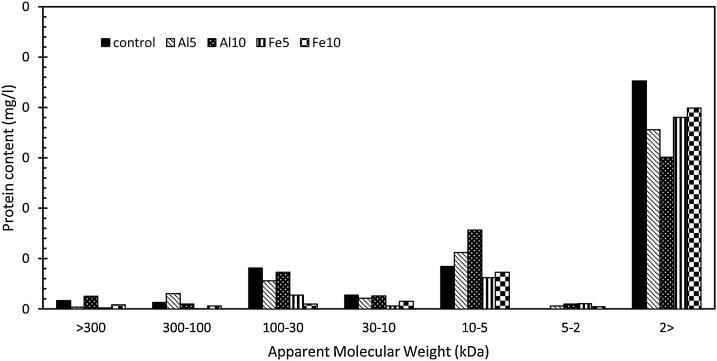
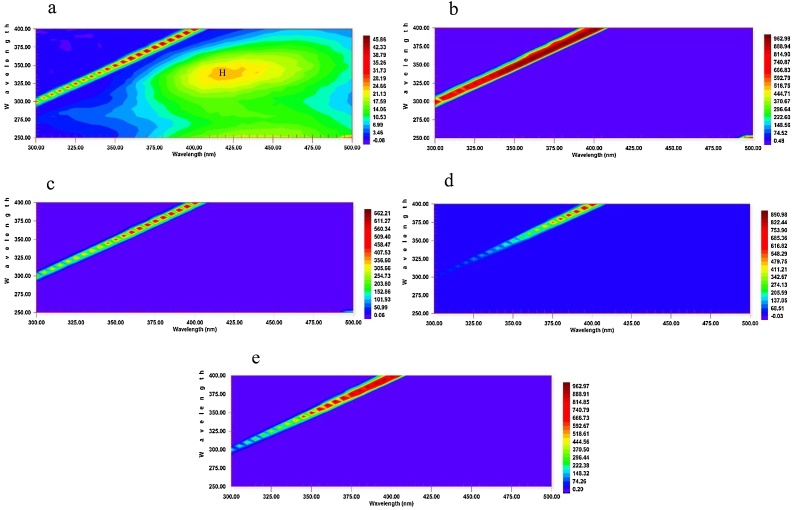
The dewatering of algal culture requires coagulation of the algal cells. However, the coagulation in a continuous operation is slowed down through the excretion of Soluble Algal Products (SAPs). Electrocoagulation (EC), already utilized as a coagulation technique, has been investigated for its effects on SAPs characterizations. A mixed culture of , , , , and was prepared and SAPs characteristics, including Specific Ultra Violet Absorbance (SUVA), Zeta potential, Molecular Weight (MW) fractionation, Dissolved Organic Carbon (DOC), protein and carbohydrate content, Excitation-Emission Matrix, and hydrophobicity using XAD resins, were measured and evaluated before and after electrocoagulation using mild steel and aluminum electrodes at 5 and 10 min. The results showed several improvements after EC. According to results, EC can render SAPs hydrophobicity up to 95 %, and the fluorescence peak results showed the complete removal of humic-like. Moreover, the SAPs were removed up to 21, 60, and 47 % for protein, carbohydrate and DOC, respectively. Results collectively showed that electrocoagulation might be able to mitigate the negative effects of growth on flocculation.
藻类培养物的脱水需要藻类细胞的凝聚。然而,在连续操作中,由于可溶性藻类产物(SAPs)的分泌,凝聚过程会减慢。电凝聚(EC)作为一种凝聚技术,已被研究其对SAPs特性的影响。制备了一种由[具体藻类名称未给出]混合培养物,并在使用低碳钢和铝电极进行5分钟和10分钟电凝聚前后,测量和评估了SAPs的特性,包括特定紫外吸光度(SUVA)、zeta电位、分子量(MW)分级、溶解有机碳(DOC)、蛋白质和碳水化合物含量、激发-发射矩阵以及使用XAD树脂测定的疏水性。结果表明电凝聚后有多项改善。根据结果,电凝聚可使SAPs的疏水性高达95%,荧光峰结果表明类腐殖质被完全去除。此外,蛋白质、碳水化合物和DOC的去除率分别高达21%、60%和47%。结果共同表明,电凝聚或许能够减轻生长对絮凝的负面影响。