Domestication Lab, Konrad Lorenz Institute of Ethology, University of Veterinary Medicine, Vienna, Austria.
Comparative Cognition, Messerli Research Institute, University of Veterinary Medicine, Vienna, Austria.
Anim Cogn. 2020 May;23(3):427-441. doi: 10.1007/s10071-020-01345-8. Epub 2020 Feb 23.
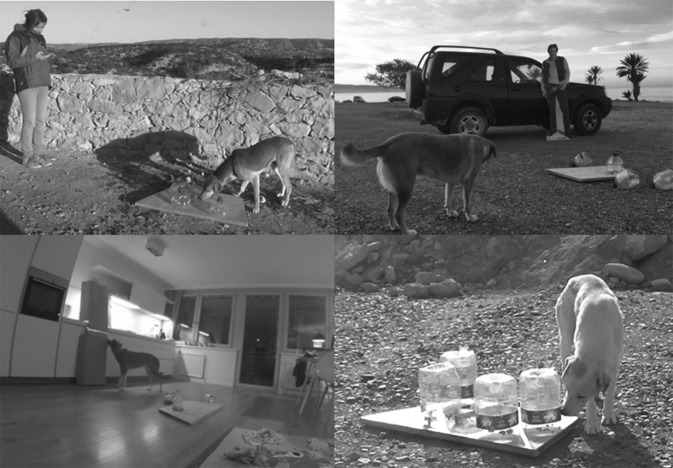
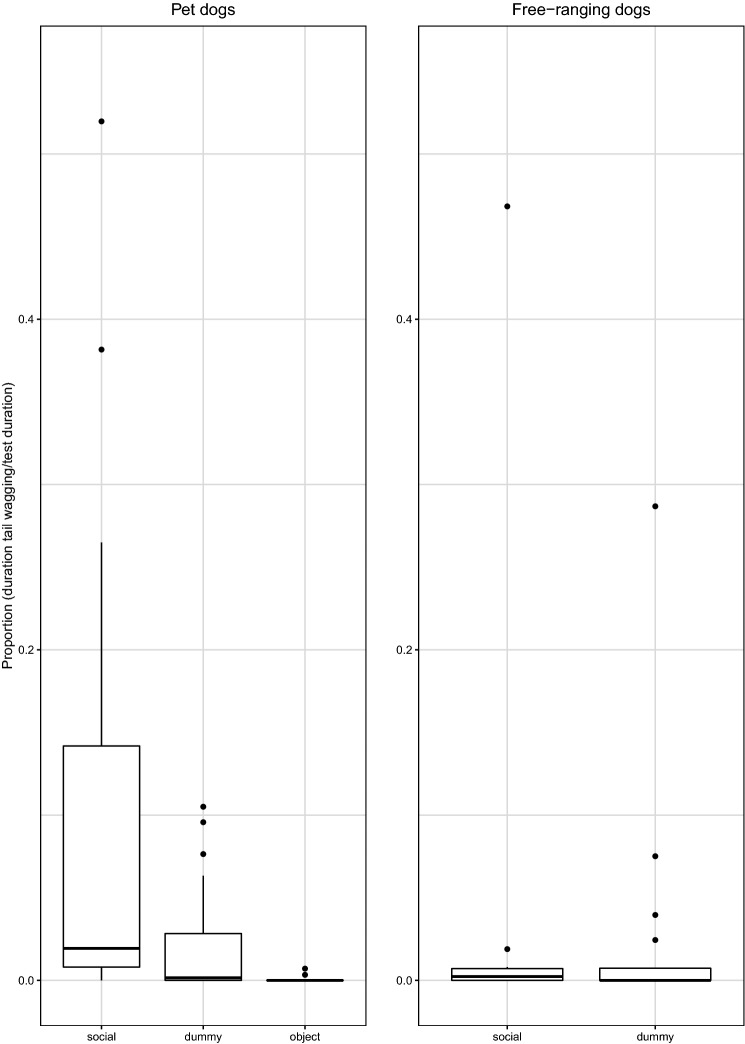
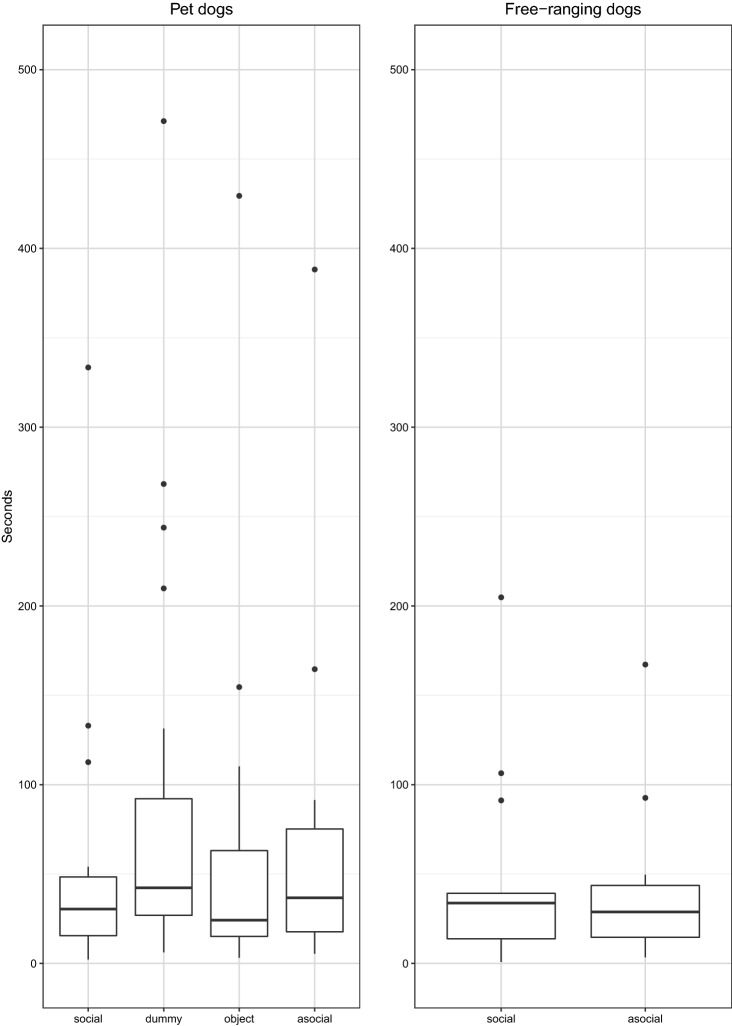
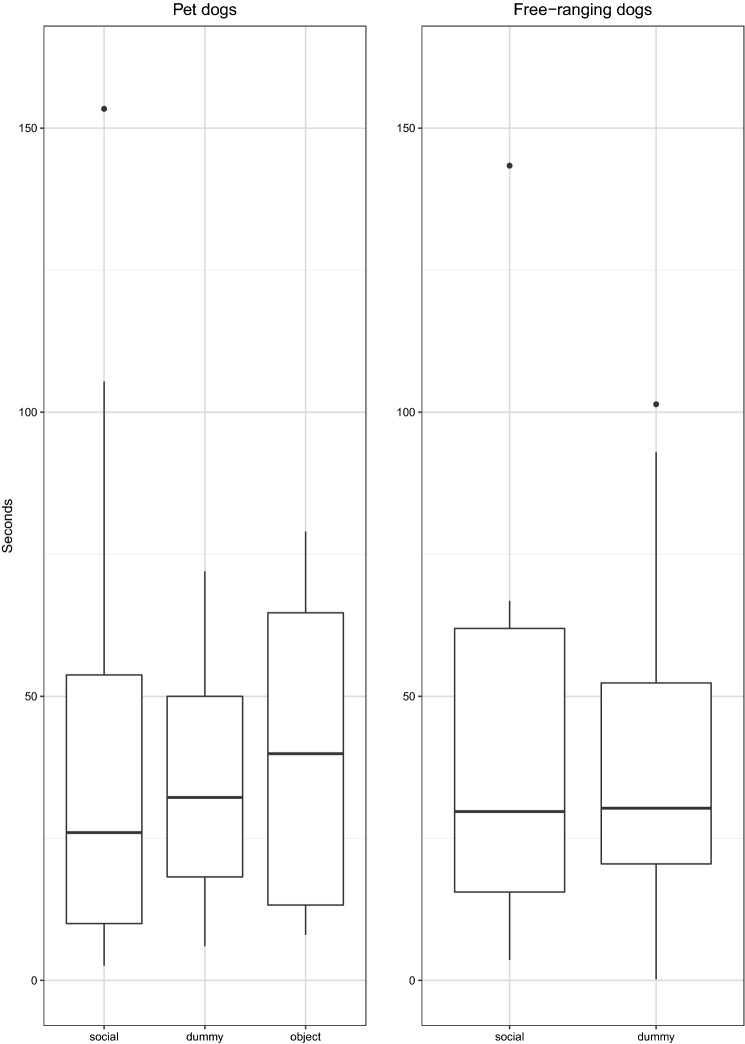
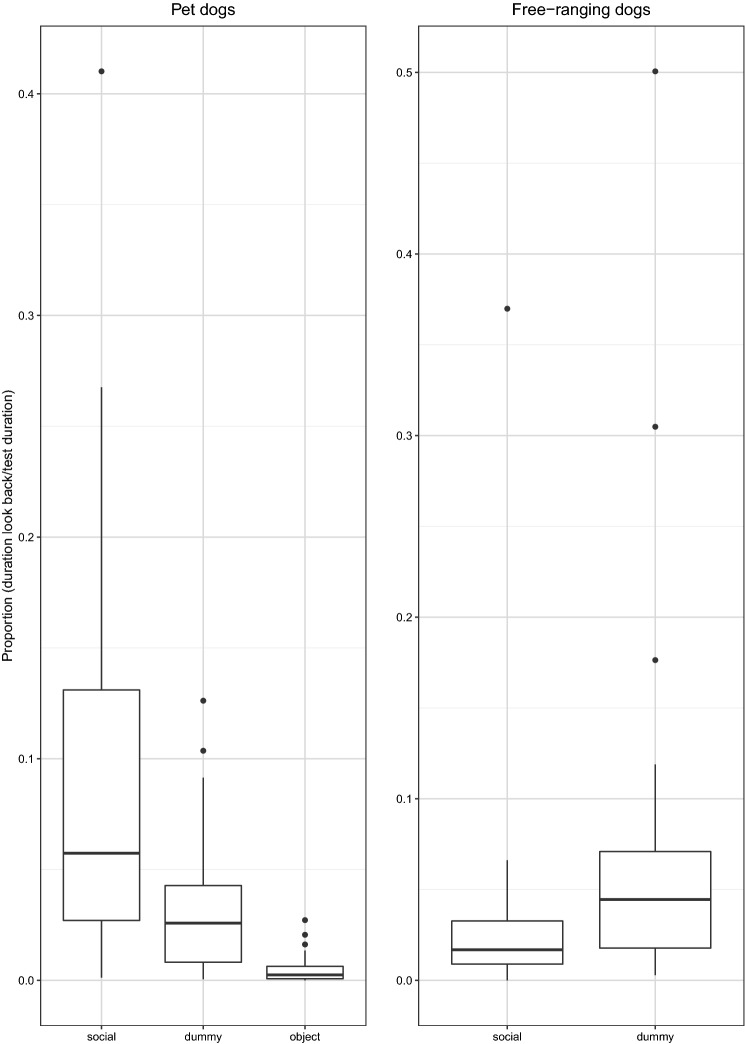
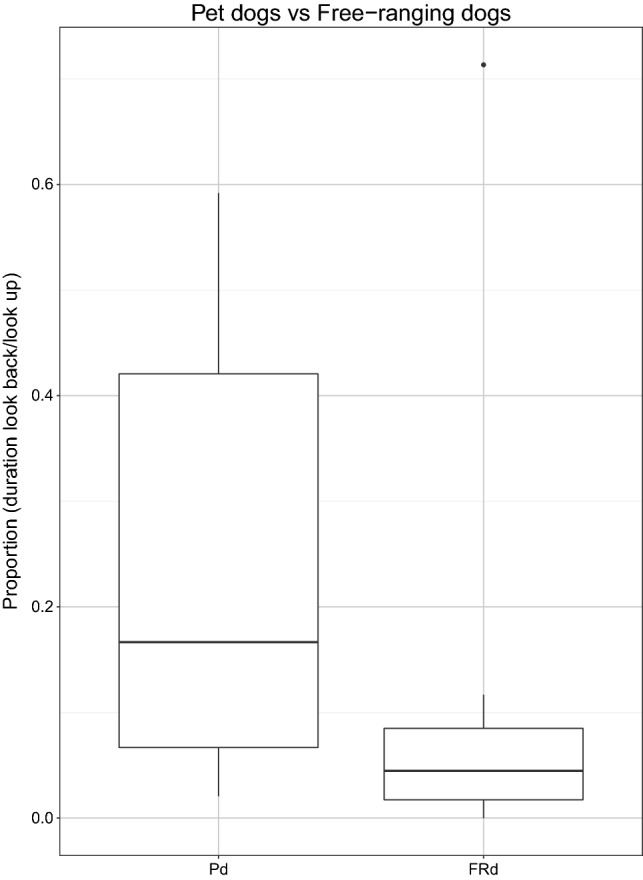
The impossible task paradigm has been extensively used to study the looking back behaviour in dogs. This behaviour is commonly considered a social problem-solving strategy: dogs facing an unsolvable task, soon give up and look back at the experimenter to ask for help. We aimed to test if the looking back in an impossible task does indeed represent a social problem-solving strategy. We used a modified version of the classic impossible task, in which the subjects simultaneously faced three possible and one impossible trials. Additionally, subjects were tested in four different conditions: social condition (with an unknown experimenter); asocial condition (subject alone); 'dummy' human condition (with a 'dummy' human); object condition (with a big sheet of cardboard). Finally, we compared two populations of dogs differing in their experience of receiving help from humans: 20 pet dogs tested in their houses and 31 free-ranging dogs tested in Morocco. We found that the pet dogs and free-ranging dogs had similar persistence in interacting with the impossible task in all conditions. Moreover, subjects looked back with similar latencies at the human, at the dummy human and at the object. Overall, pet dogs looked back longer at the human than free-ranging dogs. This could be interpreted as pet dogs being more attracted to humans and/or having a stronger association between humans and food than free-ranging dogs. Concluding, the looking back in an impossible task does not represent a problem-solving strategy. This behaviour seems rather linked to the subject's persistence, to the salience of the stimuli presented, and potentially to the past reinforcement history.
不可能任务范式已被广泛用于研究狗的回溯行为。这种行为通常被认为是一种社会问题解决策略:当狗面对无法解决的任务时,它们很快就会放弃并回头看向实验者,寻求帮助。我们旨在测试在不可能任务中的回溯行为是否确实代表了一种社会问题解决策略。我们使用了经典不可能任务的一种改良版本,其中被试同时面临三个可能的任务和一个不可能的任务。此外,被试在四种不同的条件下接受测试:社会条件(与未知的实验者一起);非社会条件(被试单独);“假人”人类条件(与“假人”一起);物体条件(与一大张硬纸板一起)。最后,我们比较了两组在接受人类帮助方面经验不同的狗:20 只宠物狗在自己的家中接受测试,31 只自由放养的狗在摩洛哥接受测试。我们发现,宠物狗和自由放养的狗在所有条件下对不可能任务的互动都具有相似的持久性。此外,被试在人类、假人和物体上的回溯潜伏期相似。总体而言,宠物狗在人类身上的回溯时间比自由放养的狗长。这可以解释为宠物狗对人类更感兴趣,或者与人类和食物之间的联系比自由放养的狗更强。综上所述,不可能任务中的回溯行为并不代表一种解决问题的策略。这种行为似乎与被试的持久性、呈现的刺激的显著性以及潜在的过去强化历史有关。