New York University Grossman School of Medicine, United States of America.
Duke University School of Medicine, United States of America.
Prog Cardiovasc Dis. 2020 Mar-Apr;63(2):92-100. doi: 10.1016/j.pcad.2020.02.013. Epub 2020 Feb 21.
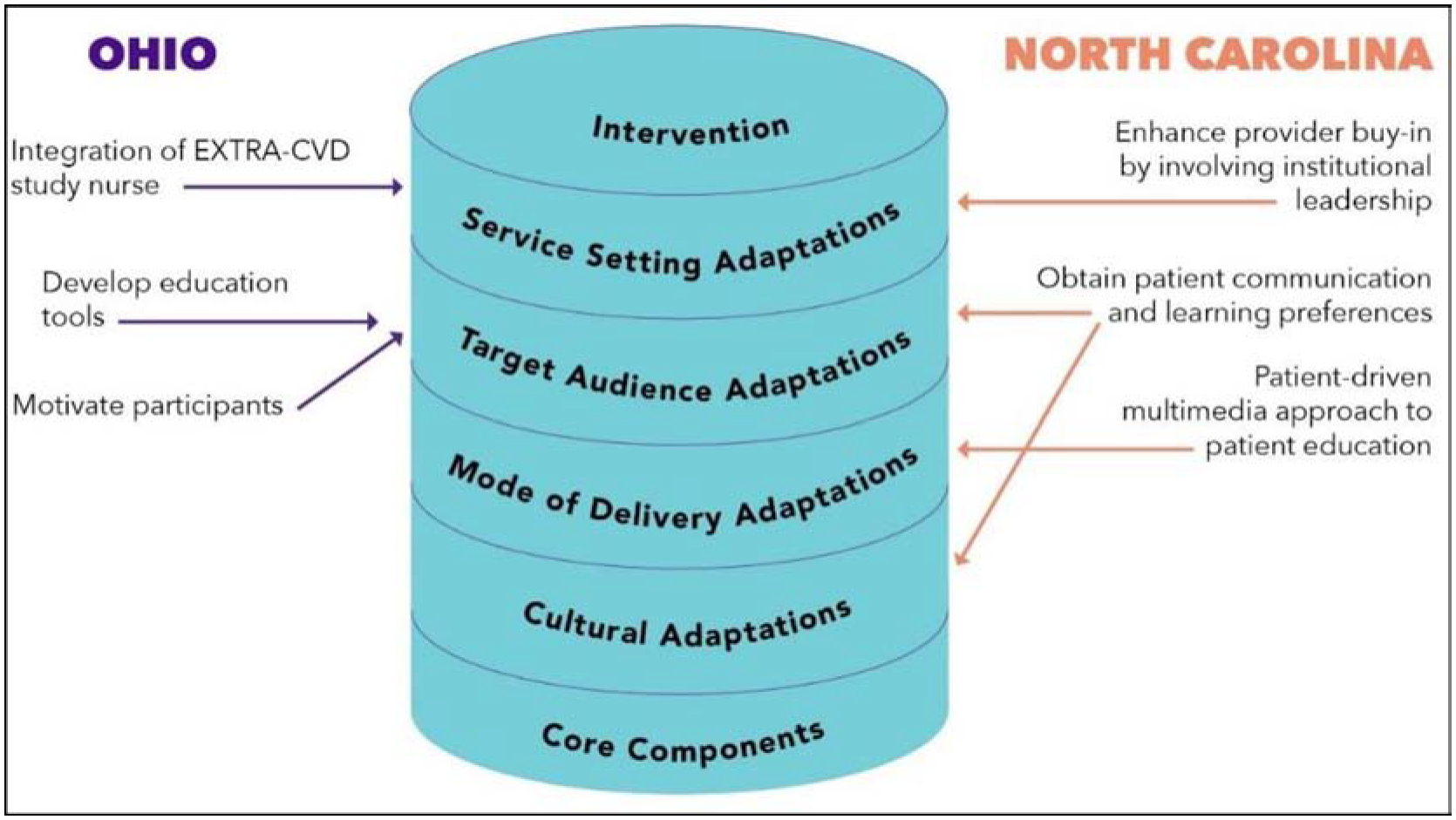
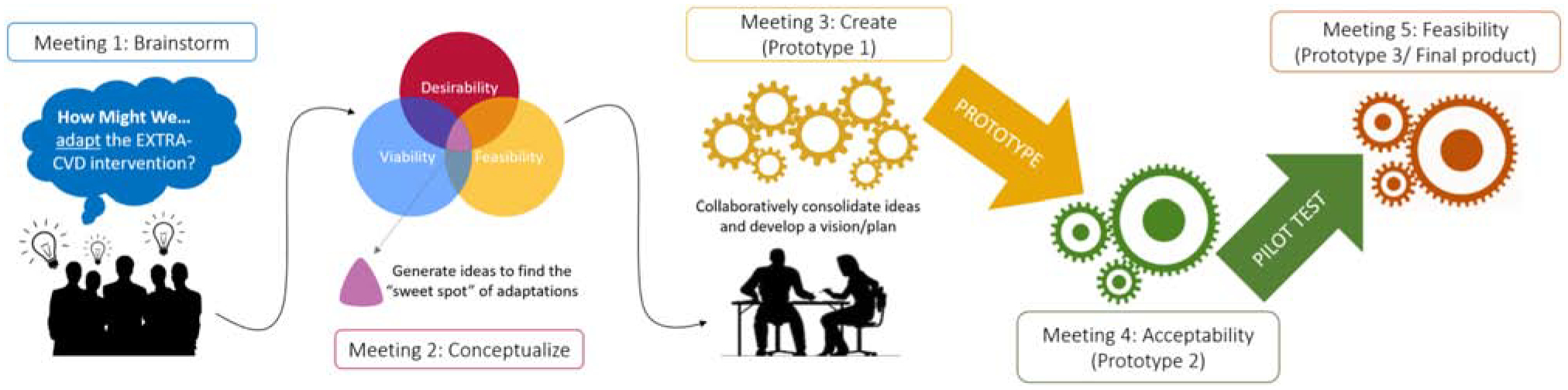
Stakeholder-informed strategies addressing cardiovascular disease (CVD) burden among people living with HIV (PWH) are needed within healthcare settings. This study provides an assessment of how human-centered design (HCD) guided the adaptation of a nurse-led intervention to reduce CVD risk among PWH. Using a HCD approach, research staff guided two multidisciplinary "design teams" in Ohio and North Carolina, with each having five HCD meetings. We conducted acceptability and feasibility testing. Six core recommendations were produced by two design teams of key stakeholders and further developed after the acceptability and feasibility testing to produce a final list of 14 actionable areas of adaptation. Acceptability and feasibility testing revealed areas for adaptation, e.g. patient preferences for communication and the benefit of additional staff to support patient follow-up. In conclusion, along with acceptability and feasibility testing, HCD led to the production of 14 key recommendations to enhance the effectiveness and scalability of an integrated HIV/CVD intervention.
需要在医疗保健环境中制定利益相关者知情的策略,以解决艾滋病毒感染者(PLHIV)的心血管疾病(CVD)负担问题。本研究评估了以人为本的设计(HCD)如何指导对护士主导的干预措施进行调整,以降低 PLHIV 的 CVD 风险。研究人员使用 HCD 方法指导俄亥俄州和北卡罗来纳州的两个多学科“设计团队”,每个团队有五个 HCD 会议。我们进行了可接受性和可行性测试。两个设计团队的主要利益相关者提出了六项核心建议,并在可接受性和可行性测试后进一步制定了这些建议,以制定最终的 14 项适应性行动计划。可接受性和可行性测试揭示了需要调整的领域,例如患者对沟通的偏好以及额外员工支持患者随访的好处。总之,除了可接受性和可行性测试外,HCD 还产生了 14 项关键建议,以提高综合 HIV/CVD 干预措施的有效性和可扩展性。