Department of Plant Sciences, MIGAL - Galilee Technology Center, 2 Tarshish St., POB 831, Kiryat-Shmona, 11016, Israel.
Bio-Imaging Unit, The Alexander Silberman Institute of Life Sciences, The Hebrew University of Jerusalem, Jerusalem, Israel.
Sci Rep. 2020 Feb 24;10(1):3291. doi: 10.1038/s41598-020-60163-7.
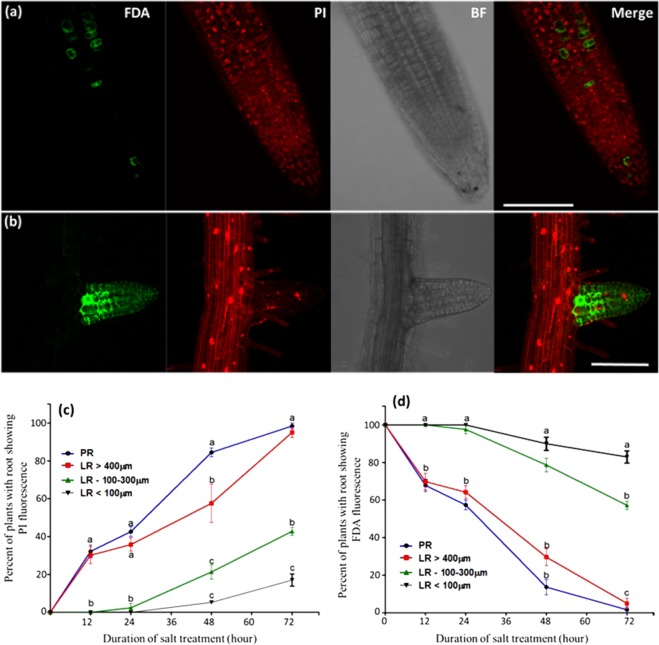
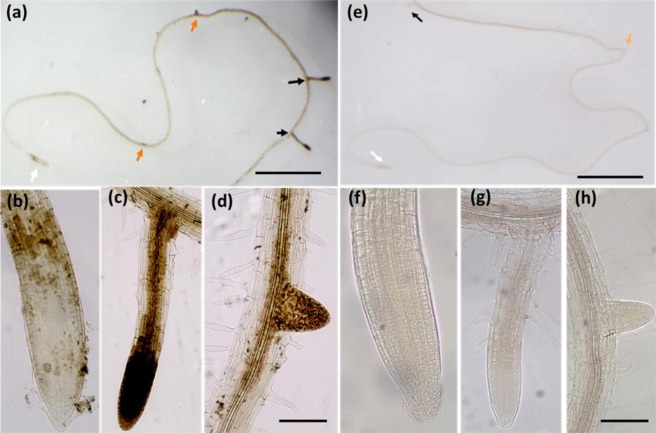
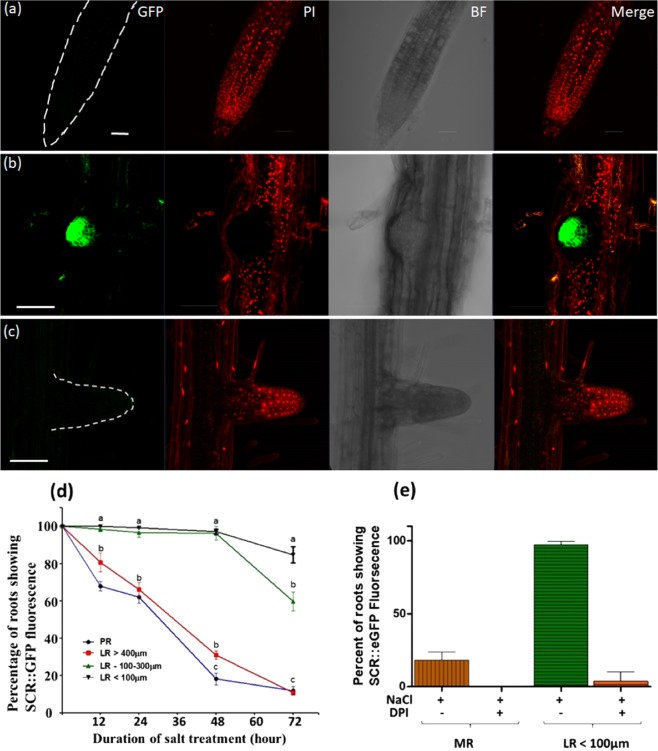
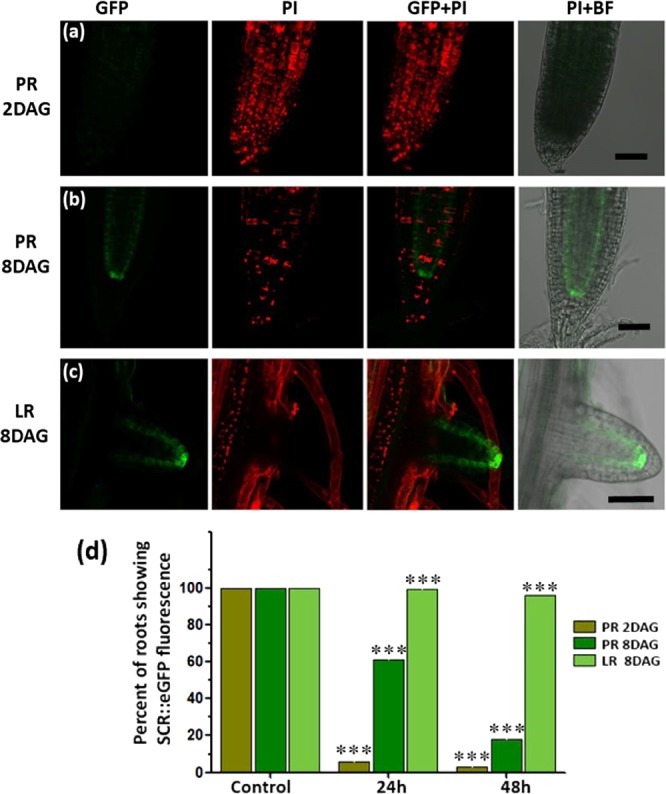
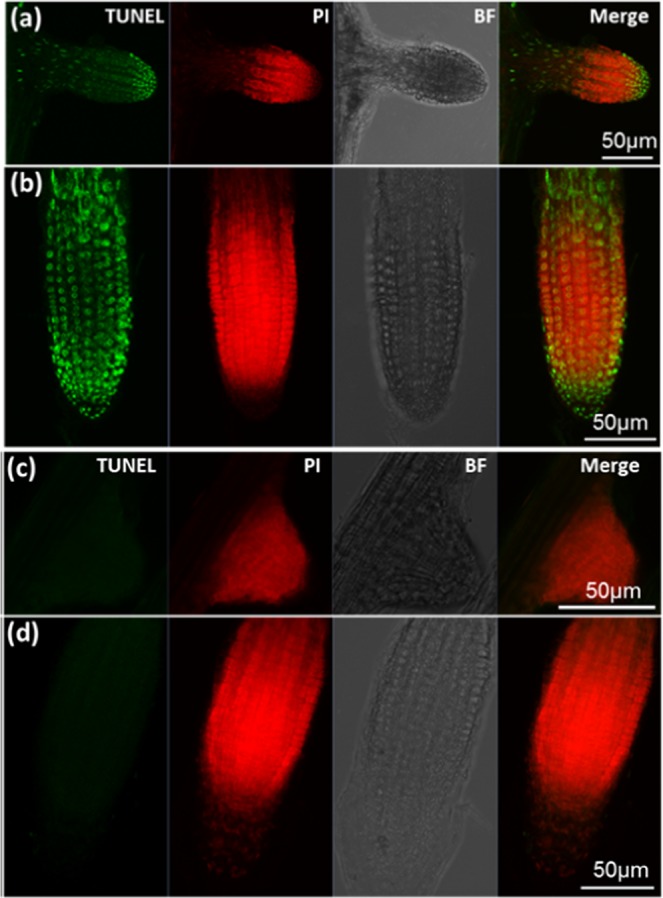
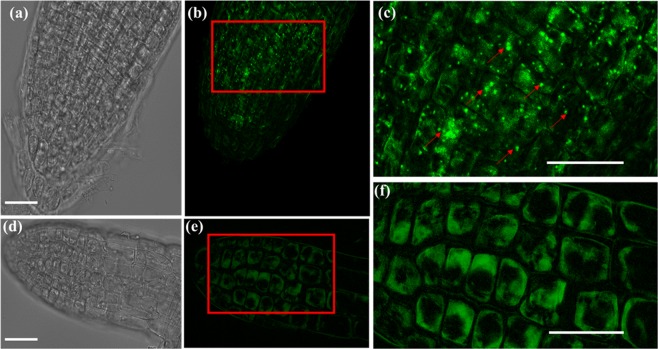
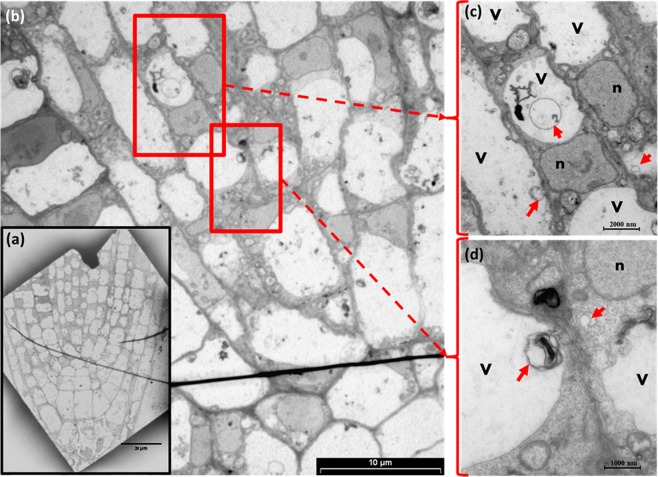
Plant responses to salinity have been extensively studied over the last decades. Despite the vast accumulated knowledge, the ways Arabidopsis lateral roots (LR) cope with lethal salinity has not been fully resolved. Here we compared the primary root (PR) and the LR responses during events leading to lethal salinity (NaCl 200 mM) in Arabidopsis. We found that the PR and young LR responded differently to lethal salinity: While the PR died, emerging and young LR's remained strikingly viable. Moreover, "age acquired salt tolerance" (AAST) was observed in the PR. During the 2 days after germination (DAG) the PR was highly sensitive, but at 8 DAG there was a significant increase in the PR cell survival. Nevertheless, the young LR exhibited an opposite pattern and completely lost its salinity tolerance, as it elongated beyond 400 µm. Examination of several cell death signatures investigated in the young LR showed no signs of an active programmed cell death (PCD) during lethal salinity. However, Autophagic PCD (A-PCD) but not apoptosis-like PCD (AL-PCD) was found to be activated in the PR during the high salinity conditions. We further found that salinity induced NADPH oxidase activated ROS, which were more highly distributed in the young LR compared to the PR, is required for the improved viability of the LR during lethal salinity conditions. Our data demonstrated a position-dependent resistance of Arabidopsis young LR to high salinity. This response can lead to identification of novel salt stress coping mechanisms needed by agriculture during the soil salinization challenge.
在过去的几十年中,人们对植物的耐盐性进行了广泛的研究。尽管已经积累了大量的知识,但拟南芥侧根(LR)应对致死性盐度的方式仍未完全解决。在这里,我们比较了拟南芥中导致致死性盐度(NaCl 200 mM)的主根(PR)和侧根(LR)的反应。我们发现,PR 和新出现的年轻 LR 对致死性盐度的反应不同:虽然 PR 死亡,但新出现的和年轻的 LR 仍然具有惊人的活力。此外,在 PR 中观察到“年龄获得耐盐性”(AAST)。在发芽后 2 天(DAG),PR 高度敏感,但在 8 DAG 时,PR 细胞的存活率显著增加。然而,年轻的 LR 表现出相反的模式,完全失去了其耐盐性,因为它伸长超过 400 µm。在年轻 LR 中研究的几种细胞死亡特征的检查显示,在致死性盐度下没有活性程序性细胞死亡(PCD)的迹象。然而,在高盐条件下,发现 Autophagic PCD(A-PCD)而不是凋亡样 PCD(AL-PCD)在 PR 中被激活。我们进一步发现,盐度诱导的 NADPH 氧化酶激活的 ROS 在年轻 LR 中的分布比在 PR 中更高,这对于 LR 在致死性盐度条件下提高存活率是必需的。我们的数据表明,拟南芥年轻 LR 的位置依赖性对高盐度的抗性。这种反应可以导致识别农业在土壤盐化挑战中所需的新的盐胁迫应对机制。