Semenov Institute of chemical physics, Russian Academy of Sciences, Moscow, Russia.
Moscow Institute of physics and technology, Moscow, Dolgoprudny, Russia.
Cerebellum. 2020 Jun;19(3):409-418. doi: 10.1007/s12311-020-01119-5.
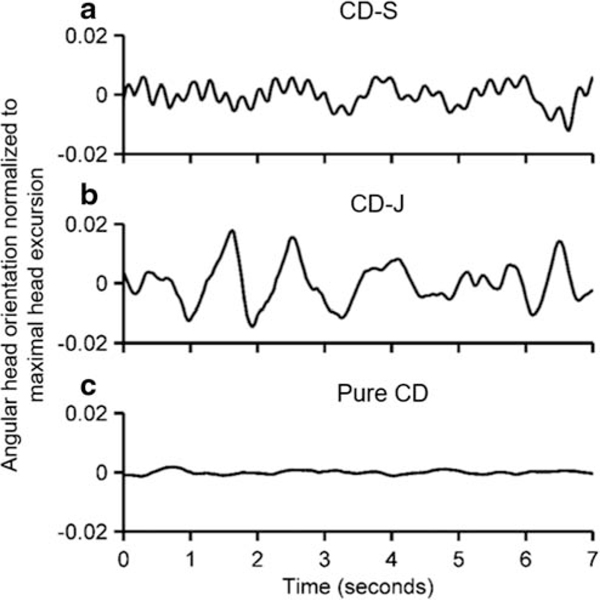
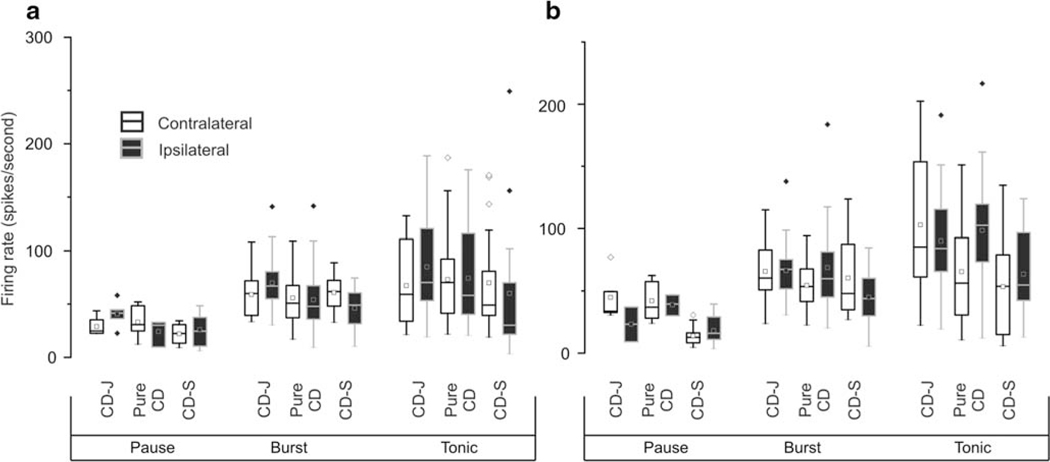
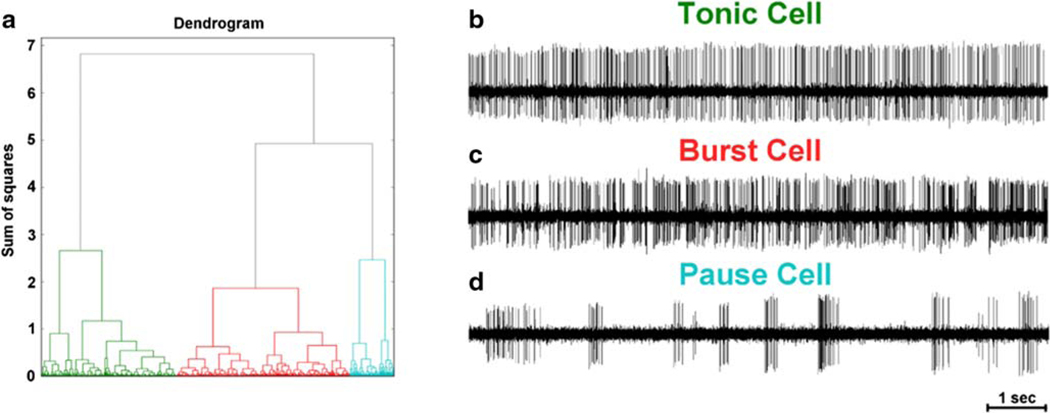
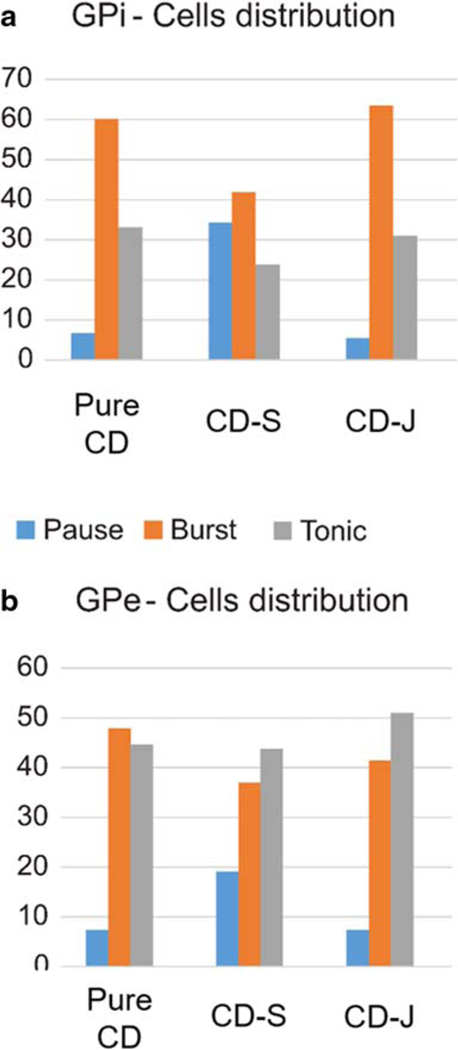
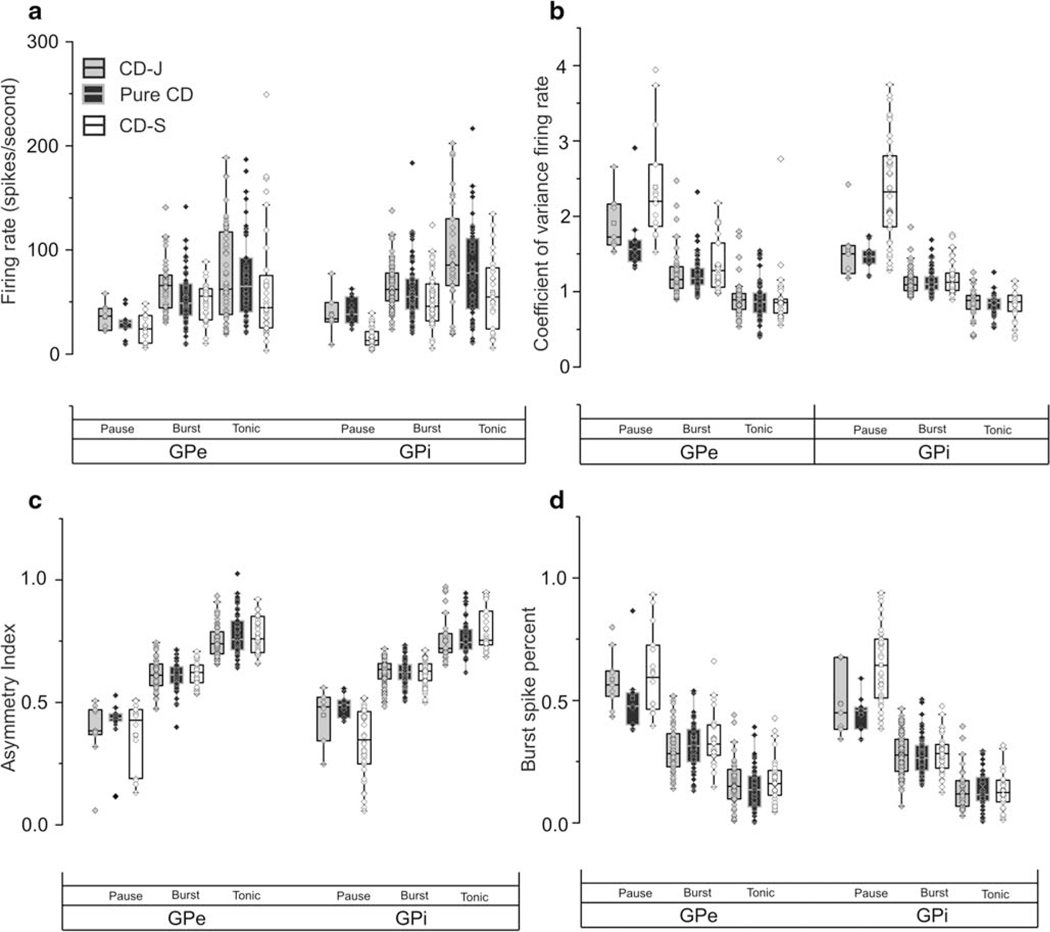
The relationship between two common movement disorders, dystonia and tremor, is controversial. Both deficits have correlates in the network that includes connections between the cerebellum and the basal ganglia. In order to assess the physiological relationship between tremor and dystonia, we measured the activity of 727 pallidal single-neurons during deep brain stimulation surgery in patients with cervical dystonia without head oscillations, cervical dystonia plus jerky oscillations, and cervical dystonia with sinusoidal oscillations. Cluster analyses of spike-train recordings allowed classification of the pallidal activity into burst, pause, and tonic. Burst neurons were more common, and number of spikes within spike and inter-burst intervals was shorter in pure dystonia and jerky oscillation groups compared to the sinusoidal oscillation group. Pause neurons were more common and irregular in pure tremor group compared to pure dystonia and jerky oscillation groups. There was bihemispheric asymmetry in spontaneous firing discharge in pure dystonia and jerky oscillation groups, but not in sinusoidal oscillation group. These results demonstrate that the physiology of pallidal neurons in patients with pure cervical dystonia is similar to those who have cervical dystonia combined with jerky oscillations, but different from those who have cervical dystonia combined with sinusoidal oscillations. These results imply distinct mechanistic underpinnings for different types of head oscillations in cervical dystonia.
两种常见运动障碍,即肌张力障碍和震颤之间的关系存在争议。这两种缺陷在包括小脑和基底节之间连接的网络中都有相关物。为了评估震颤和肌张力障碍之间的生理关系,我们在无头部摆动的颈肌张力障碍、颈肌张力障碍伴顿挫性摆动和颈肌张力障碍伴正弦性摆动的患者的深部脑刺激手术期间测量了 727 个苍白球单个神经元的活动。尖峰序列记录的聚类分析允许将苍白球活动分类为爆发、停顿和紧张。与正弦性摆动组相比,纯肌张力障碍和顿挫性摆动组的爆发神经元更为常见,并且尖峰内和尖峰间的尖峰数量较短。与纯肌张力障碍和顿挫性摆动组相比,纯震颤组的停顿神经元更为常见且不规则。在纯肌张力障碍和顿挫性摆动组中存在自发性放电的双侧不对称性,但在正弦性摆动组中不存在。这些结果表明,纯颈肌张力障碍患者的苍白球神经元的生理学与那些颈肌张力障碍合并顿挫性摆动的患者相似,但与那些颈肌张力障碍合并正弦性摆动的患者不同。这些结果暗示了不同类型的颈肌张力障碍头部摆动具有不同的机械基础。