Department of Physiology, Anatomy and Genetics, University of Oxford, Oxford, U.K.
Biochem Soc Trans. 2020 Feb 28;48(1):51-59. doi: 10.1042/BST20190240.
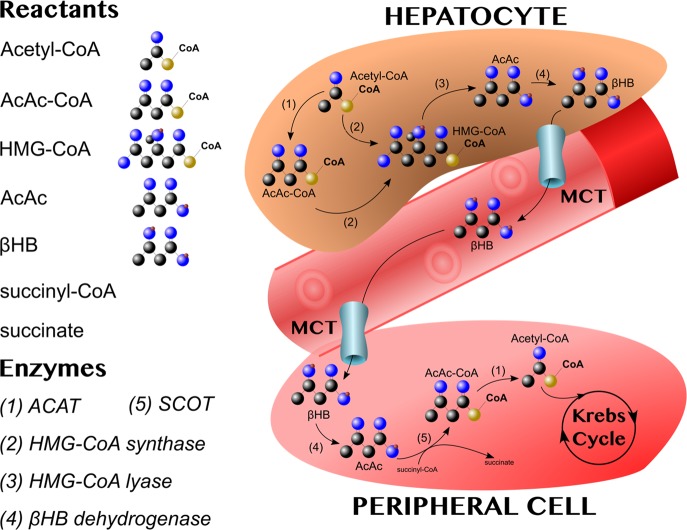
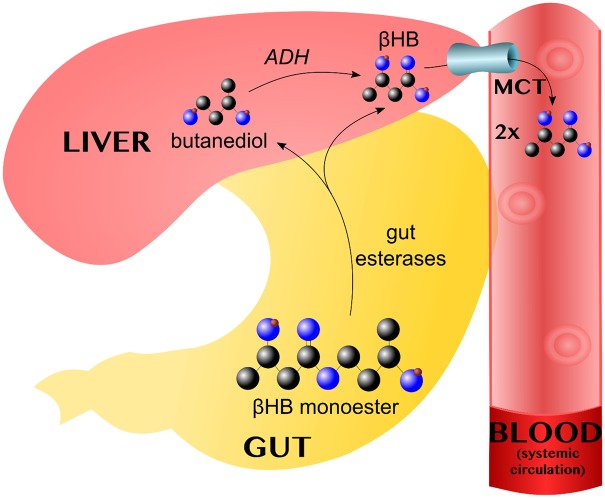
Much of the world's prominent and burdensome chronic diseases, such as diabetes, Alzheimer's, and heart disease, are caused by impaired metabolism. By acting as both an efficient fuel and a powerful signalling molecule, the natural ketone body, d-β-hydroxybutyrate (βHB), may help circumvent the metabolic malfunctions that aggravate some diseases. Historically, dietary interventions that elevate βHB production by the liver, such as high-fat diets and partial starvation, have been used to treat chronic disease with varying degrees of success, owing to the potential downsides of such diets. The recent development of an ingestible βHB monoester provides a new tool to quickly and accurately raise blood ketone concentration, opening a myriad of potential health applications. The βHB monoester is a salt-free βHB precursor that yields only the biologically active d-isoform of the metabolite, the pharmacokinetics of which have been studied, as has safety for human consumption in athletes and healthy volunteers. This review describes fundamental concepts of endogenous and exogenous ketone body metabolism, the differences between the βHB monoester and other exogenous ketones and summarises the disease-specific biochemical and physiological rationales behind its clinical use in diabetes, neurodegenerative diseases, heart failure, sepsis related muscle atrophy, migraine, and epilepsy. We also address the limitations of using the βHB monoester as an adjunctive nutritional therapy and areas of uncertainty that could guide future research.
世界上许多主要且负担沉重的慢性疾病,如糖尿病、阿尔茨海默病和心脏病,都是由代谢紊乱引起的。天然酮体 d-β-羟基丁酸(βHB)作为一种高效燃料和强大的信号分子,可能有助于避免加重某些疾病的代谢功能障碍。历史上,通过高脂肪饮食和部分饥饿等方法来提高肝脏产生 βHB 的饮食干预,已经在一定程度上成功地用于治疗慢性疾病,但这些饮食方法存在潜在的缺点。最近可食用的 βHB 单酯的开发为快速准确地提高血液中酮体浓度提供了一种新工具,为无数潜在的健康应用开辟了道路。βHB 单酯是一种无盐的 βHB 前体,仅产生代谢物的生物活性 d-异构体,其药代动力学已被研究,并且在运动员和健康志愿者中作为人类消费的安全性也已得到研究。这篇综述描述了内源性和外源性酮体代谢的基本概念,βHB 单酯与其他外源性酮体之间的区别,并总结了其在糖尿病、神经退行性疾病、心力衰竭、与败血症相关的肌肉萎缩、偏头痛和癫痫等疾病中的临床应用的特定疾病的生化和生理学依据。我们还讨论了将 βHB 单酯用作辅助营养疗法的局限性以及可能指导未来研究的不确定领域。