Lokugamage Nandadeva, Choudhuri Subhadip, Davies Carolina, Chowdhury Imran Hussain, Garg Nisha Jain
Department of Microbiology and Immunology, The University of Texas Medical Branch (UTMB), Galveston, TX 77555-1070, USA.
Instituto de Patología Experimental, Universidad Nacional de Salta-CONICET, Salta 4400, Argentina.
Vaccines (Basel). 2020 Feb 21;8(1):96. doi: 10.3390/vaccines8010096.
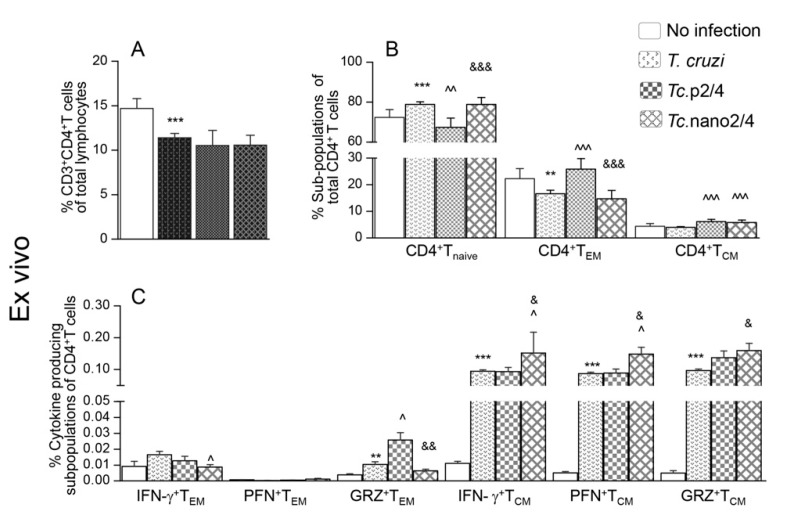
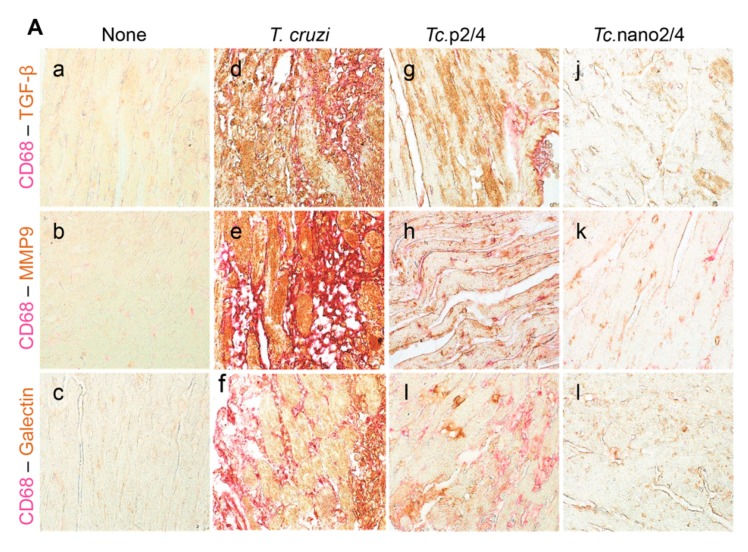
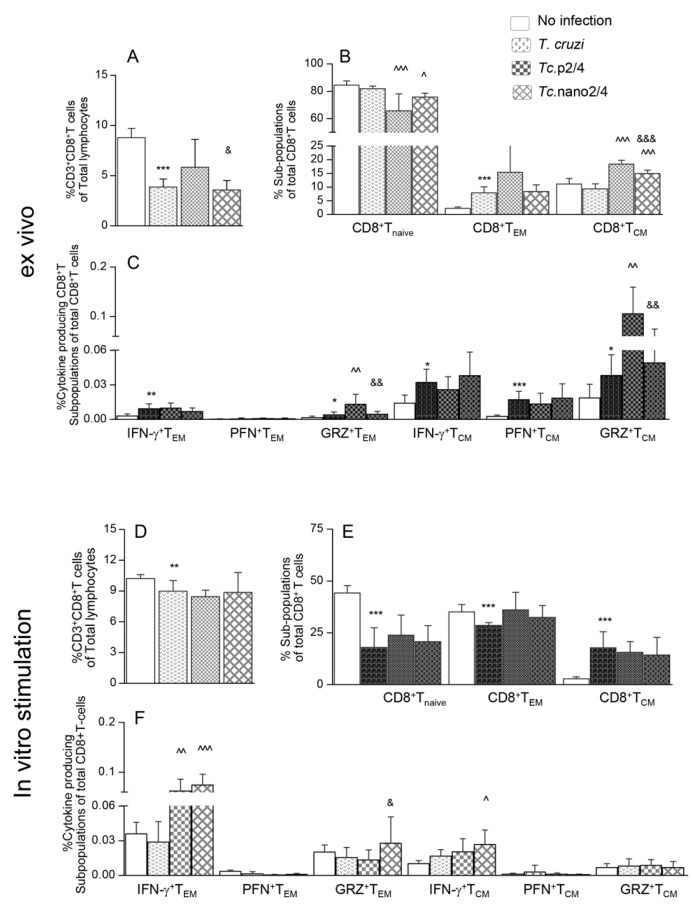
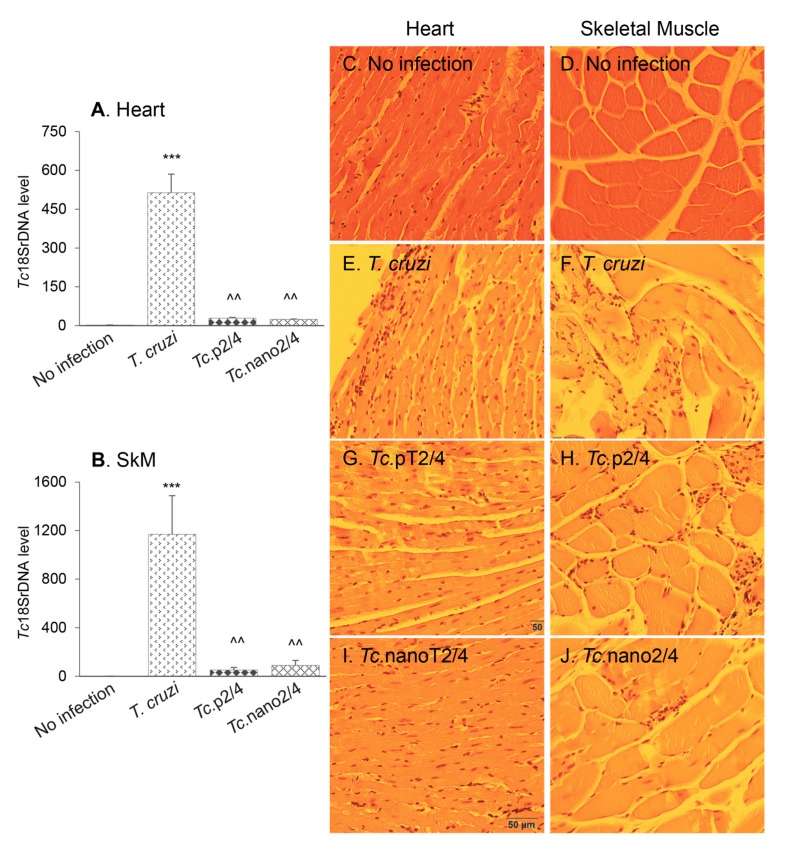
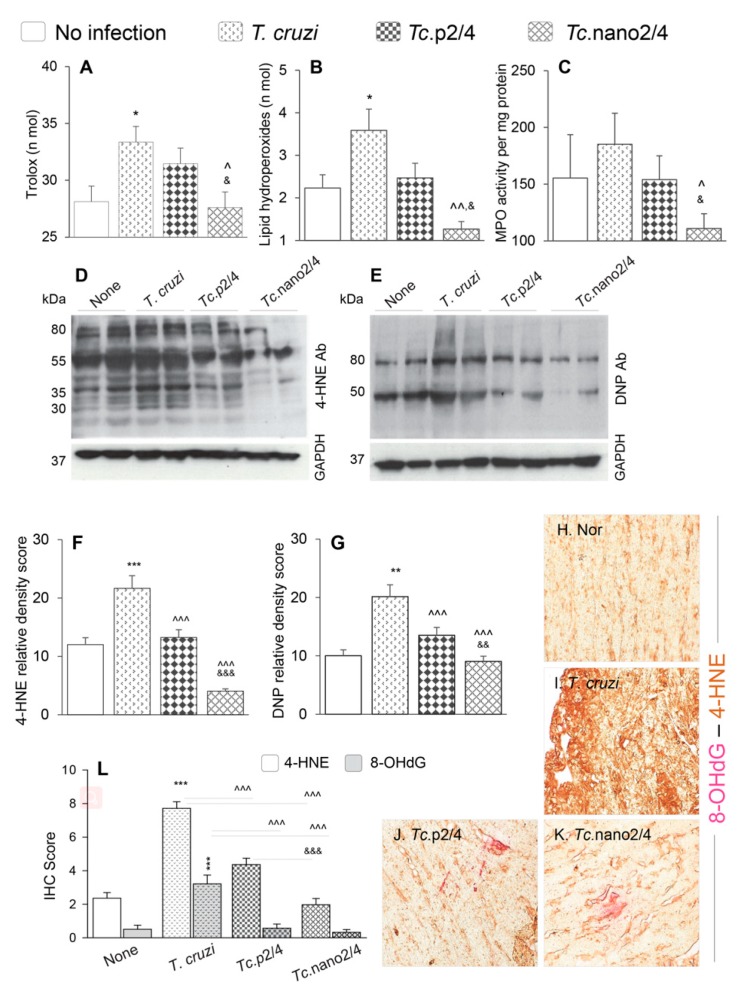
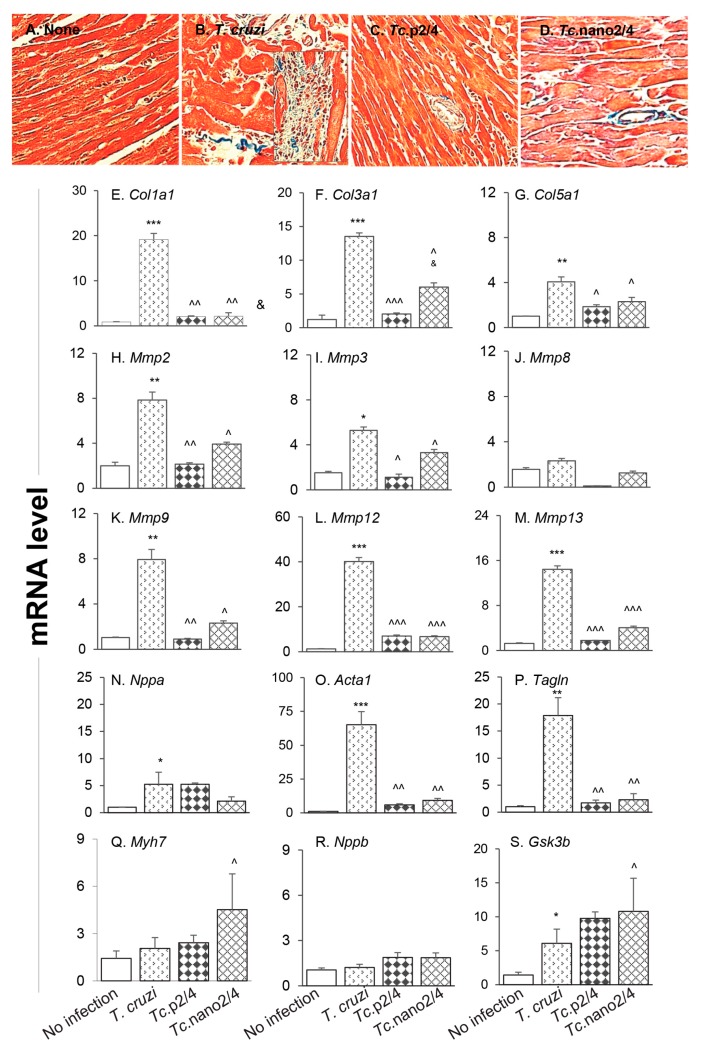
Chagas cardiomyopathy is caused by (). We identified two candidate antigens (TcG2 and TcG4) that elicit antibodies and T cell responses in naturally infected diverse hosts. In this study, we cloned and in a nanovector and evaluated whether nano-immunotherapy (referred as nano2/4) offers resistance to chronic Chagas disease. For this, C57BL/6 mice were infected with and given nano2/4 at 21 and 42 days post-infection (pi). Non-infected, infected, and infected mice treated with pcDNA3.1 expression plasmid encoding (referred as p2/4) were used as controls. All mice responded to infection with expansion and functional activation of splenic lymphocytes. Flow cytometry showed that frequency of splenic, poly-functional CD4 and CD8 T cells expressing interferon-γ, perforin, and granzyme B were increased by immunotherapy (nano2/4 > p2/4) and associated with 88%-99.7% decline in cardiac and skeletal (SK) tissue levels of parasite burden (nano2/4 > p2/4) in Chagas mice. Subsequently, nano2/4 mice exhibited a significant decline in peripheral and tissues levels of oxidative stress (e.g., 4-hydroxynonenal, protein carbonyls) and inflammatory infiltrate that otherwise were pronounced in Chagas mice. Further, nano2/4 therapy was effective in controlling the tissue infiltration of pro-fibrotic macrophages and established a balanced environment controlling the expression of collagens, metalloproteinases, and other markers of cardiomyopathy and improving the expression of (encodes β myosin heavy chain) and (encodes glycogen synthase kinase 3) required for maintaining cardiac contractility in Chagas heart. We conclude that nano2/4 enhances the systemic T cell immunity that improves the host's ability to control chronic parasite persistence and Chagas cardiomyopathy.
恰加斯心肌病由()引起。我们鉴定出两种候选抗原(TcG2和TcG4),它们能在自然感染的不同宿主中引发抗体和T细胞反应。在本研究中,我们将其克隆到一个纳米载体中,并评估纳米免疫疗法(称为nano2/4)是否能抵抗慢性恰加斯病。为此,将C57BL/6小鼠感染(),并在感染后第21天和第42天给予nano2/4。未感染、感染以及用编码()的pcDNA3.1表达质粒处理的感染小鼠(称为p2/4)用作对照。所有小鼠对()感染的反应都是脾淋巴细胞的扩增和功能激活。流式细胞术显示,通过免疫疗法(nano2/4 > p2/4),表达干扰素-γ、穿孔素和颗粒酶B的脾多功能CD4和CD8 T细胞频率增加,并且与恰加斯病小鼠心脏和骨骼肌(SK)组织中寄生虫负荷水平下降88% - 99.7%相关(nano2/4 > p2/4)。随后,nano2/4小鼠外周和组织中的氧化应激水平(如4-羟基壬烯醛、蛋白质羰基)以及炎症浸润显著下降,而这些在恰加斯病小鼠中原本很明显。此外,nano2/4疗法在控制促纤维化巨噬细胞的组织浸润方面有效,并建立了一个平衡的环境,控制胶原蛋白、金属蛋白酶以及其他心肌病标志物的表达,改善了维持恰加斯病心脏心脏收缩力所需的(编码β肌球蛋白重链)和(编码糖原合酶激酶3)的表达。我们得出结论,nano2/4增强了全身T细胞免疫功能,提高了宿主控制慢性寄生虫持续感染和恰加斯心肌病的能力。