Biomarker Unit, Department of Applied Research and Technological Development, Fondazione IRCCS Istituto Nazionale Tumori di Milano, 20133 Milano, Italy.
Department of Medical Oncology, Fondazione IRCCS Istituto Nazionale Tumori, 20133 Milano, Italy.
Int J Mol Sci. 2020 Feb 21;21(4):1475. doi: 10.3390/ijms21041475.
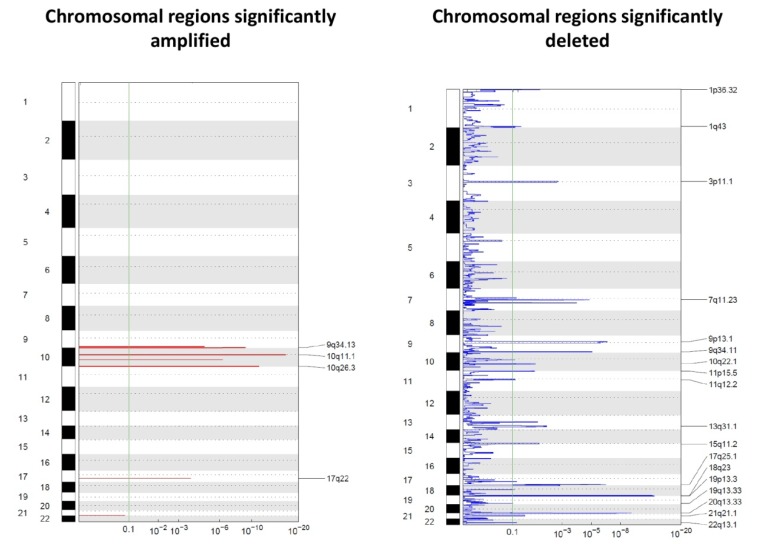
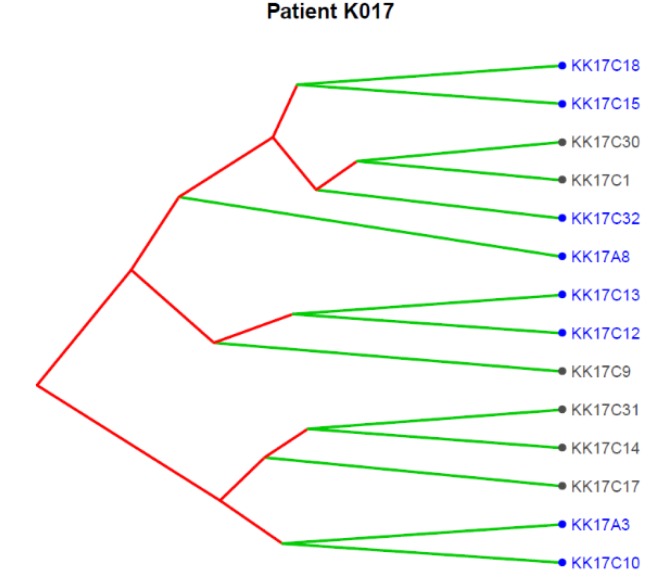
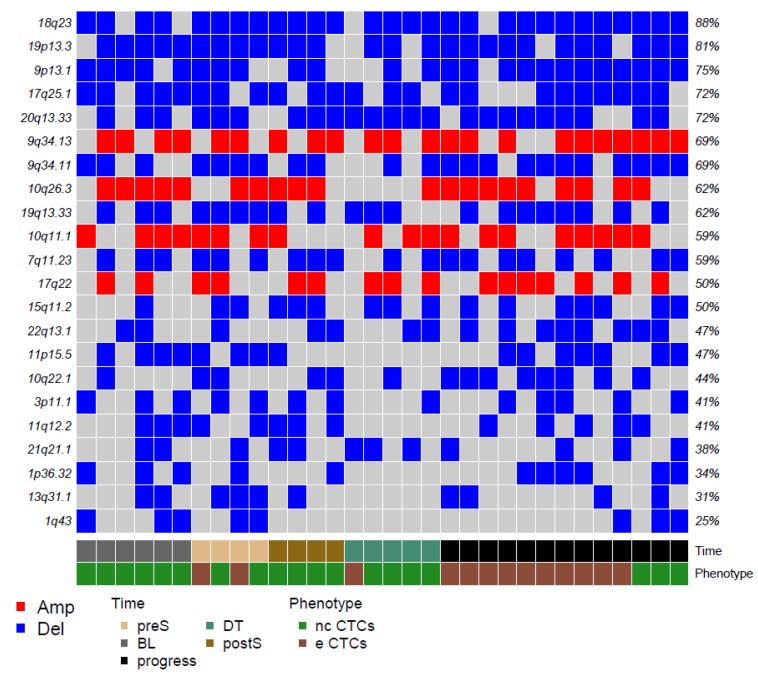
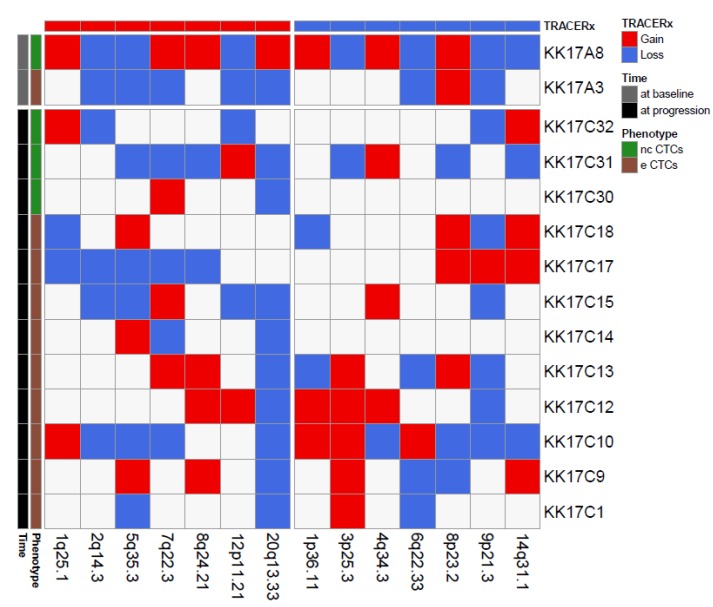
Circulating tumor cells (CTCs) are promising biomarkers for prognosis, therapeutic response prediction, and treatment monitoring in cancer patients. Despite its epithelial origin, renal cell carcinoma (RCC) shows low expression of epithelial markers hindering CTC-enrichment approaches exploiting epithelial cell surface proteins. In 21 blood samples serially collected from 10 patients with metastatic RCC entering the TARIBO trial, we overcame this limitation using the marker-independent Parsortix™ approach for CTC-enrichment coupled with positive and negative selection with the DEPArray™ with single cell recovery and analysis for copy number alterations (CNA) by next generation sequencing NGS. Two CTC subpopulations were identified: epithelial CTC (eCTC) and non-conventional CTC (ncCTC) lacking epithelial and leukocyte markers. With a threshold ≥1CTC/10 mL of blood, the positivity rates were 28% for eCTC, 62% for ncCTCs, and 71% considering both CTC types. In two patients with detectable eCTCs at baseline, progression free survival was less than 5 months. In an index case, hierarchical structure by translational oncology (TRONCO) identified three clones among 14 CTCs collected at progression and at baseline, each containing cells with a 9p21.3loss, a well-known metastasis driving subclonal alteration. CTCs detection in RCC can be increased by marker-independent approaches, and CTC molecular characterization can allow detection of subclonal events possibly related to tumor progression.
循环肿瘤细胞(CTCs)是癌症患者预后、治疗反应预测和治疗监测的有前途的生物标志物。尽管肾细胞癌(RCC)起源于上皮细胞,但由于其上皮标志物表达水平低,阻碍了利用上皮细胞表面蛋白富集 CTC 的方法。在 TARIBO 试验中,10 名转移性 RCC 患者的 21 份连续采集的血液样本中,我们使用独立于标志物的 Parsortix™方法进行 CTC 富集,结合 DEPArray™进行阳性和阴性选择,单细胞回收和分析通过下一代测序 NGS 进行拷贝数改变(CNA)。鉴定出两种 CTC 亚群:上皮 CTC(eCTC)和缺乏上皮和白细胞标志物的非传统 CTC(ncCTC)。以≥1CTC/10ml 血液为阈值,eCTC 的阳性率为 28%,ncCTCs 的阳性率为 62%,同时考虑两种 CTC 类型的阳性率为 71%。在基线时可检测到 eCTC 的两名患者中,无进展生存期均小于 5 个月。在一个指数病例中,通过转化肿瘤学(TRONCO)的层次结构,在进展期和基线时收集的 14 个 CTC 中鉴定出三个克隆,每个克隆都含有携带 9p21.3 缺失的细胞,这是一种已知的驱动转移的亚克隆改变。非依赖标志物的方法可以增加 RCC 中 CTC 的检测,CTC 的分子特征分析可以检测到可能与肿瘤进展相关的亚克隆事件。