Bowles Center for Alcohol Studies, Curriculum in Neuroscience, University of North Carolina School of Medicine, Chapel Hill, NC, USA.
Bowles Center for Alcohol Studies, Department of Pharmacology, University of North Carolina School of Medicine, Chapel Hill, NC, USA.
Mol Psychiatry. 2021 Jun;26(6):2187-2199. doi: 10.1038/s41380-020-0690-z. Epub 2020 Feb 25.
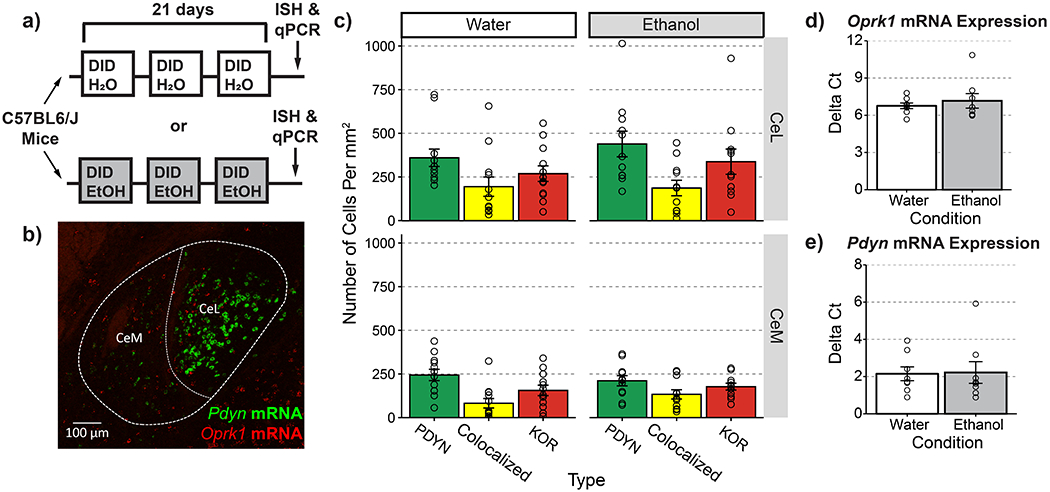
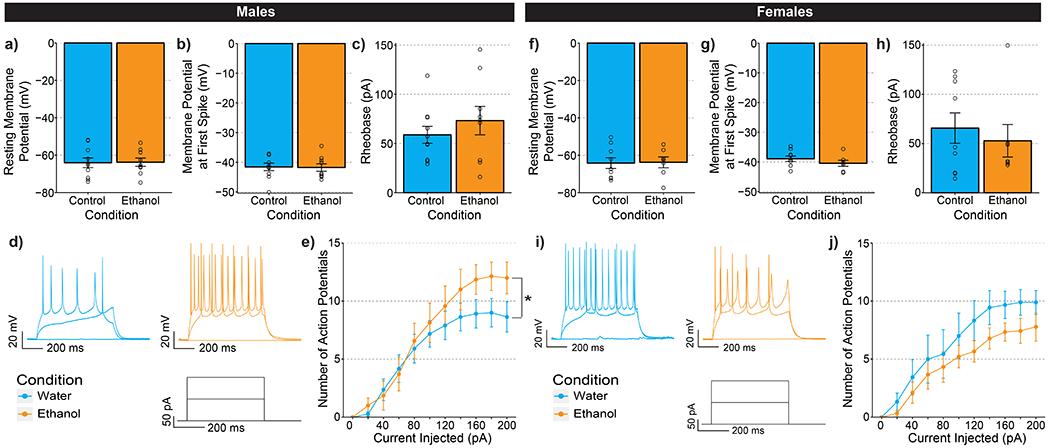
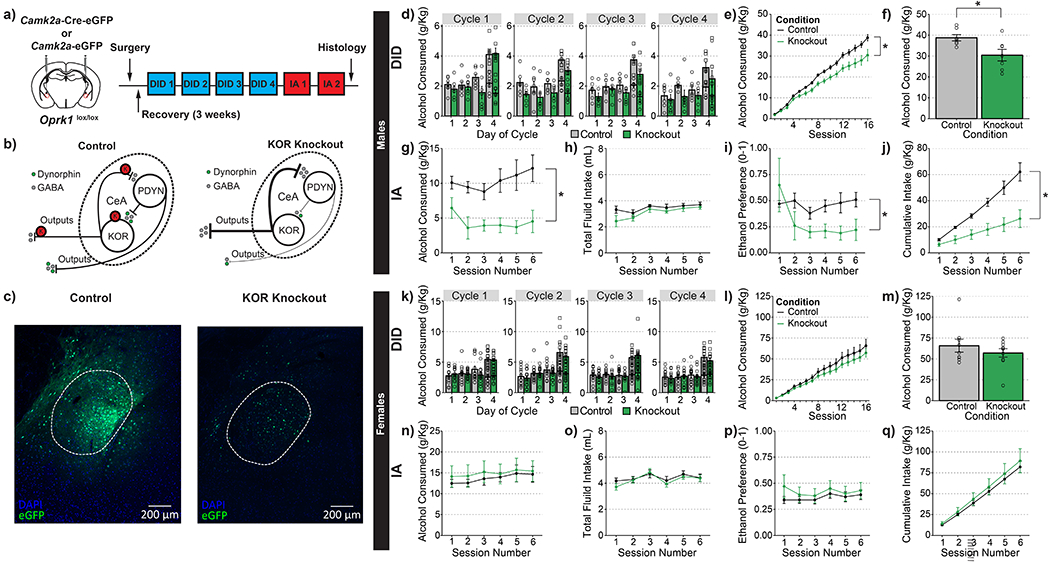
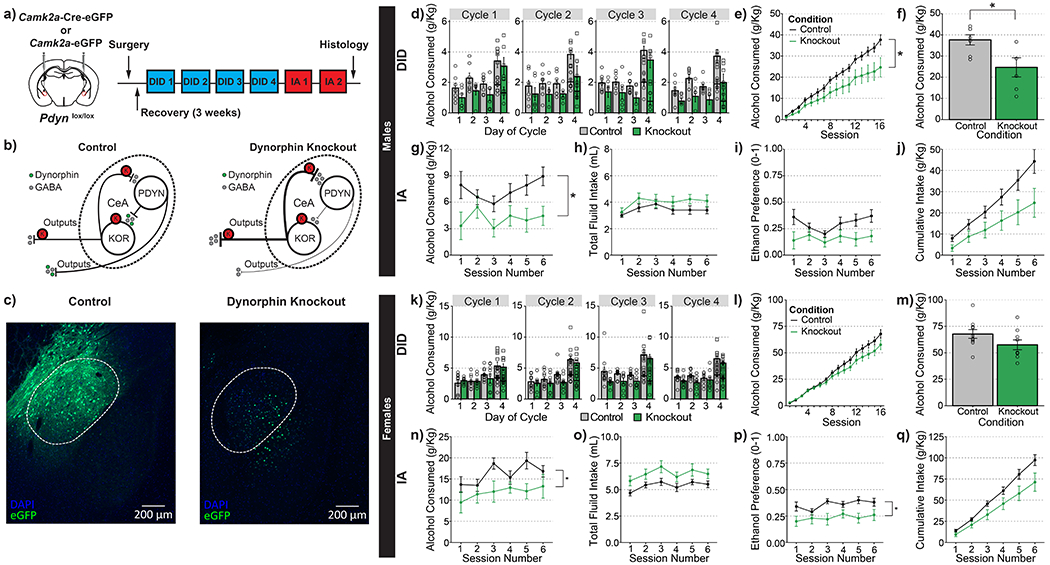
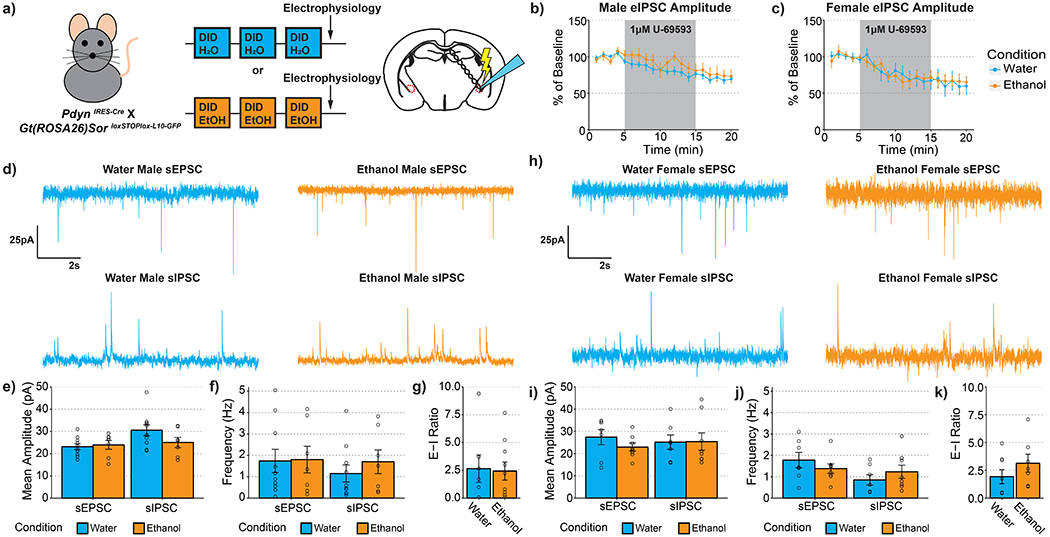
Excessive alcohol drinking has been shown to modify brain circuitry to predispose individuals for future alcohol abuse. Previous studies have implicated the central nucleus of the amygdala (CeA) as an important site for mediating the somatic symptoms of withdrawal and for regulating alcohol intake. In addition, recent work has established a role for both the Kappa Opioid Receptor (KOR) and its endogenous ligand dynorphin in mediating these processes. However, it is unclear whether these effects are due to dynorphin or KOR arising from within the CeA itself or other input brain regions. To directly examine the role of preprodynorphin (PDYN) and KOR expression in CeA neurons, we performed region-specific conditional knockout of these genes and assessed the effects on the Drinking in the Dark (DID) and Intermittent Access (IA) paradigms. Conditional gene knockout resulted in sex-specific responses wherein PDYN knockout decreased alcohol drinking in both male and female mice, whereas KOR knockout decreased drinking in males only. We also found that neither PDYN nor KOR knockout protected against anxiety caused by alcohol drinking. Lastly, a history of alcohol drinking did not alter synaptic transmission in PDYN neurons in the CeA of either sex, but excitability of PDYN neurons was increased in male mice only. Taken together, our findings indicate that PDYN and KOR signaling in the CeA plays an important role in regulating excessive alcohol consumption and highlight the need for future studies to examine how this is mediated through downstream effector regions.
过量饮酒已被证明会改变大脑回路,使个体易患未来的酒精滥用。先前的研究表明,杏仁中央核(CeA)是介导戒断躯体症状和调节酒精摄入的重要部位。此外,最近的研究还确立了κ阿片受体(KOR)及其内源性配体强啡肽在介导这些过程中的作用。然而,尚不清楚这些效应是由于 CeA 本身或其他传入脑区的内源性 dynorphin 还是 KOR 引起的。为了直接研究 CeA 神经元中前强啡肽(PDYN)和 KOR 表达的作用,我们进行了这些基因的区域特异性条件性敲除,并评估了它们对暗饮(DID)和间歇接触(IA)范式的影响。条件性基因敲除导致了性别特异性反应,其中 PDYN 敲除减少了雌雄小鼠的酒精摄入,而 KOR 敲除仅减少了雄性小鼠的酒精摄入。我们还发现,PDYN 和 KOR 敲除均不能预防酒精引起的焦虑。最后,酒精摄入史并未改变 CeA 中 PDYN 神经元的突触传递,但仅增加了雄性小鼠 PDYN 神经元的兴奋性。总之,我们的研究结果表明,CeA 中的 PDYN 和 KOR 信号在调节过量饮酒中起着重要作用,并强调需要进一步研究来探讨其如何通过下游效应区域来介导。