Institute of Dermatology, Jiangsu Key Laboratory of Molecular Biology for Skin Diseases and STIs, Chinese Academy of Medical Science & Peking Union Medical College, Nanjing, People's Republic of China.
Drug Des Devel Ther. 2020 Jan 29;14:417-428. doi: 10.2147/DDDT.S228047. eCollection 2020.
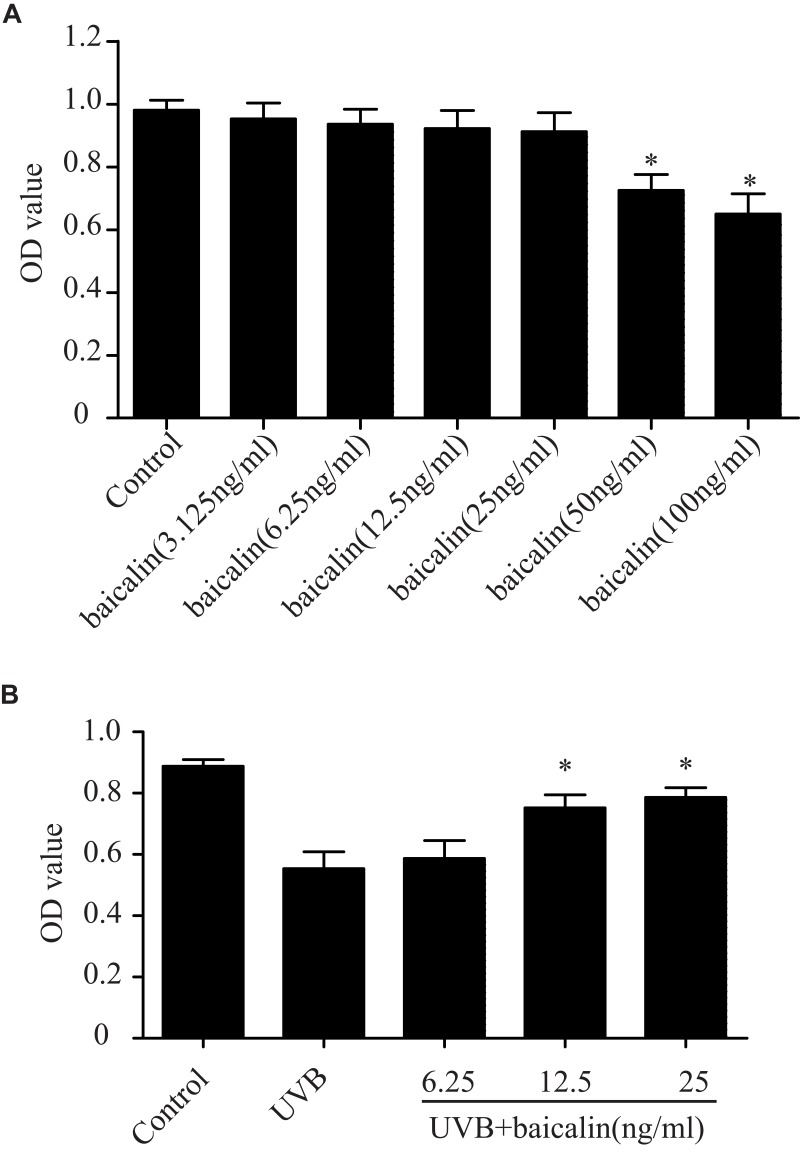
Baicalin, a natural product isolated from Scutellaria radix, has been reported to exert anti-oxidant and anti-apoptotic effects on skin, but the underlying mechanism remains poorly understood. This study aimed to investigate the possible mechanism of anti-UVB effect of baicalin in human skin fibroblasts.
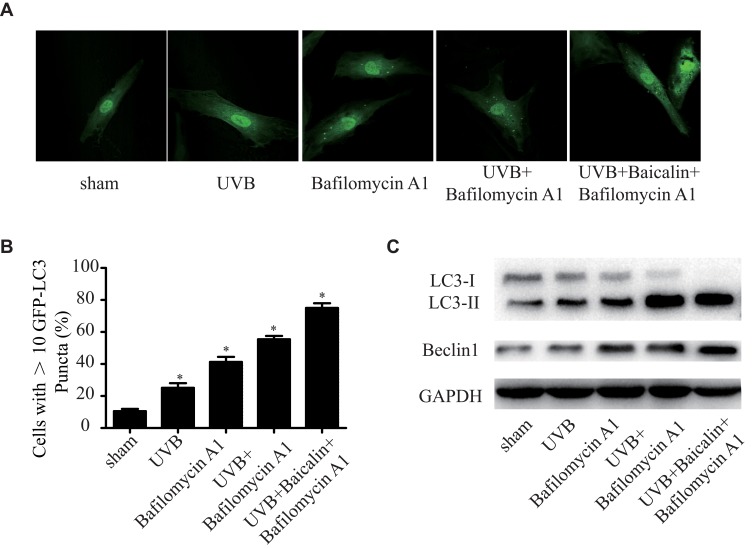
Cell proliferation was estimated by CCK-8 Kit. Apoptotic incidence was detected by flow cytometry with Annexin V-PE/PI apoptosis detection kit. Autophagy was determined by the evaluation of fluorescent LC3 puncta and Western blotting. Cell signalling was analysed by Western blotting.
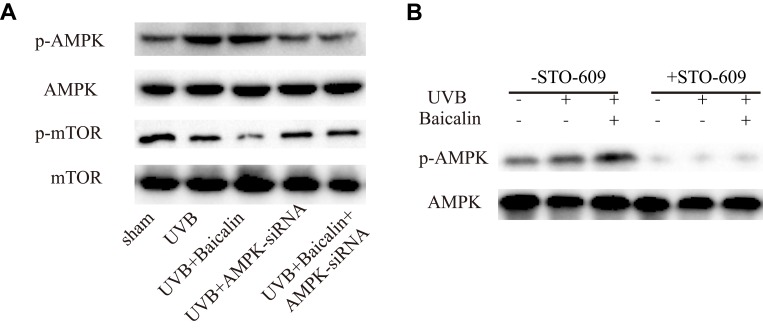
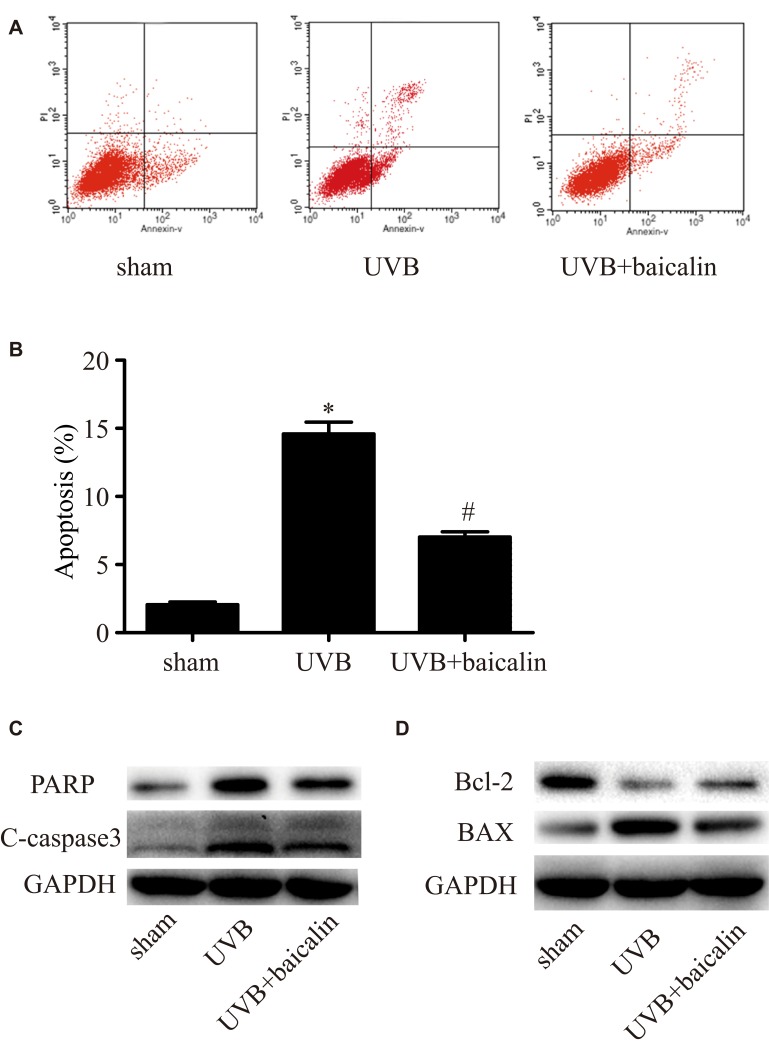
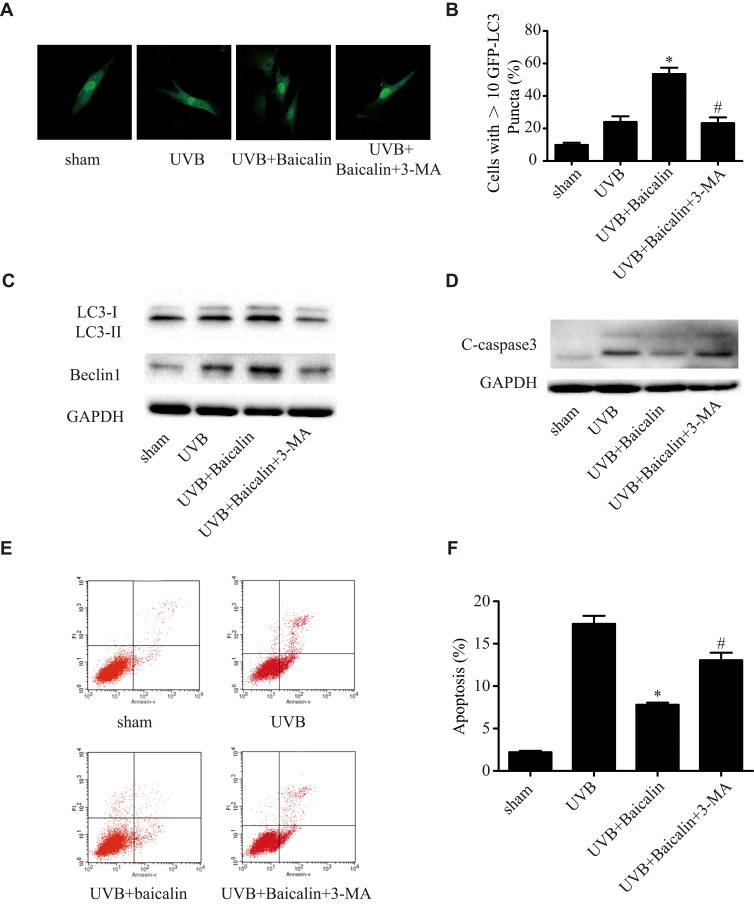
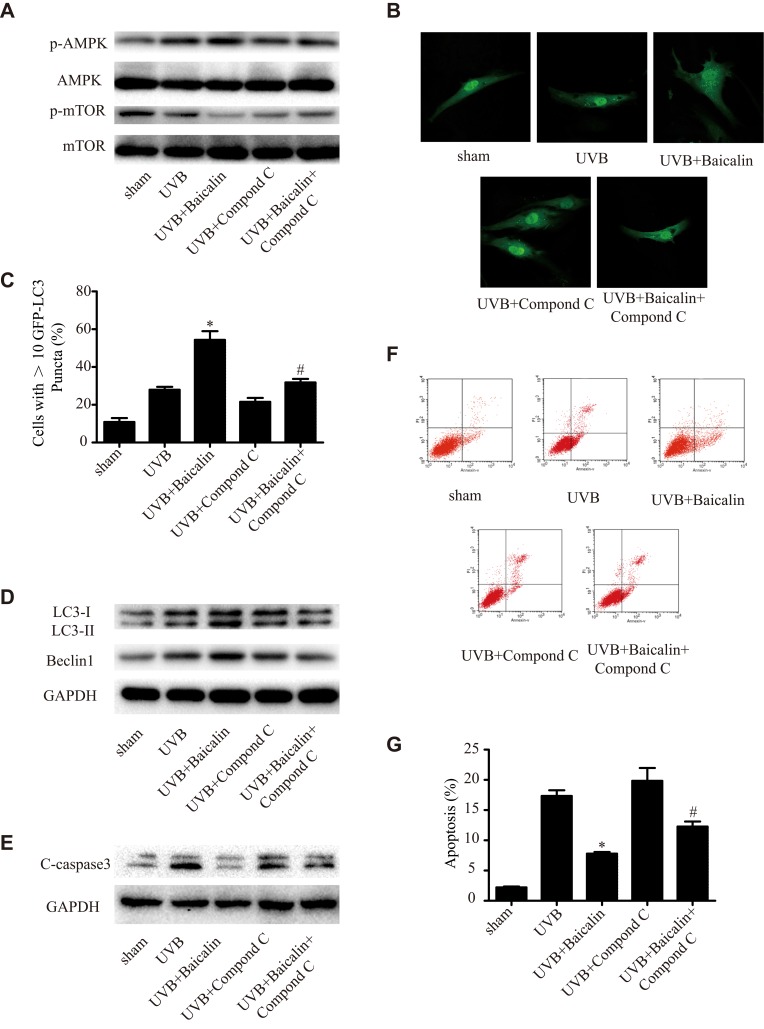
Baicalin exerted cytoprotective effects in UVB-induced HSFs. Moreover, baicalin increased autophagy and suppressed UVB-induced apoptosis of HSFs. Pretreatment with 3-MA, an autophagy inhibitor, attenuated baicalin-induced HSFs autophagy and promoted apoptosis. Baicalin activated AMPK, which leads to suppression of basal mTOR activity in cultured HSFs. Administration of compound C, an AMPK inhibitor, abrogated AMPK phosphorylation and increased mTOR phosphorylation and apoptosis compared with baicalin alone.
Taken together, these results indicate the important role of mTOR inhibition in UVB protection by baicalin and provide a new target and strategy for better prevention of UV-induced skin disorders.
黄芩苷是从黄芩根中分离得到的天然产物,已被报道具有抗氧化和抗凋亡作用,可用于皮肤,但作用机制尚不清楚。本研究旨在探讨黄芩苷对人皮肤成纤维细胞抗 UVB 作用的可能机制。
用 CCK-8 试剂盒评估细胞增殖。用 Annexin V-PE/PI 凋亡检测试剂盒通过流式细胞术检测细胞凋亡率。通过荧光 LC3 斑点和 Western blot 评估自噬。用 Western blot 分析细胞信号转导。
黄芩苷对 UVB 诱导的 HSF 具有细胞保护作用。此外,黄芩苷增加了自噬并抑制了 UVB 诱导的 HSF 凋亡。自噬抑制剂 3-MA 预处理可减弱黄芩苷诱导的 HSF 自噬并促进凋亡。黄芩苷激活 AMPK,导致培养的 HSF 中基础 mTOR 活性受到抑制。与单独使用黄芩苷相比,AMPK 抑制剂 Compound C 可阻断 AMPK 磷酸化,增加 mTOR 磷酸化和凋亡。
综上所述,这些结果表明 mTOR 抑制在黄芩苷的 UVB 保护中起重要作用,并为更好地预防 UV 诱导的皮肤疾病提供了新的靶点和策略。