Department of Dermatology, The Affiliated Huaian No. 1 People's Hospital of Nanjing Medical University, Huai'an, Jiangsu 223300, P.R. China.
Int J Mol Med. 2018 Sep;42(3):1445-1459. doi: 10.3892/ijmm.2018.3720. Epub 2018 Jun 5.
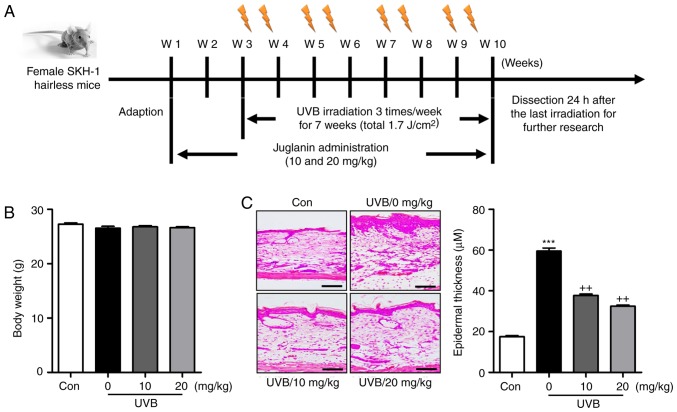
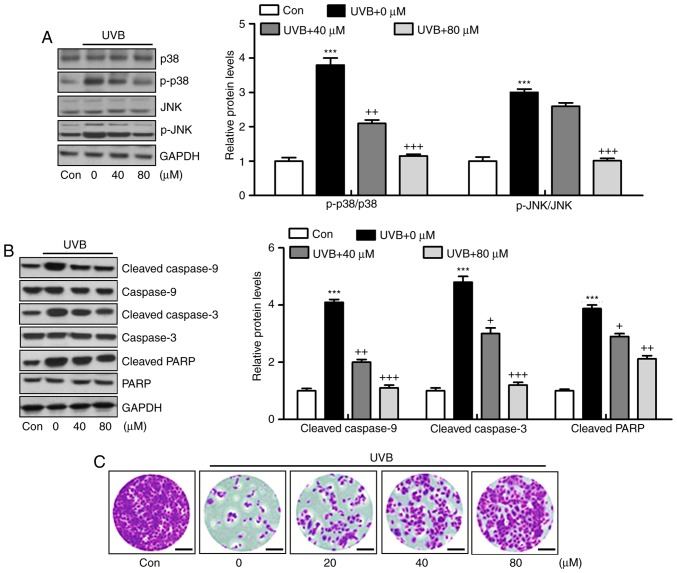
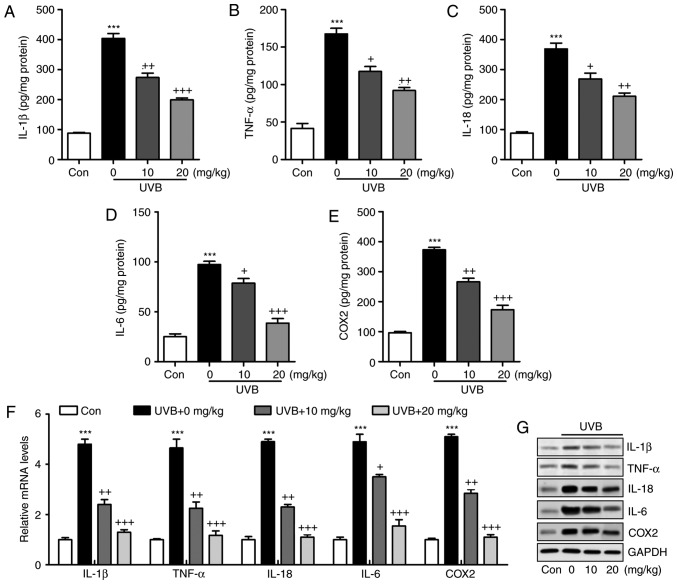
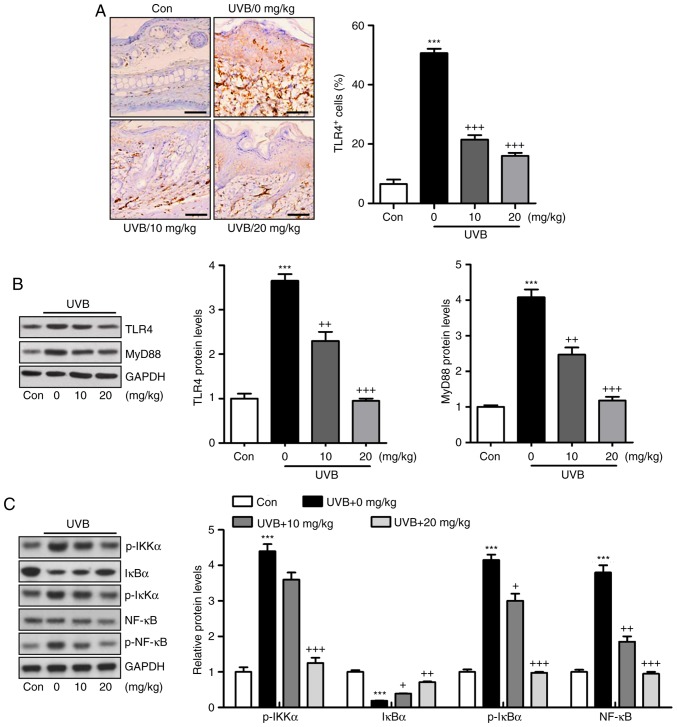
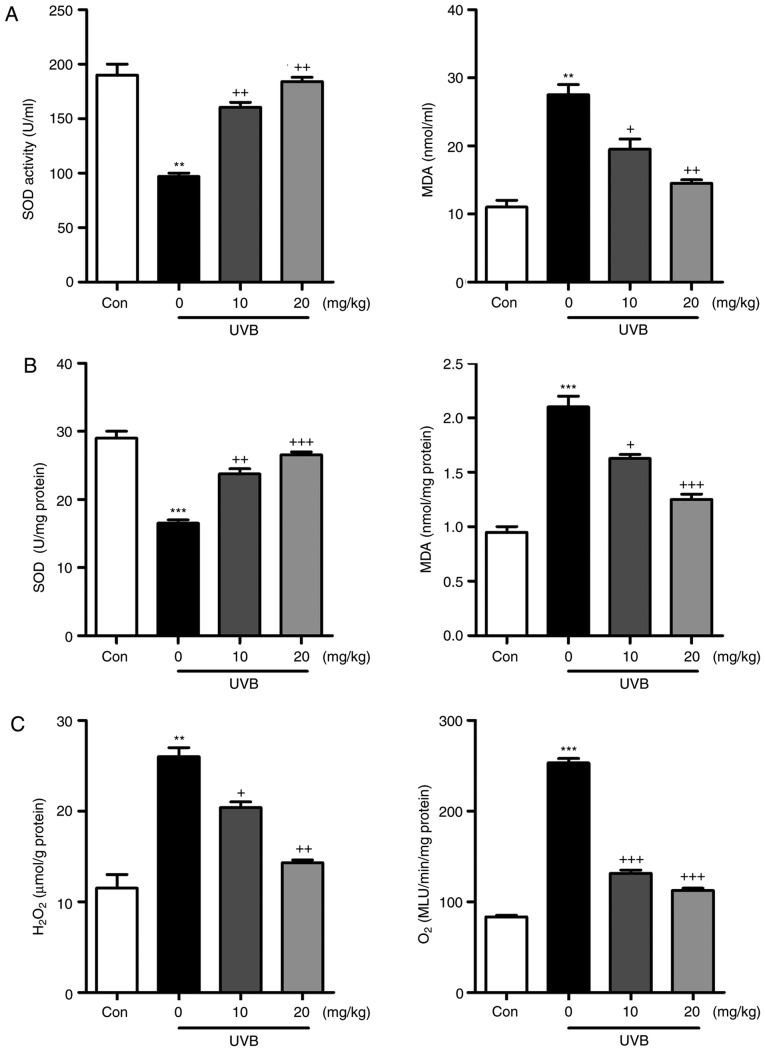
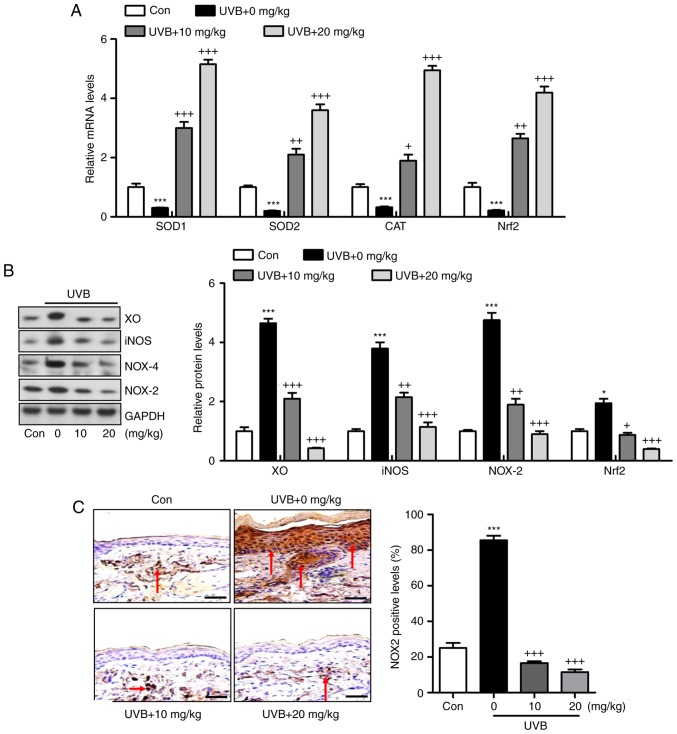
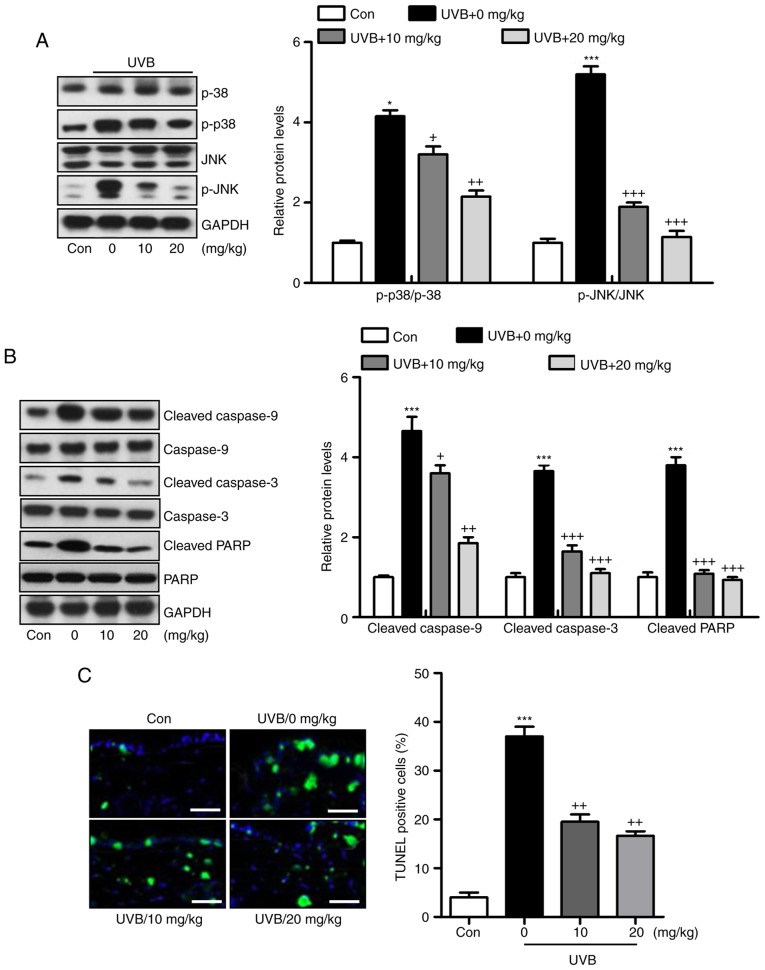
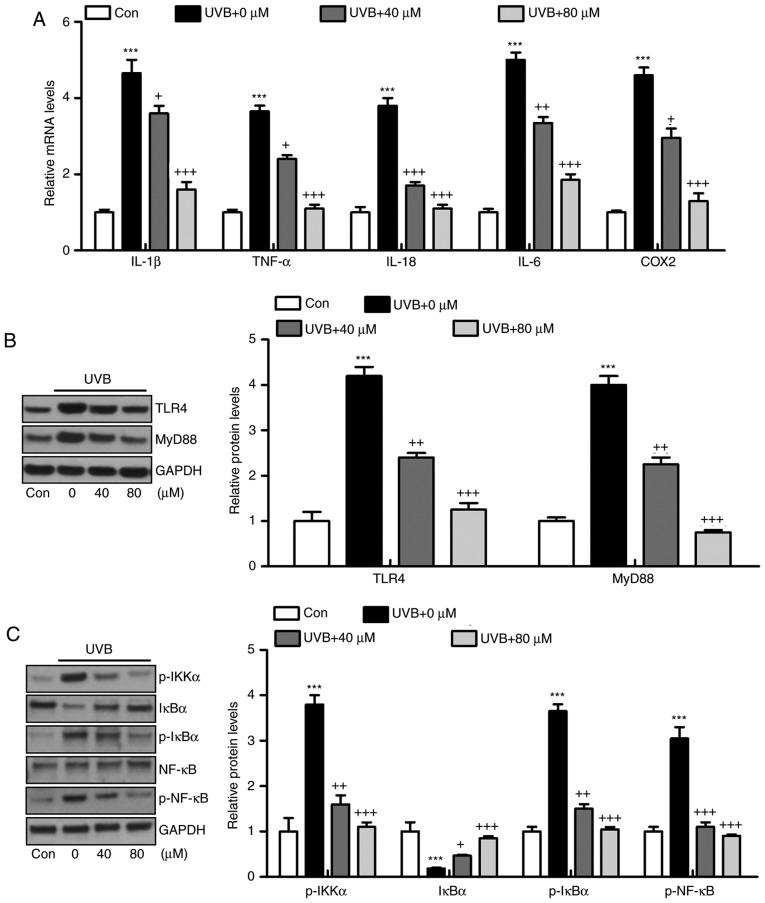
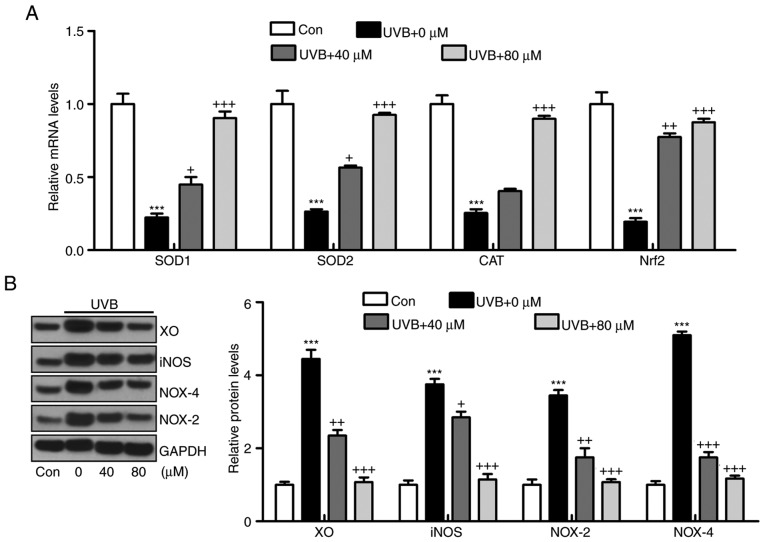
Solar ultraviolet B (UVB) radiation is known to trigger inflammation, oxidative stress and apoptotic responses through various signaling pathways, which eventually lead to skin cancer. The present study investigated whether liquiritin suppresses UVB‑induced skin injury in vivo and in vitro using SKH‑1 hairless mice and HACAT cells, respectively. The animals were exposed to UVB irradiation (180 mJ/cm2) for 20 min, followed by liquiritin treatment. The findings indicated that UVB exposure resulted in the excessive release of pro‑inflammatory cytokines, including interleukin (IL)‑1β, tumor necrosis factor (TNF)‑α, IL‑18, IL‑6 and cyclooxygenase (COX)2, which were dependent on the toll‑like receptor (TLR)4/myeloid differentiation factor 88 (MyD88)/nuclear factor‑κB (NF‑κB) signaling pathway. Oxidative stress was also observed, evidenced by reduced antioxidants and elevated oxidants. Apoptosis, examined using terminal deoxynucleotidyl transferase dUTP nick end labeling and crystal violet staining, suggested that UVB irradiation caused cell death in vivo and in vitro, which was closely associated with p38/c‑Jun N‑terminal kinase and caspase activity. Of note, liquiritin treatment in mice and cells exposed to UVB showed reduced inflammatory response, oxidative stress and apoptosis through inhibiting the activation of TLR4/MyD88/NF‑κB mitogen‑activated protein kinases and caspase pathways, and downregulating the release of oxidants. Overall, the data revealed that liquiritin may be a useful compound against UVB‑induced skin injury.
太阳紫外线 B(UVB)辐射已知通过各种信号通路引发炎症、氧化应激和细胞凋亡反应,最终导致皮肤癌。本研究分别使用无毛 SKH-1 小鼠和 HACAT 细胞,研究了甘草素是否能抑制 UVB 诱导的体内和体外皮肤损伤。动物接受 180mJ/cm2 的 UVB 照射 20 分钟,然后用甘草素处理。结果表明,UVB 暴露导致促炎细胞因子(包括白细胞介素 1β、肿瘤坏死因子-α、白细胞介素 18、白细胞介素 6 和环氧化酶 2)过度释放,这依赖于 Toll 样受体 4/髓样分化因子 88(MyD88)/核因子-κB(NF-κB)信号通路。还观察到氧化应激,表现为抗氧化剂减少和氧化剂增加。使用末端脱氧核苷酸转移酶 dUTP 缺口末端标记和结晶紫染色检查凋亡,表明 UVB 照射导致体内和体外细胞死亡,这与 p38/c-Jun N-末端激酶和半胱氨酸天冬氨酸蛋白酶活性密切相关。值得注意的是,甘草素处理暴露于 UVB 的小鼠和细胞显示出炎症反应、氧化应激和凋亡减少,这是通过抑制 TLR4/MyD88/NF-κB 丝裂原激活蛋白激酶和半胱氨酸天冬氨酸蛋白酶途径,并下调氧化剂释放来实现的。总体而言,数据表明甘草素可能是一种对抗 UVB 诱导皮肤损伤的有用化合物。