Wang Ye, Liu Yanfang, Du Xinyang, Ma Hong, Yao Jing
Cancer Center, Union Hospital, Tongji Medical College, Huazhong University of Science and Technology, Wuhan 430022, People's Republic of China.
Cancer Manag Res. 2020 Jan 30;12:695-702. doi: 10.2147/CMAR.S242329. eCollection 2020.
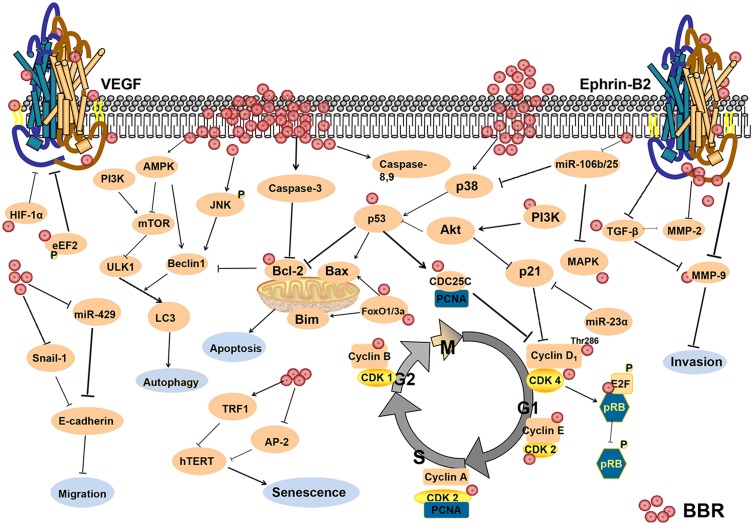
Berberine (BBR) has been extensively studied in vivo and vitro experiments. BBR inhibits cell proliferation by regulating cell cycle and cell autophagy, and promoting cell apoptosis. BBR also inhibits cell invasion and metastasis by suppressing EMT and down-regulating the expression of metastasis-related proteins and signaling pathways. In addition, BBR inhibits cell proliferation by interacting with microRNAs and suppressing telomerase activity. BBR exerts its anti-inflammation and antioxidant properties, and also regulates tumor microenvironment. This review emphasized that BBR as a potential anti-inflammation and antioxidant agent, also as an effective immunomodulator, is expected to be widely used in clinic for cancer therapy.
小檗碱(BBR)已在体内和体外实验中得到广泛研究。BBR通过调节细胞周期和细胞自噬以及促进细胞凋亡来抑制细胞增殖。BBR还通过抑制上皮-间质转化(EMT)以及下调转移相关蛋白和信号通路的表达来抑制细胞侵袭和转移。此外,BBR通过与微小RNA相互作用并抑制端粒酶活性来抑制细胞增殖。BBR发挥其抗炎和抗氧化特性,还可调节肿瘤微环境。本综述强调,BBR作为一种潜在的抗炎和抗氧化剂,同时也是一种有效的免疫调节剂,有望在临床上广泛用于癌症治疗。