Jawi Motasim M, Frohlich Jiri, Chan Sammy Y
Healthy Heart Program, St. Paul's Hospital, Vancouver V6Z 1Y6, Canada.
Division of Experimental Medicine, Department of Medicine, Faculty of Medicine, University of British Columbia, Vancouver V5Z 1M9, Canada.
J Lipids. 2020 Feb 1;2020:3491764. doi: 10.1155/2020/3491764. eCollection 2020.
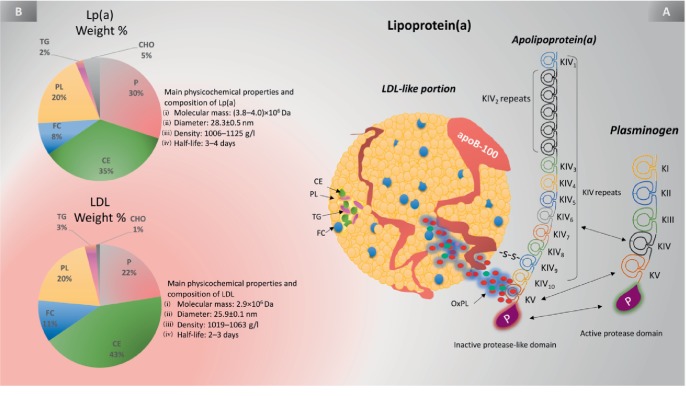
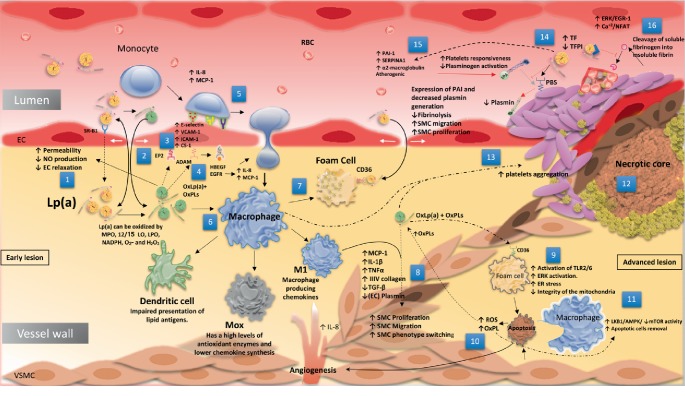
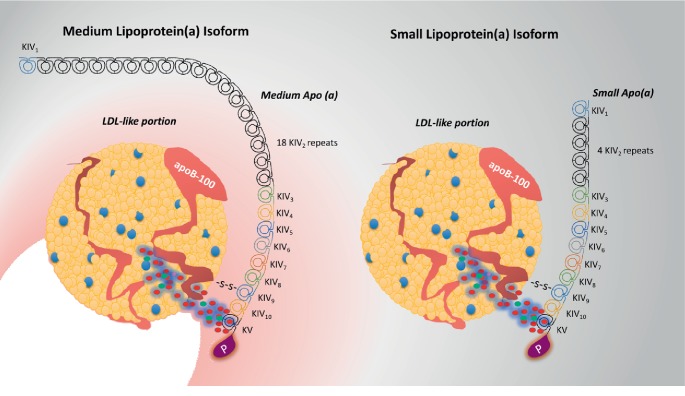
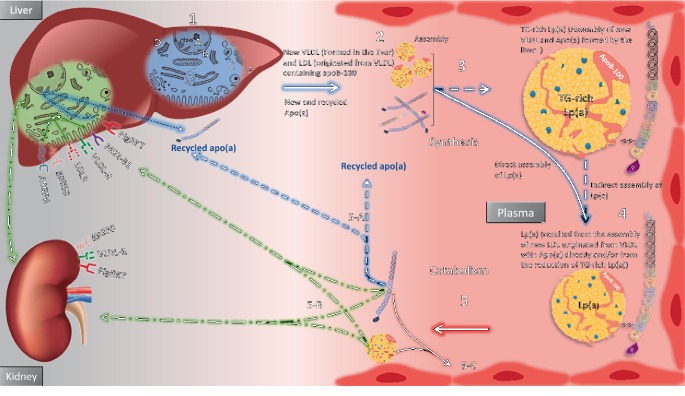
Lipoprotein(a) [Lp(a)], aka "Lp little a", was discovered in the 1960s in the lab of the Norwegian physician Kåre Berg. Since then, we have greatly improved our knowledge of lipids and cardiovascular disease (CVD). Lp(a) is an enigmatic class of lipoprotein that is exclusively formed in the liver and comprises two main components, a single copy of apolipoprotein (apo) B-100 (apo-B100) tethered to a single copy of a protein denoted as apolipoprotein(a) apo(a). Plasma levels of Lp(a) increase soon after birth to a steady concentration within a few months of life. In adults, Lp(a) levels range widely from <2 to 2500 mg/L. Evidence that elevated Lp(a) levels >300 mg/L contribute to CVD is significant. The improvement of isoform-independent assays, together with the insight from epidemiologic studies, meta-analyses, genome-wide association studies, and Mendelian randomization studies, has established Lp(a) as the single most common independent genetically inherited causal risk factor for CVD. This breakthrough elevated Lp(a) from a biomarker of atherosclerotic risk to a target of therapy. With the emergence of promising second-generation antisense therapy, we hope that we can answer the question of whether Lp(a) is ready for prime-time clinic use. In this review, we present an update on the metabolism, pathophysiology, and current/future medical interventions for high levels of Lp(a).
脂蛋白(a)[Lp(a)],又称“小a脂蛋白”,于20世纪60年代在挪威医生卡雷·伯格的实验室中被发现。从那时起,我们对脂质和心血管疾病(CVD)的认识有了很大提高。Lp(a)是一类神秘的脂蛋白,仅在肝脏中形成,由两个主要成分组成,一个载脂蛋白(apo)B-100(apo-B100)的单拷贝与一个名为载脂蛋白(a)(apo(a))的蛋白质的单拷贝相连。出生后不久,Lp(a)的血浆水平会升高,并在出生后的几个月内达到稳定浓度。在成年人中,Lp(a)水平范围广泛,从<2到2500mg/L。Lp(a)水平>300mg/L会导致CVD的证据很充分。独立于异构体的检测方法的改进,以及来自流行病学研究、荟萃分析、全基因组关联研究和孟德尔随机化研究的见解,已将Lp(a)确立为CVD最常见的单一独立遗传因果风险因素。这一突破将Lp(a)从动脉粥样硬化风险的生物标志物提升为治疗靶点。随着有前景的第二代反义疗法的出现,我们希望能够回答Lp(a)是否已准备好用于临床的问题。在这篇综述中,我们介绍了Lp(a)高水平的代谢、病理生理学以及当前/未来医学干预措施的最新情况。