Galani Apostolia, Zikopoulos Athanasios, Potiris Anastasios, Moustakli Efthalia, Maneta-Stavrakaki Stefania, Paraskevaidi Maria, Skentou Charikleia, Zikopoulos Konstantinos, Drakakis Peter, Stavros Sofoklis
Department of Metabolism, Digestion and Reproduction, Faculty of Medicine, Imperial College London, London W12 ONN, UK.
Third Department of Obstetrics and Gynecology, University General Hospital "ATTIKON", Medical School, National and Kapodistrian University of Athens, 12462 Athens, Greece.
J Clin Med. 2025 Jun 11;14(12):4134. doi: 10.3390/jcm14124134.
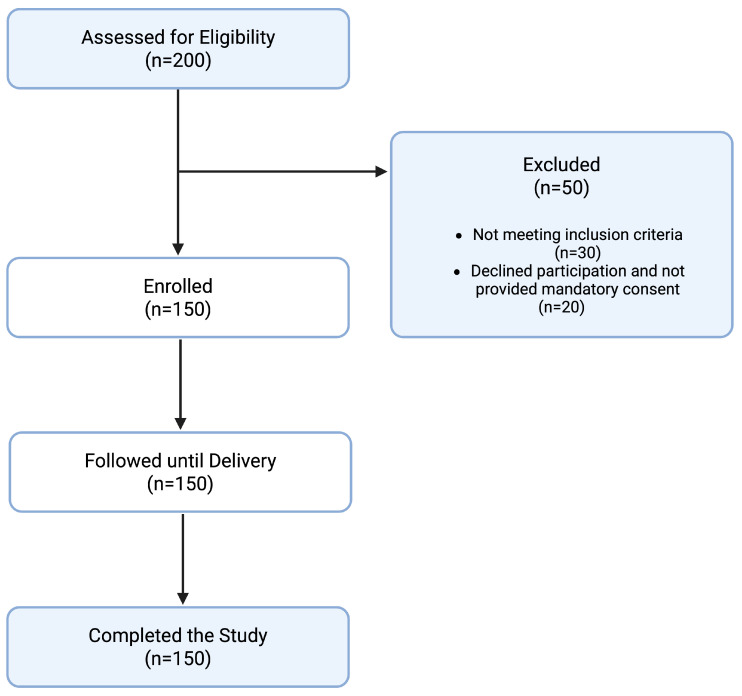
Preeclampsia (PE), characterized by its complex and multisystemic nature, significantly compromises the health outcomes of both mothers and their newborns. According to recent research, its underlying pathophysiological mechanisms may be influenced by abnormalities in lipid metabolism. The purpose of this study is to assess the association between unfavorable pregnancy outcomes and increased lipoprotein(a) levels in the first trimester and the subsequent risk of PE. A prospective cohort study comprising 150 pregnant women with a gestational age of less than 12 weeks and no history of PE was carried out at the University Hospital of Ioannina. In the first trimester, lipoprotein(a) levels were assessed, and individuals were monitored for the emergence of preeclampsia, preterm birth, gestational hypertension without proteinuria, and fetal growth limitation. Selection bias was minimized through the use of sequential sampling and rigorous inclusion and exclusion criteria. Associations were assessed using logistic regression analysis. Women with elevated lipoprotein(a) levels had a considerably greater risk of PE than those with normal levels (64.7% vs. 15.5%, < 0.001). Additionally, elevated lipoprotein(a) was linked to higher odds of fetal growth restriction ( < 0.001), gestational hypertension without proteinuria ( = 0.024), and premature delivery ( = 0.009). These results imply that early lipoprotein(a) screening during pregnancy may help identify women who are at high risk for PE and its associated negative consequences. The association between PE and elevated first-trimester lipoprotein(a) levels highlights the necessity for a deeper understanding of the underlying pathophysiological mechanisms, which could ultimately improve outcomes for both mothers and newborns.
子痫前期(PE)具有复杂的多系统特性,严重影响母亲及其新生儿的健康结局。根据最近的研究,其潜在的病理生理机制可能受脂质代谢异常的影响。本研究的目的是评估孕早期脂蛋白(a)水平升高与不良妊娠结局之间的关联以及随后发生PE的风险。在约阿尼纳大学医院开展了一项前瞻性队列研究,纳入150例孕周小于12周且无PE病史的孕妇。在孕早期,评估脂蛋白(a)水平,并监测个体是否出现子痫前期、早产、无蛋白尿的妊娠期高血压和胎儿生长受限。通过序贯抽样以及严格的纳入和排除标准将选择偏倚降至最低。使用逻辑回归分析评估关联。脂蛋白(a)水平升高的女性发生PE 的风险明显高于水平正常者(64.7% 对15.5%,<0.001)。此外,脂蛋白(a)升高与胎儿生长受限(<0.001)、无蛋白尿的妊娠期高血压(=0.024)和早产(=0.009)几率较高有关。这些结果表明,孕期早期脂蛋白(a)筛查可能有助于识别发生PE及其相关不良后果风险较高的女性群体。PE与孕早期脂蛋白(a)水平升高之间的关联凸显了深入了解潜在病理生理机制的必要性,这最终可能改善母亲和新生儿的结局