Paulis Marianna, Susani Lucia, Castelli Alessandra, Suzuki Teruhiko, Hara Takahiko, Straniero Letizia, Duga Stefano, Strina Dario, Mantero Stefano, Caldana Elena, Sergi Lucia Sergi, Villa Anna, Vezzoni Paolo
National Research Council (CNR)-IRGB/UOS, Milan, Italy.
Humanitas Clinical and Research Center, Rozzano (MI), Italy.
Mol Ther Methods Clin Dev. 2020 Jan 21;17:369-377. doi: 10.1016/j.omtm.2020.01.003. eCollection 2020 Jun 12.
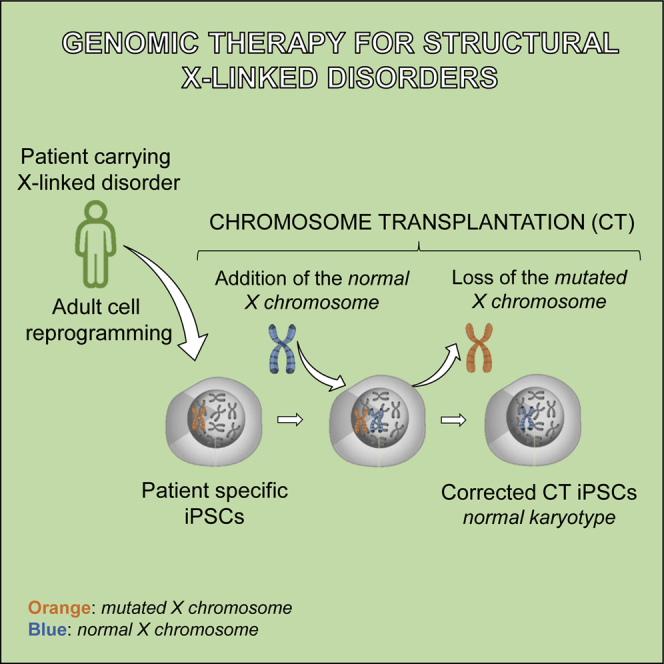
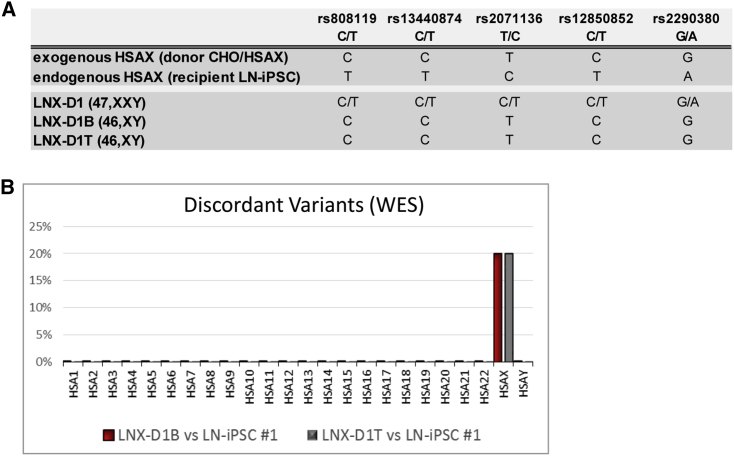
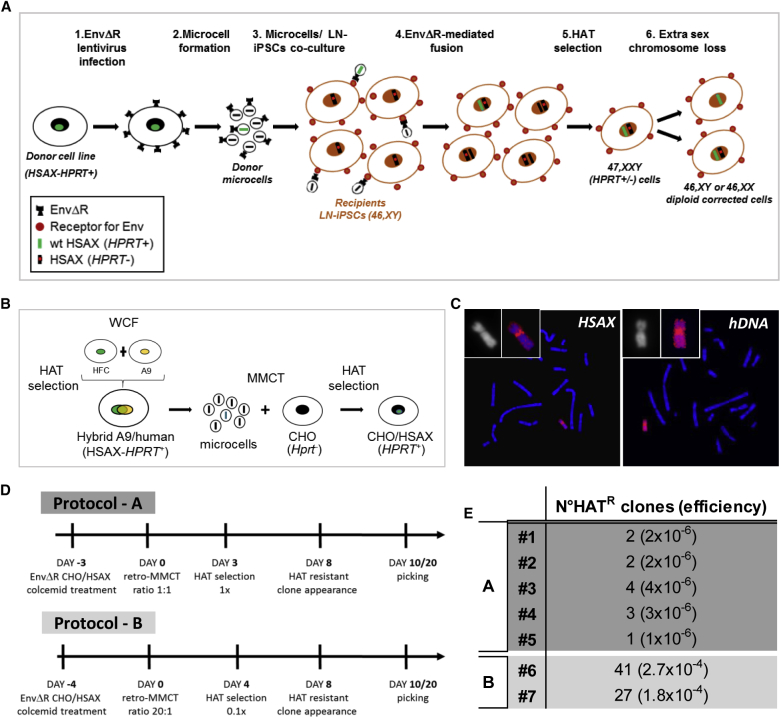
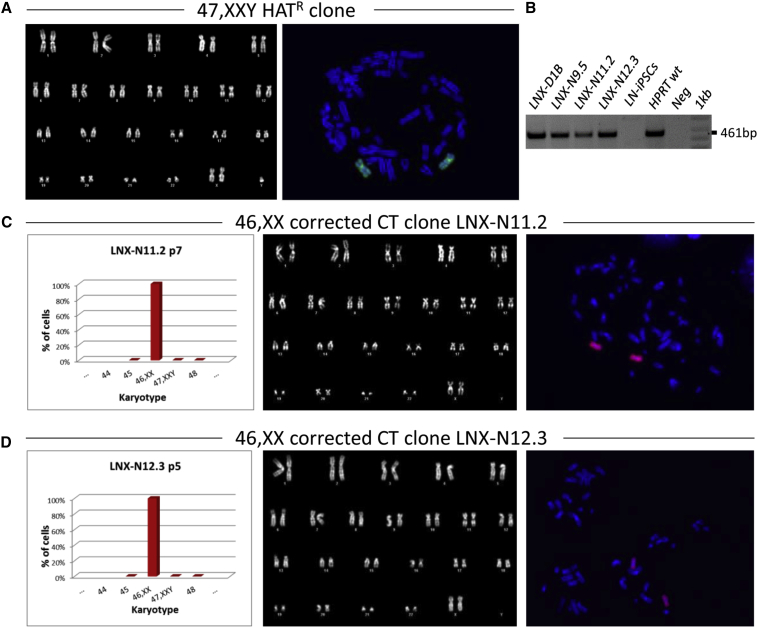
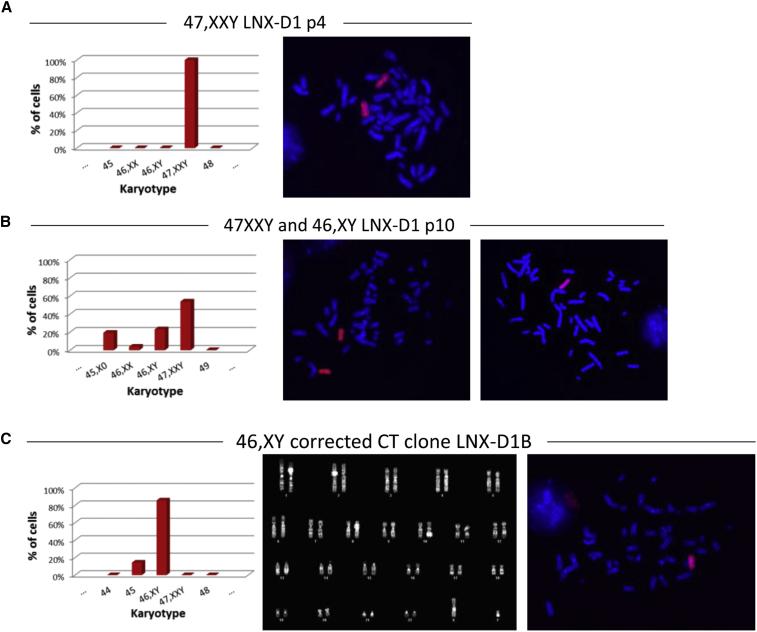
Many human genetic diseases are associated with gross mutations such as aneuploidies, deletions, duplications, or inversions. For these "structural" disorders, conventional gene therapy, based on viral vectors and/or on programmable nuclease-mediated homologous recombination, is still unsatisfactory. To correct such disorders, chromosome transplantation (CT), defined as the perfect substitution of an endogenous defective chromosome with an exogenous normal one, could be applied. CT re-establishes a normal diploid cell, leaving no marker of the procedure, as we have recently shown in mouse pluripotent stem cells. To prove the feasibility of the CT approach in human cells, we used human induced pluripotent stem cells (hiPSCs) reprogrammed from Lesch-Nyhan (LN) disease patients, taking advantage of their mutation in the X-linked gene, making the LN cells selectable and distinguishable from the resistant corrected normal cells. In this study, we demonstrate, for the first time, that CT is feasible in hiPSCs: the normal exogenous X chromosome was first transferred using an improved chromosome transfer system, and the extra sex chromosome was spontaneously lost. These CT cells were functionally corrected and maintained their pluripotency and differentiation capability. By inactivation of the autologous gene, CT paves the way to the correction of hiPSCs from several X-linked disorders.
许多人类遗传疾病与染色体数目异常、缺失、重复或倒位等大规模突变有关。对于这些“结构性”疾病,基于病毒载体和/或可编程核酸酶介导的同源重组的传统基因治疗仍然不尽人意。为了纠正此类疾病,可以应用染色体移植(CT),即将内源性缺陷染色体用外源性正常染色体进行完美替代。正如我们最近在小鼠多能干细胞中所展示的那样,CT能重新建立一个正常的二倍体细胞,且不会留下该操作的任何标记。为了证明CT方法在人类细胞中的可行性,我们利用从莱施-奈恩(LN)病患者重编程而来的人类诱导多能干细胞(hiPSC),利用其X连锁基因突变,使LN细胞可被选择并与抗性纠正后的正常细胞区分开来。在本研究中,我们首次证明CT在hiPSC中是可行的:首先使用改进的染色体转移系统转移正常的外源性X染色体,多余的性染色体会自发丢失。这些CT细胞在功能上得到了纠正,并保持了它们的多能性和分化能力。通过使自体基因失活,CT为纠正多种X连锁疾病的hiPSC铺平了道路。