Lawrence Berkeley National Laboratory, Berkeley, CA, United States of America.
PLoS One. 2020 Feb 26;15(2):e0229495. doi: 10.1371/journal.pone.0229495. eCollection 2020.
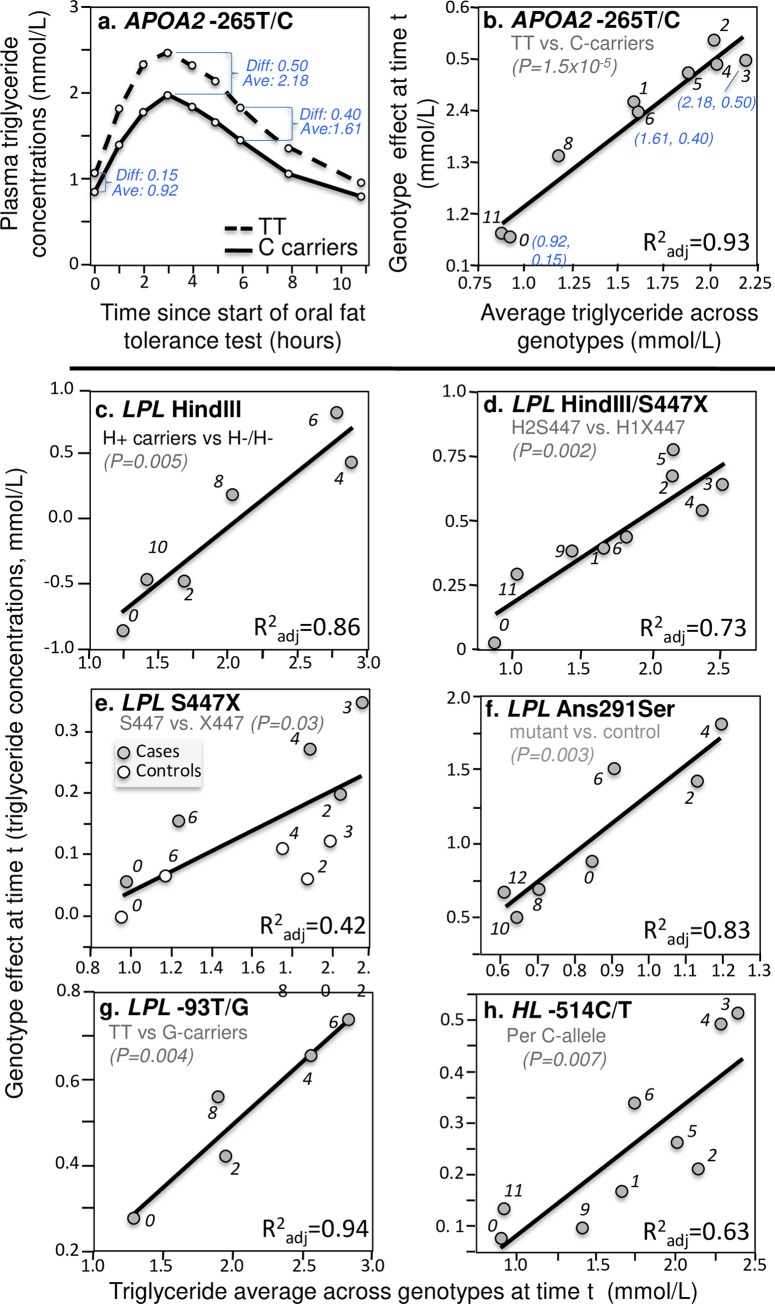
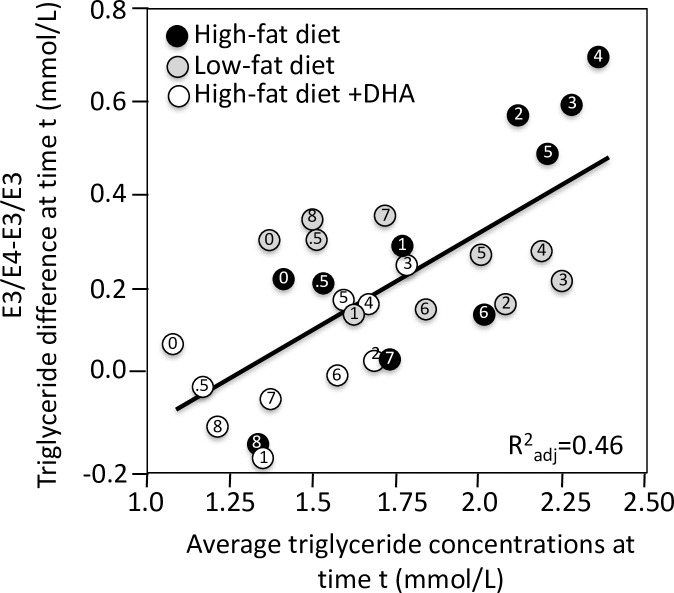
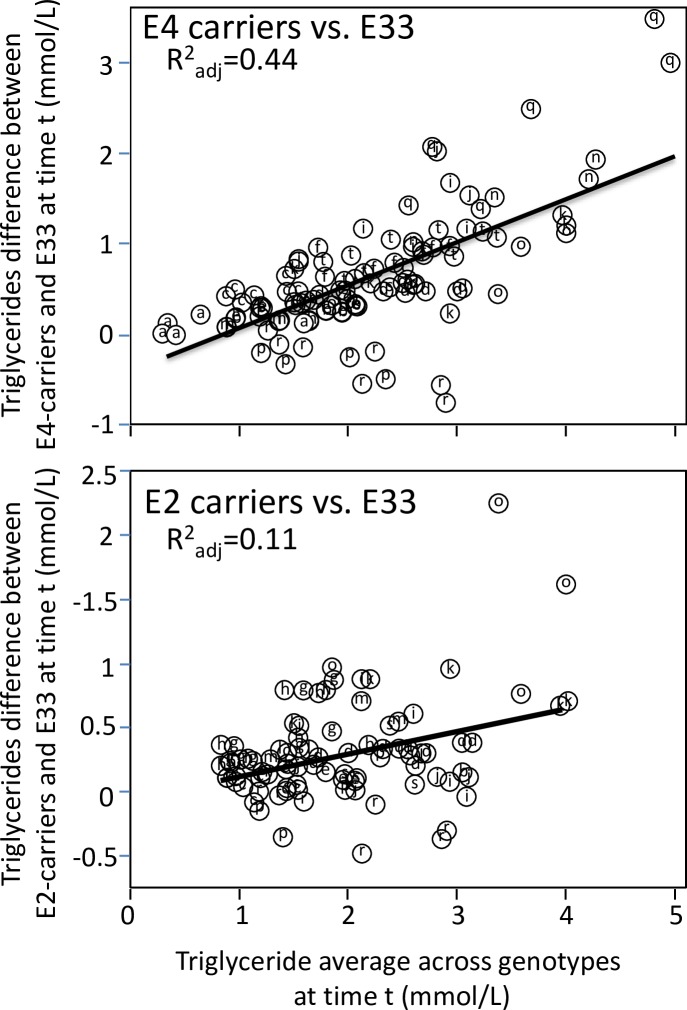
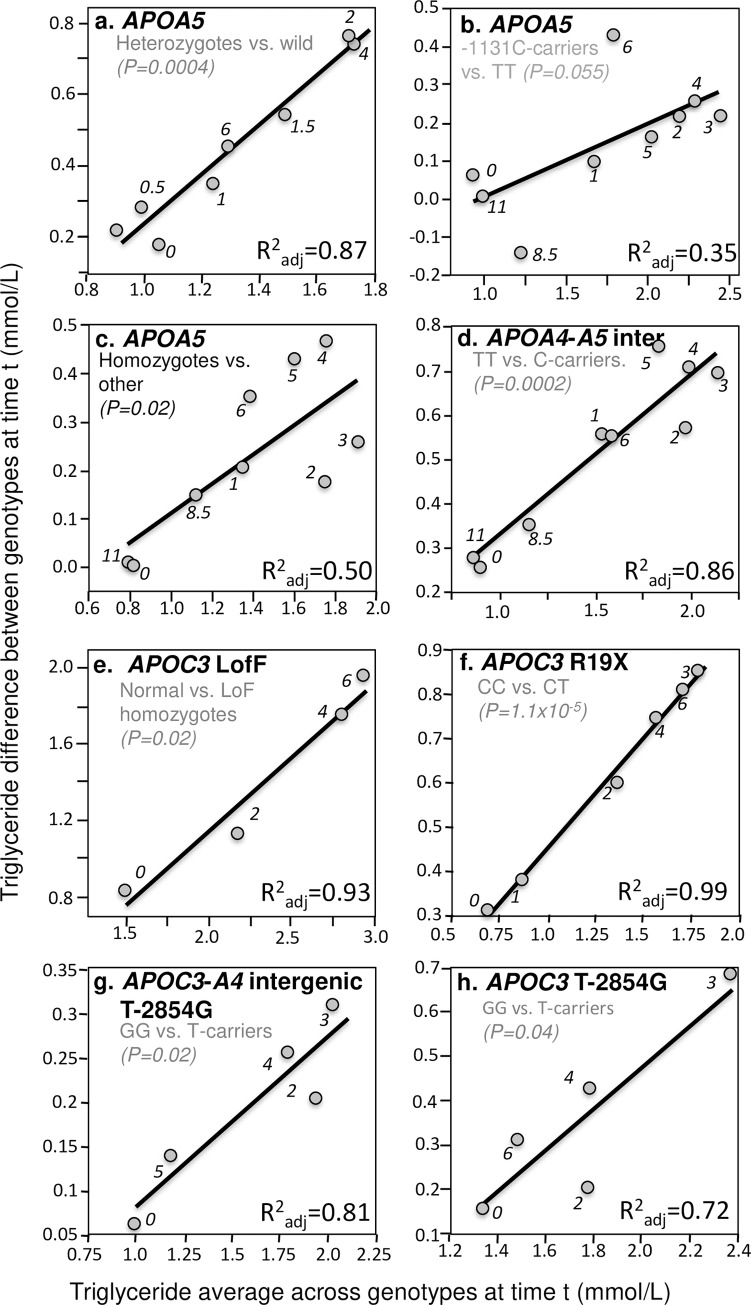
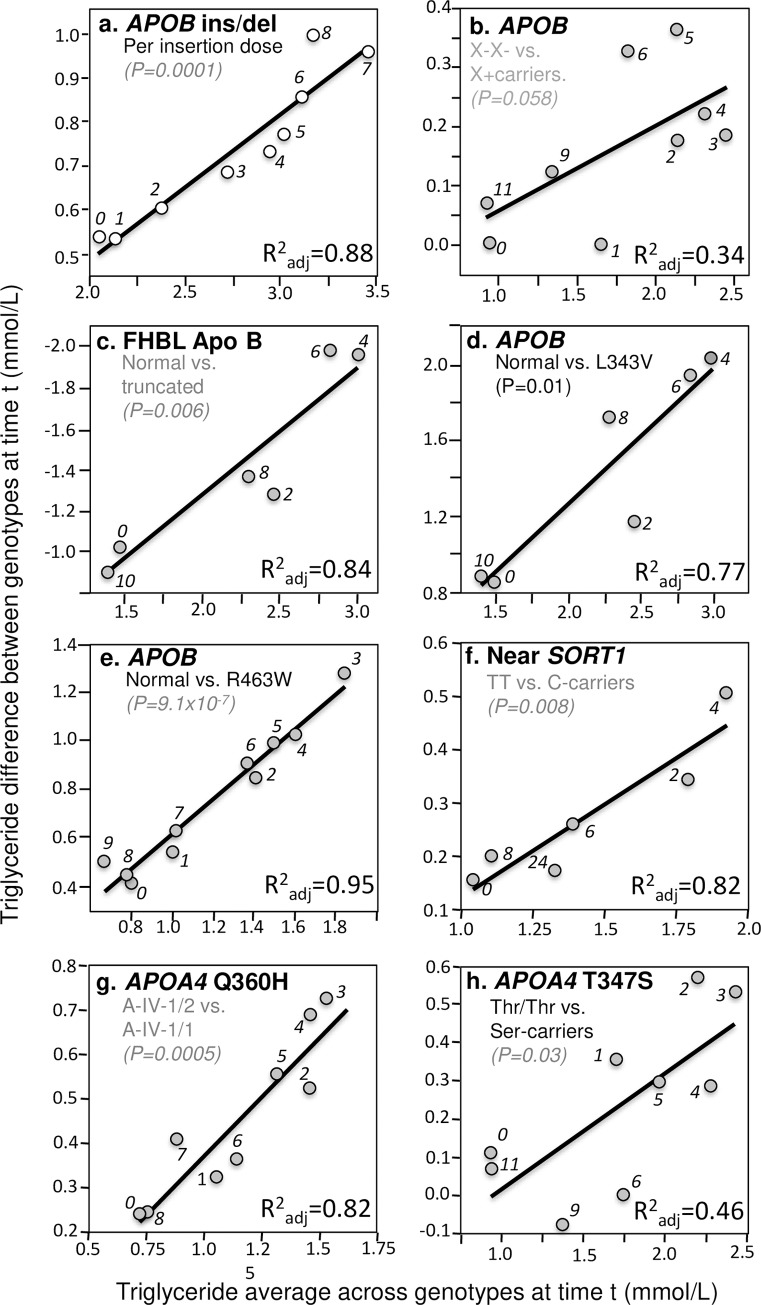
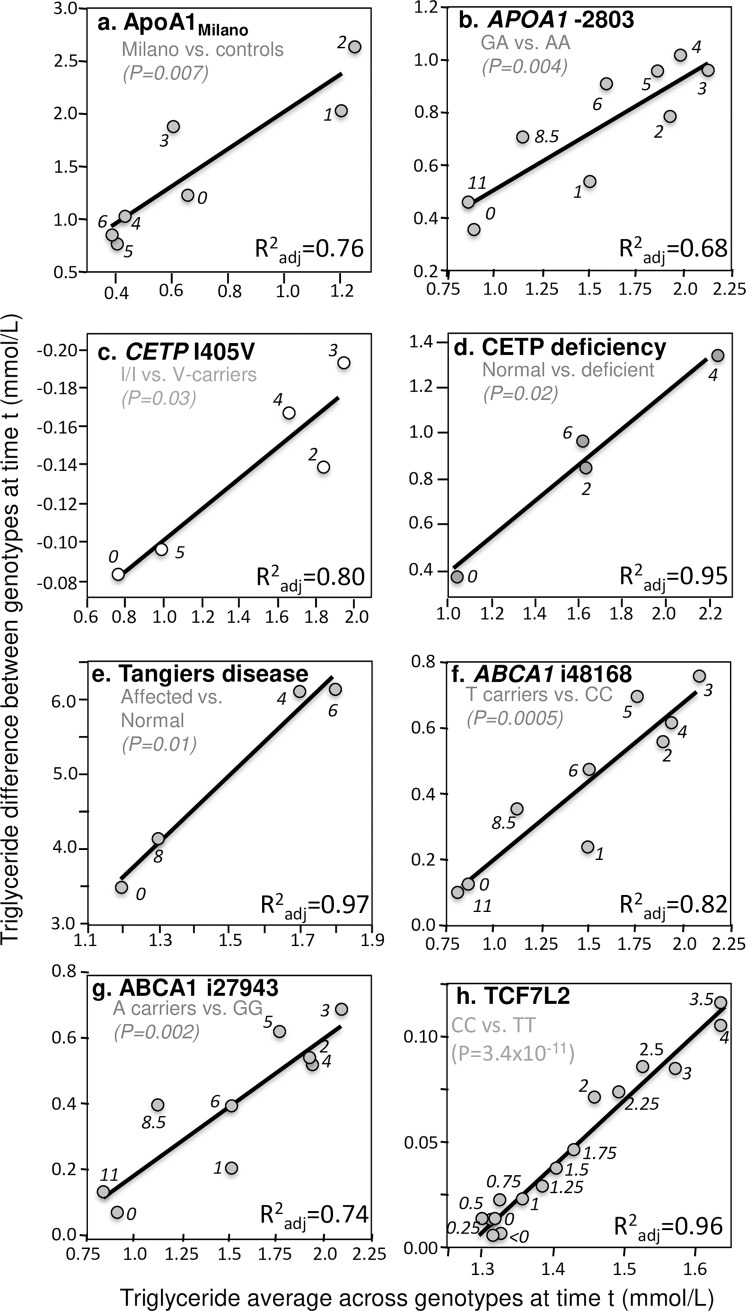
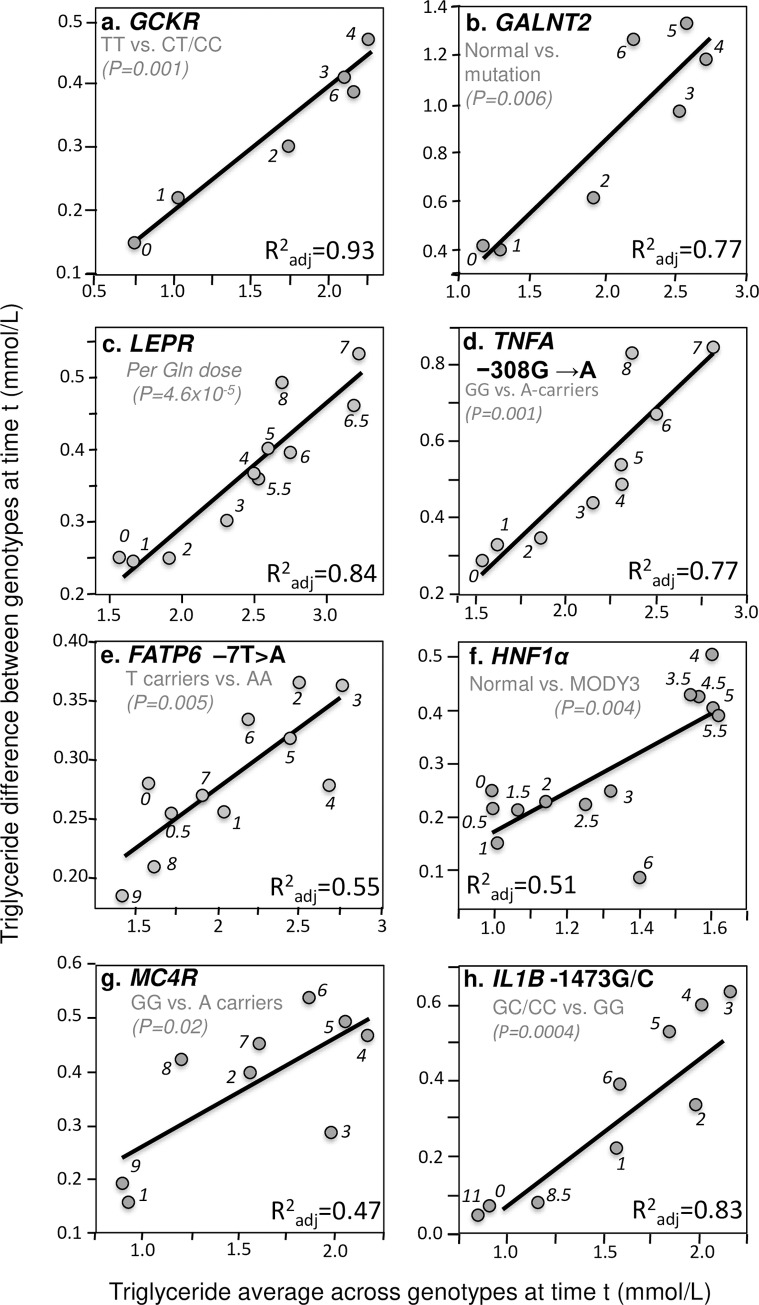
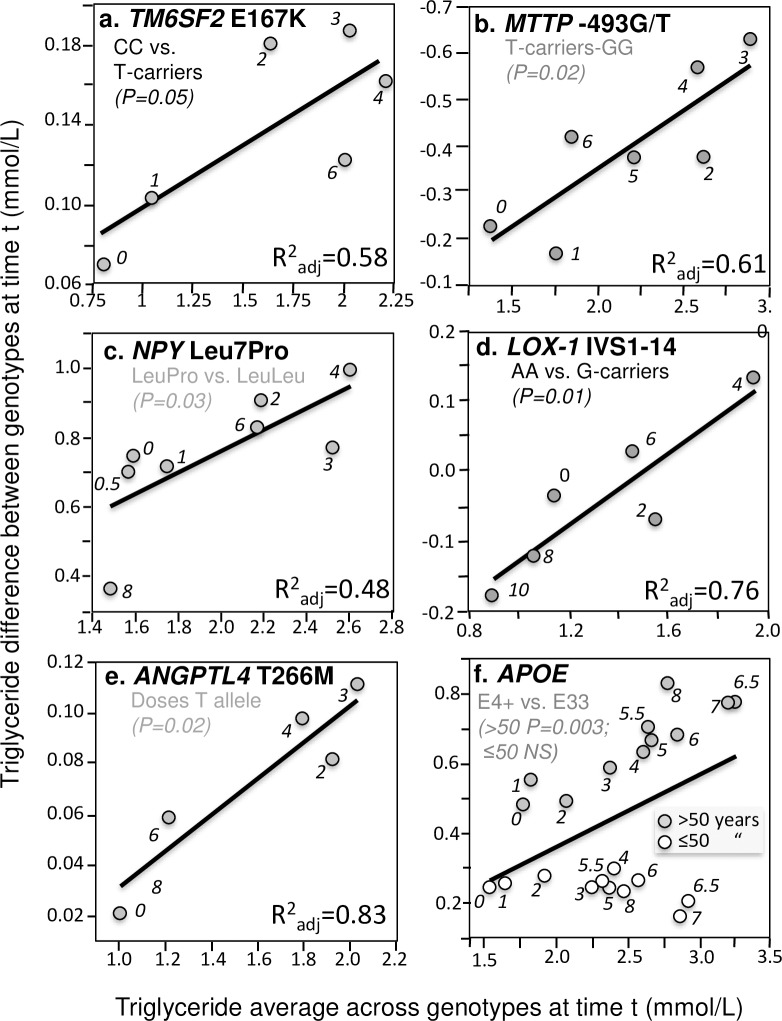
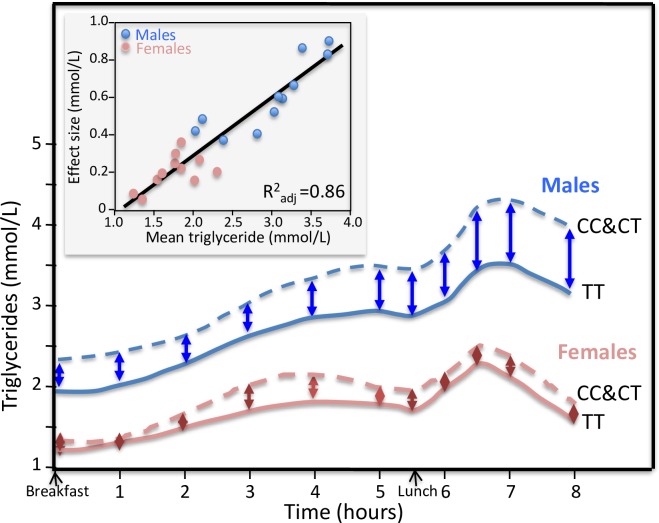
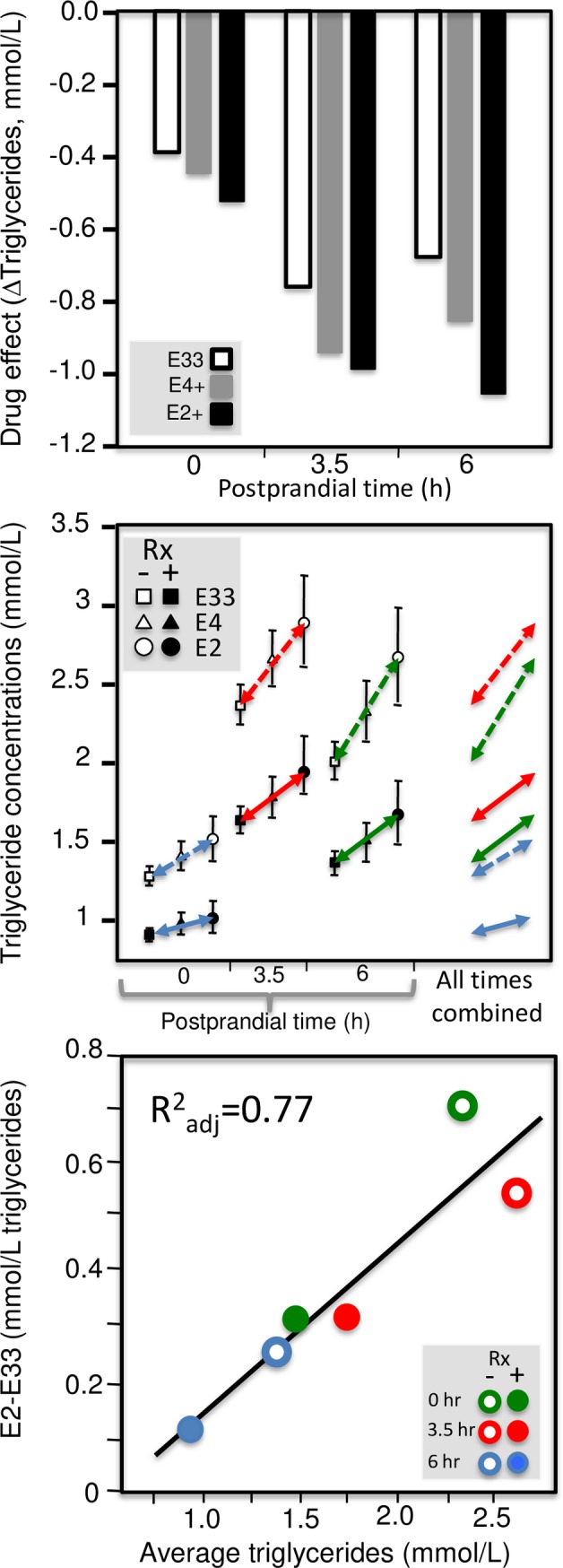
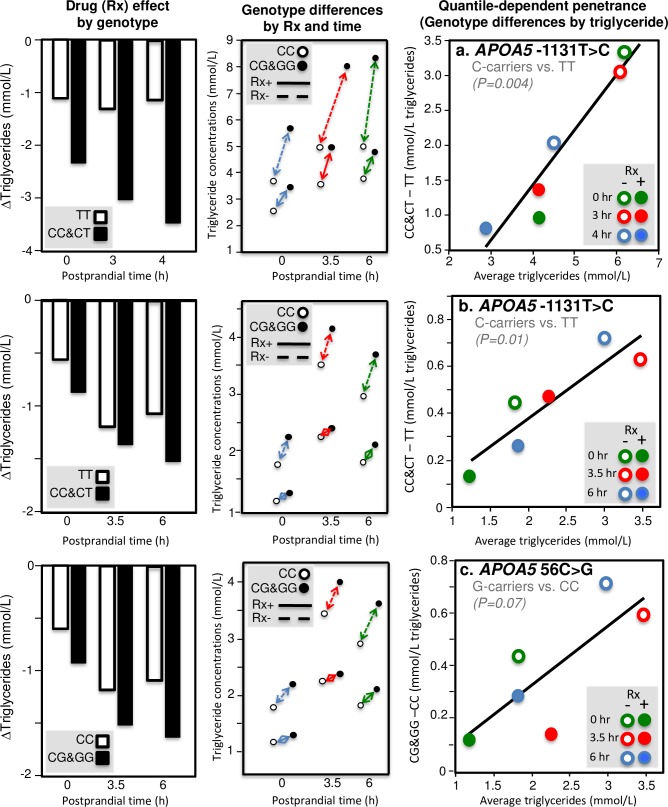
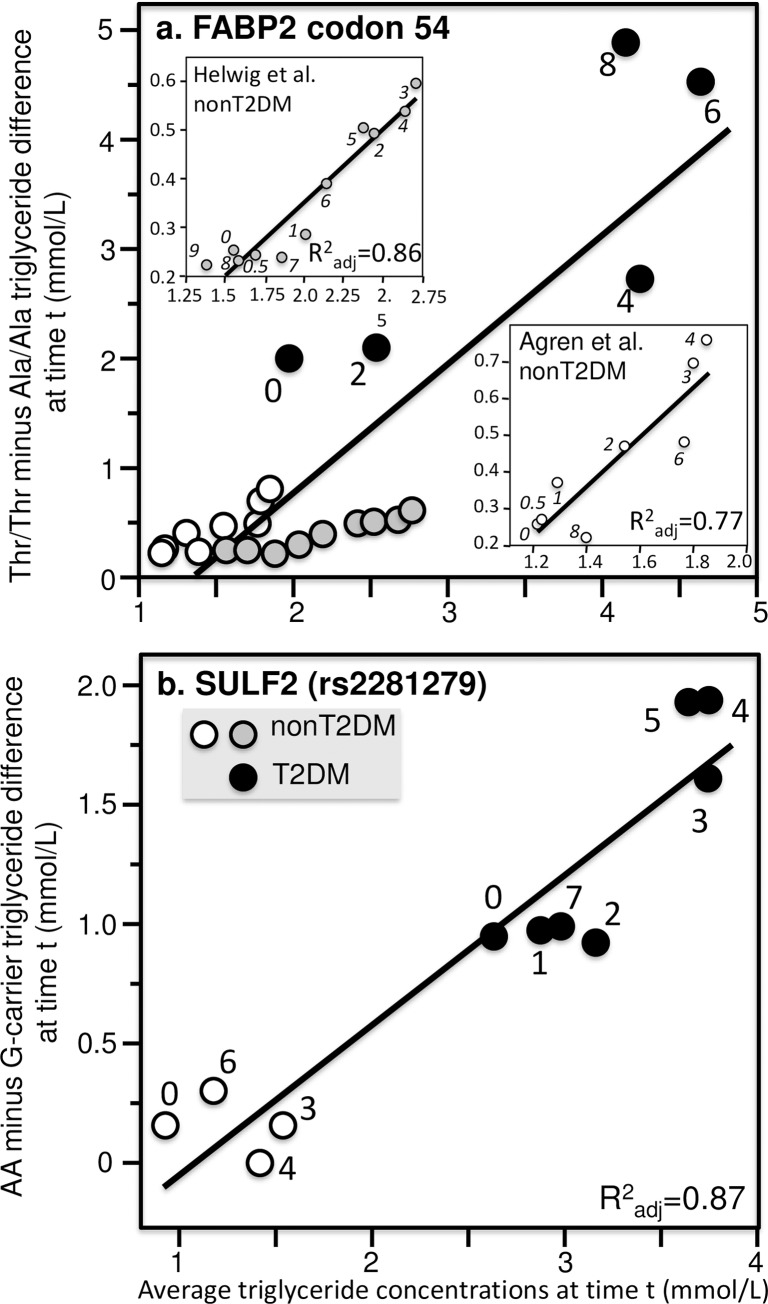
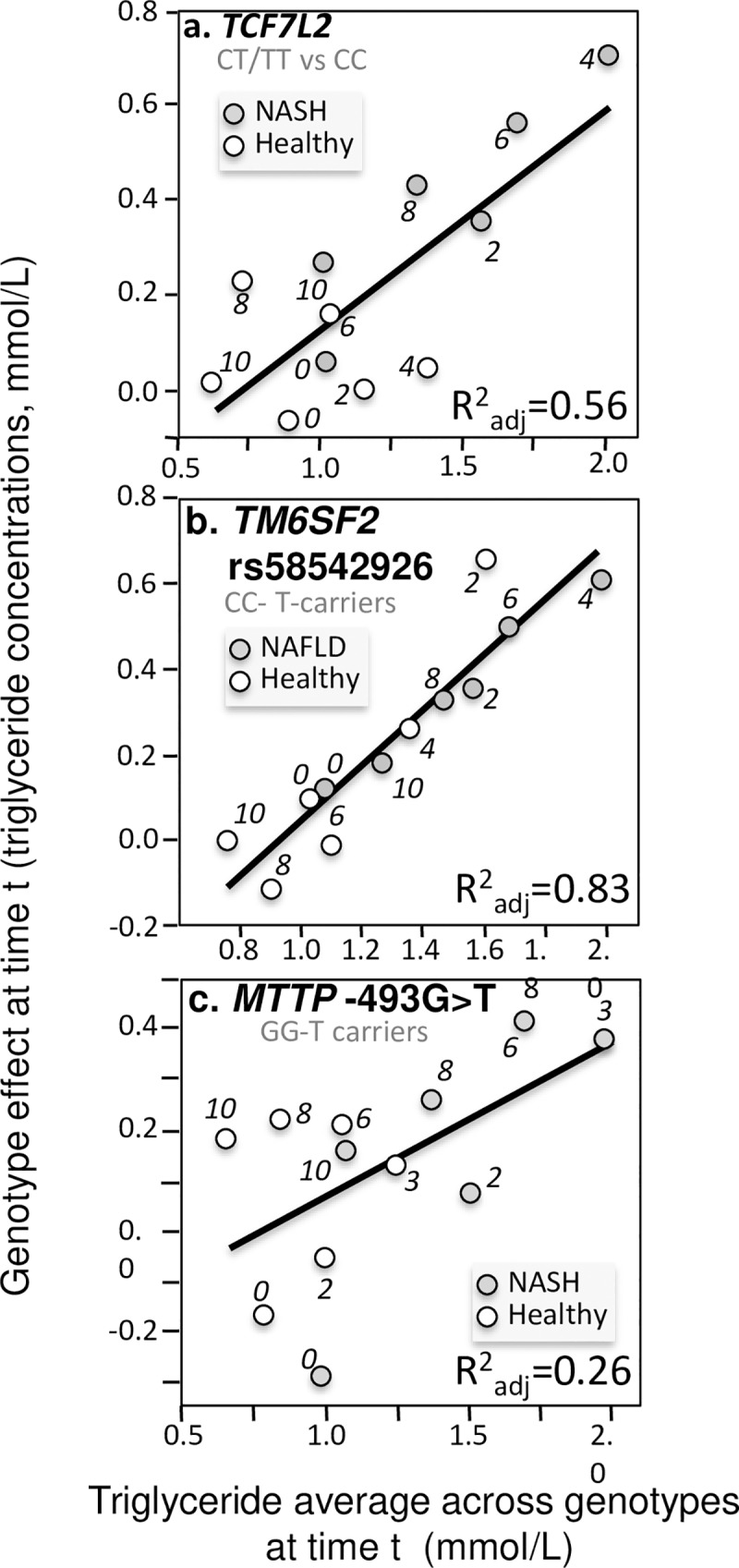
"Quantile-dependent expressivity" describes an effect of the genotype that depends upon the level of the phenotype (e.g., whether a subject's triglycerides are high or low relative to its population distribution). Prior analyses suggest that the effect of a genetic risk score (GRS) on fasting plasma triglyceride levels increases with the percentile of the triglyceride distribution. Postprandial lipemia is well suited for testing quantile-dependent expressivity because it exposes each individual's genotype to substantial increases in their plasma triglyceride concentrations. Ninety-seven published papers were identified that plotted mean triglyceride response vs. time and genotype, which were converted into quantitative data. Separately, for each published graph, standard least-squares regression analysis was used to compare the genotype differences at time t (dependent variable) to average triglyceride concentrations at time t (independent variable) to assess whether the genetic effect size increased in association with higher triglyceride concentrations and whether the phenomenon could explain purported genetic interactions with sex, diet, disease, BMI, and drugs.
Consistent with the phenomenon, genetic effect sizes increased (P≤0.05) with increasing triglyceride concentrations for polymorphisms associated with ABCA1, ANGPTL4, APOA1, APOA2, APOA4, APOA5, APOB, APOC3, APOE, CETP, FABP2, FATP6, GALNT2, GCKR, HL, IL1b, LEPR, LOX-1, LPL, MC4R, MTTP, NPY, SORT1, SULF2, TNFA, TCF7L2, and TM6SF2. The effect size for these polymorphisms showed a progressively increasing dose-response, with intermediate effect sizes at intermediate triglyceride concentrations. Quantile-dependent expressivity provided an alternative interpretation to their interactions with sex, drugs, disease, diet, and age, which have been traditionally ascribed to gene-environment interactions and genetic predictors of drug efficacy (i.e., personalized medicine).
Quantile-dependent expressivity applies to the majority of genetic variants affecting postprandial triglycerides, which may arise because the impaired functionalities of these variants increase at higher triglyceride concentrations. Purported gene-drug interactions may be the manifestations of quantile-dependent expressivity, rather than genetic predictors of drug efficacy.
“依定量表现性”描述的是基因型的一种效应,该效应取决于表型的水平(例如,受试者的甘油三酯水平相对于其群体分布是高还是低)。先前的分析表明,遗传风险评分(GRS)对空腹血浆甘油三酯水平的影响随着甘油三酯分布的百分位数而增加。餐后血脂异常非常适合检验依定量表现性,因为它使每个个体的基因型暴露于其血浆甘油三酯浓度的大幅增加中。确定了 97 篇发表的论文,这些论文绘制了平均甘油三酯反应与时间和基因型的关系图,并将其转化为定量数据。另外,对于每篇已发表的图表,分别使用标准最小二乘法回归分析来比较时间 t 时的基因型差异(因变量)与时间 t 时的平均甘油三酯浓度(自变量),以评估遗传效应大小是否与更高的甘油三酯浓度相关增加,以及这种现象是否可以解释与性别、饮食、疾病、BMI 和药物的所谓遗传相互作用。
与该现象一致,与 ABCA1、ANGPTL4、APOA1、APOA2、APOA4、APOA5、APOB、APOC3、APOE、CETP、FABP2、FATP6、GALNT2、GCKR、HL、IL1b、LEPR、LOX-1、LPL、MC4R、MTTP、NPY、SORT1、SULF2、TNFA、TCF7L2 和 TM6SF2 相关的多态性的遗传效应大小随着甘油三酯浓度的增加而增加(P≤0.05)。这些多态性的效应大小显示出逐渐增加的剂量反应,中间甘油三酯浓度的中间效应大小。依定量表现性为其与性别、药物、疾病、饮食和年龄的相互作用提供了另一种解释,这些相互作用传统上归因于基因-环境相互作用和药物疗效的遗传预测因子(即个性化医学)。
依定量表现性适用于影响餐后甘油三酯的大多数遗传变异,这可能是因为这些变异的功能障碍在更高的甘油三酯浓度下增加。所谓的基因-药物相互作用可能是依定量表现性的表现,而不是药物疗效的遗传预测因子。