University of South Florida, H. Lee Moffitt Cancer Center & Research Institute, Tampa, FL, USA.
The University of Texas MD Anderson Cancer Center, Houston, TX, USA.
Trends Cancer. 2020 Mar;6(3):181-191. doi: 10.1016/j.trecan.2020.01.005. Epub 2020 Feb 6.
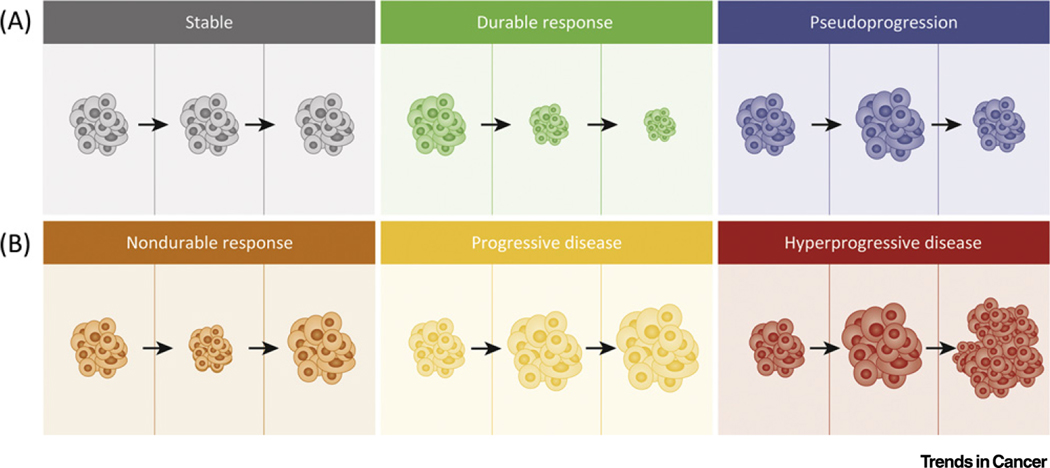
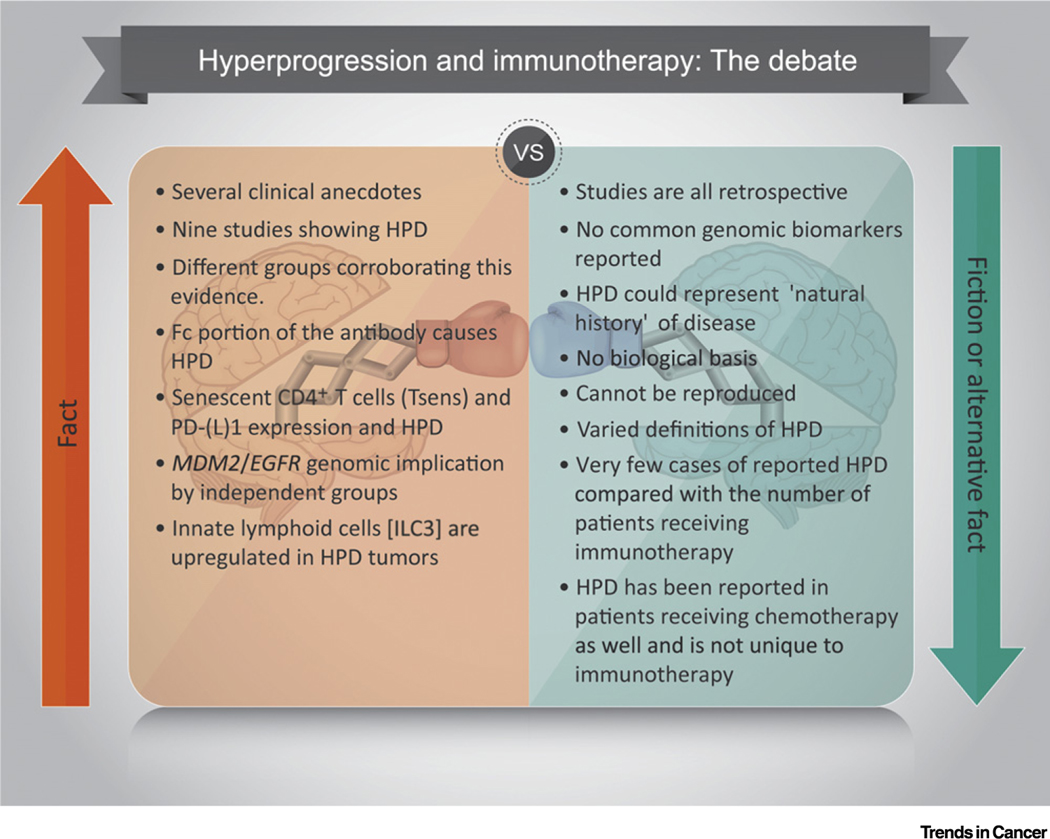
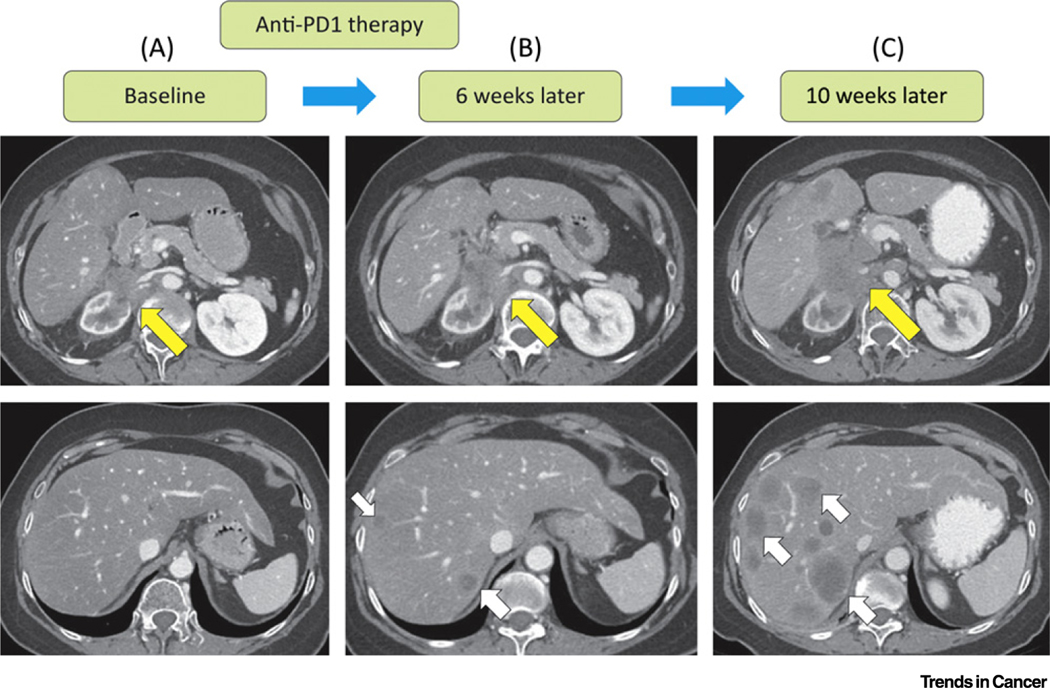
Immunotherapy (IO) has altered the therapeutic landscape for multiple cancers. There are emerging data from retrospective studies on a subset of patients who do not benefit from IO, instead experiencing rapid progression with dramatic acceleration of disease trajectory, termed 'hyperprogressive disease' (HPD). The incidence of HPD ranges from 4% to 29% from the studies reported. Biological basis and mechanisms of HPD are currently being elucidated, with one theory involving the Fc region of antibodies. Another group has shown EGFR and MDM2/MDM4 amplifications in patients with HPD. This phenomenon has polarized oncologists who debate that this could still reflect the natural history of the disease. Thus, prospective studies are urgently needed to confirm the underlying biology, predict patients who are susceptible to HPD, and determine the modality of therapy post progression.
免疫疗法 (IO) 改变了多种癌症的治疗格局。有一些回顾性研究的数据表明,一小部分患者对 IO 没有受益,反而经历了快速进展,疾病轨迹急剧加速,被称为“超进展性疾病” (HPD)。从已报道的研究中,HPD 的发生率在 4%到 29%之间。目前正在阐明 HPD 的生物学基础和机制,其中一种理论涉及抗体的 Fc 区域。另一组研究表明,HPD 患者存在 EGFR 和 MDM2/MDM4 扩增。这一现象使肿瘤学家产生了分歧,他们认为这仍然反映了疾病的自然史。因此,迫切需要进行前瞻性研究来确认潜在的生物学机制,预测易患 HPD 的患者,并确定进展后的治疗方式。