Department of Applied Life Science & Integrated Bioscience, Graduate School, Konkuk University, Chungju 27478, Korea.
The Florey Institute of Neuroscience and Mental Health, The University of Melbourne, Parkville, VIC 3010, Australia.
Cells. 2020 Feb 23;9(2):506. doi: 10.3390/cells9020506.
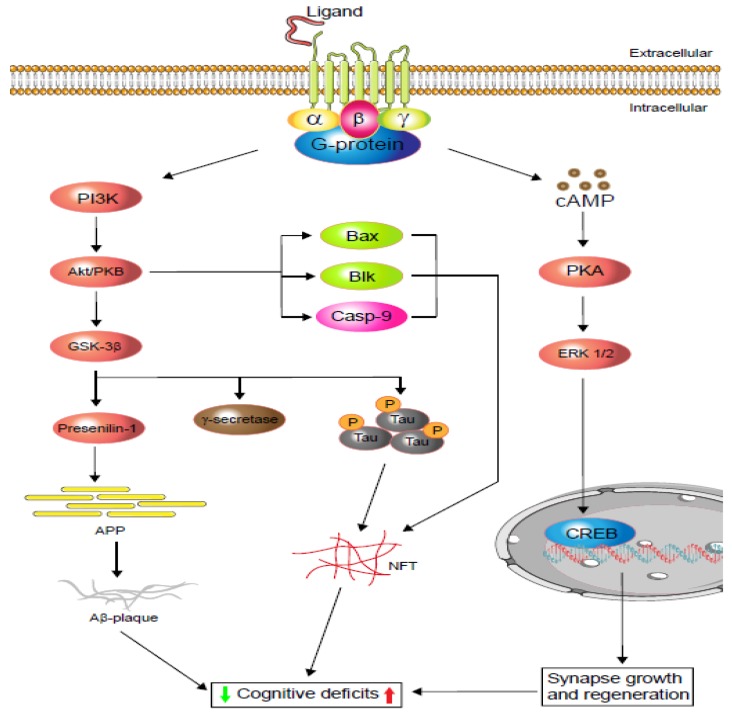
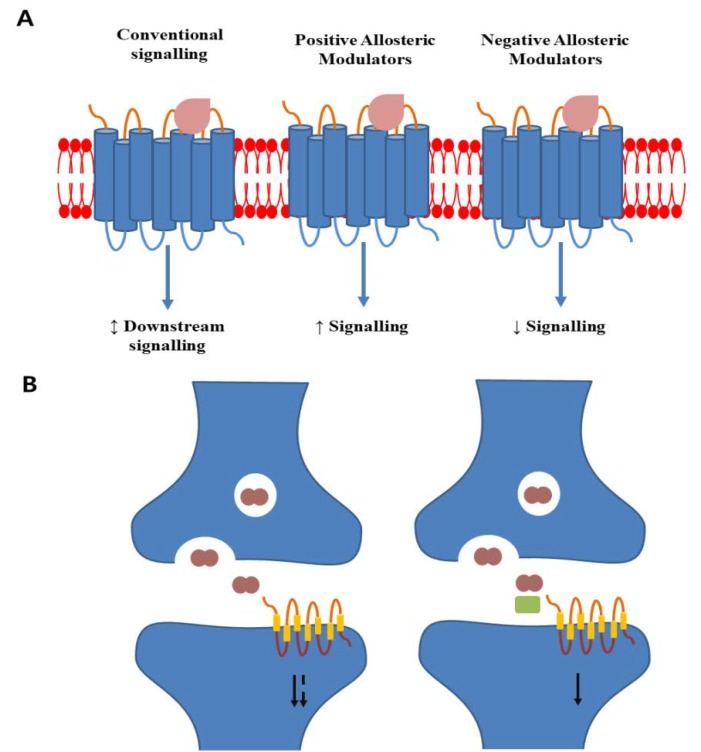
Neurodegenerative diseases are a large group of neurological disorders with diverse etiological and pathological phenomena. However, current therapeutics rely mostly on symptomatic relief while failing to target the underlying disease pathobiology. G-protein-coupled receptors (GPCRs) are one of the most frequently targeted receptors for developing novel therapeutics for central nervous system (CNS) disorders. Many currently available antipsychotic therapeutics also act as either antagonists or agonists of different GPCRs. Therefore, GPCR-based drug development is spreading widely to regulate neurodegeneration and associated cognitive deficits through the modulation of canonical and noncanonical signals. Here, GPCRs' role in the pathophysiology of different neurodegenerative disease progressions and cognitive deficits has been highlighted, and an emphasis has been placed on the current pharmacological developments with GPCRs to provide an insight into a potential therapeutic target in the treatment of neurodegeneration.
神经退行性疾病是一大类具有不同病因和病理现象的神经疾病。然而,目前的治疗方法主要依赖于症状缓解,而无法针对潜在的疾病病理生物学。G 蛋白偶联受体(GPCR)是开发中枢神经系统(CNS)疾病新疗法的最常靶向受体之一。许多现有的抗精神病治疗药物也作为不同 GPCR 的拮抗剂或激动剂发挥作用。因此,基于 GPCR 的药物开发正在广泛传播,通过调节经典和非经典信号来调节神经退行性变和相关认知缺陷。在这里,强调了 GPCR 在不同神经退行性疾病进展和认知缺陷的病理生理学中的作用,并强调了目前基于 GPCR 的药理学进展,为治疗神经退行性变提供了一个潜在的治疗靶点。