• 文献检索
  • 文档翻译
  • 深度研究
  • 学术资讯
  • Suppr Zotero 插件Zotero 插件
  • 邀请有礼
  • 套餐&价格
  • 历史记录
应用&插件
Suppr Zotero 插件Zotero 插件浏览器插件Mac 客户端Windows 客户端微信小程序
定价
高级版会员购买积分包购买API积分包
服务
文献检索文档翻译深度研究API 文档MCP 服务
关于我们
关于 Suppr公司介绍联系我们用户协议隐私条款
关注我们

Suppr 超能文献

核心技术专利:CN118964589B侵权必究
粤ICP备2023148730 号-1Suppr @ 2026

文献检索

告别复杂PubMed语法,用中文像聊天一样搜索,搜遍4000万医学文献。AI智能推荐,让科研检索更轻松。

立即免费搜索

文件翻译

保留排版,准确专业,支持PDF/Word/PPT等文件格式,支持 12+语言互译。

免费翻译文档

深度研究

AI帮你快速写综述,25分钟生成高质量综述,智能提取关键信息,辅助科研写作。

立即免费体验

建立两阶段肢体缺血模型以更好地模拟人类外周动脉疾病。

Development of a two-stage limb ischemia model to better simulate human peripheral artery disease.

机构信息

The Vascular Biology Unit, Queensland Research Centre for Peripheral Vascular Disease, School of Medicine and Dentistry, James Cook University, Townsville, Queensland, 4811, Australia.

Department of Vascular and Endovascular Surgery, The Townsville Hospital, Townsville, Queensland, 4811, Australia.

出版信息

Sci Rep. 2020 Feb 26;10(1):3449. doi: 10.1038/s41598-020-60352-4.

DOI:10.1038/s41598-020-60352-4
PMID:32103073
原文链接:https://pmc.ncbi.nlm.nih.gov/articles/PMC7044206/
Abstract

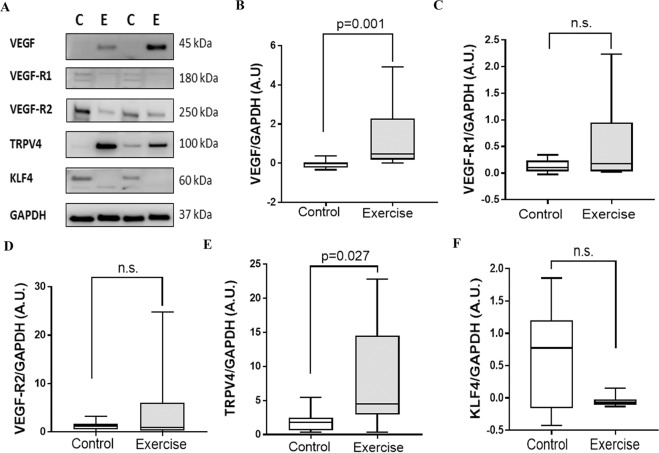
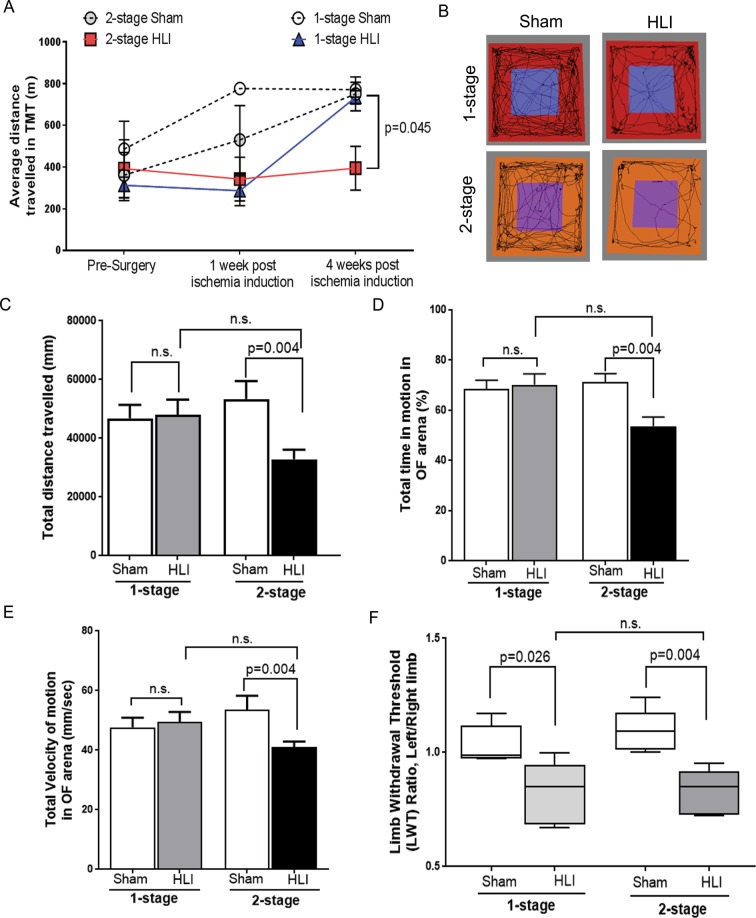
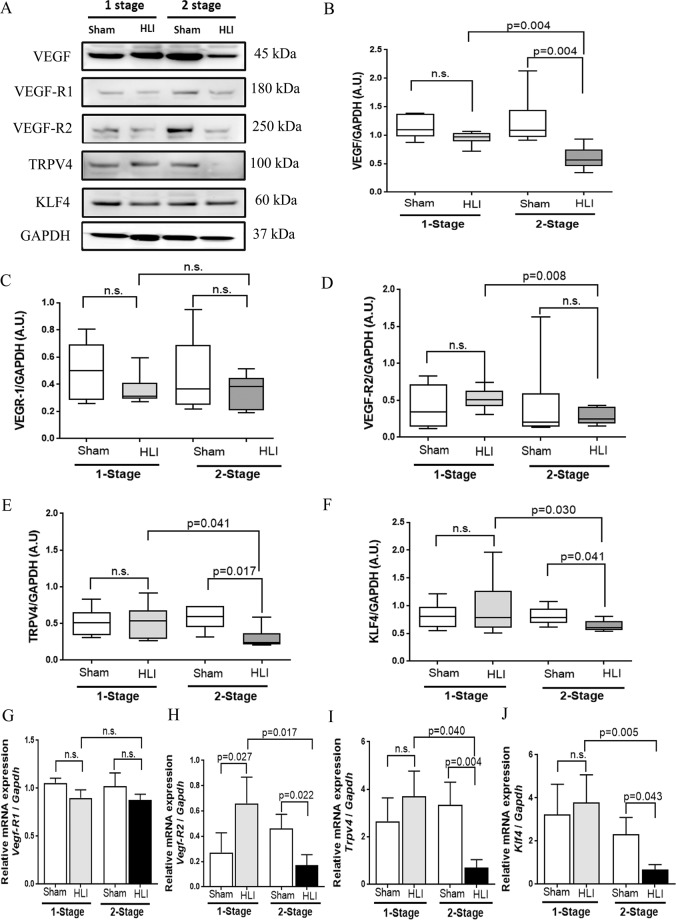
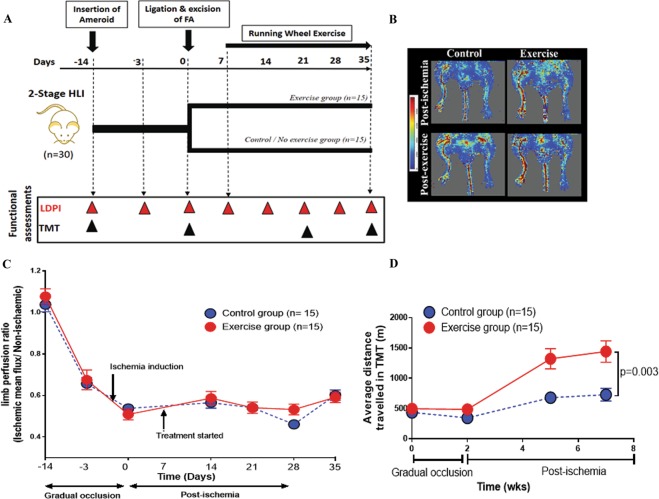
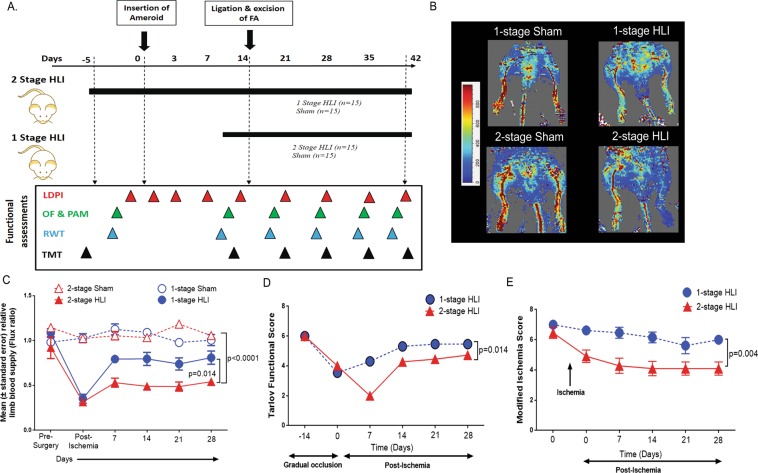
Peripheral arterial disease (PAD) develops due to the narrowing or blockage of arteries supplying blood to the lower limbs. Surgical and endovascular interventions are the main treatments for advanced PAD but alternative and adjunctive medical therapies are needed. Currently the main preclinical experimental model employed in PAD research is based on induction of acute hind limb ischemia (HLI) by a 1-stage procedure. Since there are concerns regarding the ability to translate findings from this animal model to patients, we aimed to develop a novel clinically relevant animal model of PAD. HLI was induced in male Apolipoprotein E (ApoE) deficient mice by a 2-stage procedure of initial gradual femoral artery occlusion by ameroid constrictors for 14 days and subsequent excision of the femoral artery. This 2-stage HLI model was compared to the classical 1-stage HLI model and sham controls. Ischemia severity was assessed using Laser Doppler Perfusion Imaging (LDPI). Ambulatory ability was assessed using an open field test, a treadmill test and using established scoring scales. Molecular markers of angiogenesis and shear stress were assessed within gastrocnemius muscle tissue samples using quantitative polymerase chain reaction. HLI was more severe in mice receiving the 2-stage compared to the 1-stage ischemia induction procedure as assessed by LDPI (p = 0.014), and reflected in a higher ischemic score (p = 0.004) and lower average distance travelled on a treadmill test (p = 0.045). Mice undergoing the 2-stage HLI also had lower expression of angiogenesis markers (vascular endothelial growth factor, p = 0.004; vascular endothelial growth factor- receptor 2, p = 0.008) and shear stress response mechano-transducer transient receptor potential vanilloid 4 (p = 0.041) within gastrocnemius muscle samples, compared to animals having the 1-stage HLI procedure. Mice subjected to the 2-stage HLI receiving an exercise program showed significantly greater improvement in their ambulatory ability on a treadmill test than a sedentary control group. This study describes a novel model of HLI which leads to more severe and sustained ischemia than the conventionally used model. Exercise therapy, which has established efficacy in PAD patients, was also effective in this new model. This new model maybe useful in the evaluation of potential novel PAD therapies.

摘要

外周动脉疾病 (PAD) 是由于供应下肢血液的动脉变窄或阻塞而发展的。手术和血管内介入是治疗晚期 PAD 的主要方法,但需要替代和辅助的医学治疗。目前,PAD 研究中使用的主要临床前实验模型是基于通过 1 期手术诱导急性下肢缺血 (HLI)。由于人们担心从这种动物模型中获得的研究结果能否转化为患者,因此我们旨在开发一种新的、与临床相关的 PAD 动物模型。通过对雄性载脂蛋白 E (ApoE) 缺陷小鼠进行 2 期手术,逐渐用 ameroid 缩窄器阻塞股动脉 14 天,然后切除股动脉,诱导 HLI。将这种 2 期 HLI 模型与经典的 1 期 HLI 模型和假手术对照组进行比较。使用激光多普勒灌注成像 (LDPI) 评估缺血严重程度。使用旷场测试、跑步机测试和既定评分量表评估活动能力。使用定量聚合酶链反应评估腓肠肌组织样本中血管生成和切应力的分子标志物。通过 LDPI 评估,接受 2 期缺血诱导程序的小鼠的 HLI 比接受 1 期缺血诱导程序的小鼠更严重 (p=0.014),并且表现为更高的缺血评分 (p=0.004) 和跑步机测试中平均行驶距离更低 (p=0.045)。接受 2 期 HLI 的小鼠腓肠肌样本中的血管生成标志物 (血管内皮生长因子,p=0.004;血管内皮生长因子受体 2,p=0.008) 和切应力反应机械转导瞬时受体电位香草酸 4 的表达也较低 (p=0.041),与接受 1 期 HLI 手术的动物相比。接受 2 期 HLI 并接受运动方案的小鼠在跑步机测试中的活动能力改善明显大于久坐对照组。本研究描述了一种新的 HLI 模型,与传统使用的模型相比,该模型导致更严重和持续的缺血。在 PAD 患者中已证实有效的运动疗法在这种新模型中也同样有效。这种新模型可能有助于评估潜在的新型 PAD 治疗方法。
https://cdn.ncbi.nlm.nih.gov/pmc/blobs/efd5/7044206/c750e0189611/41598_2020_60352_Fig6_HTML.jpg
https://cdn.ncbi.nlm.nih.gov/pmc/blobs/efd5/7044206/c3600f40a814/41598_2020_60352_Fig1_HTML.jpg
https://cdn.ncbi.nlm.nih.gov/pmc/blobs/efd5/7044206/b88803e5f8b8/41598_2020_60352_Fig2_HTML.jpg
https://cdn.ncbi.nlm.nih.gov/pmc/blobs/efd5/7044206/c0c163c06081/41598_2020_60352_Fig3_HTML.jpg
https://cdn.ncbi.nlm.nih.gov/pmc/blobs/efd5/7044206/a922f6c3a0ea/41598_2020_60352_Fig4_HTML.jpg
https://cdn.ncbi.nlm.nih.gov/pmc/blobs/efd5/7044206/6747d5bc83ff/41598_2020_60352_Fig5_HTML.jpg
https://cdn.ncbi.nlm.nih.gov/pmc/blobs/efd5/7044206/c750e0189611/41598_2020_60352_Fig6_HTML.jpg
https://cdn.ncbi.nlm.nih.gov/pmc/blobs/efd5/7044206/c3600f40a814/41598_2020_60352_Fig1_HTML.jpg
https://cdn.ncbi.nlm.nih.gov/pmc/blobs/efd5/7044206/b88803e5f8b8/41598_2020_60352_Fig2_HTML.jpg
https://cdn.ncbi.nlm.nih.gov/pmc/blobs/efd5/7044206/c0c163c06081/41598_2020_60352_Fig3_HTML.jpg
https://cdn.ncbi.nlm.nih.gov/pmc/blobs/efd5/7044206/a922f6c3a0ea/41598_2020_60352_Fig4_HTML.jpg
https://cdn.ncbi.nlm.nih.gov/pmc/blobs/efd5/7044206/6747d5bc83ff/41598_2020_60352_Fig5_HTML.jpg
https://cdn.ncbi.nlm.nih.gov/pmc/blobs/efd5/7044206/c750e0189611/41598_2020_60352_Fig6_HTML.jpg

相似文献

1
Development of a two-stage limb ischemia model to better simulate human peripheral artery disease.建立两阶段肢体缺血模型以更好地模拟人类外周动脉疾病。
Sci Rep. 2020 Feb 26;10(1):3449. doi: 10.1038/s41598-020-60352-4.
2
Gene therapy with Pellino-1 improves perfusion and decreases tissue loss in Flk-1 heterozygous mice but fails in MAPKAP Kinase-2 knockout murine hind limb ischemia model.Pellino-1 基因治疗改善 Flk-1 杂合子小鼠的灌注并减少组织损失,但在 MAPKAP Kinase-2 敲除小鼠后肢缺血模型中失败。
Microvasc Res. 2022 May;141:104311. doi: 10.1016/j.mvr.2022.104311. Epub 2022 Jan 7.
3
Antiangiogenic VEGFb Regulates Macrophage Polarization via S100A8/S100A9 in Peripheral Artery Disease.抗血管生成 VEGFb 通过外周动脉疾病中的 S100A8/S100A9 调节巨噬细胞极化。
Circulation. 2019 Jan 8;139(2):226-242. doi: 10.1161/CIRCULATIONAHA.118.034165.
4
An endovascular model of ischemic myopathy from peripheral arterial disease.一种源于外周动脉疾病的缺血性肌病的血管内模型。
J Vasc Surg. 2017 Sep;66(3):891-901. doi: 10.1016/j.jvs.2016.07.127. Epub 2016 Sep 29.
5
Dysregulation of ghrelin in diabetes impairs the vascular reparative response to hindlimb ischemia in a mouse model; clinical relevance to peripheral artery disease.糖尿病中胃饥饿素的失调会损害小鼠模型后肢缺血的血管修复反应;对周围动脉疾病的临床相关性。
Sci Rep. 2020 Aug 12;10(1):13651. doi: 10.1038/s41598-020-70391-6.
6
Quantitative optical imaging of vascular response in vivo in a model of peripheral arterial disease.活体外周动脉疾病模型中血管反应的定量光学成像。
Am J Physiol Heart Circ Physiol. 2013 Oct 15;305(8):H1168-80. doi: 10.1152/ajpheart.00362.2013. Epub 2013 Aug 16.
7
Buyang Huanwu Decoction Enhances Revascularization via Akt/GSK3/NRF2 Pathway in Diabetic Hindlimb Ischemia.补阳还五汤通过 Akt/GSK3/NRF2 通路促进糖尿病性下肢缺血血管新生。
Oxid Med Cell Longev. 2021 Dec 3;2021:1470829. doi: 10.1155/2021/1470829. eCollection 2021.
8
Chloroquine improves the response to ischemic muscle injury and increases HMGB1 after arterial ligation.氯喹可改善缺血性肌肉损伤的反应,并增加动脉结扎后的高迁移率族蛋白 1。
J Vasc Surg. 2018 Mar;67(3):910-921. doi: 10.1016/j.jvs.2017.01.021. Epub 2017 Mar 1.
9
Polydeoxyribonucleotide (PDRN) restores blood flow in an experimental model of peripheral artery occlusive disease.聚脱氧核糖核苷酸(PDRN)可在周围动脉闭塞性疾病的实验模型中恢复血流。
J Vasc Surg. 2008 Nov;48(5):1292-300. doi: 10.1016/j.jvs.2008.06.041.
10
Deletion of prolyl hydroxylase domain proteins (PHD1, PHD3) stabilizes hypoxia inducible factor-1 alpha, promotes neovascularization, and improves perfusion in a murine model of hind-limb ischemia.脯氨酰羟化酶结构域蛋白(PHD1、PHD3)的缺失可使缺氧诱导因子-1α稳定,促进血管新生,并改善后肢缺血小鼠模型的灌注。
Microvasc Res. 2015 Jan;97:181-8. doi: 10.1016/j.mvr.2014.10.009. Epub 2014 Nov 3.

引用本文的文献

1
mRNA-based induction of ETV2 to restore blood flow in a preclinical mouse hindlimb ischemia model.基于信使核糖核酸(mRNA)诱导内皮转录因子2(ETV2)以恢复临床前小鼠后肢缺血模型中的血流
Mol Ther Nucleic Acids. 2025 Jun 9;36(3):102592. doi: 10.1016/j.omtn.2025.102592. eCollection 2025 Sep 9.
2
Is Laser Doppler Perfusion Imaging Truly a "Gold Standard" for Preclinical Peripheral Artery Disease Research?激光多普勒血流成像真的是临床前外周动脉疾病研究的“金标准”吗?
JACC Basic Transl Sci. 2025 Jan 27;10(1):104-106. doi: 10.1016/j.jacbts.2024.11.005. eCollection 2025 Jan.
3
A 6-Minute Limb Function Assessment for Therapeutic Testing in Experimental Peripheral Artery Disease Models.

本文引用的文献

1
2017 ESC Guidelines on the Diagnosis and Treatment of Peripheral Arterial Diseases, in collaboration with the European Society for Vascular Surgery (ESVS).2017年欧洲心脏病学会(ESC)与欧洲血管外科学会(ESVS)合作制定的外周动脉疾病诊断和治疗指南。
Rev Esp Cardiol (Engl Ed). 2018 Feb;71(2):111. doi: 10.1016/j.rec.2017.12.014.
2
Hindlimb Ischemia Impairs Endothelial Recovery and Increases Neointimal Proliferation in the Carotid Artery.后肢缺血可损害颈动脉内皮细胞的修复能力并增加内膜增生。
Sci Rep. 2018 Jan 15;8(1):761. doi: 10.1038/s41598-017-19136-6.
3
Exercise for intermittent claudication.
用于实验性外周动脉疾病模型治疗测试的6分钟肢体功能评估
JACC Basic Transl Sci. 2024 Oct 23;10(1):88-103. doi: 10.1016/j.jacbts.2024.08.011. eCollection 2025 Jan.
4
A mouse model of deep vein thrombosis by inferior vena cava hypoperfusion using ameroid constrictors.使用阿梅氏缩窄环通过下腔静脉低灌注建立的深静脉血栓形成小鼠模型。
Sci Rep. 2025 Jan 6;15(1):928. doi: 10.1038/s41598-024-84443-8.
5
What Is the Best Experimental Model for Developing Novel Therapeutics in Peripheral Artery Disease?开发外周动脉疾病新疗法的最佳实验模型是什么?
Arterioscler Thromb Vasc Biol. 2024 Nov;44(11):2264-2270. doi: 10.1161/ATVBAHA.124.321163. Epub 2024 Oct 23.
6
Pathological Changes in the Gastrocnemius Muscle throughout Hind Limb Ischemia Modeling in Rats.大鼠后肢缺血模型中腓肠肌的病理变化。
Bull Exp Biol Med. 2024 May;177(1):26-29. doi: 10.1007/s10517-024-06124-w. Epub 2024 Jul 2.
7
The rat as an animal model in chronic wound research: An update.大鼠作为慢性伤口研究中的动物模型:最新进展。
Life Sci. 2024 Aug 15;351:122783. doi: 10.1016/j.lfs.2024.122783. Epub 2024 Jun 5.
8
A 6-minute Limb Function Assessment for Therapeutic Testing in Experimental Peripheral Artery Disease Models.用于实验性外周动脉疾病模型治疗测试的6分钟肢体功能评估。
bioRxiv. 2024 Mar 27:2024.03.21.586197. doi: 10.1101/2024.03.21.586197.
9
A rat model for acute limb ischemia using microsized gelatin beads.采用微凝胶珠的急性肢体缺血大鼠模型。
Sci Prog. 2024 Jan-Mar;107(1):368504241231656. doi: 10.1177/00368504241231656.
10
Power-Doppler Ultrasonic Imaging of Peripheral Perfusion in Diabetic Mice.糖尿病小鼠外周灌注的能量多普勒超声成像。
IEEE Trans Biomed Eng. 2024 Aug;71(8):2421-2431. doi: 10.1109/TBME.2024.3373254. Epub 2024 Jul 18.
间歇性跛行的运动疗法
Cochrane Database Syst Rev. 2017 Dec 26;12(12):CD000990. doi: 10.1002/14651858.CD000990.pub4.
4
Growth factors for angiogenesis in peripheral arterial disease.外周动脉疾病中血管生成的生长因子。
Cochrane Database Syst Rev. 2017 Jun 8;6(6):CD011741. doi: 10.1002/14651858.CD011741.pub2.
5
Autologous Cell Therapy for Peripheral Arterial Disease: Systematic Review and Meta-Analysis of Randomized, Nonrandomized, and Noncontrolled Studies.自体细胞治疗外周动脉疾病:随机、非随机和非对照研究的系统评价和荟萃分析。
Circ Res. 2017 Apr 14;120(8):1326-1340. doi: 10.1161/CIRCRESAHA.116.309045. Epub 2017 Jan 17.
6
Wnt Signaling Pathway Inhibitor Sclerostin Inhibits Angiotensin II-Induced Aortic Aneurysm and Atherosclerosis.Wnt信号通路抑制剂硬化蛋白可抑制血管紧张素II诱导的主动脉瘤和动脉粥样硬化。
Arterioscler Thromb Vasc Biol. 2017 Mar;37(3):553-566. doi: 10.1161/ATVBAHA.116.308723. Epub 2016 Dec 22.
7
Endovascular Versus Open Revascularization for Peripheral Arterial Disease.外周动脉疾病的血管内与开放血管重建术
Ann Surg. 2017 Feb;265(2):424-430. doi: 10.1097/SLA.0000000000001676.
8
A Systematic Review of the Uptake and Adherence Rates to Supervised Exercise Programs in Patients with Intermittent Claudication.间歇性跛行患者接受监督运动计划的参与率和依从率的系统评价
Ann Vasc Surg. 2016 Jul;34:280-9. doi: 10.1016/j.avsg.2016.02.009. Epub 2016 Apr 25.
9
Evaluation of the clinical relevance and limitations of current pre-clinical models of peripheral artery disease.评估当前外周动脉疾病临床前模型的临床相关性及局限性。
Clin Sci (Lond). 2016 Feb;130(3):127-50. doi: 10.1042/CS20150435.
10
The efficacy of extraembryonic stem cells in improving blood flow within animal models of lower limb ischaemia.胚外干细胞在改善下肢缺血动物模型血流方面的疗效。
Heart. 2016 Jan;102(1):69-74. doi: 10.1136/heartjnl-2015-308322. Epub 2015 Nov 16.