Department of Biomedical Science and Engineering, Gwangju Institute of Science and Technology, Gwangju, South Korea.
Artificial Intelligence Graduate School, Gwangju Institute of Science and Technology, Gwangju, South Korea.
Sci Rep. 2020 Feb 26;10(1):3485. doi: 10.1038/s41598-020-60595-1.
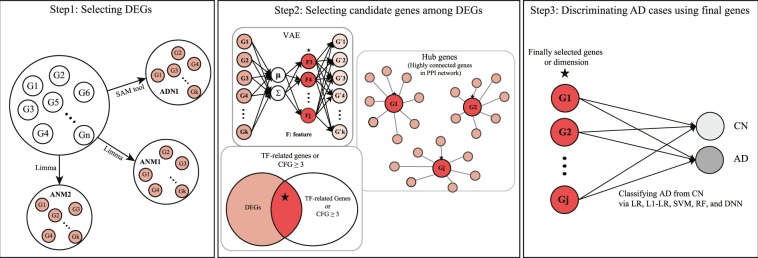
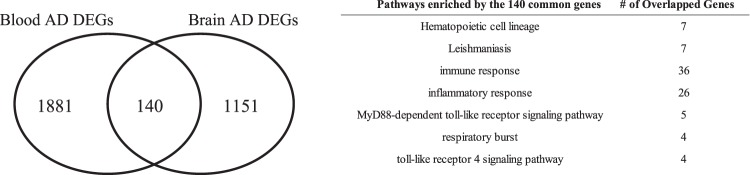
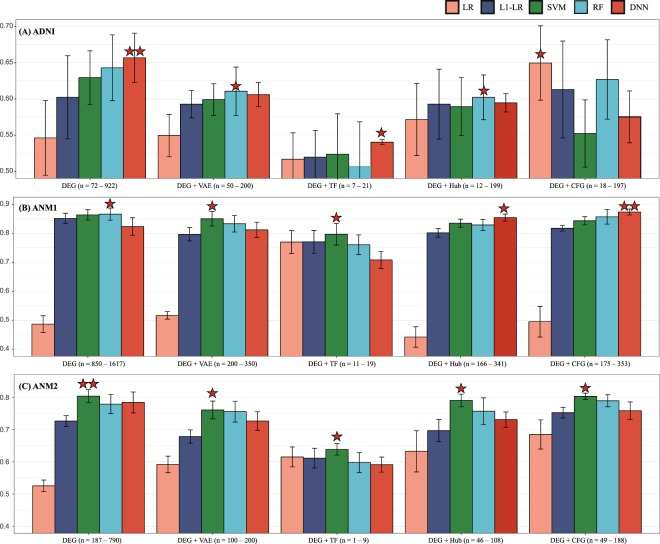
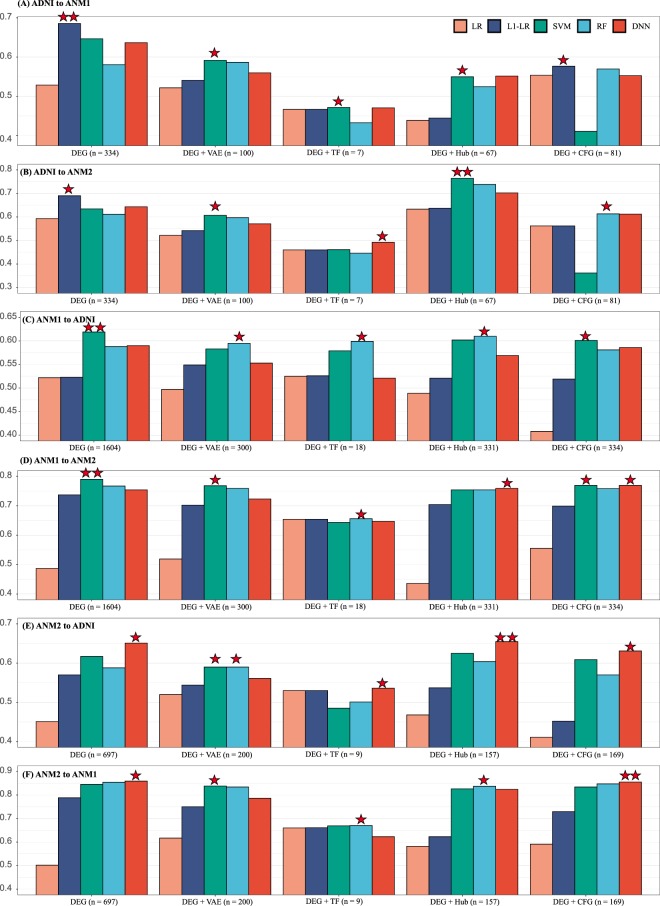
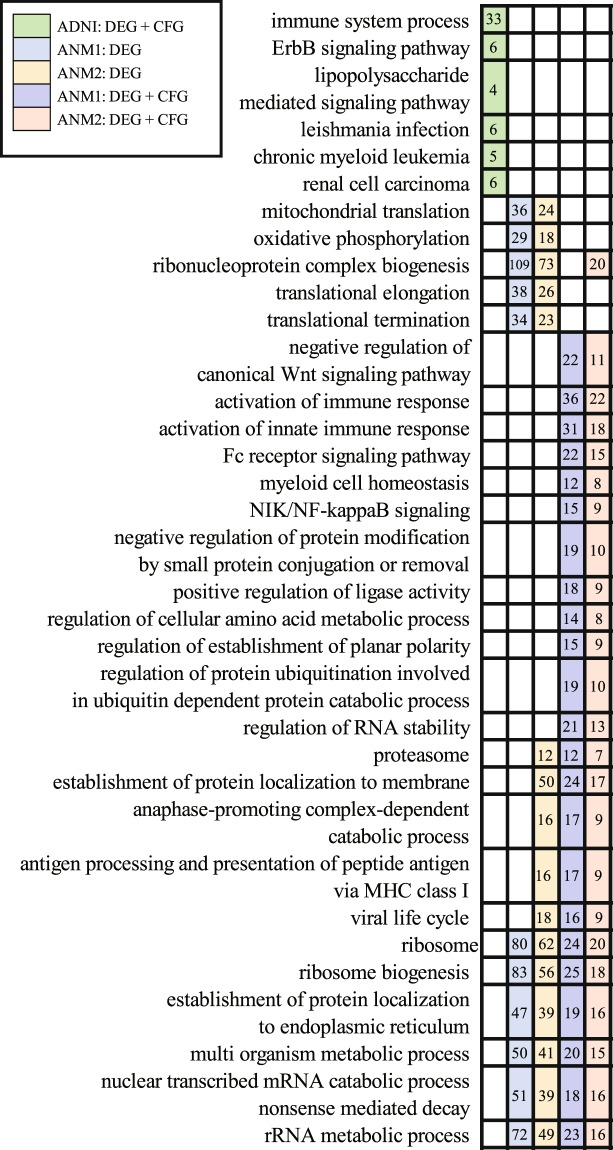
Identification of AD (Alzheimer's disease)-related genes obtained from blood samples is crucial for early AD diagnosis. We used three public datasets, ADNI, AddNeuroMed1 (ANM1), and ANM2, for this study. Five feature selection methods and five classifiers were used to curate AD-related genes and discriminate AD patients, respectively. In the internal validation (five-fold cross-validation within each dataset), the best average values of the area under the curve (AUC) were 0.657, 0.874, and 0.804 for ADNI, ANMI, and ANM2, respectively. In the external validation (training and test sets from different datasets), the best AUCs were 0.697 (training: ADNI to testing: ANM1), 0.764 (ADNI to ANM2), 0.619 (ANM1 to ADNI), 0.79 (ANM1 to ANM2), 0.655 (ANM2 to ADNI), and 0.859 (ANM2 to ANM1), respectively. These results suggest that although the classification performance of ADNI is relatively lower than that of ANM1 and ANM2, classifiers trained using blood gene expression can be used to classify AD for other data sets. In addition, pathway analysis showed that AD-related genes were enriched with inflammation, mitochondria, and Wnt signaling pathways. Our study suggests that blood gene expression data are useful in predicting the AD classification.
从血液样本中鉴定出与 AD(阿尔茨海默病)相关的基因对于 AD 的早期诊断至关重要。我们使用了三个公共数据集 ADNI、AddNeuroMed1(ANM1)和 ANM2 进行这项研究。分别使用了五种特征选择方法和五种分类器来筛选与 AD 相关的基因并区分 AD 患者。在内部验证(每个数据集内的五折交叉验证)中,ADNI、ANM1 和 ANM2 的曲线下面积(AUC)最佳平均值分别为 0.657、0.874 和 0.804。在外部验证(来自不同数据集的训练集和测试集)中,最佳 AUC 分别为 0.697(训练:ADNI 到测试:ANM1)、0.764(ADNI 到 ANM2)、0.619(ANM1 到 ADNI)、0.79(ANM1 到 ANM2)、0.655(ANM2 到 ADNI)和 0.859(ANM2 到 ANM1)。这些结果表明,尽管 ADNI 的分类性能相对低于 ANM1 和 ANM2,但使用血液基因表达训练的分类器可以用于对其他数据集进行 AD 分类。此外,通路分析表明,与 AD 相关的基因与炎症、线粒体和 Wnt 信号通路有关。我们的研究表明,血液基因表达数据可用于预测 AD 分类。