College of Humanities and Sciences, Northeast Normal University, Changchun, China.
Education AI, College of Information Science and Technology, Northeast Normal University, Changchun, China.
Comput Math Methods Med. 2020 Feb 20;2020:4036560. doi: 10.1155/2020/4036560. eCollection 2020.
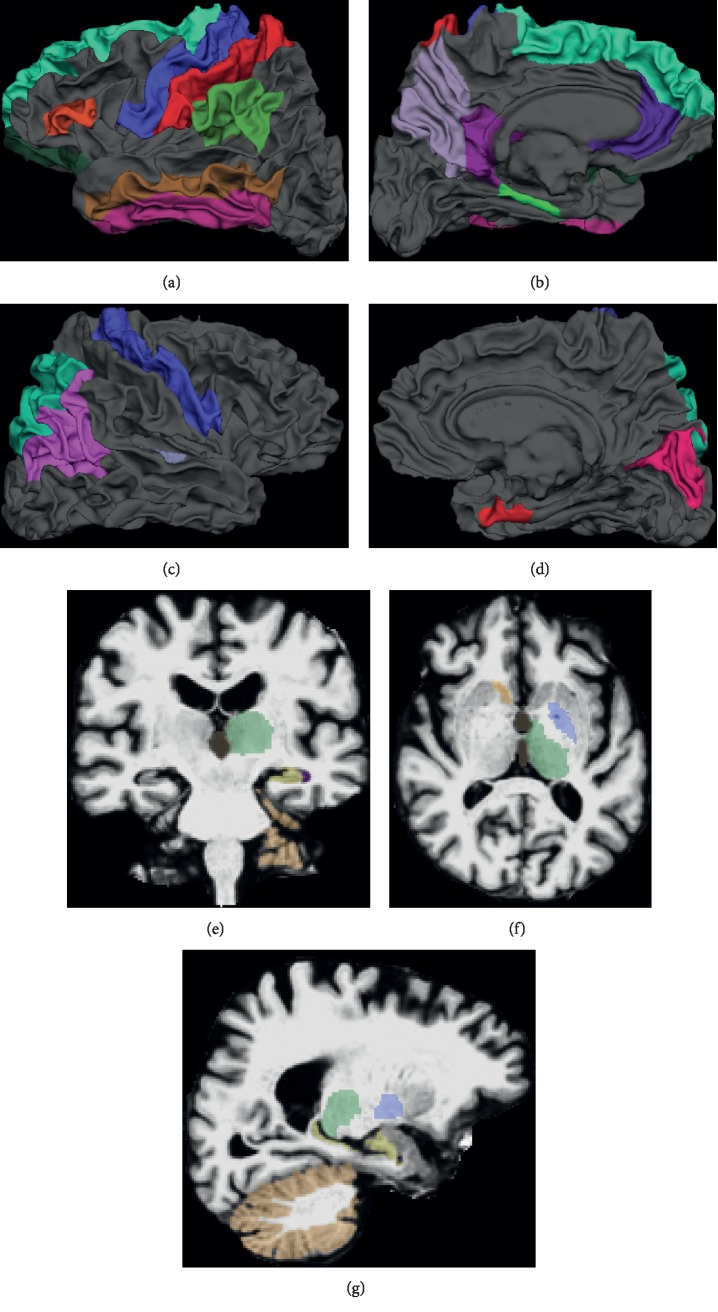
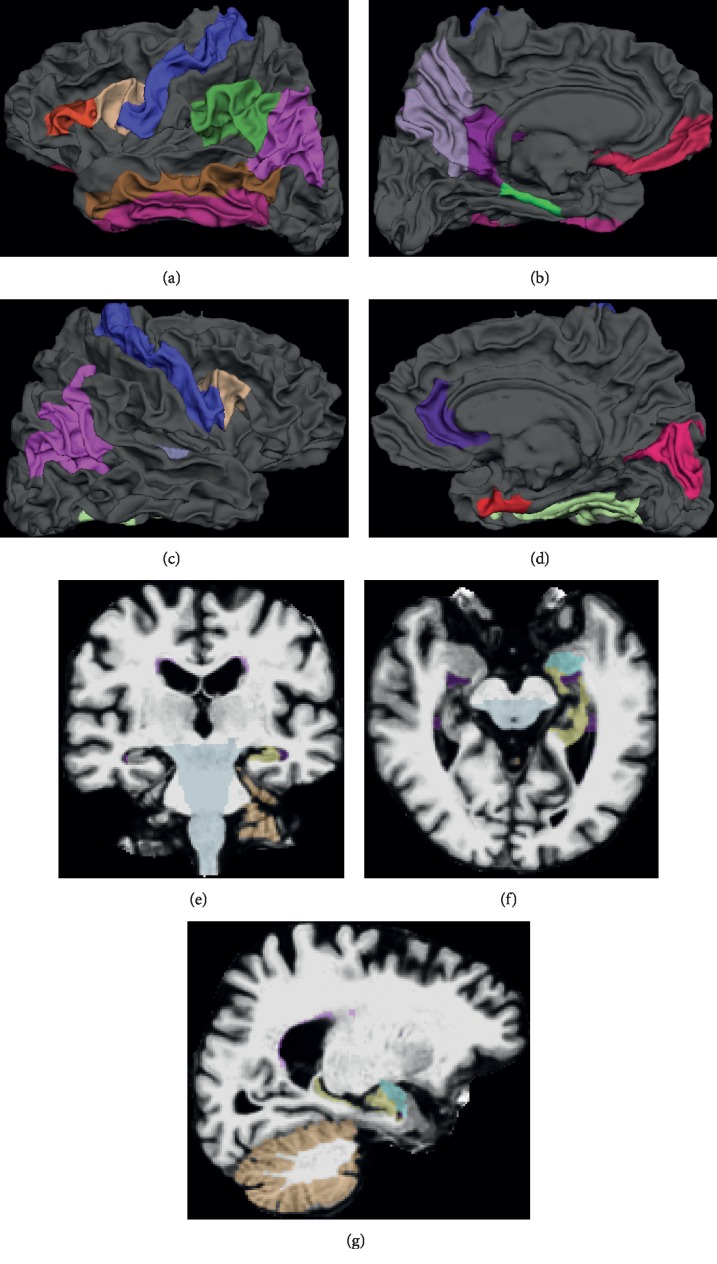
As the largest cause of dementia, Alzheimer's disease (AD) has brought serious burdens to patients and their families, mostly in the financial, psychological, and emotional aspects. In order to assess the progression of AD and develop new treatment methods for the disease, it is essential to infer the trajectories of patients' cognitive performance over time to identify biomarkers that connect the patterns of brain atrophy and AD progression. In this article, a structured regularized regression approach termed group guided fused Laplacian sparse group Lasso (GFL-SGL) is proposed to infer disease progression by considering multiple prediction of the same cognitive scores at different time points (longitudinal analysis). The proposed GFL-SGL simultaneously exploits the interrelated structures within the MRI features and among the tasks with sparse group Lasso (SGL) norm and presents a novel group guided fused Laplacian (GFL) regularization. This combination effectively incorporates both the relatedness among multiple longitudinal time points with a general weighted (undirected) dependency graphs and useful inherent group structure in features. Furthermore, an alternating direction method of multipliers- (ADMM-) based algorithm is also derived to optimize the nonsmooth objective function of the proposed approach. Experiments on the dataset from Alzheimer's Disease Neuroimaging Initiative (ADNI) show that the proposed GFL-SGL outperformed some other state-of-the-art algorithms and effectively fused the multimodality data. The compact sets of cognition-relevant imaging biomarkers identified by our approach are consistent with the results of clinical studies.
作为痴呆症的最大病因,阿尔茨海默病(AD)给患者及其家庭带来了严重的负担,主要体现在经济、心理和情感方面。为了评估 AD 的进展并为该疾病开发新的治疗方法,推断患者认知表现随时间的轨迹以确定将脑萎缩模式与 AD 进展联系起来的生物标志物至关重要。在本文中,提出了一种称为群组引导融合拉普拉斯稀疏群组 Lasso(GFL-SGL)的结构化正则化回归方法,通过考虑同一认知评分在不同时间点的多次预测(纵向分析)来推断疾病进展。所提出的 GFL-SGL 同时利用了 MRI 特征内以及稀疏群组 Lasso(SGL)范数内任务之间的相关结构,并提出了一种新的群组引导融合拉普拉斯(GFL)正则化。这种组合有效地结合了多个纵向时间点之间的相关性,以及具有一般加权(无向)依赖图的相关性和特征中的有用固有群组结构。此外,还推导了基于交替方向乘子法(ADMM)的算法来优化所提出方法的非光滑目标函数。来自阿尔茨海默病神经影像学倡议(ADNI)的数据集上的实验表明,所提出的 GFL-SGL 优于其他一些最先进的算法,并有效地融合了多模态数据。我们的方法确定的与认知相关的成像生物标志物的紧凑集与临床研究的结果一致。