Tahara Kohei, Karasawa Keiichi, Onodera Risako, Takeuchi Hirofumi
Laboratory of Pharmaceutical Engineering, Gifu Pharmaceutical University, 1-25-4 Daigaku-nishi, Gifu 501-1196, Japan.
Asian J Pharm Sci. 2017 Jul;12(4):394-399. doi: 10.1016/j.ajps.2017.03.002. Epub 2017 Apr 6.
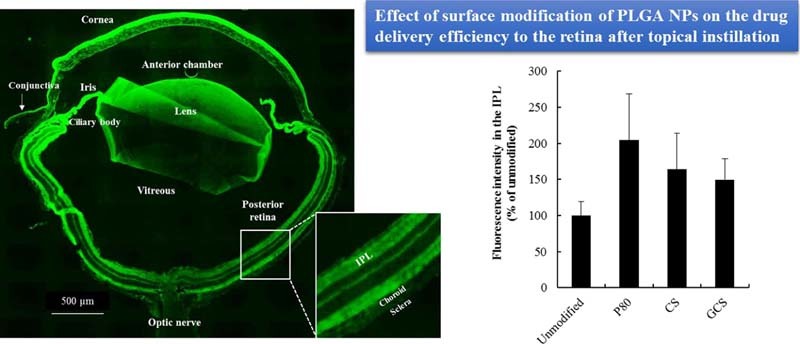
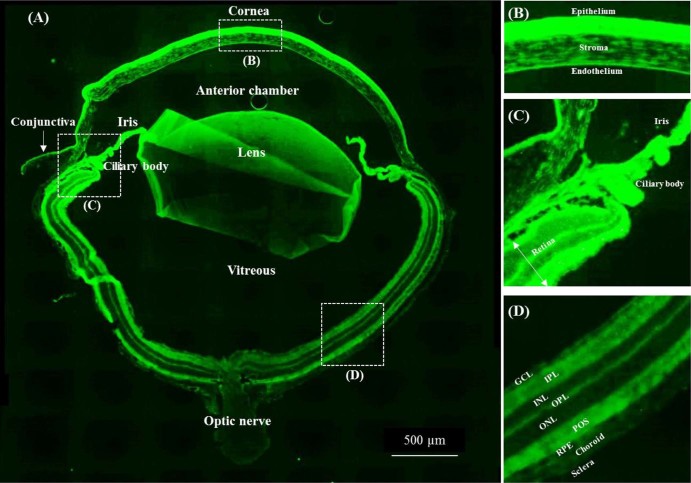
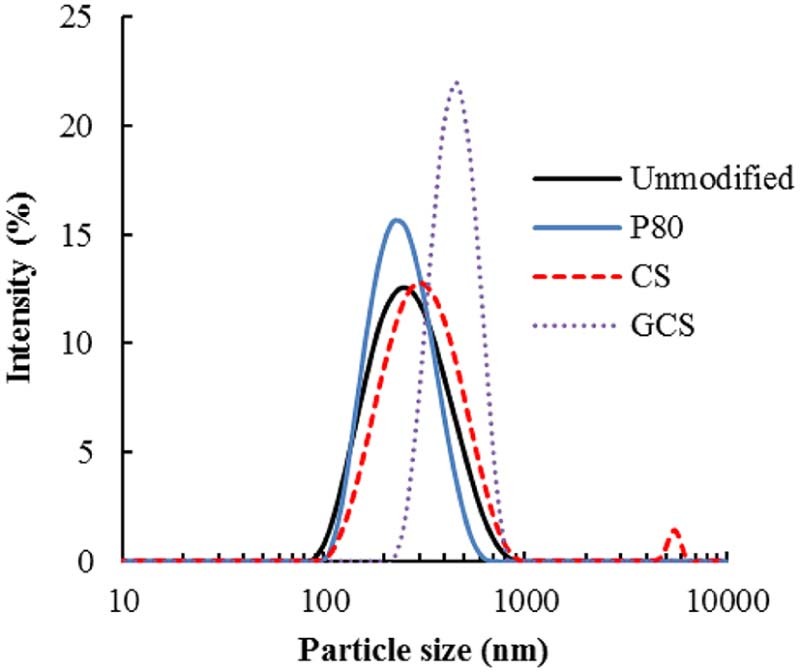
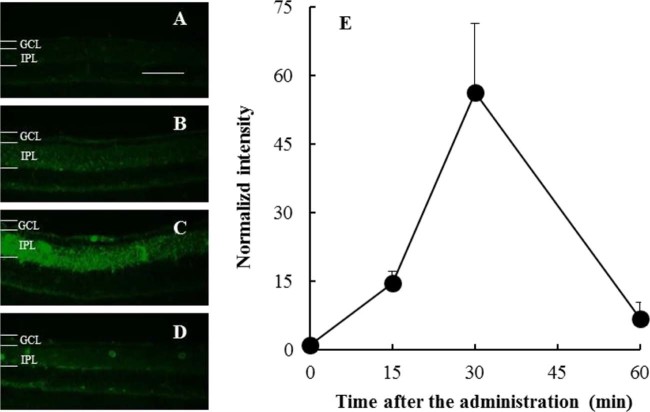
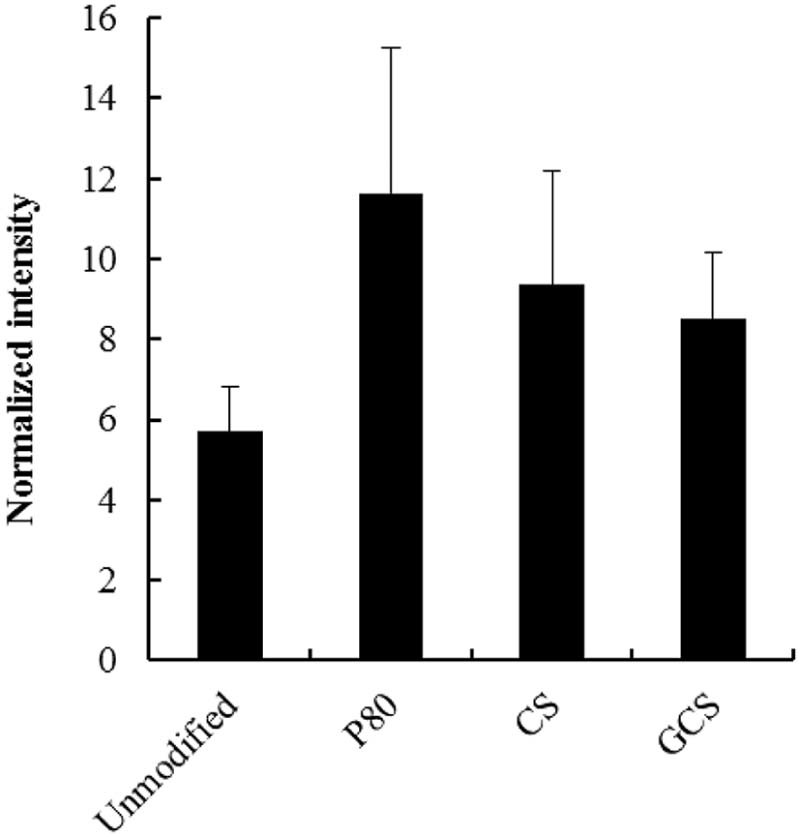
We investigated the delivery of drugs to the posterior segment of the eye by non-invasive topical instillation using submicron-sized poly(D,L-lactide-co-glycolide) (PLGA) nanoparticles (NPs). Surface-modified PLGA NPs were developed to improve the drug delivery efficiency to the retina and were administered as topical eye drops to mice. Chitosan (CS) and glycol chitosan (GCS), which are mucoadhesive polymers, and polysorbate 80 (P80) were used as surface modifiers, and have been reported to increase the association of NPs with cells. Coumarin-6 was used as a model drug and fluorescent marker, and after ocular administration of PLGA NP eye drops, the fluorescence intensity of coumarin-6 was observed in the retina. The fluorescence image analysis indicated that there are several possible routes to the retina and fates of PLGA NPs in ocular tissue, and that these pathways involved the corneal, non-corneal, or uveal routes. Delivery to the mouse retina segments after topical administration was increased by surface modification with CS, GCS, or P80. Surface-modified PLGA NPs are a promising method for retinal drug delivery via topical instillation.
我们研究了使用亚微米级聚(D,L-丙交酯-共-乙交酯)(PLGA)纳米颗粒(NPs)通过非侵入性局部滴注将药物递送至眼后段的情况。开发了表面改性的PLGA NPs以提高药物向视网膜的递送效率,并将其作为局部滴眼液给予小鼠。壳聚糖(CS)和乙二醇壳聚糖(GCS)是粘膜粘附聚合物,聚山梨酯80(P80)用作表面改性剂,据报道它们可增加NPs与细胞的结合。香豆素-6用作模型药物和荧光标记物,在眼部给予PLGA NP滴眼液后,在视网膜中观察到香豆素-6的荧光强度。荧光图像分析表明,PLGA NPs在眼组织中有几种可能的途径到达视网膜和命运,并且这些途径涉及角膜、非角膜或葡萄膜途径。通过CS、GCS或P80进行表面改性后,局部给药后向小鼠视网膜段的递送增加。表面改性的PLGA NPs是一种通过局部滴注进行视网膜药物递送的有前途的方法。