Epidemiology Branch, National Institute of Environmental Health Sciences, National Institutes of Health, Research Triangle Park, NC.
Westat, Durham, NC.
Am J Obstet Gynecol. 2020 Sep;223(3):402.e1-402.e18. doi: 10.1016/j.ajog.2020.02.016. Epub 2020 Feb 24.
Uterine fibroids are common. Symptoms are debilitating for many, leading to high medical and societal costs. Indirect data suggest that compared with white women, African Americans develop fibroids at least 10 years earlier on average, and their higher health burden has been well documented.
The objective of the study was to directly measure fibroid incidence and growth in a large, community-based cohort of young African-American women.
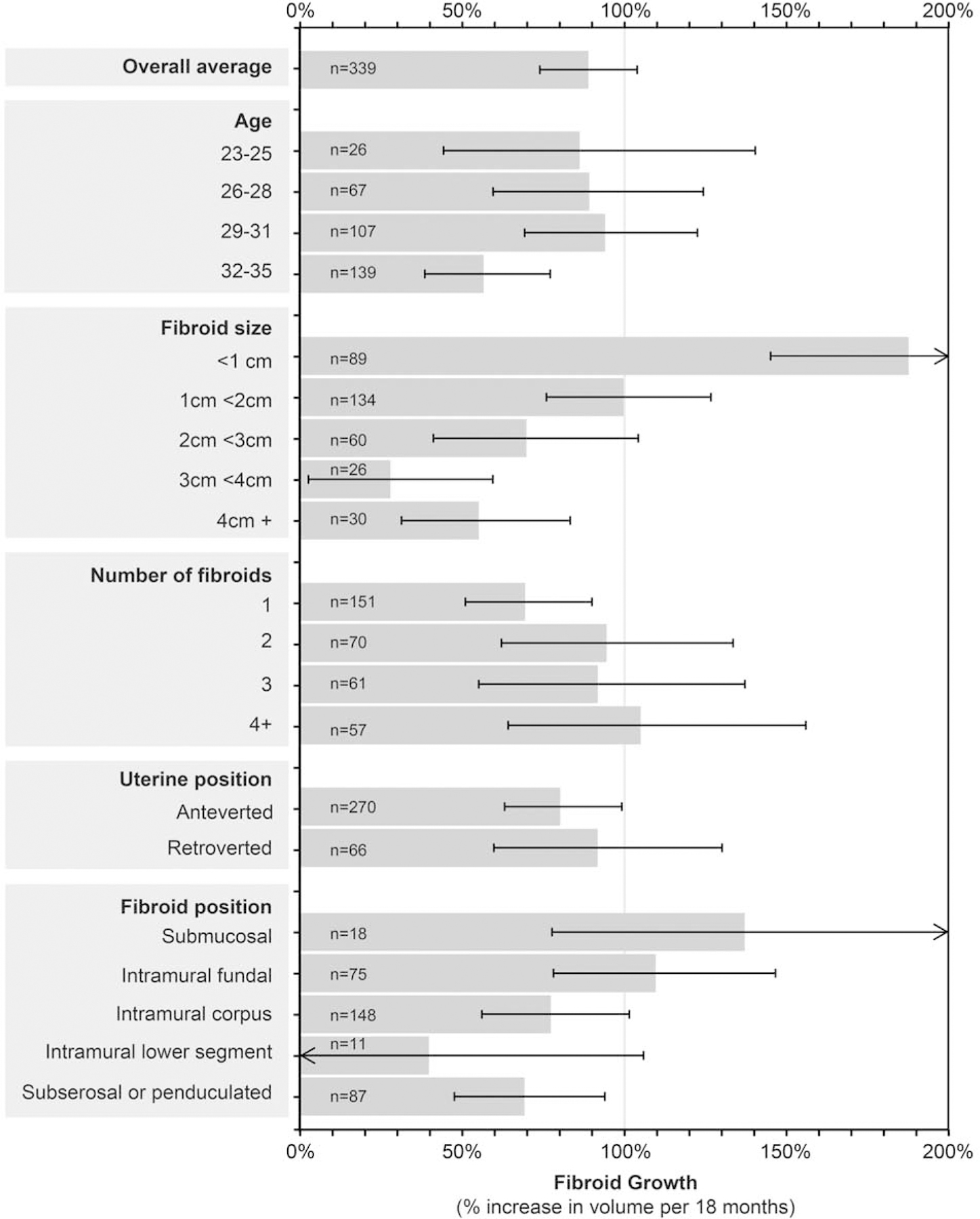
This observational, community-based, prospective study enrolled 1693 African-American women, aged 23-35 years with no prior diagnosis of fibroids. Standardized transvaginal ultrasound examinations at enrollment and after approximately 18 months were conducted to identify and measure fibroids ≥0.5 cm in diameter. Fibroid growth (change in natural log volume per 18 months) was analyzed with mixed-model regression (n = 344 fibroids from 251 women whose baseline ultrasound revealed already existing fibroids).
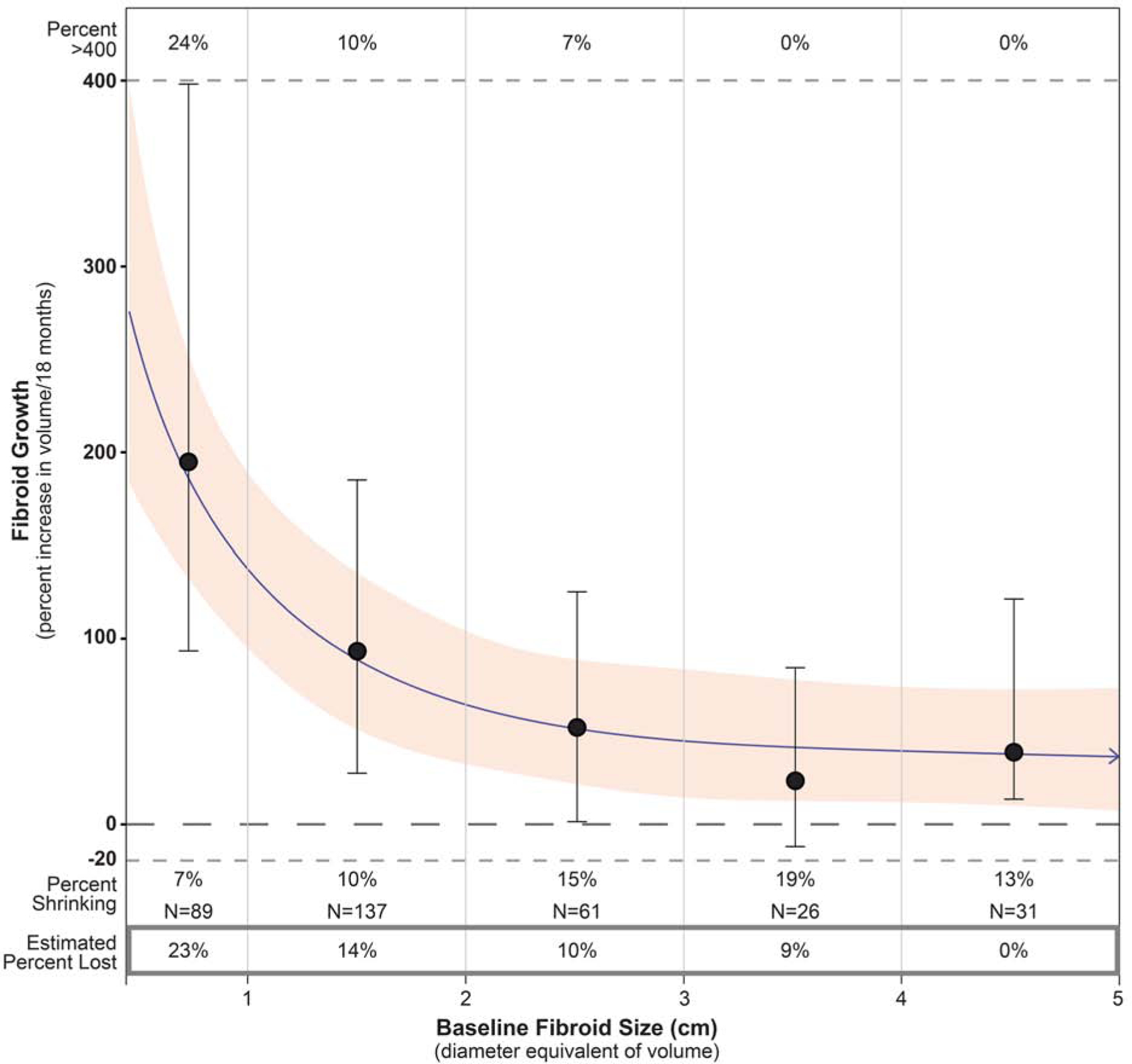
Among the 1123 fibroid-free women with follow-up data (88% were followed up), incidence was 9.4% (95% confidence interval, 7.7-11.2) and increased with age (P < .0001), from 6% (confidence interval, 3-9) for 23-25 year olds to 13% (confidence interval, 9-17) for 32-35 year olds. The chance of any new fibroid development was greater than twice as high for women with existing fibroids compared with women who were fibroid free at baseline (age-adjusted relative risk = 2.3 (confidence interval, 1.7-3.0). The uterine position of most incident fibroids (60%) was intramural corpus. Average fibroid growth was 89% per 18 months (confidence interval, 74-104%) but varied by baseline fibroid size (P < .0001). Fibroids ≥2 cm in diameter had average growth rates well under 100%. In contrast, small fibroids (<1 cm diameter) had an average growth rate of nearly 200% (188%, confidence interval, 145-238%). However, these small fibroids also had a high estimated rate of disappearance (23%).
This is the first study to directly measure age-specific fibroid incidence with a standardized ultrasound protocol and to measure fibroid growth in a large community-based sample. Findings indicate that very small fibroids are very dynamic in their growth, with rapid growth, but a high chance of loss. Larger fibroids grow more slowly. For example, a 2-cm fibroid is likely to take 4-5 years to double its diameter. Detailed data on fibroid incidence confirm an early onset in African-American women.
子宫肌瘤很常见。其症状使许多人身体虚弱,导致医疗和社会成本高昂。间接数据表明,与白人女性相比,非裔美国人的子宫肌瘤发病平均提前至少 10 年,且她们面临着更高的健康负担,这一点已有充分记录。
本研究旨在通过对一个大型、基于社区的非裔美国年轻女性队列进行直接测量,评估子宫肌瘤的发病和生长情况。
这是一项观察性、基于社区的前瞻性研究,共纳入 1693 名年龄在 23-35 岁、无子宫肌瘤既往病史的非裔美国女性。入组时和大约 18 个月后,通过标准的经阴道超声检查,识别并测量直径≥0.5 厘米的子宫肌瘤。采用混合模型回归分析(基线超声显示存在子宫肌瘤的 251 名女性中,有 344 个子宫肌瘤的生长数据纳入分析),评估子宫肌瘤的生长(每 18 个月自然对数体积的变化)。
在随访数据完整的 1123 名无子宫肌瘤的女性(88%接受了随访)中,发病率为 9.4%(95%置信区间,7.7-11.2),且随年龄增长而升高(P<0.0001),23-25 岁女性的发病率为 6%(置信区间,3-9),32-35 岁女性的发病率为 13%(置信区间,9-17)。与基线无子宫肌瘤的女性相比,已有子宫肌瘤的女性新发子宫肌瘤的可能性要高出两倍以上(年龄调整的相对风险为 2.3(置信区间,1.7-3.0))。大多数新发子宫肌瘤(60%)位于子宫壁内。平均每 18 个月子宫肌瘤生长 89%(置信区间,74-104%),但与基线时的子宫肌瘤大小有关(P<0.0001)。直径≥2 厘米的子宫肌瘤生长速度明显低于 100%。相比之下,直径<1 厘米的小肌瘤生长速度接近 200%(188%,置信区间,145-238%)。然而,这些小肌瘤也有很高的估计消失率(23%)。
这是第一项使用标准化超声方案直接测量特定年龄子宫肌瘤发病率,并在大型基于社区的样本中测量子宫肌瘤生长情况的研究。研究结果表明,非常小的子宫肌瘤在生长方面非常活跃,生长迅速,但消失的可能性也很高。较大的子宫肌瘤生长较慢。例如,一个 2 厘米的肌瘤可能需要 4-5 年才能使其直径翻倍。关于子宫肌瘤发病率的详细数据证实,非裔美国女性发病年龄较早。