Department of Pharmacology and Experimental Neuroscience, College of Medicine, University of Nebraska Medical Center, Omaha, NE 68198, USA.
Faculty of Medicine and Biomedical Sciences, University of Yaoundé I, P.O. Box 1364 Yaoundé, Cameroon.
Int J Mol Sci. 2020 Feb 25;21(5):1553. doi: 10.3390/ijms21051553.
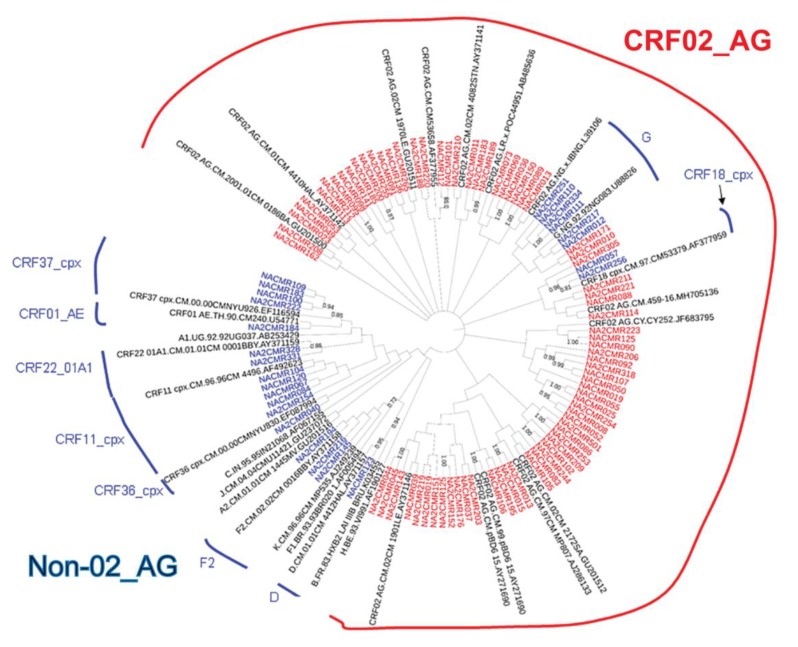
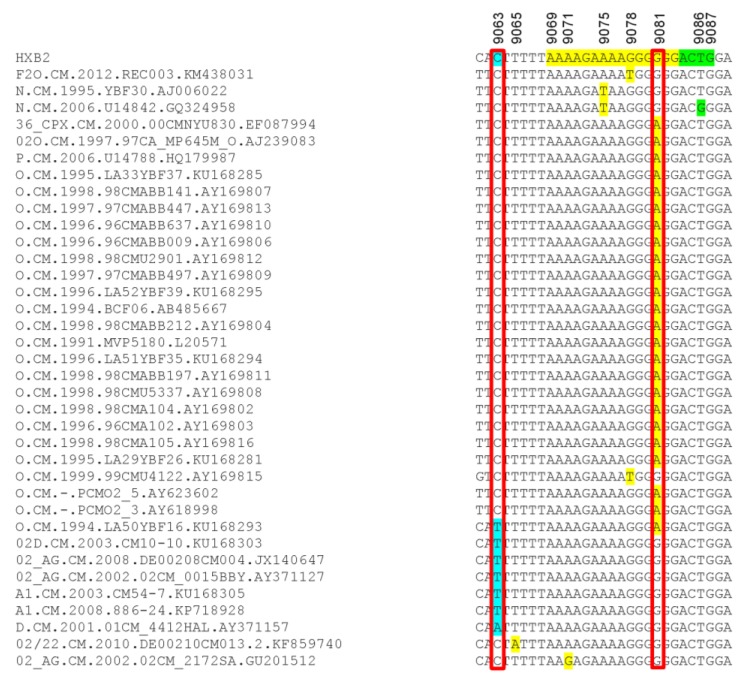
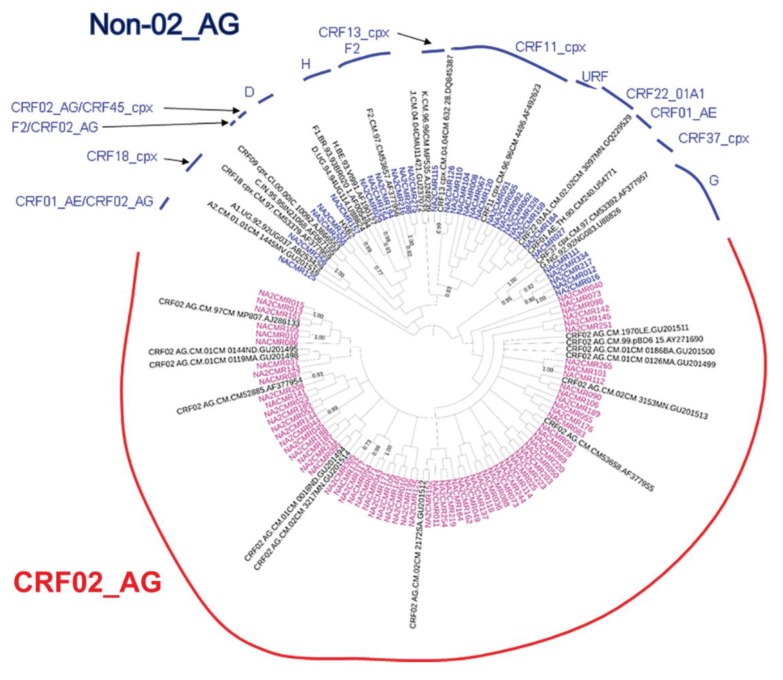
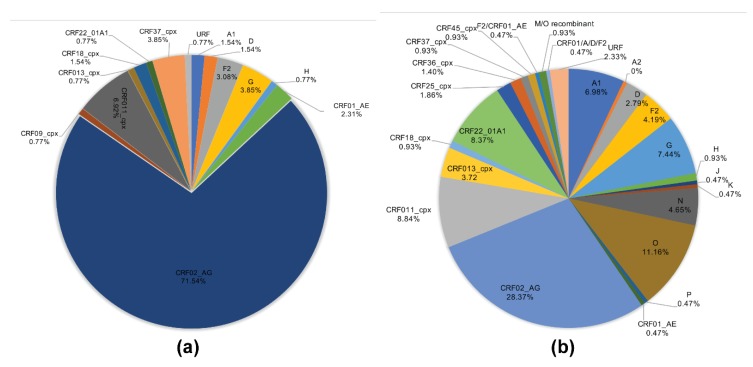
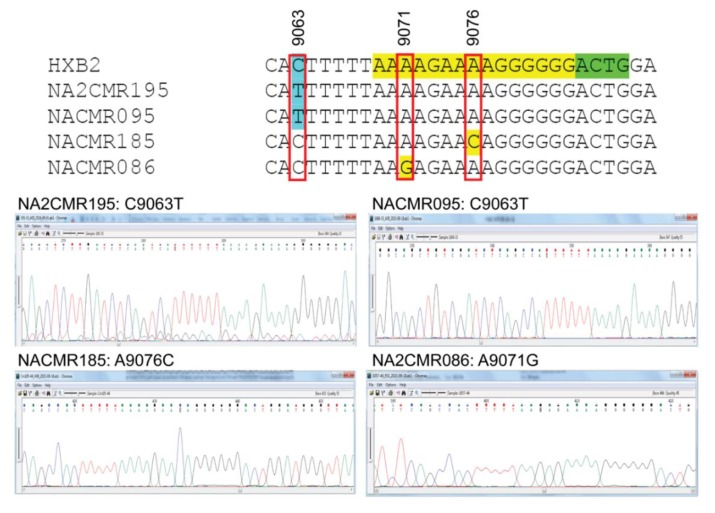
Integrase strand-transfer inhibitors (INSTIs) are now included in preferred first-line antiretroviral therapy (ART) for HIV-infected adults. Studies of Western clade-B HIV-1 show increased resistance to INSTIs following mutations in integrase and nef 3'polypurine tract (3'-PPT). With anticipated shifts in Africa (where 25.6-million HIV-infected people resides) to INSTIs-based ART, it is critical to monitor patients in African countries for resistance-associated mutations (RAMs) affecting INSTIs efficacy. We analyzed HIV-1 integrase and 3'-PPT sequences in 345 clinical samples from INSTIs-naïve HIV-infected Cameroonians for polymorphisms and RAMs that affect INSTIs. Phylogeny showed high genetic diversity, with the predominance of HIV-1 CRF02_AG. Major INSTIs RAMs T66A and N155K were found in two (0.6%) samples. Integrase polymorphic and accessory RAMs found included T97A, E157Q, A128T, M50I, S119R, L74M, L74I, S230N, and E138D (0.3%-23.5% of samples). Ten (3.2%) samples had both I72V+L74M, L74M+T97A, or I72V+T97A mutations; thirty-one (9.8%) had 3'-PPT mutations. The low frequency of major INSTIs RAMs shows that INSTIs-based ART can be successfully used in Cameroon. Several samples had 1 INSTIs accessory RAMs known to reduce INSTIs efficacy; thus, INSTIs-based ART would require genetic surveillance. The 3'-PPT mutations could also affect INSTIs. For patients failing INSTIs-based ART with no INSTIs RAMs, monitoring 3'-PPT sequences could reveal treatment failure etiology.
整合酶链转移抑制剂(INSTIs)现已被纳入感染 HIV 的成人首选一线抗逆转录病毒治疗(ART)。西部分支 HIV-1 的研究表明,整合酶和 nef 3'多嘧啶 tract(3'-PPT)突变会导致对 INSTIs 的耐药性增加。随着非洲(HIV 感染者 2560 万人居住于此)对基于 INSTIs 的 ART 的预期转变,对非洲国家的患者进行影响 INSTIs 疗效的耐药相关突变(RAMs)监测至关重要。我们分析了来自喀麦隆的 345 例未经 INSTIs 治疗的 HIV-1 感染者的 HIV-1 整合酶和 3'-PPT 序列,以确定影响 INSTIs 的多态性和 RAMs。系统发育树显示出高度的遗传多样性,以 HIV-1 CRF02_AG 为主。在两个(0.6%)样本中发现了主要的 INSTIs RAMs T66A 和 N155K。发现的整合酶多态性和辅助 RAMs 包括 T97A、E157Q、A128T、M50I、S119R、L74M、L74I、S230N 和 E138D(占样本的 0.3%-23.5%)。有 10 个(3.2%)样本同时存在 I72V+L74M、L74M+T97A 或 I72V+T97A 突变;31 个(9.8%)样本存在 3'-PPT 突变。主要 INSTIs RAMs 的低频率表明,基于 INSTIs 的 ART 可以在喀麦隆成功使用。一些样本存在已知会降低 INSTIs 疗效的 1 个 INSTIs 辅助 RAMs;因此,基于 INSTIs 的 ART 需要进行基因监测。3'-PPT 突变也可能影响 INSTIs。对于没有 INSTIs RAMs 而基于 INSTIs 的 ART 失败的患者,监测 3'-PPT 序列可能会揭示治疗失败的病因。