Department of Public Health, University Medical Center Rotterdam, Erasmus MC, 3000 CA Rotterdam, The Netherlands.
Department of Internal Medicine, University Medical Center Rotterdam, Erasmus MC, 3000 CA Rotterdam, The Netherlands.
Int J Environ Res Public Health. 2020 Feb 25;17(5):1461. doi: 10.3390/ijerph17051461.
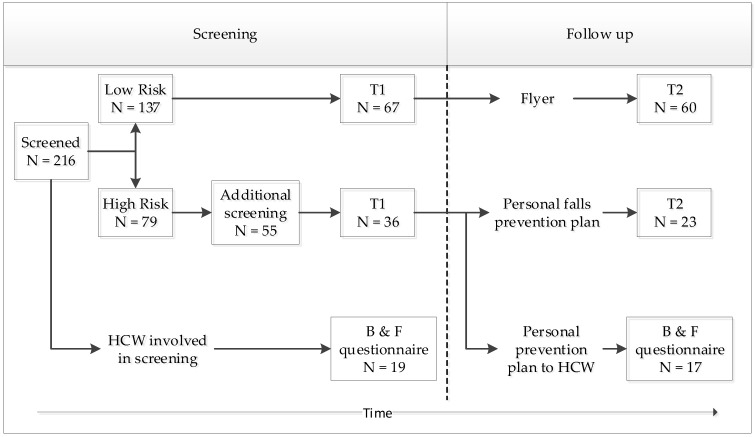
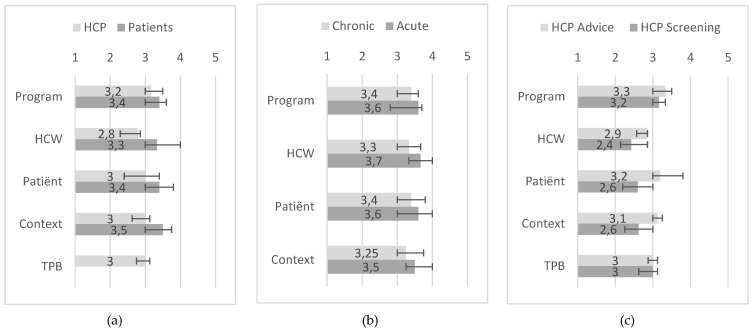
We aimed to gain insight into the barriers and facilitators to fall risk screening of older adults visiting the hospital as experienced by patients and healthcare professionals, and to examine the differences between chronic- and acute-care patients. We invited patients (≥ 70 years) attending the nephrology and emergency department to participate in the screening. Patients and their healthcare professionals were asked to complete a self-administered questionnaire based on the "Barriers and Facilitators Assessment Instrument". Differences in barriers and facilitators between acute- and chronic-care patients were examined with chi-square tests. A total of 216 patients were screened, and 103 completed the questionnaire. They considered many factors as facilitators, and none as barriers. Acute-care patients were more positive than chronic-care patients about healthcare worker characteristics, such as knowledge and skills. After screening, patients were more open to receiving advice regarding fall prevention. The 36 healthcare professionals considered program characteristics to be facilitators and mainly factors regarding healthcare worker characteristics as barriers to implementation. For patients, the outpatient setting seemed to be a good place to be screened for fall risk. Healthcare professionals also suggested that program characteristics could enhance implementation. However, healthcare professionals' mindsets and the changing of routines are barriers that have to be addressed first.
我们旨在深入了解患者和医疗保健专业人员在医院就诊的老年人跌倒风险筛查的障碍和促进因素,并研究慢性和急性护理患者之间的差异。我们邀请了(≥70 岁)参加肾病和急诊科的患者参与筛查。患者及其医疗保健专业人员被要求根据“障碍和促进因素评估工具”完成一份自我管理问卷。使用卡方检验检查了急性和慢性护理患者之间障碍和促进因素的差异。共筛查了 216 名患者,其中 103 名完成了问卷调查。他们认为许多因素是促进因素,没有一个是障碍。与慢性护理患者相比,急性护理患者对医护人员的特征,如知识和技能,更为积极。筛查后,患者更愿意接受有关预防跌倒的建议。36 名医疗保健专业人员认为计划特征是促进因素,主要是与医护人员特征有关的因素是实施的障碍。对于患者来说,门诊环境似乎是筛查跌倒风险的好地方。医疗保健专业人员还建议可以通过计划特征来增强实施效果。然而,医护人员的心态和常规的改变是必须首先解决的障碍。