Ma Wanru, Qiao Juanli, Zhou Jing, Gu Liankun, Deng Dajun
Key Laboratory of Carcinogenesis and Translational Research (Ministry of Education/Beijing), Division of Etiology, Peking University Cancer Hospital & Institute, Fu-Cheng-Lu #52, Haidian District, Beijing, 100142, China.
Mol Cancer. 2020 Feb 27;19(1):42. doi: 10.1186/s12943-020-01150-4.
The CDKN2A/B locus contains crucial tumor suppressors and a lncRNA gene ANRIL. However, the mechanisms that coordinately regulate their expression levels are not clear.
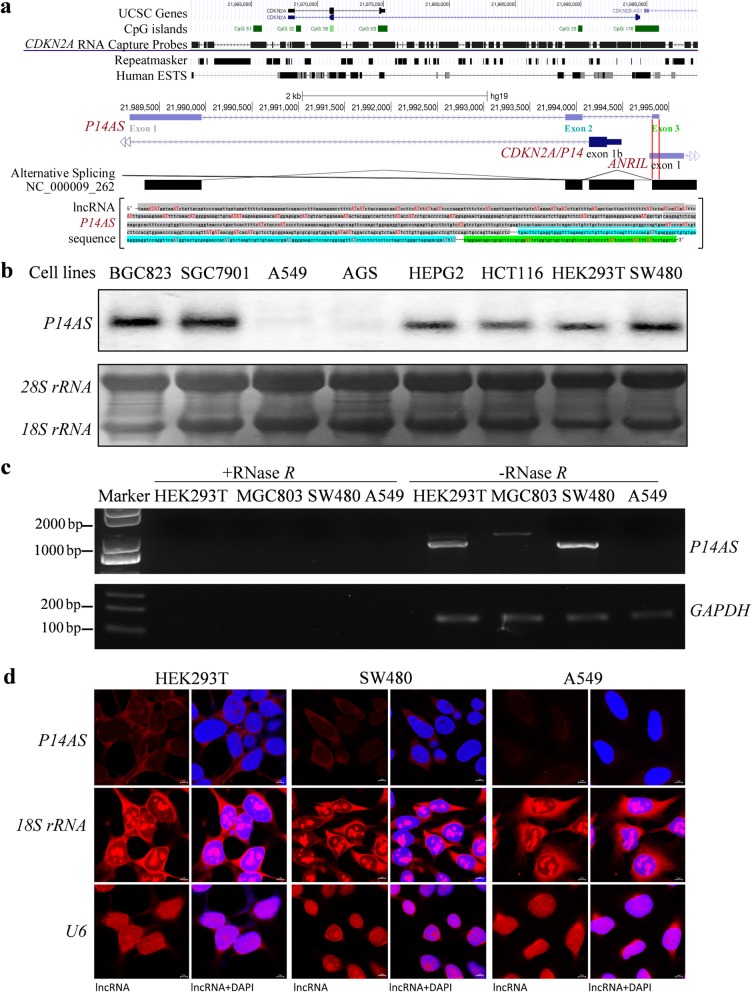
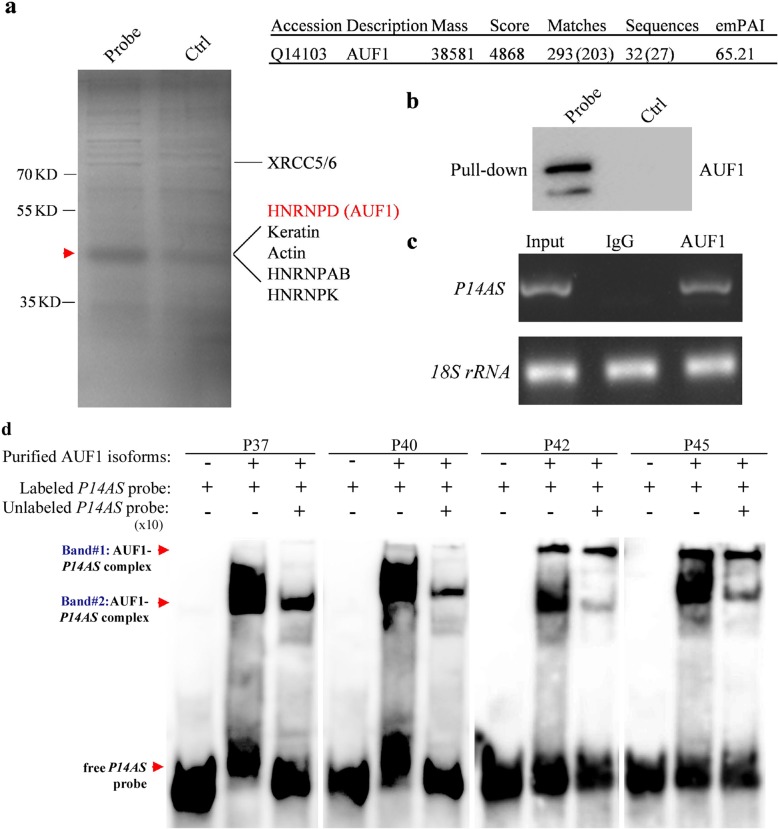
Novel RNAs transcribed from the CDKN2A gene were screened by CDKN2A-specific RNA capture deep-sequencing and confirmed by Northern blotting and clone-sequencing. Long non-coding RNA (lncRNA) binding proteins were characterized by RNA pull-down combined with mass spectrometry and RNA immunoprecipitation. LncRNA functions in human cells were studied using a set of biological assays in vitro and in vivo.
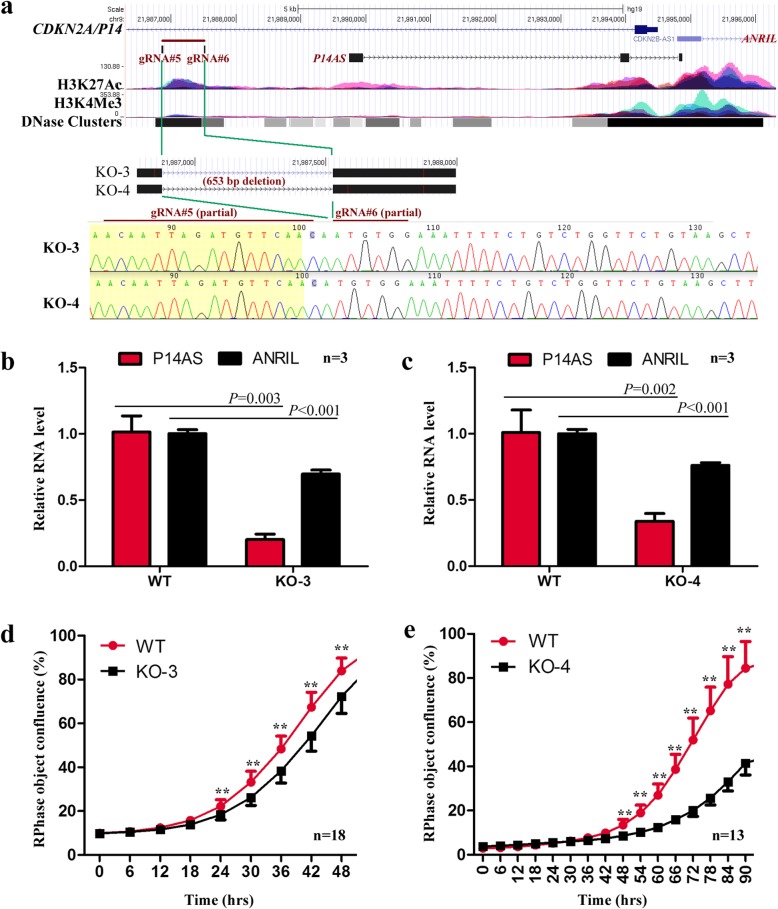
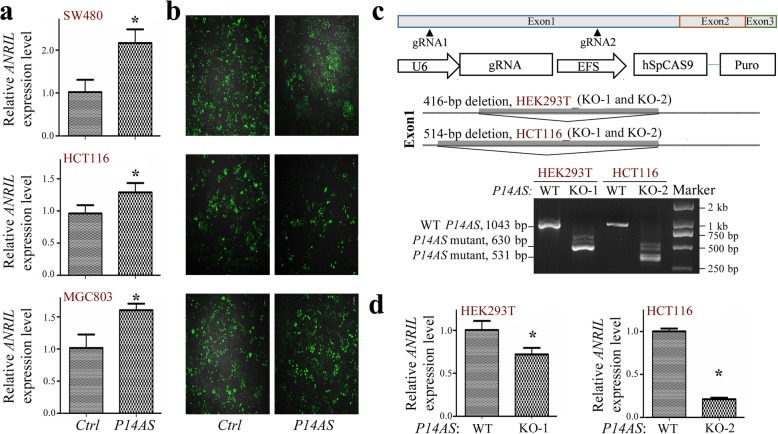
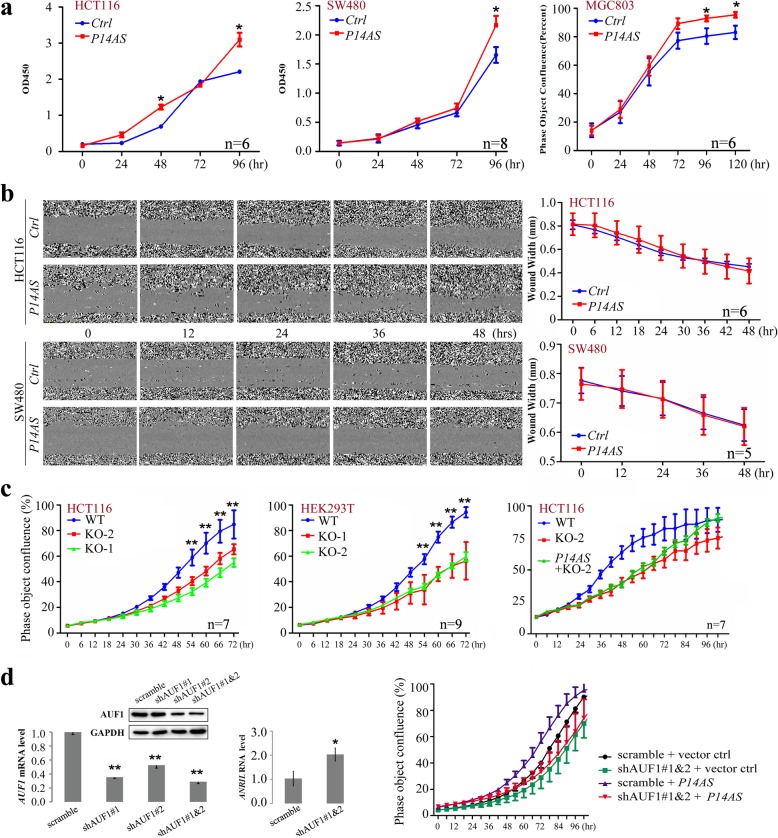
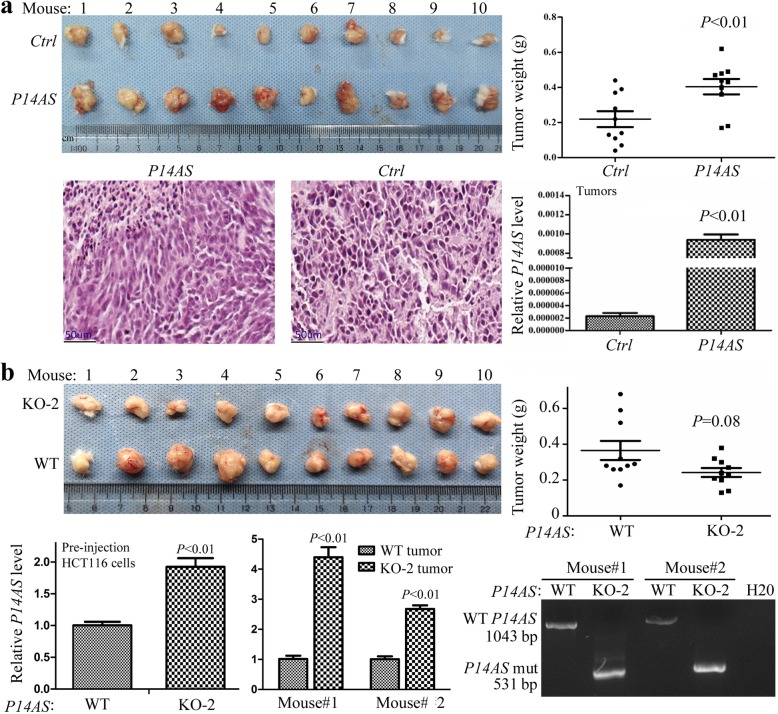
We characterized a novel lncRNA, P14AS with its promoter in the antisense strand of the fragment near CDKN2A exon 1b in human cells. The mature P14AS is a three-exon linear cytoplasmic lncRNA (1043-nt), including an AU-rich element (ARE) in exon 1. P14AS decreases AUF1-ANRIL/P16 RNA interaction and then increases ANRIL/P16 expression by competitively binding to AUF1 P37 and P40 isoforms. Interestingly, P14AS significantly promoted the proliferation of cancer cells and tumor formation in NOD-SCID mice in a P16-independent pattern. Moreover, in human colon cancer tissues, the expression levels of P14AS and ANRIL lncRNAs were significantly upregulated compared with the paired normal tissues.
A novel lncRNA, P14AS, transcribed from the antisense strand of the CDKN2A/P14 gene, promotes colon cancer development by cis upregulating the expression of oncogenic ANRIL.
CDKN2A/B基因座包含关键的肿瘤抑制因子和一个长链非编码RNA基因ANRIL。然而,协调调节它们表达水平的机制尚不清楚。
通过CDKN2A特异性RNA捕获深度测序筛选从CDKN2A基因转录的新型RNA,并通过Northern印迹和克隆测序进行确认。通过RNA下拉结合质谱和RNA免疫沉淀来鉴定长链非编码RNA(lncRNA)结合蛋白。使用一系列体外和体内生物学试验研究lncRNA在人类细胞中的功能。
我们在人类细胞中鉴定了一种新型lncRNA,P14AS,其启动子位于CDKN2A外显子1b附近片段的反义链中。成熟的P14AS是一种三外显子线性细胞质lncRNA(1043个核苷酸),在外显子1中包含一个富含AU的元件(ARE)。P14AS通过竞争性结合AUF1 P37和P40异构体降低AUF1-ANRIL/P16 RNA相互作用,进而增加ANRIL/P16表达。有趣的是,P14AS以不依赖P16的模式显著促进癌细胞增殖和NOD-SCID小鼠中的肿瘤形成。此外,在人类结肠癌组织中,与配对的正常组织相比,P14AS和ANRIL lncRNA的表达水平显著上调。
一种从CDKN2A/P14基因反义链转录的新型lncRNA,P14AS,通过顺式上调致癌性ANRIL的表达促进结肠癌发展。