Department of Anthropology, University of Zurich, Winterthurerstrasse 190, 8057, Zürich, Switzerland.
Anim Cogn. 2020 May;23(3):581-594. doi: 10.1007/s10071-020-01363-6. Epub 2020 Feb 27.
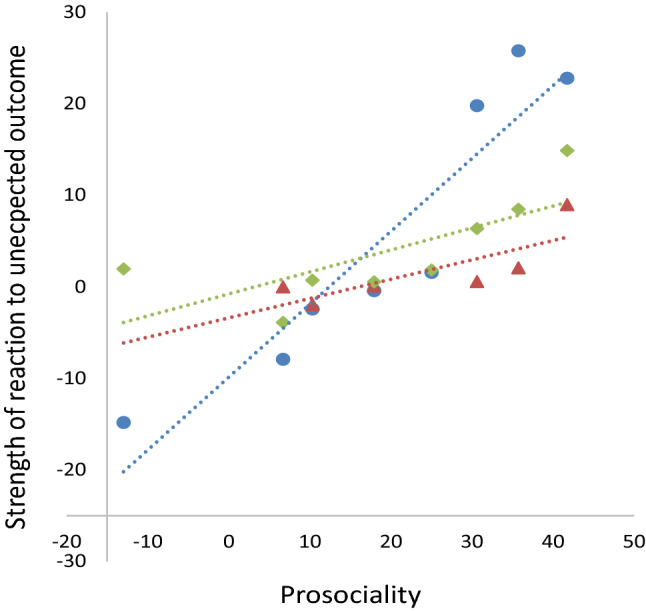
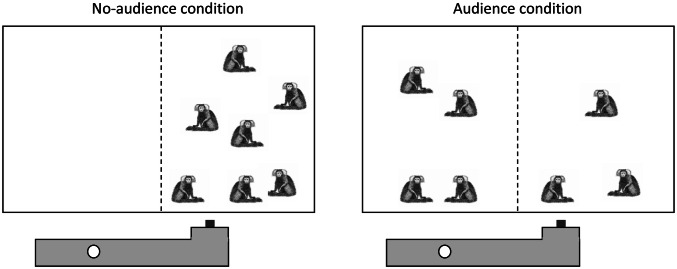
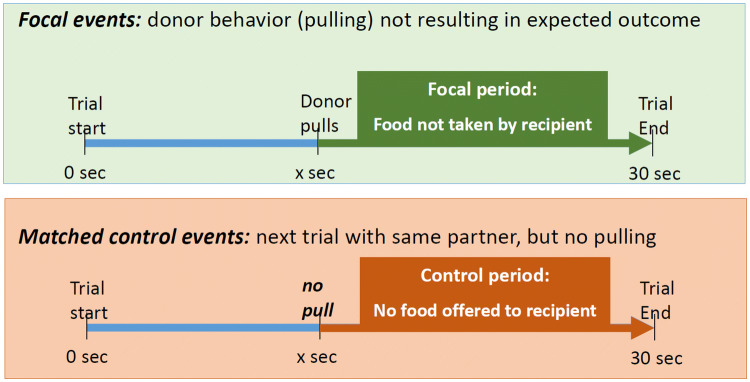
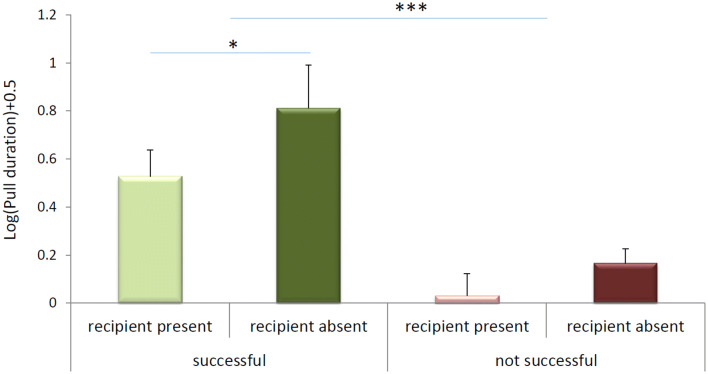
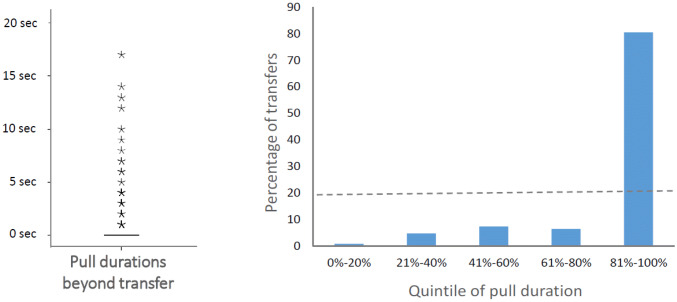
Marmoset monkeys show high levels of proactive prosociality, a trait shared with humans, presumably because both species rely on allomaternal care. However, it is not clear whether the proximate regulation of this convergent trait is also similar, in particular with regard to intentionality, which is a defining characteristic of prosocial behavior in the human literature. The aim of this paper was to investigate whether marmoset monkeys' prosociality fulfils the criteria of intentionality developed in primate communication research. The results show that marmoset prosocial behavior (i) has some degree of flexibility, since individuals can use multiple means to reach their goal and adjust them to specific conditions, (ii) depends on the presence of an audience, i.e. potential recipients (social use), and (iii) is goal-directed, because (a) it continues exactly until the putative goal is reached, and (b) individuals check back and look at/for their partner when their prosocial actions do not achieve the putative goal (i.e. if their actions don't lead to the expected outcome, this elicits distinct reactions in the actor). These results suggest that marmoset prosociality is under some degree of voluntary, intentional control. They are in line with other findings that marmosets perceive each other as intentional agents, and only learn socially from actions that are perceived as intentional. The most parsimonious conclusion is, therefore, that prosocial behavior is fundamentally under voluntary control in marmosets, just as it is in humans, even though our more sophisticated cognitive abilities allow for a far more complex integration of prosociality into a broader variety of contexts and of behavioral goals.
卷尾猴表现出高水平的主动亲社会行为,这一特征与人类共有,大概是因为这两个物种都依赖于异体抚育。然而,目前尚不清楚这种趋同特征的近因调节是否也相似,特别是在意图方面,意图是人类文献中亲社会行为的一个决定性特征。本文旨在探讨卷尾猴的亲社会行为是否符合灵长类动物交流研究中提出的意图标准。研究结果表明,卷尾猴的亲社会行为(i)具有一定程度的灵活性,因为个体可以使用多种手段来达到目标,并根据具体情况进行调整;(ii)依赖于观众的存在,即潜在的接受者(社交用途);(iii)是目标导向的,因为(a)它会持续进行,直到达到假定的目标,并且(b)当个体的亲社会行为没有达到假定的目标时,它们会回头查看或寻找伙伴(即如果它们的行为没有产生预期的结果,这会在行为者身上引起明显的反应)。这些结果表明,卷尾猴的亲社会行为在某种程度上受到自愿、意图控制。它们与其他发现一致,即卷尾猴将彼此视为有意图的行为体,并且只从被感知为有意的行为中进行社会学习。因此,最合理的结论是,亲社会行为在卷尾猴中受到自愿控制,就像在人类中一样,尽管我们更复杂的认知能力允许将亲社会行为更复杂地融入更广泛的各种情境和行为目标中。