Lin Changjie, Xia Jing, Gu Zhiwei, Meng Yunpeng, Gao Dekang, Wei Shaohua
Department of General Surgery, The Second Affiliated Hospital of Soochow University, Suzhou, Jiangsu 215000, People's Republic of China.
Onco Targets Ther. 2020 Feb 18;13:1471-1480. doi: 10.2147/OTT.S228857. eCollection 2020.
Pancreatic cancer (PC) is a highly lethal malignancy worldwide. Our previous study indicated that overexpression of USP34 could promote tumor growth in PC cells. Therefore, this study aimed to further investigate the role of USP34 during the tumorigenesis of PC.
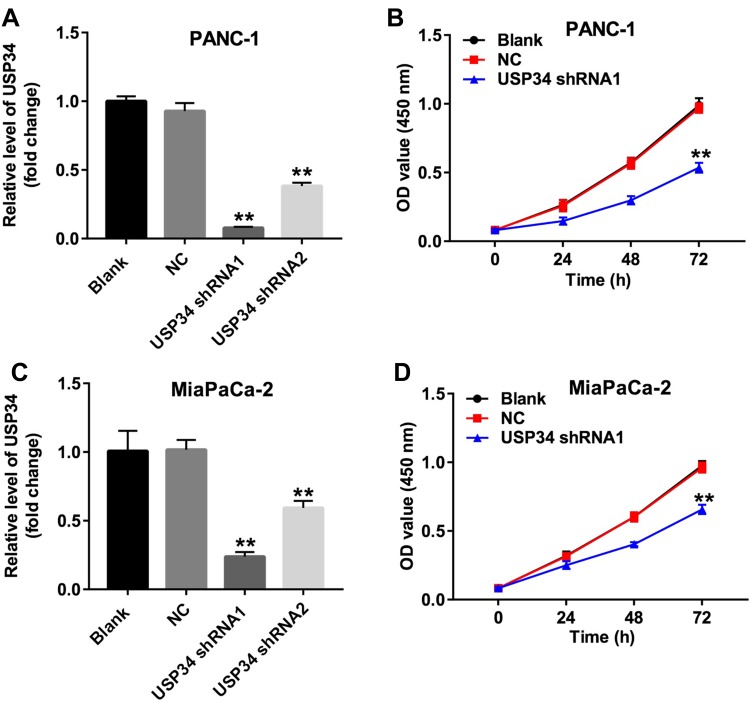
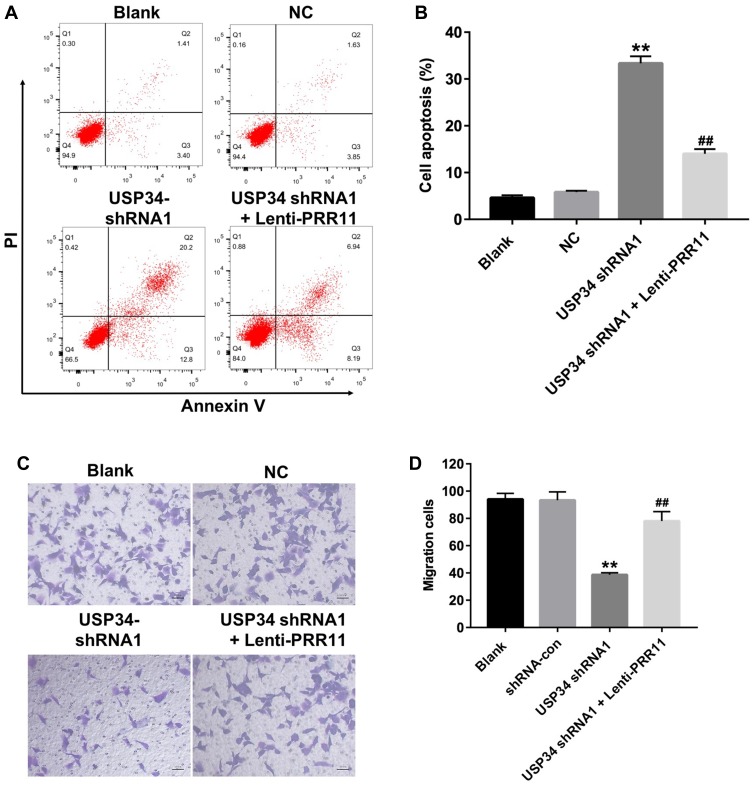
The level of USP34 in PANC-1 and MiaPaCa-2 cells transfected with USP34-shRNAs was detected by RT-qPCR. Moreover, transwell migration and Annexin V/PI analysis were conducted to detect cell migration and apoptosis, respectively.
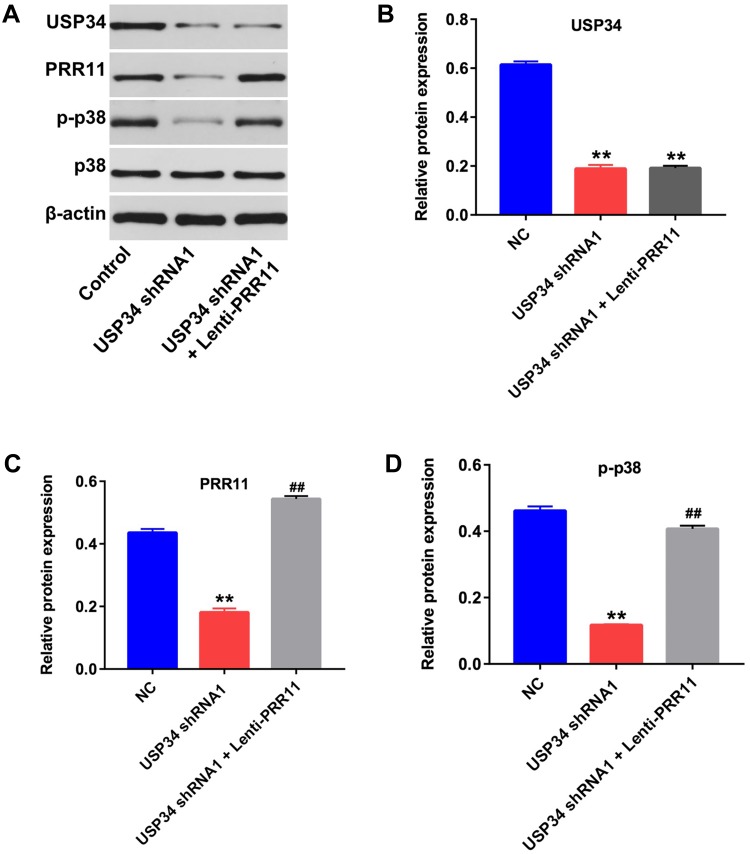
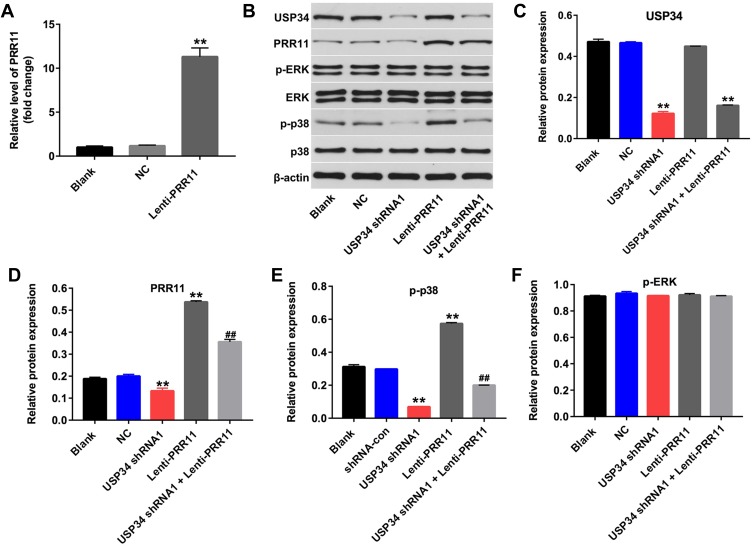
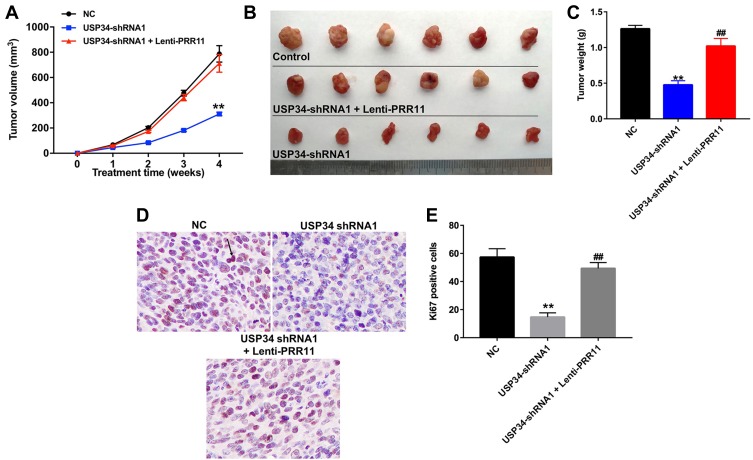
In this study, downregulation of USP34 markedly inhibited proliferation and migration, and induced apoptosis in PANC-1 cells. Moreover, silencing of USP34 obviously downregulated the levels of PRR11 and p-p38 in PANC-1 cells. An in vivo study in nude mice bearing PANC-1 cell xenografts confirmed these results.
Downregulation of USP34 could inhibit proliferation and migration in PANC-1 cells via inhibiting PRR11, and inactivating p38 MAPK signaling. Therefore, USP34 might be a potential therapeutic target for the treatment of PC.
胰腺癌(PC)是全球范围内一种高度致命的恶性肿瘤。我们之前的研究表明,USP34的过表达可促进胰腺癌细胞的肿瘤生长。因此,本研究旨在进一步探究USP34在胰腺癌发生过程中的作用。
通过RT-qPCR检测用USP34-shRNAs转染的PANC-1和MiaPaCa-2细胞中USP34的水平。此外,分别进行Transwell迁移实验和Annexin V/PI分析以检测细胞迁移和凋亡情况。
在本研究中,USP34的下调显著抑制了PANC-1细胞的增殖和迁移,并诱导其凋亡。此外,USP34的沉默明显下调了PANC-1细胞中PRR11和p-p38的水平。在携带PANC-1细胞异种移植瘤的裸鼠体内研究证实了这些结果。
USP34的下调可通过抑制PRR11和使p38 MAPK信号失活来抑制PANC-1细胞的增殖和迁移。因此,USP34可能是治疗胰腺癌的一个潜在治疗靶点。