Suzuki Naomi, Tajiri Kazuto, Futsukaichi Yuka, Tanaka Shinichi, Murayama Aiko, Entani Toshiki, Kobayashi Saito, Takahashi Kosuke, Fujii Tsutomu, Imura Johji, Yasuda Ichiro
Department of Gastroenterology, Toyama University Hospital, Toyama, Japan.
Graduate Education and Clinical Training Center, Toyama University Hospital, Toyama, Japan.
Case Rep Gastroenterol. 2020 Feb 5;14(1):63-69. doi: 10.1159/000505774. eCollection 2020 Jan-Apr.
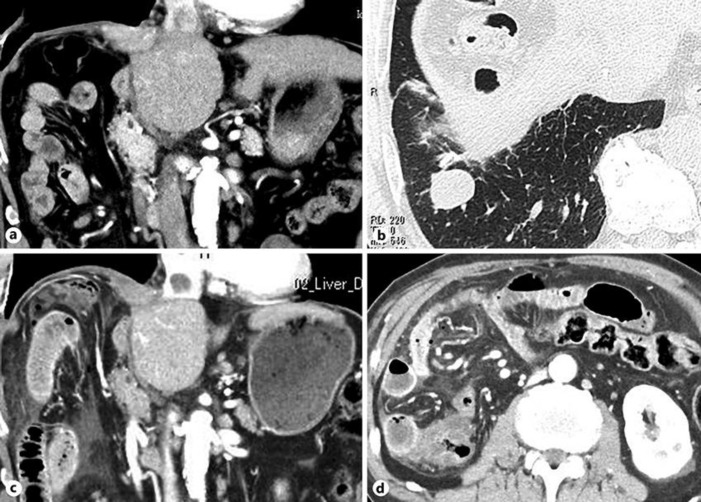
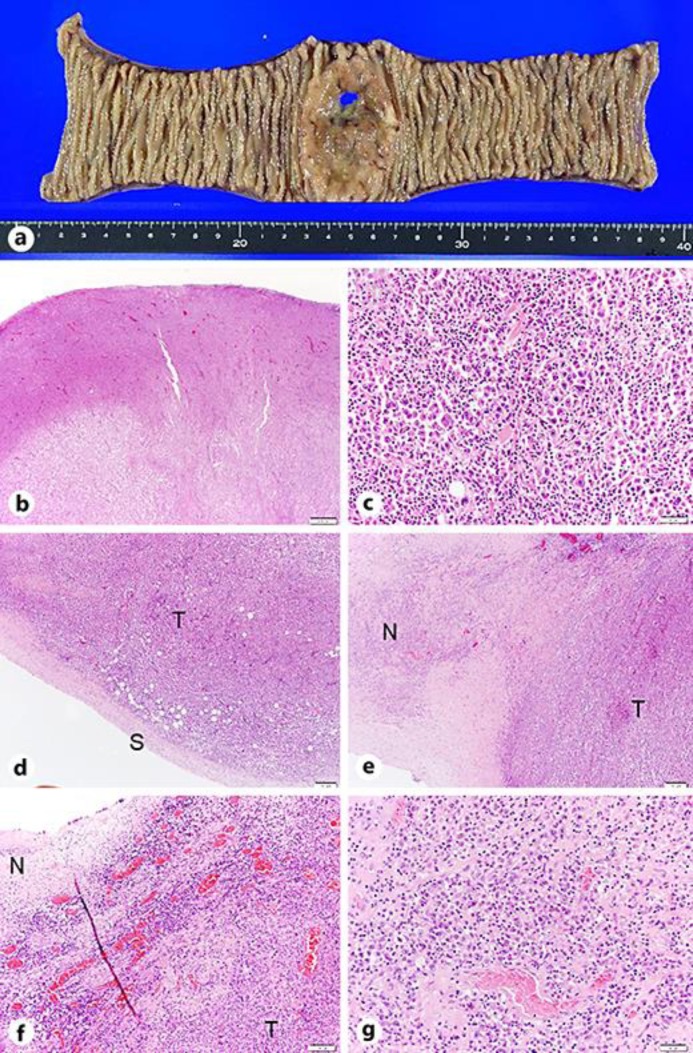
Lenvatinib is a first-line standard treatment for advanced hepatocellular carcinoma (HCC) with better anti-tumor effects than sorafenib, as shown by greater inhibition of the kinases of fibroblast growth factor receptor and vascular endothelial growth factor (VEGF) receptor. This report describes a patient with advanced HCC who experienced perforation of the small intestine 1 month after starting the treatment with lenvatinib. This patient likely had partial necrosis of a metastasis to the small intestine before starting lenvatinib treatment, with subsequent ischemic changes leading to perforation of the small intestine. Although metastasis of HCC to the small intestine is rare, patients with these metastases should be regarded as being at risk for perforation during lenvatinib treatment.
仑伐替尼是晚期肝细胞癌(HCC)的一线标准治疗药物,对成纤维细胞生长因子受体激酶和血管内皮生长因子(VEGF)受体的抑制作用更强,因此抗肿瘤效果优于索拉非尼。本报告描述了一名晚期HCC患者,在开始使用仑伐替尼治疗1个月后发生小肠穿孔。该患者在开始仑伐替尼治疗前可能已有小肠转移灶的部分坏死,随后出现缺血性改变,导致小肠穿孔。虽然HCC转移至小肠的情况罕见,但有这些转移灶的患者在仑伐替尼治疗期间应被视为有穿孔风险。