Soud Mohamad, Al-Khadra Yasser, Darmoch Fahed, Moussa Pacha Homam, Fanari Zaher, Alraies M Chadi
Rutgers New Jersey Medical School, Newark, New Jersey, USA.
Cleveland Clinic, Medicine Institute, Cleveland, Ohio, USA.
Avicenna J Med. 2020 Jan 23;10(1):22-28. doi: 10.4103/ajm.ajm_134_19. eCollection 2020 Jan-Mar.
Bicuspid aortic valve (BAV) disease is considered the most common congenital heart disease and the main etiology of aortic valve stenosis (AS) in young adults. Although transcatheter aortic valve replacement (TAVR) is routinely used in high- and intermediate-risk patients with AS, BAV patients with AS were excluded from all pivotal trials that led to TAVR approval. We sought, therefore, to examine in-hospital outcomes of patients with BAV who underwent TAVR in comparison with surgical aortic valve replacement (SAVR).
Using the National Inpatient Sample from 2011 to 2014, we identified patients with BAV with International Classification of Diseases-Ninth Revision-CM code 746.4. Patients who underwent TAVR were identified using ICD-9 codes 35.05 and 35.06 and those who underwent SAVR were identified using codes 35.21 and 35.22 during the same period.
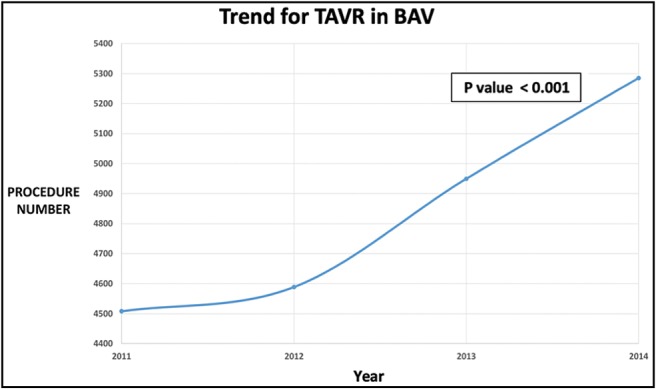
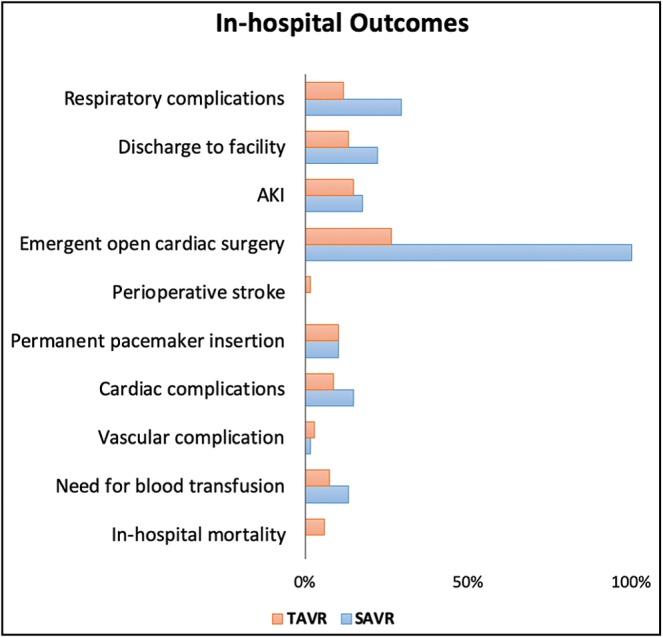
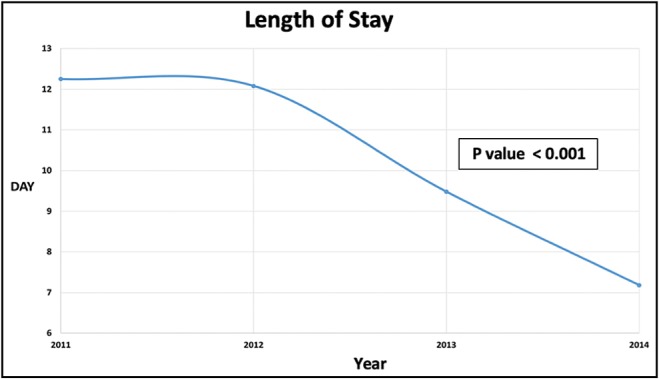
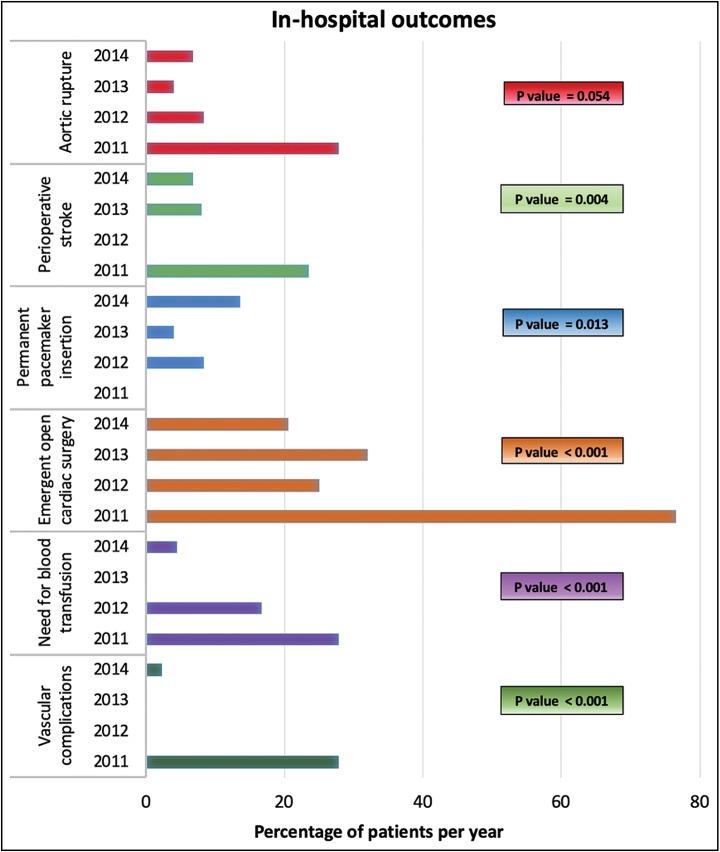
A total of 37,052 patients were found to have BAV stenosis. Among them, 36,629 patients (98.8%) underwent SAVR, whereas 423 patients (1.14%) underwent TAVR. One-third of enrolled patients were female, and the majority of the patients were White with a mean age of 65.9 ± 15.1 years. TAVR use for BAV stenosis significantly increased from 0.39% in 2011 to 4.16% in 2014 ( < 0.001), which represents a 3.77% overall growth in procedure rate. The median length of stay decreased significantly throughout the study period (mean 12.2 ± 8.2 days to 7.1 ± 5.9 days, < 0.001). There was no statistically significant difference between SAVR and TAVR groups in the in-hospital mortality (0% vs. 5.9%; adjusted = 0.119).
There is a steady increase in TAVR use for BAV stenosis patients along with a significant decrease in length of stay.
二叶式主动脉瓣(BAV)疾病被认为是最常见的先天性心脏病,也是年轻成人主动脉瓣狭窄(AS)的主要病因。尽管经导管主动脉瓣置换术(TAVR)常用于中高危AS患者,但导致TAVR获批的所有关键试验均将患有AS的BAV患者排除在外。因此,我们试图比较接受TAVR的BAV患者与接受外科主动脉瓣置换术(SAVR)患者的住院结局。
利用2011年至2014年的全国住院患者样本,我们通过国际疾病分类第九版临床修正版(ICD-9-CM)编码746.4确定了BAV患者。同期,接受TAVR的患者通过ICD-9编码35.05和35.06确定,接受SAVR的患者通过编码35.21和35.22确定。
共发现37052例BAV狭窄患者。其中,36629例患者(98.8%)接受了SAVR,而423例患者(1.14%)接受了TAVR。三分之一的入组患者为女性,大多数患者为白人,平均年龄为65.9±15.1岁。BAV狭窄患者使用TAVR的比例从2011年的0.39%显著增加到2014年的4.16%(P<0.001),这代表手术率总体增长了3.77%。在整个研究期间,住院时间中位数显著缩短(平均12.2±8.2天至7.1±5.9天,P<0.001)。SAVR组和TAVR组的住院死亡率无统计学显著差异(0%对5.9%;校正P=0.119)。
BAV狭窄患者使用TAVR的情况稳步增加,同时住院时间显著缩短。