Maskarinec S A, Park L P, Ruffin F, Turner N A, Patel N, Eichenberger E M, van Duin D, Lodise T, Fowler V G, Thaden J T
Division of Infectious Diseases and International Health, Duke University, Durham, NC, USA.
Division of Clinical Pharmacy, Skaggs School of Pharmacy and Pharmaceutical Sciences, University of California-San Diego, La Jolla, CA, USA.
Clin Microbiol Infect. 2020 Jul;26(7):904-910. doi: 10.1016/j.cmi.2020.01.025. Epub 2020 Feb 28.
The role of follow-up blood cultures (FUBCs) in the management of Gram-negative bacteraemia (GNB) is poorly understood. We aimed to determine the utility of FUBCs in identifying patients with increased mortality risk.
An observational study with a prospectively enrolled cohort of adult inpatients with GNB was conducted at Duke University Health System from 2002 to 2015. FUBCs were defined as blood cultures performed from 24 hours to 7 days from initial positive blood culture.
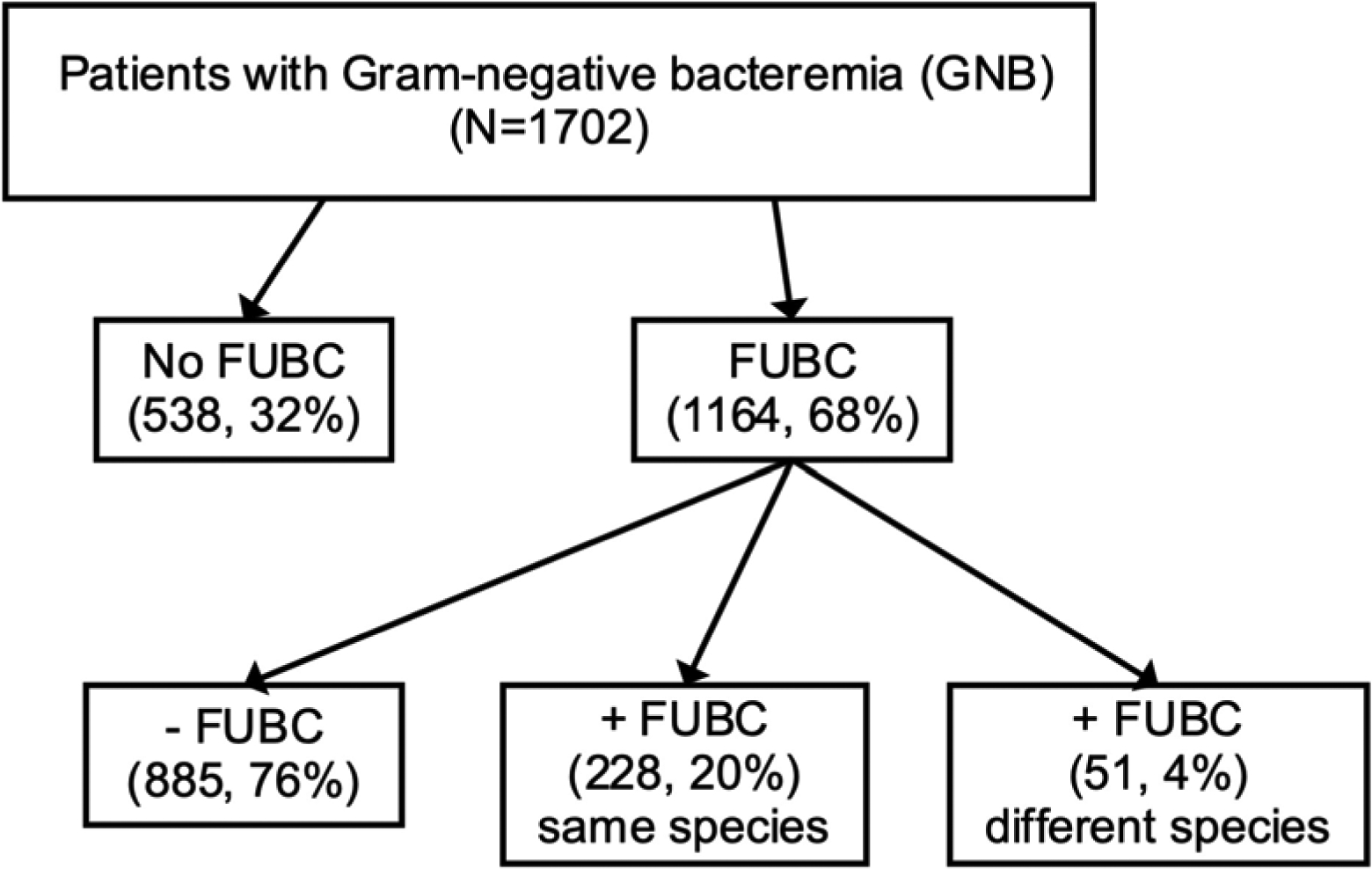
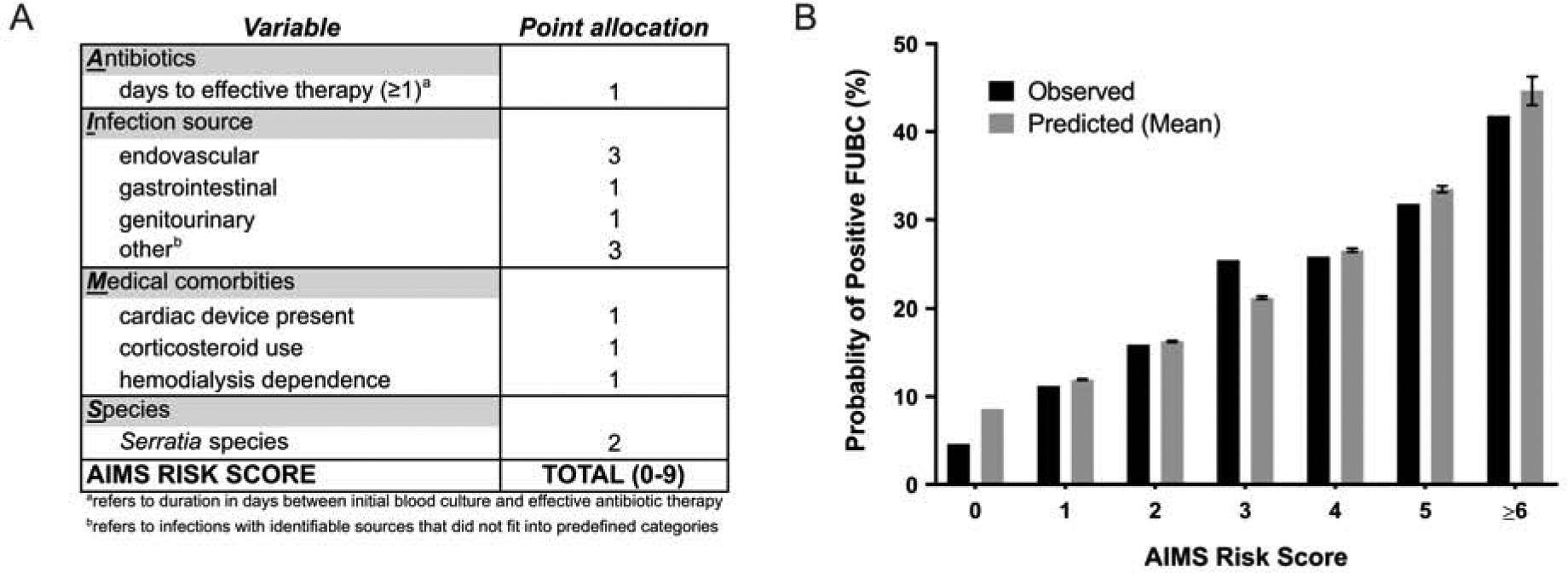
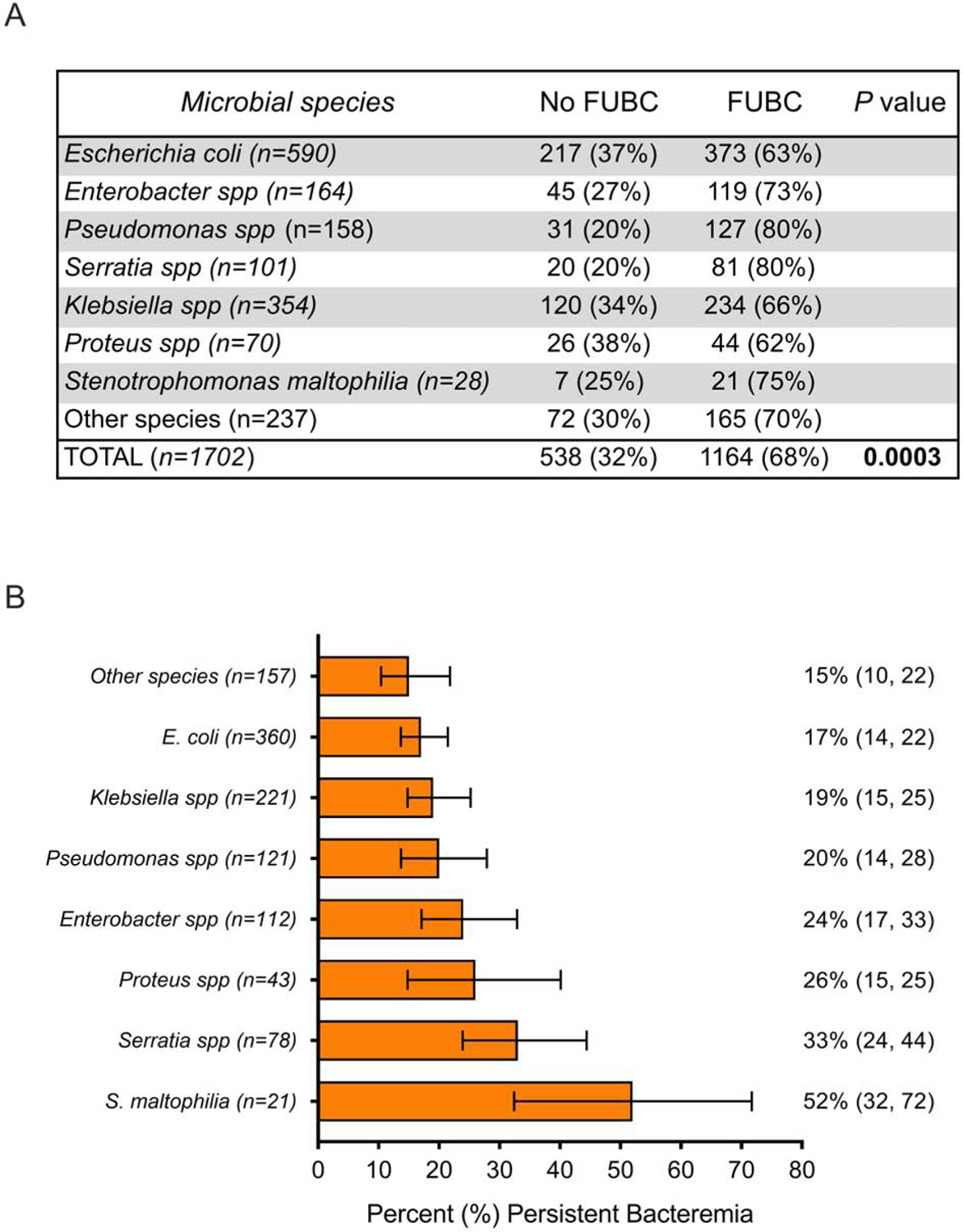
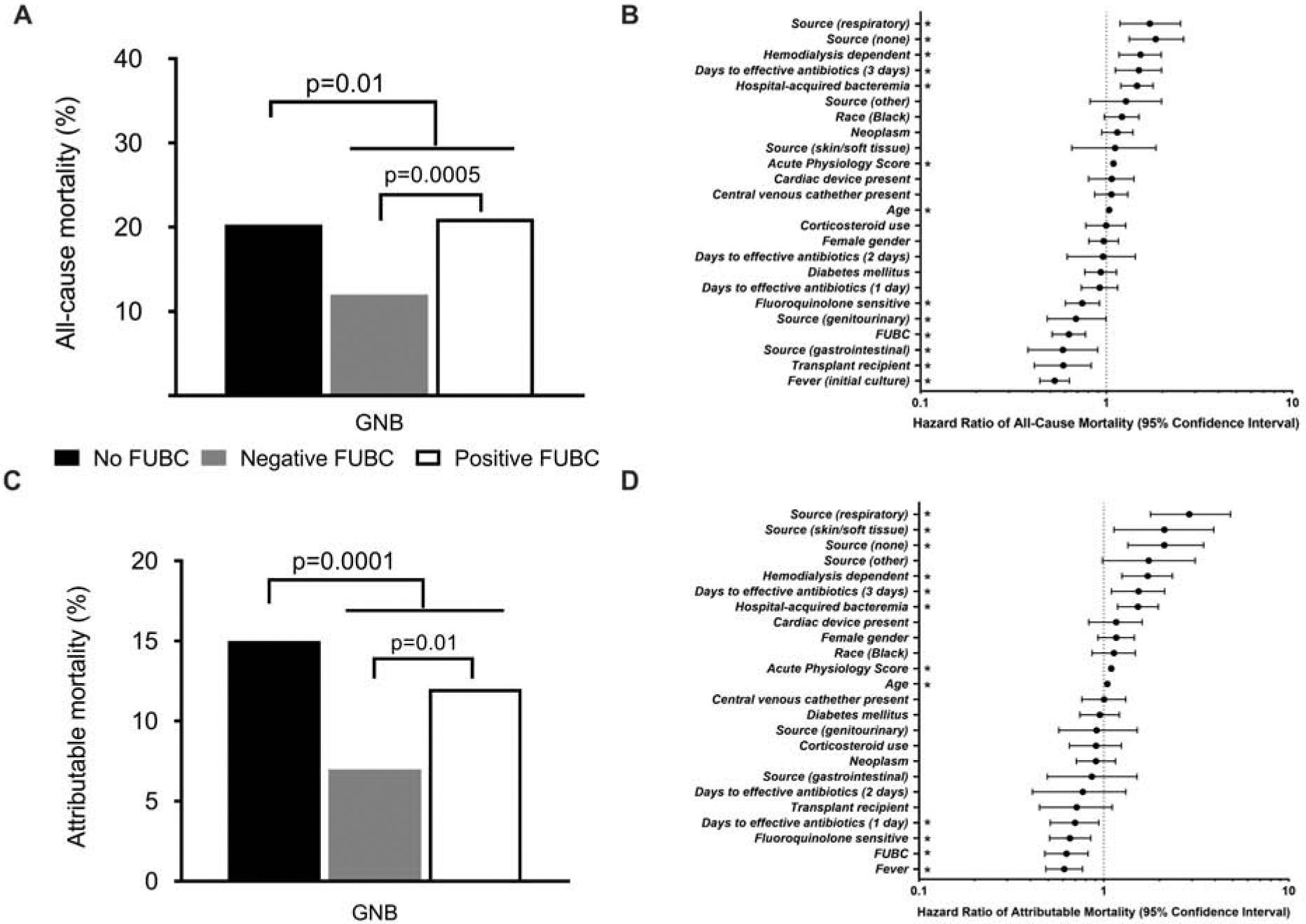
Among 1702 patients with GNB, 1164 (68%) had FUBCs performed. When performed, FUBCs were positive in 20% (228/1113) of cases. FUBC acquisition was associated with lower all-cause in-hospital mortality (108/538, 20%, vs. 176/1164, 15%; p 0.01) and attributable in-hospital mortality (78/538, 15%, vs. 98/1164, 8%; p < 0.0001). Propensity score-weighted Cox proportional hazards models revealed that obtaining FUBCs was associated with reductions in all-cause (hazard ratio (HR) 0.629; 95% confidence interval (CI), 0.511-0.772; p < 0.0001) and attributable mortality (HR 0.628; 95% CI, 0.480-0.820; p 0.0007). Positive FUBCs were associated with increased all-cause mortality (49/228, 21%, vs. 110/885, 11%; p 0.0005) and attributable mortality (27/228, 12%, vs. 61/885, 7%; p 0.01) relative to negative FUBCs. Propensity score-weighted Cox proportional hazards models revealed that positive FUBCs were associated with increased all-cause (HR 2.099; 95% CI, 1.567-2.811; p < 0.0001) and attributable mortality (HR 1.800; 95% CI, 1.245-2.603; p 0.002). In a calibration analysis, a scoring system accurately identified patients at high risk of positive FUBCs.
Rates of positive FUBCs were high and identified patients at increased risk for mortality. Clinical variables can identify patients at high risk for positive FUBCs. FUBCs should be considered in the management of GNB.
对于革兰氏阴性菌血症(GNB)管理中随访血培养(FUBC)的作用,人们了解甚少。我们旨在确定FUBC在识别死亡风险增加患者方面的效用。
2002年至2015年在杜克大学健康系统对一组前瞻性纳入的成年GNB住院患者进行了一项观察性研究。FUBC定义为在首次血培养阳性后的24小时至7天内进行的血培养。
在1702例GNB患者中,1164例(68%)进行了FUBC。进行FUBC时,20%(228/1113)的病例结果为阳性。采集FUBC与较低的全因住院死亡率相关(108/538,20%,对比176/1164,15%;p = 0.01)以及归因住院死亡率相关(78/538,15%,对比98/1164,8%;p < 0.0001)。倾向评分加权的Cox比例风险模型显示,采集FUBC与全因死亡率降低相关(风险比(HR)0.629;95%置信区间(CI),0.511 - 0.772;p < 0.0001)以及归因死亡率降低相关(HR 0.628;95% CI,0.480 - 0.820;p = 0.0007)。与阴性FUBC相比,阳性FUBC与全因死亡率增加相关(49/228,21%,对比110/885,11%;p = 0.0005)以及归因死亡率增加相关(27/228,12%,对比61/885,7%;p = 0.01)。倾向评分加权的Cox比例风险模型显示,阳性FUBC与全因死亡率增加相关(HR 2.099;95% CI,1.567 - 2.811;p < 0.0001)以及归因死亡率增加相关(HR 1.800;95% CI,1.245 - 2.603;p = 0.002)。在校准分析中,一个评分系统准确识别出了FUBC阳性的高风险患者。
FUBC阳性率较高,且能识别出死亡风险增加的患者。临床变量可识别出FUBC阳性的高风险患者。在GNB的管理中应考虑进行FUBC。