Huang Guian, Liu Linlin, Wang Huasong, Gou Mo, Gong Peng, Tian Chenglei, Deng Wei, Yang Jiao, Zhou Tian-Tian, Xu Guo-Liang, Liu Lin
Department of Cell Biology and Genetics, College of Life Sciences, Nankai University, Tianjin 300071, China; State Key Laboratory of Medicinal Chemical Biology, Nankai University, Tianjin 300071, China.
State Key Laboratory of Molecular Biology, Shanghai Institute of Biochemistry and Cell Biology, Chinese Academy of Sciences, Shanghai 200031, China.
iScience. 2020 Mar 27;23(3):100908. doi: 10.1016/j.isci.2020.100908. Epub 2020 Feb 13.
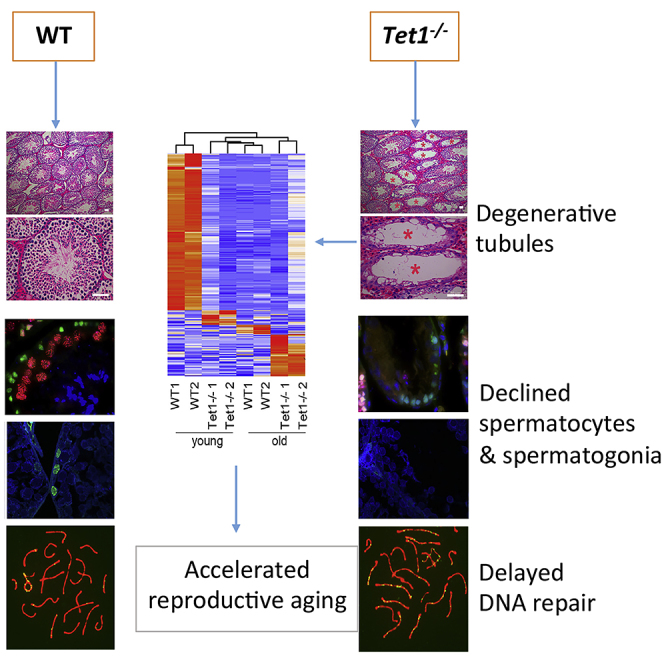
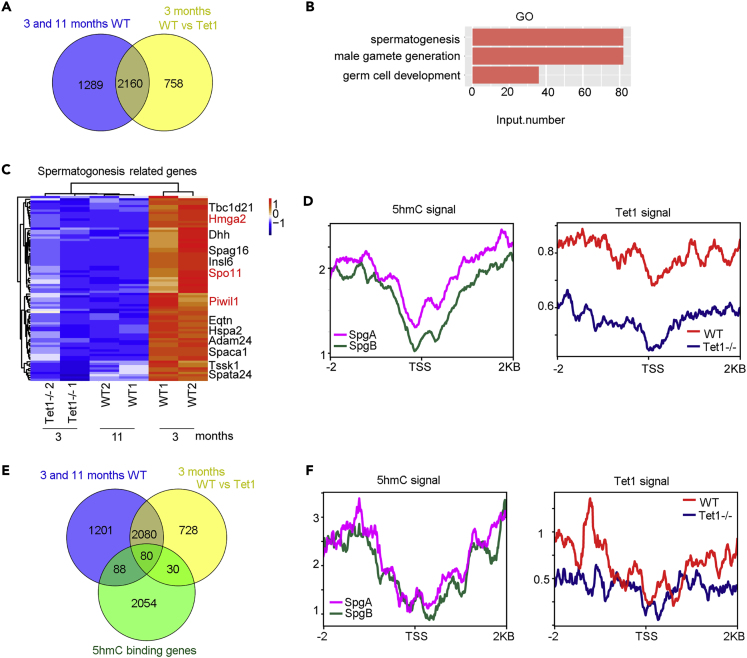
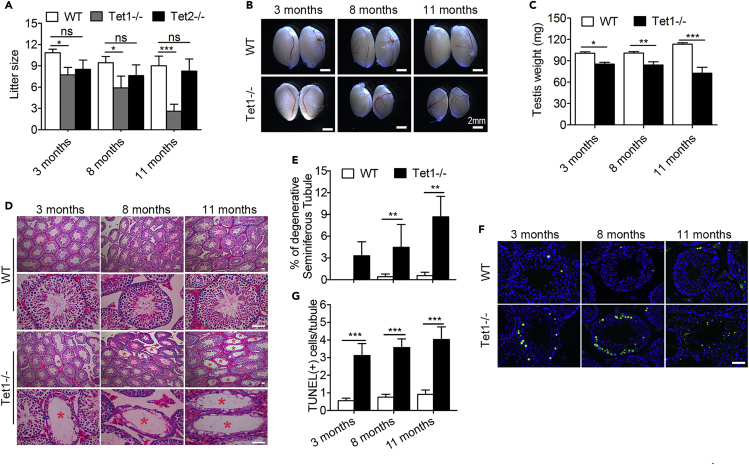
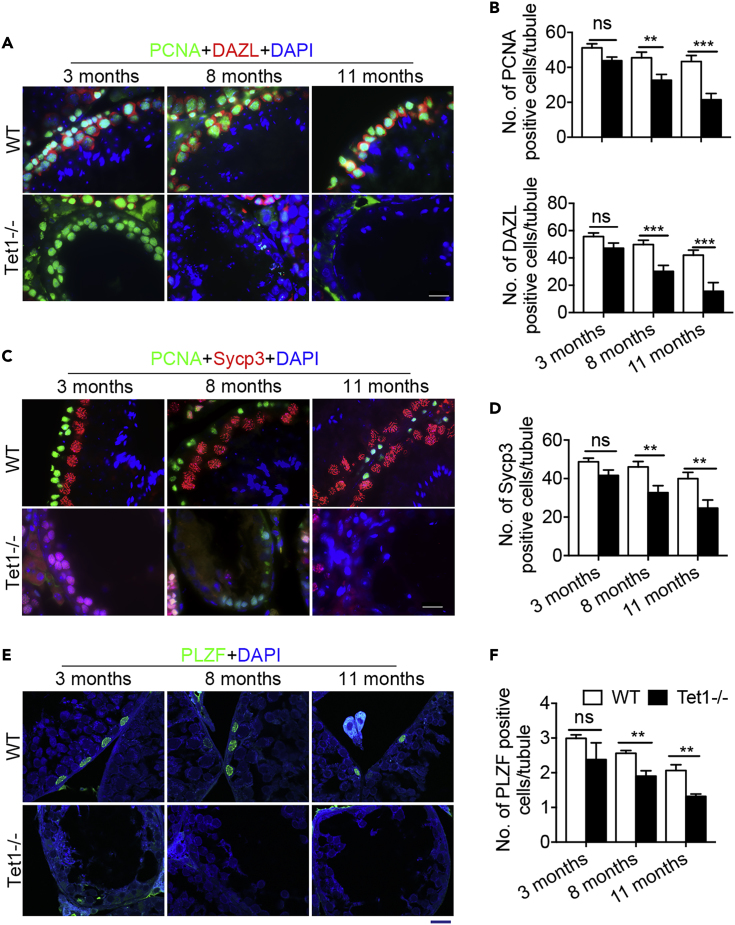
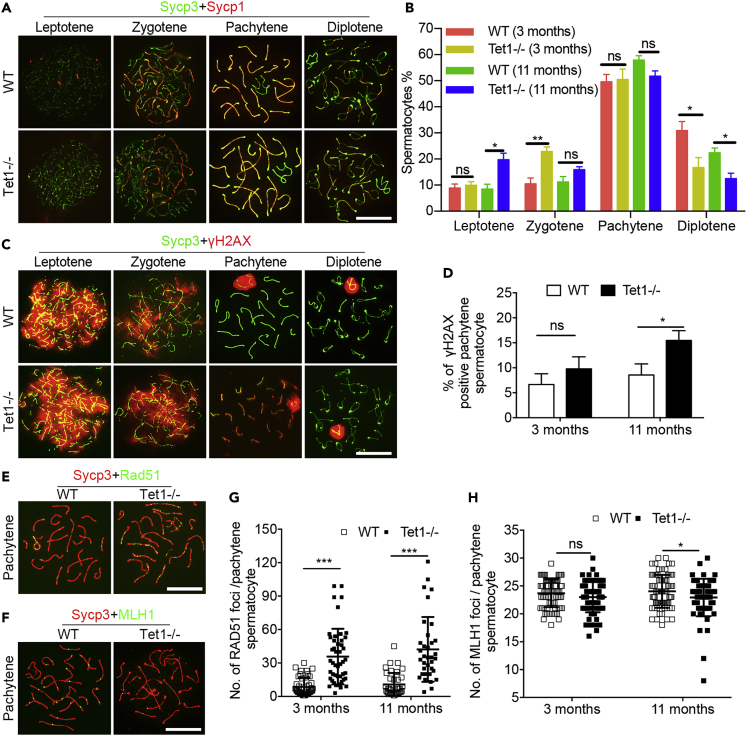
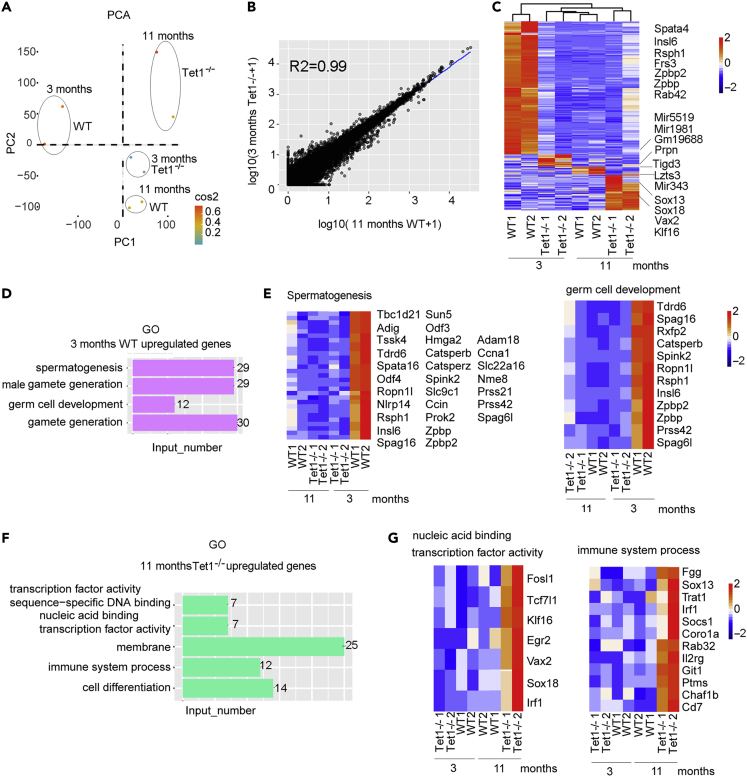
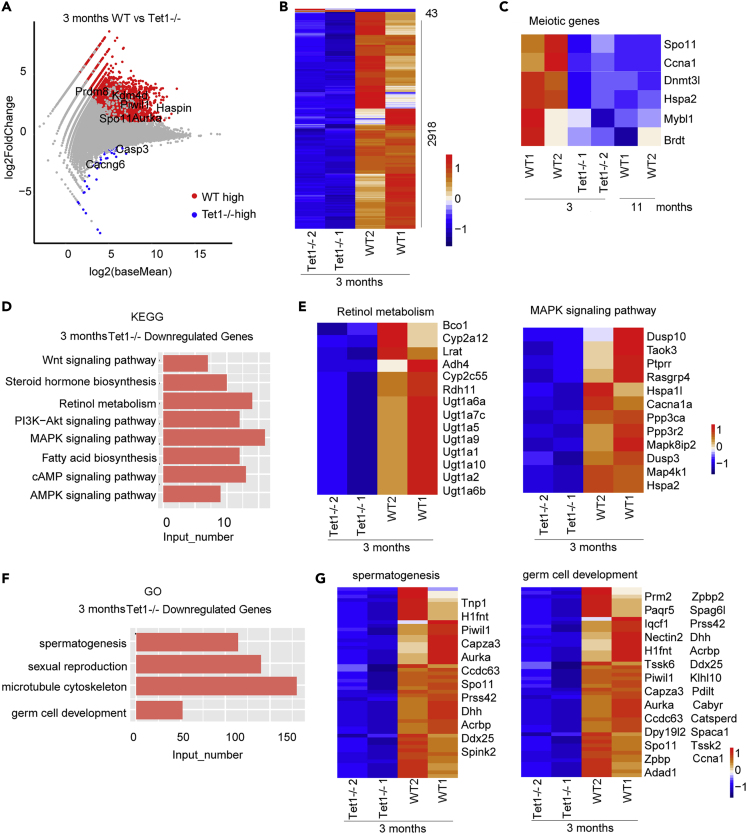
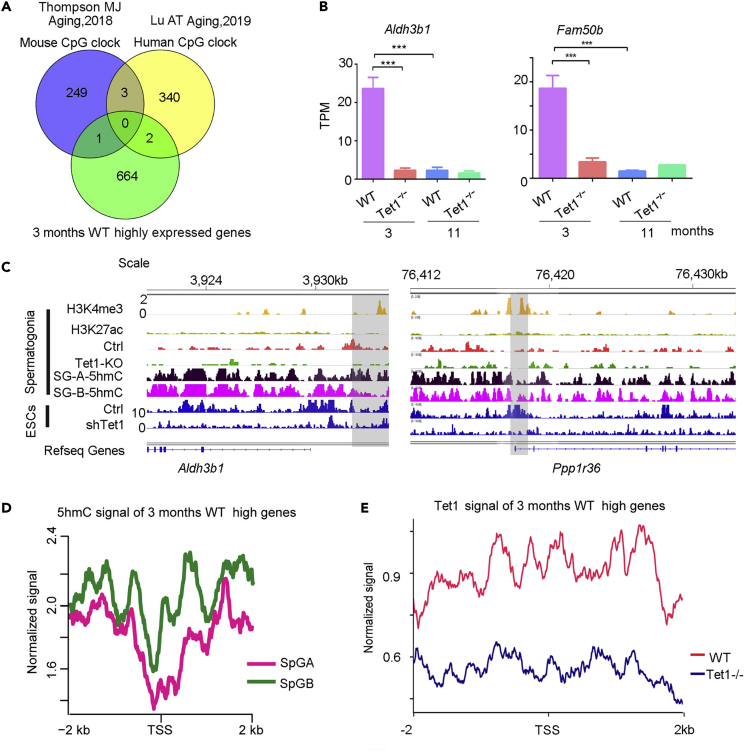
Ten-eleven translocation (Tet) enzymes are involved in DNA demethylation, important in regulating embryo development, stem cell pluripotency and tumorigenesis. Alterations of DNA methylation with age have been shown in various somatic cell types. We investigated whether Tet1 and Tet2 regulate aging. We showed that Tet1-deficient mice undergo a progressive reduction of spermatogonia stem cells and spermatogenesis and thus accelerated infertility with age. Tet1 deficiency decreases 5hmC levels in spermatogonia and downregulates a subset of genes important for cell cycle, germ cell differentiation, meiosis and reproduction, such as Ccna1 and Spo11, resulting in premature reproductive aging. Moreover, Tet1 and 5hmC both regulate signaling pathways key for stem cell development, including Wnt and PI3K-Akt, autophagy and stress response genes. In contrast, effect of Tet2 deficiency on male reproductive aging is minor. Hence, Tet1 maintains spermatogonia stem cells with age, revealing an important role of Tet1 in regulating stem cell aging.
十一易位(Tet)酶参与DNA去甲基化过程,这对于调节胚胎发育、干细胞多能性和肿瘤发生至关重要。在各种体细胞类型中,已显示DNA甲基化会随年龄发生改变。我们研究了Tet1和Tet2是否调节衰老。我们发现,Tet1基因缺陷的小鼠精原干细胞和精子发生过程会逐渐减少,因此随着年龄增长会加速不育。Tet1缺陷会降低精原细胞中的5-羟甲基胞嘧啶(5hmC)水平,并下调细胞周期、生殖细胞分化、减数分裂和繁殖等重要的一组基因,如Ccna1和Spo11,从而导致生殖早衰。此外,Tet1和5hmC均调节干细胞发育的关键信号通路,包括Wnt和PI3K-Akt、自噬和应激反应基因。相比之下,Tet2缺陷对雄性生殖衰老的影响较小。因此,Tet1随年龄维持精原干细胞,揭示了Tet1在调节干细胞衰老中的重要作用。