Ogaki Ari, Ikegaya Yuji, Koyama Ryuta
Laboratory of Chemical Pharmacology, Graduate School of Pharmaceutical Sciences, The University of Tokyo, Bunkyo, Japan.
Center for Information and Neural Networks, National Institute of Information and Communications and Technology, Suita City, Japan.
Front Pharmacol. 2020 Feb 4;11:20. doi: 10.3389/fphar.2020.00020. eCollection 2020.
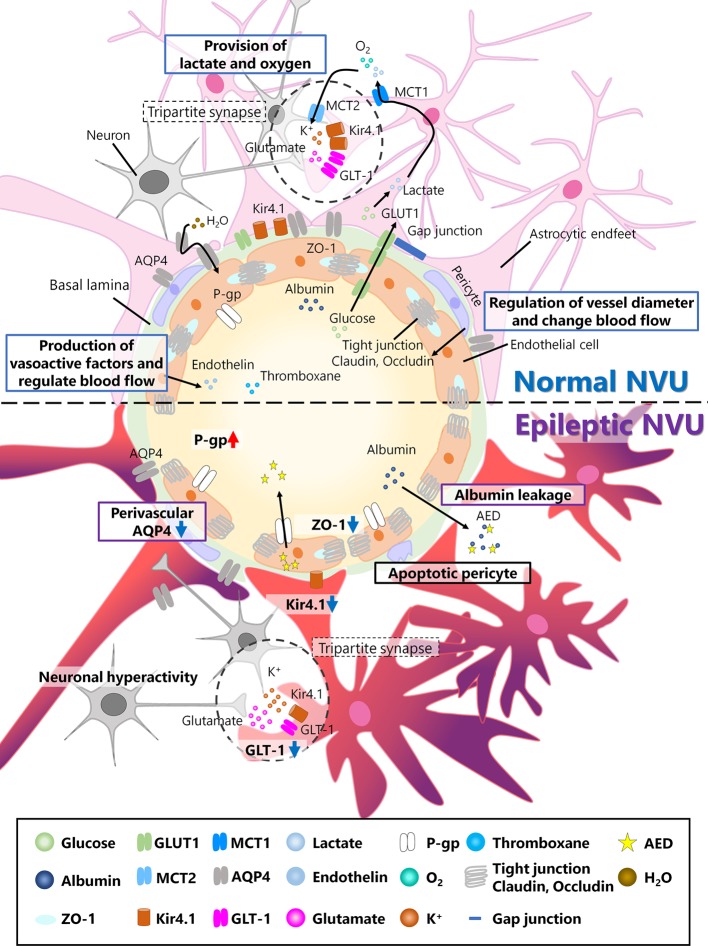
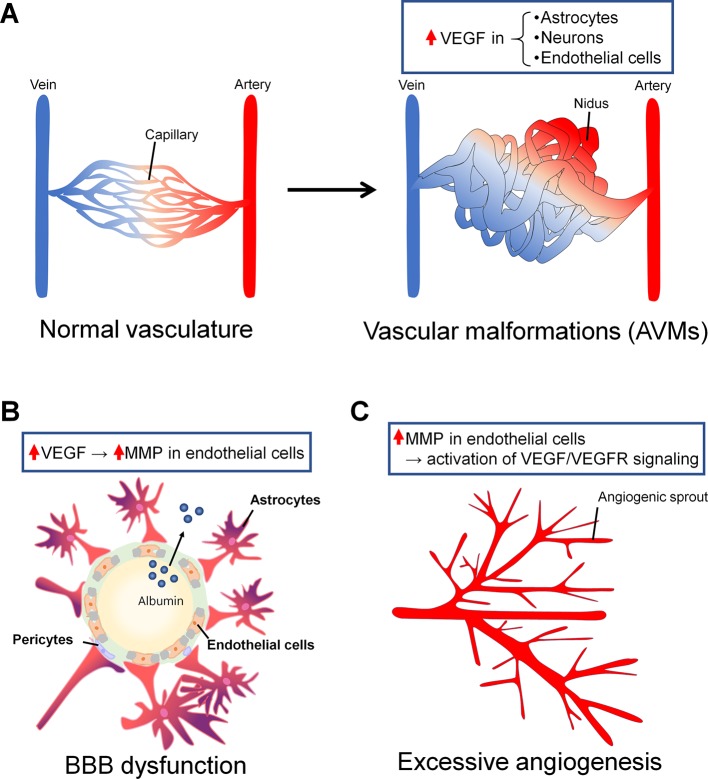
Epilepsy is a chronic neurological disorder generally defined to be caused by excessive neuronal activity. Thus, excessive neuronal activity is the main target of the currently used antiepileptic drugs (AEDs). However, as many as 30% of epileptic patients show drug resistance to currently available AEDs, which suggests that epilepsy should be attributed not only to neuronal cells but also to other brain cells, such as glial cells and vascular cells. Astrocytes, pericytes, and endothelial cells in particular comprise the blood-brain barrier (BBB), which tightly regulates the exchange of substances between the brain parenchyma and the circulating blood. It has been proposed that BBB dysfunction, especially barrier leakage, exacerbates epileptic progression, and conversely, that epileptic seizures induce barrier leakage. Furthermore, several studies have shown that BBB dysfunction is one of the main causes of drug resistance in epilepsy. To better understand the mechanisms that link BBB dysfunction and intractable epilepsy to gain insights for the future development of treatments, we review and discuss the relationships between epilepsy and brain vascular abnormalities, mainly by focusing on vascular malformation, BBB dysfunction, and excessive angiogenesis. Because these abnormalities have been reported to be caused by vascular endothelial growth factor (VEGF) in the ischemic brain, we discuss the possible role of VEGF in vascular abnormalities in the epileptic brain, in which the upregulation of VEGF levels has been reported. Both glial cells and endothelial cells express VEGF receptors (VEGFRs); thus, these cells are likely affected by increases in VEGF during seizures, which in turn could cause vascular abnormalities. In this review, we review the possible role of VEGF in epilepsy and discuss the mechanisms that link vascular abnormalities and intractable epilepsy.
癫痫是一种慢性神经系统疾病,通常被定义为由神经元活动过度引起。因此,神经元活动过度是目前使用的抗癫痫药物(AEDs)的主要作用靶点。然而,多达30%的癫痫患者对目前可用的AEDs表现出耐药性,这表明癫痫的发生不仅应归因于神经细胞,还应归因于其他脑细胞,如胶质细胞和血管细胞。星形胶质细胞、周细胞和内皮细胞尤其构成了血脑屏障(BBB),它严格调节脑实质与循环血液之间的物质交换。有人提出,血脑屏障功能障碍,尤其是屏障渗漏,会加剧癫痫进展,反之,癫痫发作会导致屏障渗漏。此外,多项研究表明,血脑屏障功能障碍是癫痫耐药的主要原因之一。为了更好地理解将血脑屏障功能障碍与难治性癫痫联系起来的机制,以便为未来的治疗发展提供见解,我们回顾并讨论癫痫与脑血管异常之间的关系,主要关注血管畸形、血脑屏障功能障碍和过度血管生成。由于这些异常在缺血性脑中已被报道是由血管内皮生长因子(VEGF)引起的,我们讨论了VEGF在癫痫性脑的血管异常中的可能作用,其中已报道VEGF水平上调。胶质细胞和内皮细胞均表达VEGF受体(VEGFRs);因此,这些细胞在癫痫发作期间可能会受到VEGF增加的影响,进而可能导致血管异常。在本综述中,我们回顾了VEGF在癫痫中的可能作用,并讨论了将血管异常与难治性癫痫联系起来的机制。