Tan Xiaohua, Yu Lixia, Yang Ruo, Tao Qianyu, Xiang Lijun, Xiao Jian, Zhang Jin-San
Department of Pathology, School of Basic Medicine, Qingdao University, Qingdao, China.
School of Pharmaceutical Sciences, Wenzhou Medical University, Wenzhou, China.
Front Pharmacol. 2020 Feb 7;11:39. doi: 10.3389/fphar.2020.00039. eCollection 2020.
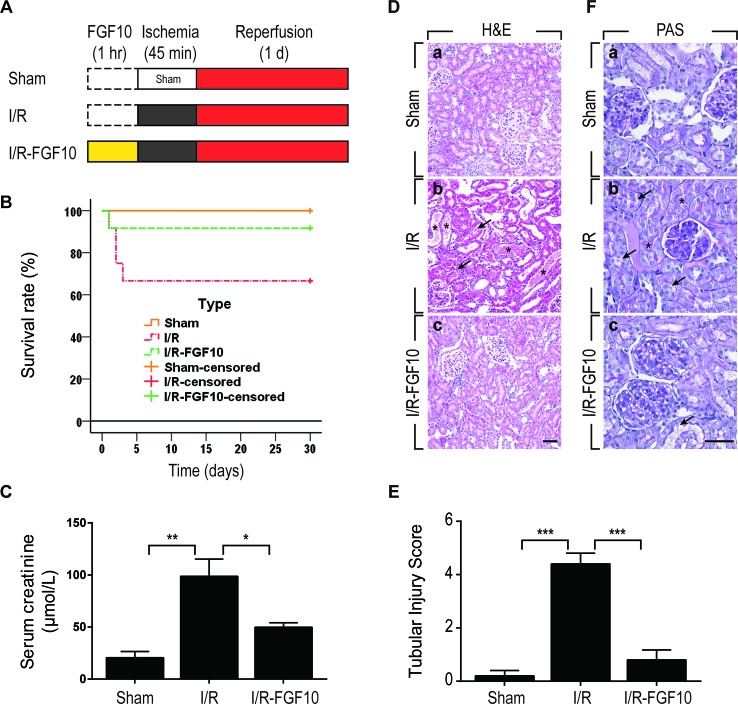
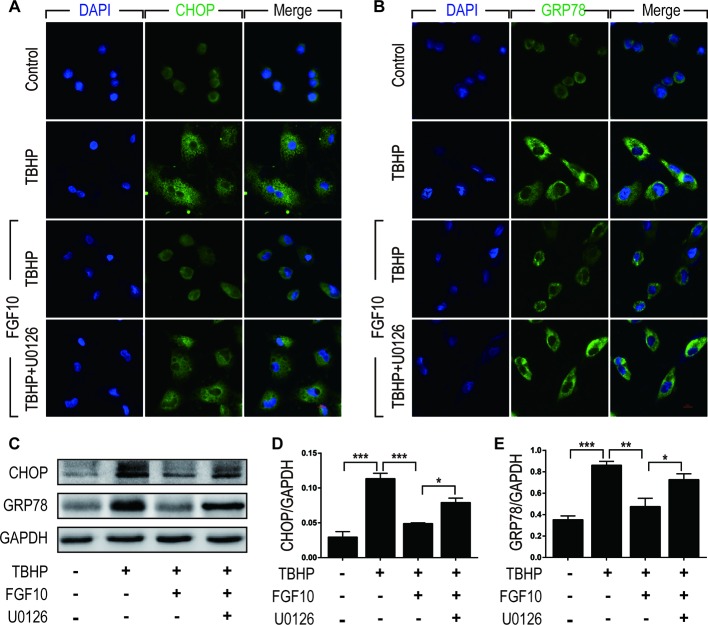
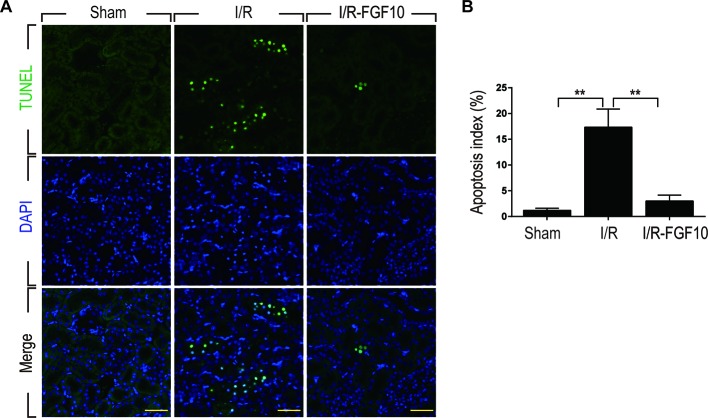
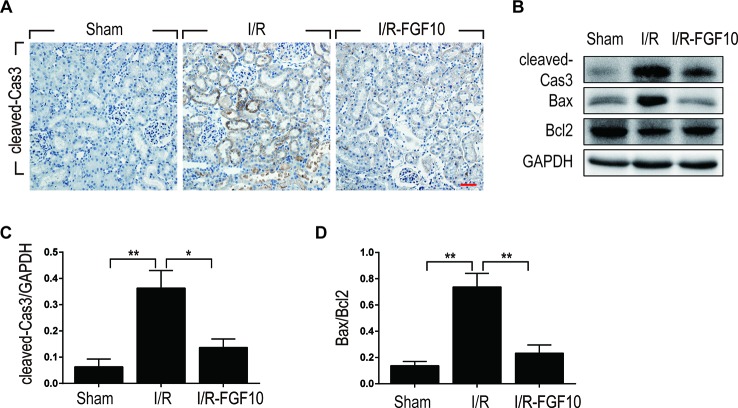
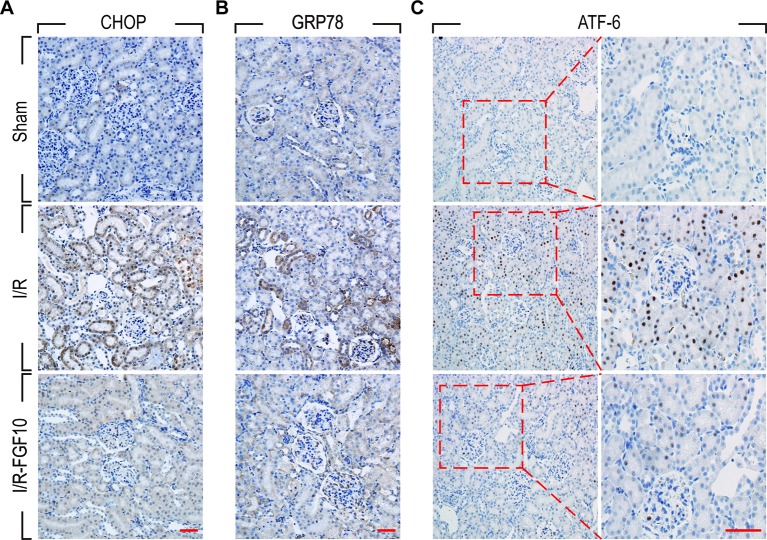
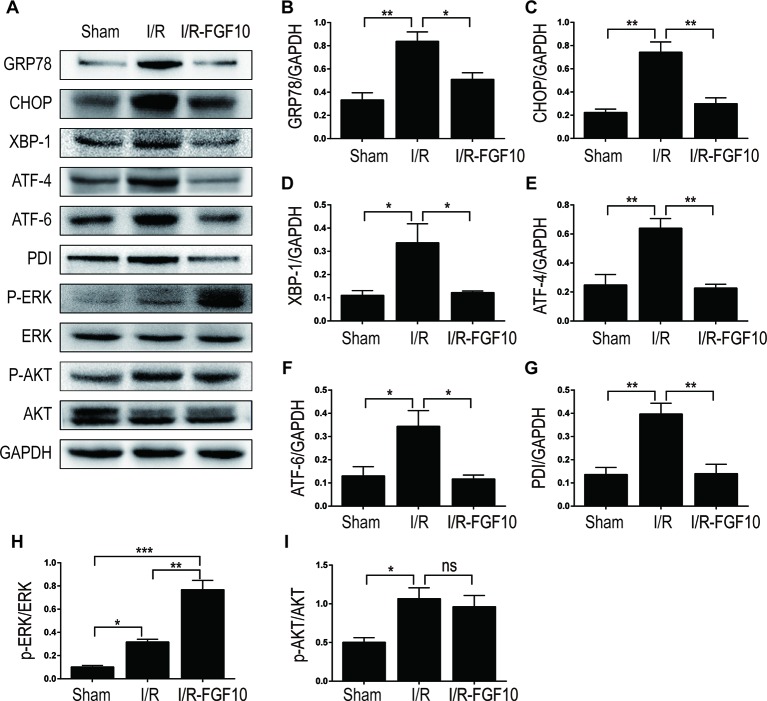
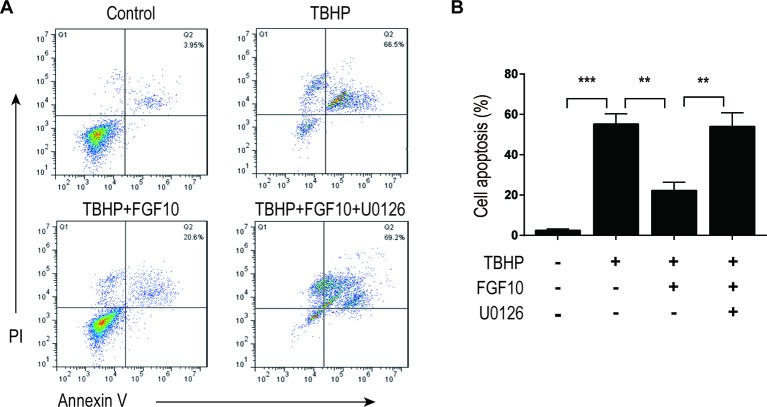
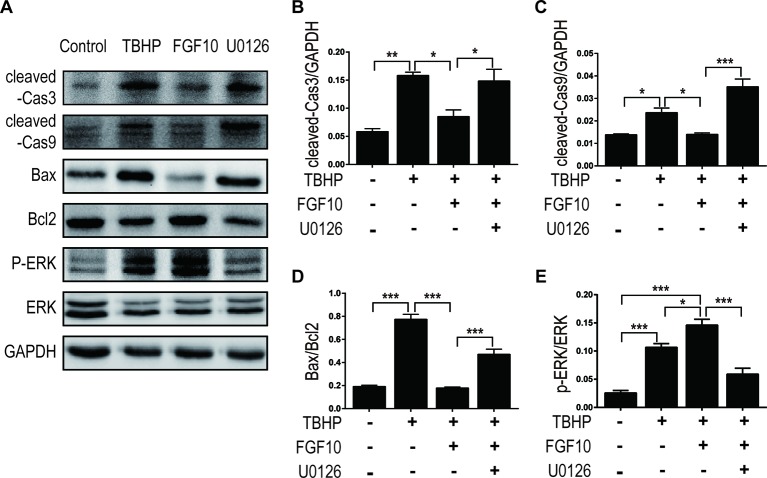
Renal ischemia-reperfusion (I/R) injury is a predominant cause of acute kidney injury (AKI), the pathologic mechanism of which is highly complex involving reactive oxygen species (ROS) accumulation, inflammatory response, autophagy, apoptosis as well as endoplasmic reticulum (ER) stress. Fibroblast growth factor 10 (FGF10), as a multifunctional growth factor, plays crucial roles in embryonic development, adult homeostasis, and regenerative medicine. Herein, we investigated the molecular pathways underlying the protective effect of FGF10 on renal I/R injury using Sprague-Dawley rats. Results showed that administration of FGF10 not only effectively inhibited I/R-induced activation of Caspase-3 and expression of Bax, but also alleviated I/R evoked expression of ER stress-related proteins in the kidney including CHOP, GRP78, XBP-1, and ATF-4 and ATF-6. The protective effect of FGF10 against apoptosis and ER stress was recapitulated by experiments using oxidative damaged NRK-52E cells induced by tert-Butyl hydroperoxide (TBHP). Significantly, U0126, a selective noncompetitive inhibitor of MAP kinase kinases (MKK), largely abolished the protective role of FGF10. Taken together, both and experiments indicated that FGF10 attenuates I/R-induced renal epithelial apoptosis by suppressing excessive ER stress, which is, at least partially, mediated by the activation of the MEK-ERK1/2 signaling pathway. Therefore, our present study revealed the therapeutic potential of FGF10 on renal I/R injury.
肾缺血再灌注(I/R)损伤是急性肾损伤(AKI)的主要原因,其病理机制高度复杂,涉及活性氧(ROS)积累、炎症反应、自噬、凋亡以及内质网(ER)应激。成纤维细胞生长因子10(FGF10)作为一种多功能生长因子,在胚胎发育、成人稳态和再生医学中发挥着关键作用。在此,我们使用Sprague-Dawley大鼠研究了FGF10对肾I/R损伤保护作用的分子途径。结果表明,给予FGF10不仅有效抑制了I/R诱导的Caspase-3激活和Bax表达,还减轻了I/R引起的肾脏中ER应激相关蛋白的表达,包括CHOP、GRP78、XBP-1以及ATF-4和ATF-6。使用叔丁基过氧化氢(TBHP)诱导的氧化损伤NRK-52E细胞进行的实验重现了FGF10对凋亡和ER应激的保护作用。值得注意的是,MAP激酶激酶(MKK)的选择性非竞争性抑制剂U0126在很大程度上消除了FGF10的保护作用。综上所述,体内和体外实验均表明,FGF10通过抑制过度的ER应激来减轻I/R诱导的肾上皮细胞凋亡,这至少部分是由MEK-ERK1/2信号通路的激活介导的。因此,我们目前的研究揭示了FGF10对肾I/R损伤的治疗潜力。