Almebairik Nada, Zamudio Roxana, Ironside Corinne, Joshi Chaitanya, Ralph Joseph D, Roberts Adam P, Gould Ian M, Morrissey Julie A, Hijazi Karolin, Oggioni Marco R
Department of Genetics and Genome Biology, University of Leicester, Leicester, United Kingdom.
School of Medicine, Medical Sciences and Nutrition, University of Aberdeen, Aberdeen, United Kingdom.
Front Microbiol. 2020 Feb 12;11:166. doi: 10.3389/fmicb.2020.00166. eCollection 2020.
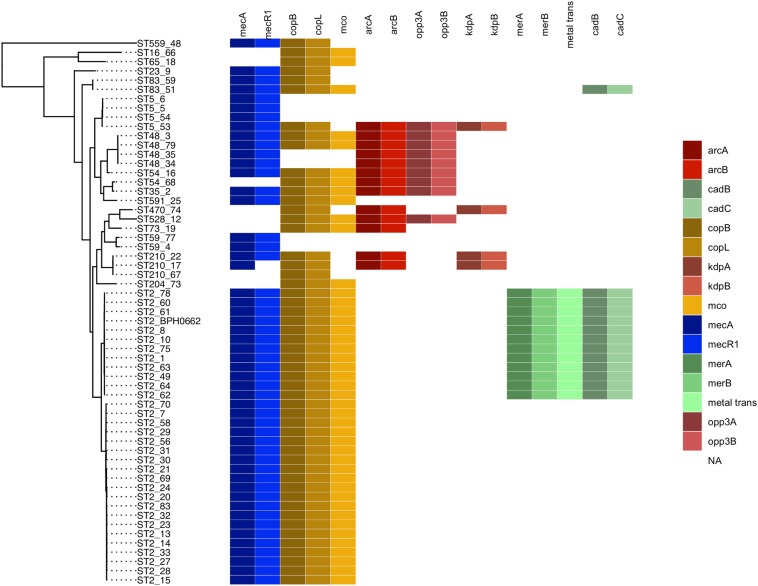
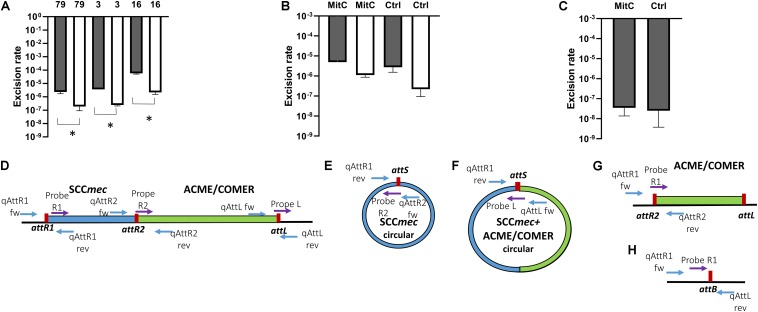
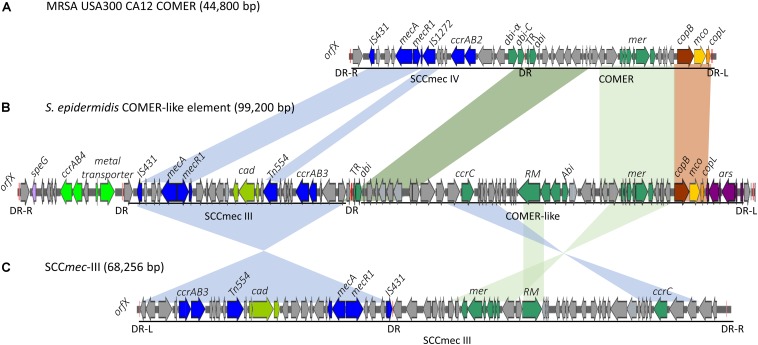
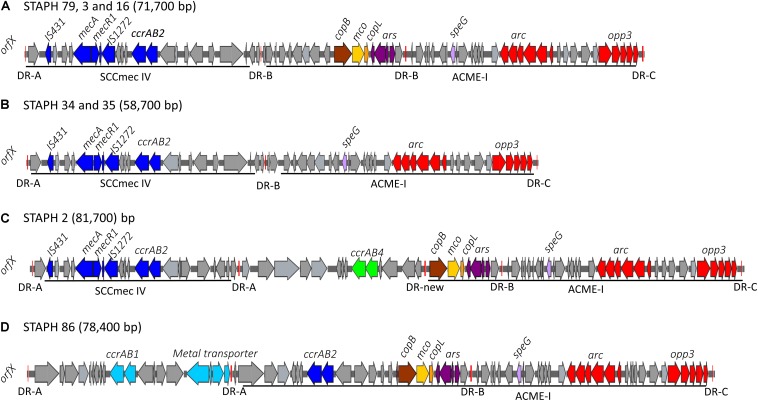
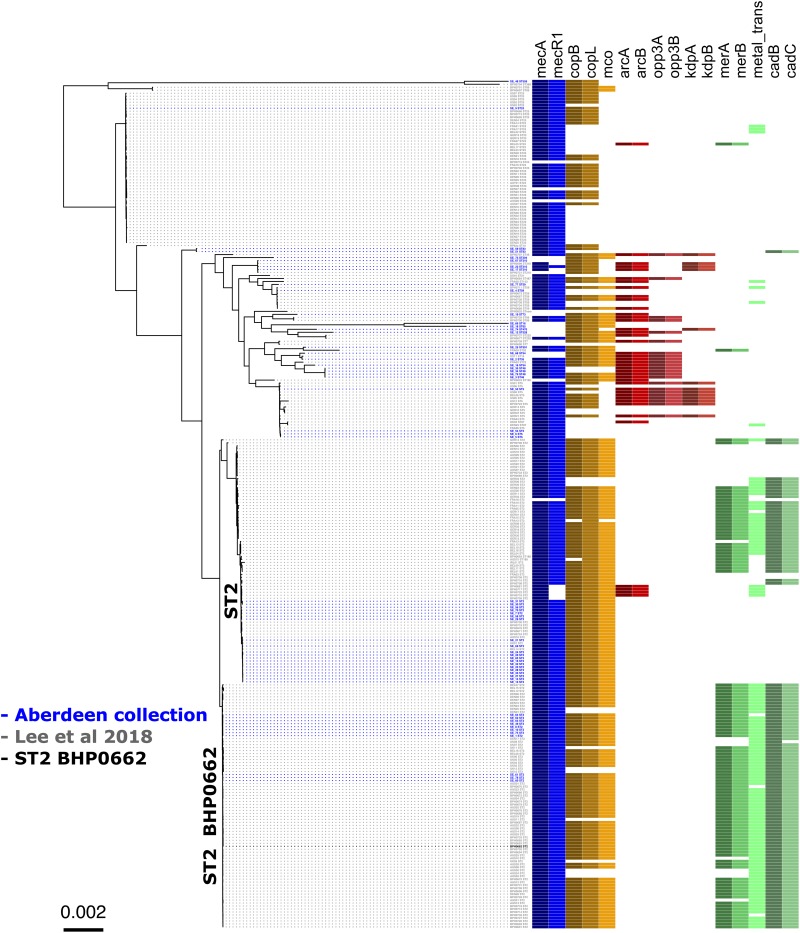
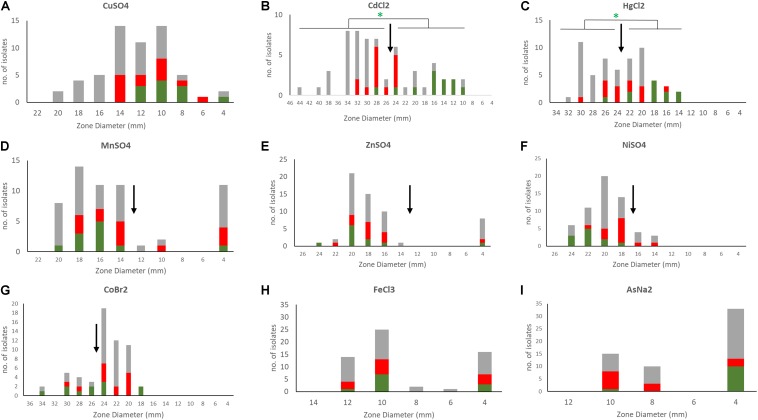
The epidemiological success of methicillin-resistant USA300 has been associated with the presence of two mobile elements, the arginine catabolic mobile element (ACME) and the copper and mercury resistance (COMER) element. These two mobile elements are associated with resistance to copper, which has been related to host fitness and survival within macrophages. Several studies found that ACME is more prevalent, and exhibits greater diversity, in while COMER has not been identified in or any other staphylococcal species. We aimed in this study to evaluate the presence and diversity of ACME and COMER-like elements in our clinical isolates. The genomes of 58 clinical isolates, collected between 2009 and 2018 in a Scottish hospital, were sequenced. A core-genome phylogenetic tree and genome based MLST typing showed that more than half of the isolates belong to the clinically predominant sequence type2 (ST2) and these isolates have been found to split into two lineages within the phylogenetic tree. Analysis showed the presence of SCC in the majority of isolates. Comparative analysis identified a cluster of ACME-positive isolates with most of them belonging to ST48. ACME showed high variation even between isolates of the same ACME type and ST. COMER-like elements have been identified in one of the two major hospital adapted drug resistant ST2 lineages; and showed high stability. This difference in stability at the genomic level correlates well with the up to one hundred times higher excision frequency found for the SCC elements in ACME-containing isolates compared to COMER-like element containing isolates. ACME/COMER-like element positive isolates did not show a significant phenotype of decreased copper susceptibility, while resistance to mercury was over-represented in COMER-like element positive isolates. To the best of our knowledge, this is the first molecular characterization of COMER-like elements in isolates. The presence of the COMER-like elements is the most prominent accessory genome feature of these successful lineages suggesting that this chromosomal island contributes to the success and wide clinical distribution of ST2 .
耐甲氧西林的USA300在流行病学上的成功与两个可移动元件有关,即精氨酸分解代谢可移动元件(ACME)和铜汞抗性(COMER)元件。这两个可移动元件与对铜的抗性相关,而铜抗性又与巨噬细胞内的宿主适应性和存活有关。多项研究发现,ACME在[此处原文缺失相关信息]中更为普遍,且表现出更大的多样性,而在[此处原文缺失相关信息]或任何其他葡萄球菌物种中尚未鉴定出COMER。在本研究中,我们旨在评估我们的[此处原文缺失相关信息]临床分离株中ACME和类COMER元件的存在情况及多样性。对2009年至2018年期间在一家苏格兰医院收集的58株[此处原文缺失相关信息]临床分离株的基因组进行了测序。核心基因组系统发育树和基于基因组的多位点序列分型显示,超过一半的分离株属于临床上占主导地位的序列类型2(ST2),并且这些分离株在系统发育树中已被发现分为两个谱系。分析表明,大多数分离株中存在葡萄球菌染色体盒(SCC)。比较分析确定了一组ACME阳性分离株,其中大多数属于ST48。即使在相同ACME类型和ST的分离株之间,ACME也表现出高度变异。在两个主要的医院适应性耐药ST2谱系之一中鉴定出了类COMER元件;并且显示出高度稳定性。基因组水平上这种稳定性的差异与含ACME分离株中SCC元件的切除频率比含类COMER元件分离株高多达一百倍的情况密切相关。ACME/类COMER元件阳性分离株未表现出明显的铜敏感性降低表型,而类COMER元件阳性分离株中汞抗性的比例过高。据我们所知,这是对[此处原文缺失相关信息]分离株中类COMER元件的首次分子特征描述。类COMER元件的存在是这些成功谱系最突出的附属基因组特征,表明这个染色体岛有助于ST2的成功及广泛的临床分布。