Finnish Red Cross Blood Service, Helsinki, Finland.
Stem Cell Transplantation Unit, Comprehensive Cancer Center, Helsinki University Hospital, Helsinki, Finland.
Front Immunol. 2020 Feb 3;11:19. doi: 10.3389/fimmu.2020.00019. eCollection 2020.
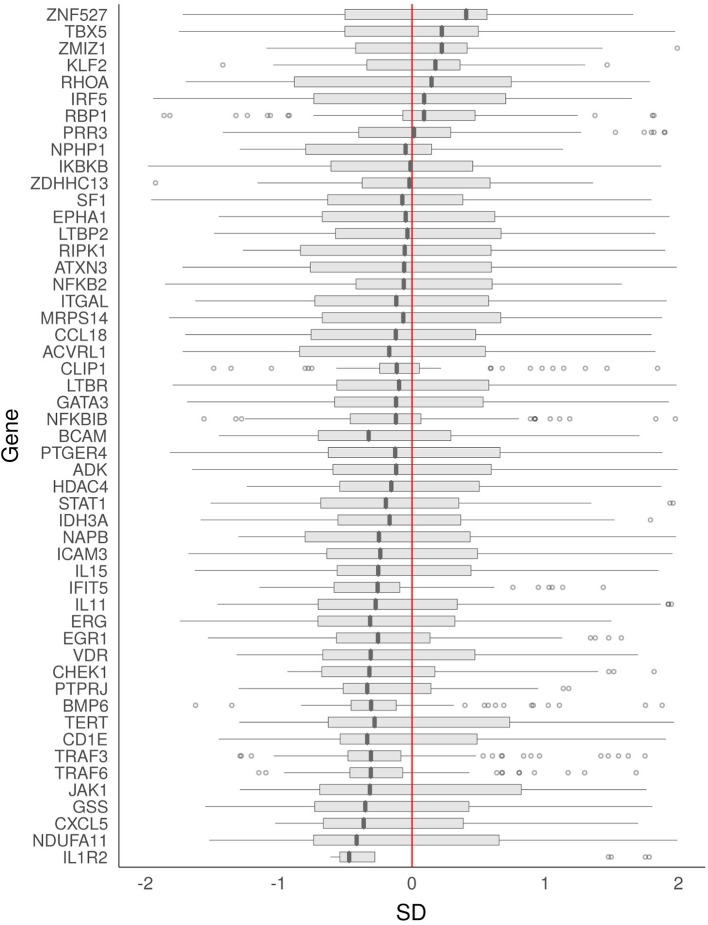
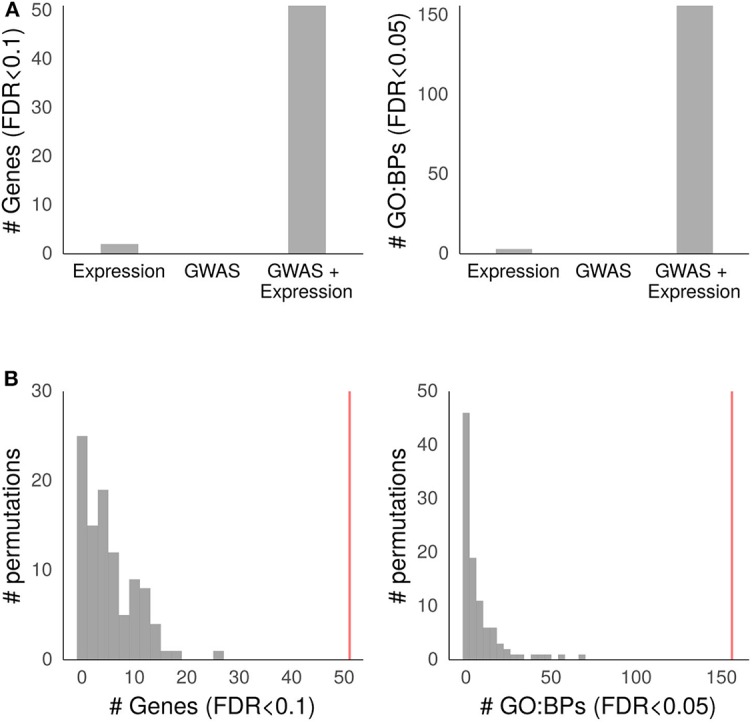
Graft-vs.-host disease (GvHD) is a major complication after allogeneic hematopoietic stem cell transplantation that causes mortality and severe morbidity. Genetic disparities in human leukocyte antigens between the recipient and donor are known contributors to the risk of the disease. However, the overall impact of genetic component is complex, and consistent findings across different populations and studies remain sparse. To gain a comprehensive understanding of the genes responsible for GvHD, we combined genome-wide association studies (GWAS) from two distinct populations with previously published gene expression studies on GvHD in a single gene-level meta-analysis. We hypothesized that genes driving GvHD should be associated in both data modalities and therefore could be detected more readily through their combined effects in the integrated analysis rather than in separate analyses. The meta-analysis yielded a total of 51 acute GvHD-associated genes (false detection rate [FDR] <0.1). In support of our hypothesis, this number was significantly higher than that in a permutation meta-analysis involving the whole data set, as well as in separate meta-analyses on the GWAS and gene expression data sets. The genes indicated by the meta-analysis were significantly enriched in 277 Gene Ontology terms (FDR < 0.05), such as T cell function and cytokine-mediated signaling pathways, and the results highlighted several established immune mediators, such as interleukins and JAK-STAT signaling, and presented TRAF6 and TERT as potential effector candidates. Altogether, the results support the chosen methodological approach, implicate a role of gene-level variation in donors' key immunological regulators predisposing patients to acute GVHD, and present potential targets for therapeutic intervention.
移植物抗宿主病(GvHD)是异基因造血干细胞移植后的主要并发症,可导致死亡率和严重发病率。受者和供者之间人类白细胞抗原的遗传差异是疾病风险的已知因素。然而,遗传成分的总体影响是复杂的,不同人群和研究的一致发现仍然很少。为了全面了解导致 GvHD 的基因,我们将两个不同人群的全基因组关联研究(GWAS)与之前关于 GvHD 的基因表达研究结合在一个单一的基因水平荟萃分析中。我们假设,导致 GvHD 的基因应该在两种数据模式中都有相关性,因此可以通过它们在综合分析中的联合效应而不是在单独的分析中更容易被检测到。荟萃分析共产生了 51 个急性 GvHD 相关基因(错误发现率[FDR] <0.1)。支持我们的假设,这个数字明显高于整个数据集的置换荟萃分析以及 GWAS 和基因表达数据集的单独荟萃分析中的数字。荟萃分析指示的基因在 277 个基因本体论术语中显著富集(FDR <0.05),例如 T 细胞功能和细胞因子介导的信号通路,结果突出了几个已建立的免疫介质,如白细胞介素和 JAK-STAT 信号通路,并提出 TRAF6 和 TERT 作为潜在的效应候选物。总之,这些结果支持所选择的方法学方法,表明供体关键免疫调节剂中的基因水平变异在使患者易患急性 GvHD 方面起作用,并提出了潜在的治疗干预靶点。