Division of Experimental Medicine, Beth Israel Deaconess Medical Center and Harvard Medical School, Boston, MA, United States.
Front Immunol. 2020 Feb 7;11:136. doi: 10.3389/fimmu.2020.00136. eCollection 2020.
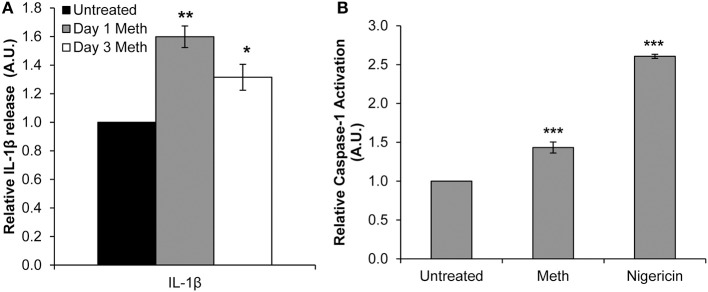
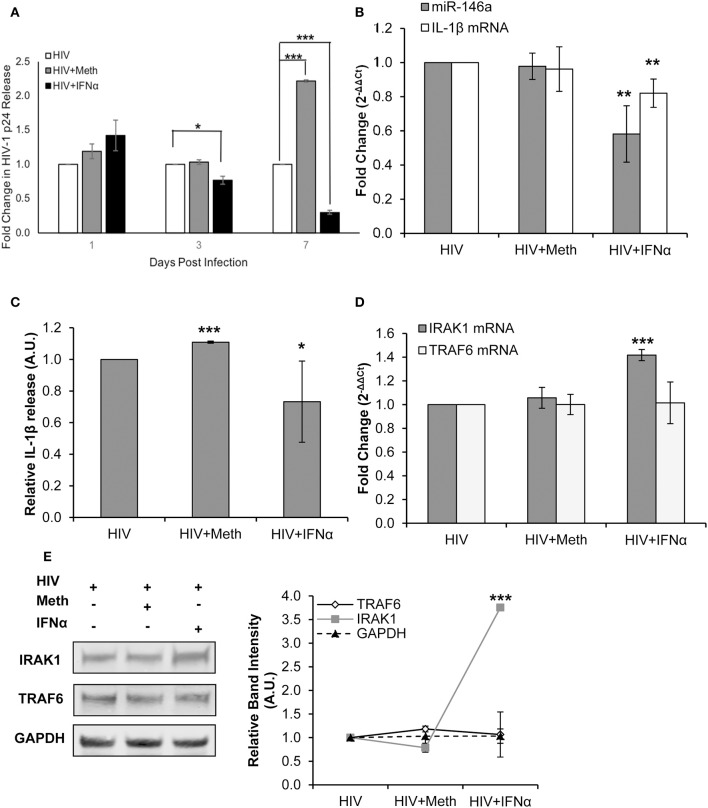
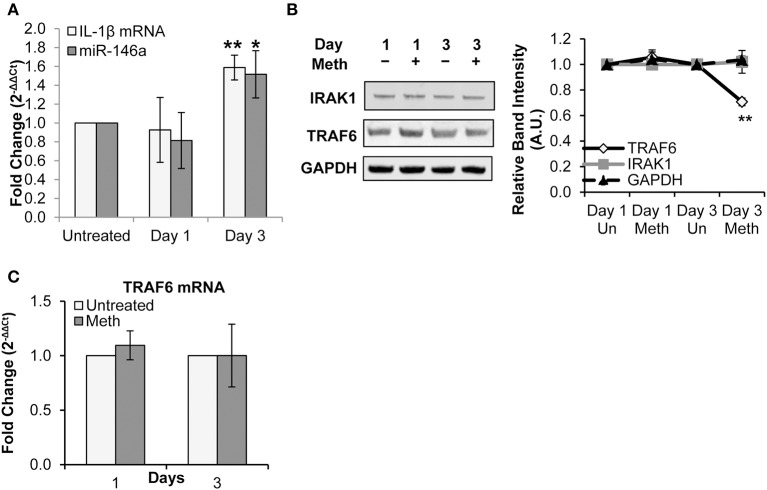
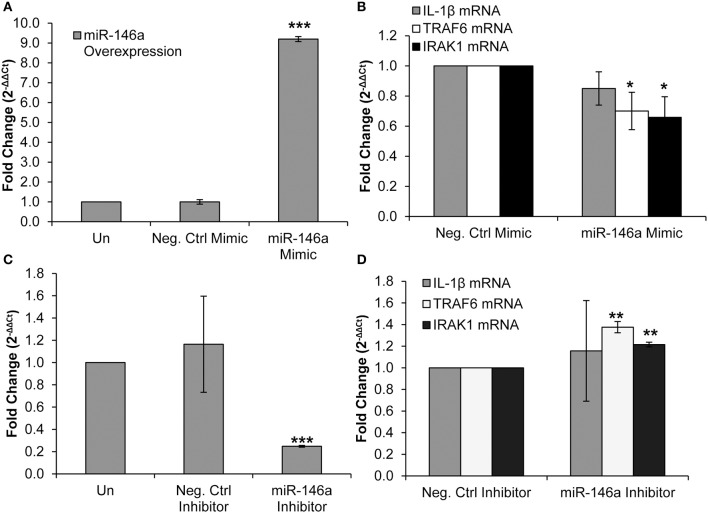
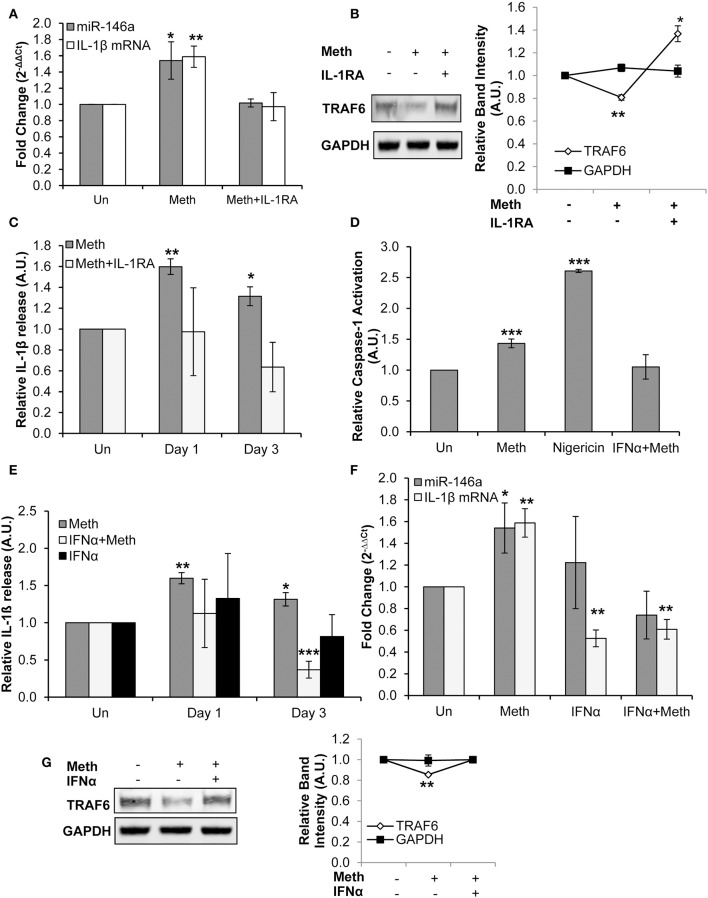
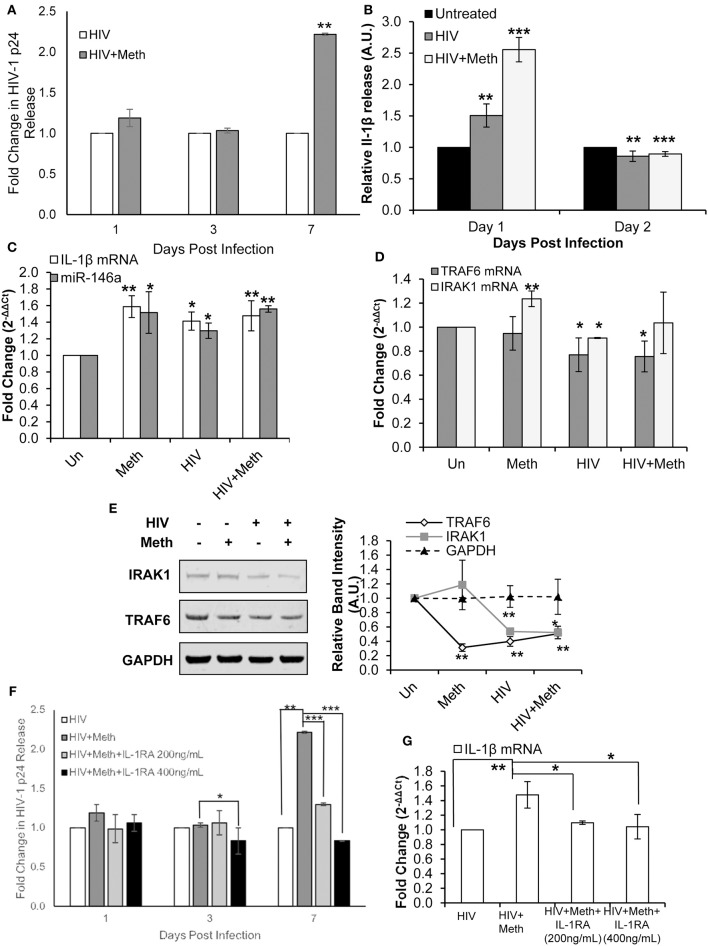
Methamphetamine (Meth) abuse is a worldwide public health problem and contributes to HIV-1 pathobiology and poor adherence to anti-retroviral therapies. Specifically, Meth is posited to alter molecular mechanisms to provide a more conducive environment for HIV-1 replication and spread. Enhanced expression of inflammatory cytokines, such as Interleukin-1β (IL-1β), has been shown to be important for HIV-1 pathobiology. In addition, microRNAs (miRNAs) play integral roles in fine-tuning the innate immune response. Notably, the effects of Meth abuse on miRNA expression are largely unknown. We studied the effects of Meth on IL-1β and miR-146a, a well-characterized member of the innate immune signaling network. We found that Meth induces miR-146a and triggers an IL-1β auto-regulatory loop to modulate innate immune signaling in CD4 T-cells. We also found that Meth enhances HIV-1 replication via IL-1 signaling. Our results indicate that Meth activates an IL-1β feedback loop to alter innate immune pathways and favor HIV-1 replication. These observations offer a framework for designing targeted therapies in HIV-infected, Meth using hosts.
甲基苯丙胺(冰毒)滥用是一个全球性的公共卫生问题,它导致 HIV-1 的发病机制改变,并导致抗逆转录病毒治疗的依从性差。具体来说,冰毒被认为改变了分子机制,为 HIV-1 的复制和传播提供了更有利的环境。促炎细胞因子(如白细胞介素-1β,IL-1β)的表达增强被认为对 HIV-1 的发病机制很重要。此外,microRNAs(miRNAs)在精细调节先天免疫反应中发挥着重要作用。值得注意的是,冰毒滥用对 miRNA 表达的影响在很大程度上是未知的。我们研究了冰毒对 IL-1β和 miR-146a 的影响,miR-146a 是先天免疫信号网络中一个特征明确的成员。我们发现冰毒诱导了 miR-146a 的表达,并引发了一个 IL-1β 自身调节回路,从而调节 CD4 T 细胞中的先天免疫信号。我们还发现冰毒通过 IL-1 信号增强了 HIV-1 的复制。我们的结果表明,冰毒激活了一个 IL-1β 反馈回路,改变了先天免疫途径,有利于 HIV-1 的复制。这些观察结果为设计针对 HIV 感染、冰毒使用宿主的靶向治疗提供了一个框架。